Kirjojen hintavertailu – 12 903 725 kirjaa ja 27 kauppaa

Kirjailija

Peter Elmer

Kirjat ja teokset yhdessä paikassa: 7 kirjaa, julkaisuja vuosilta 2003–2023, suosituimpiin kuuluu Satire, Fantasy and Writings on the Supernatural by Daniel Defoe, Part I Vol 4. Vertaile teosten hintoja ja tarkista saatavuus suomalaisista kirjakaupoista.

7 kirjaa

Kirjojen julkaisuvuodet: 2003–2023.

Medicine in an Age of Revolution

Medicine in an Age of Revolution

Peter Elmer

Oxford University Press
2023
sidottu
This is an open access title available under the terms of a CC BY-NC-ND 4.0 International licence. It is free to read on the Oxford Academic platform and offered as a free PDF download from OUP and selected open access locations. Medicine in an Age of Revolution is the first major attempt since the 1970s to challenge the idea that the essential engine of medical (and scientific) change in seventeenth-century Britain was puritanism. While Peter Elmer seeks to reaffirm the crucial role of the period of the civil wars and their aftermath in providing the most congenial context for a re-evaluation of traditional attitudes to medicine, he rejects the idea that such initiatives were the special preserve of a small religious elite (puritans), claiming instead that enthusiasm for change can be found across the religious spectrum. At the same time, Elmer seeks to show that medical practitioners were increasingly drawn into contemporary religious and political debates in a way that led to a fundamental politicization of the 'profession'. By the end of the seventeenth century, it was commonplace to see doctors, apothecaries, and surgeons fully engaged in everyday political and civic life. At the same time, religious and political orientation often became an important factor in the career development of medics, especially in towns and cities, where substantial benefits might accrue to those who found themselves in favour with the ruling elites, be they Whig or Tory. The body politic, a Renaissance commonplace, was now peopled by medical practitioners who often claimed a special authority when it came to diagnosing the ills of late seventeenth century society.
Witchcraft, Witch-Hunting, and Politics in Early Modern England
Witchcraft, Witch-hunting, and Politics in Early Modern England constitutes a wide-ranging and original overview of the place of witchcraft and witch-hunting in the broader culture of early modern England. Based on a mass of new evidence extracted from a range of archives, both local and national, it seeks to relate the rise and decline of belief in witchcraft, alongside the legal prosecution of witches, to the wider political culture of the period. Building on the seminal work of scholars such as Stuart Clark, Ian Bostridge, and Jonathan Barry, Peter Elmer demonstrates how learned discussion of witchcraft, as well as the trials of those suspected of the crime, were shaped by religious and political imperatives in the period from the passage of the witchcraft statute of 1563 to the repeal of the various laws on witchcraft. In the process, Elmer sheds new light upon various issues relating to the role of witchcraft in English society, including the problematic relationship between puritanism and witchcraft as well as the process of decline.
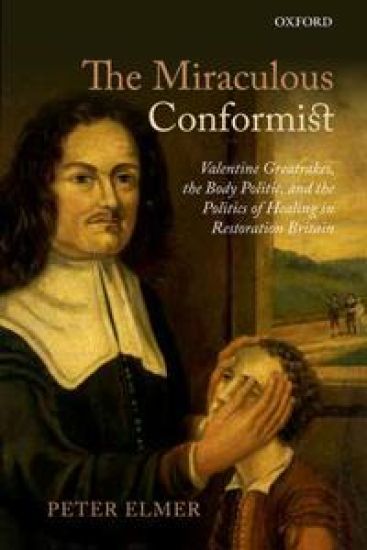
The Miraculous Conformist

The Miraculous Conformist

Peter Elmer

Oxford University Press
2012
sidottu
In 1666 Valentine Greatrakes achieved brief but widespread fame as a miracle healer. Dubbed the 'Stroker', he is widely believed to have touched and cured thousands of men, women, and children suffering from a large range of acute diseases and chronic conditions. His actions attracted the attention of the King, Charles II, as well as other eminent figures at court and in the various institutions of government and learning, including the newly founded Royal Society. However, there was little consensus as to the nature and origin of his gift and, following a brief period of intense lobbying on his behalf, he retired to Ireland and relative obscurity. Most histories of this period rarely grant the strange events surrounding the appearance of Greatrakes much more than an occasional footnote. Here, however, for the first time the compelling story of Greatrakes the man, and his place in the history of seventeenth-century Britain, is told in full for the first time. Based on extensive research in Irish and English archives, it reveals a fascinating account of one man's engagement with, and response to, some of the most important events of the period, including the Irish Rebellion of 1641, the English civil wars, the Cromwellian Conquest of Ireland, and the Restoration of 1660. In the process, it shows how Greatrakes' claims to heal the bodies of the sick and maimed were in large part a response to broader divisions within the fractured body politic of Britain - an approach that was enthusiastically received by many prominent figures in church and state who were eager to seek reconciliation and rapprochement in the early years of the Restoration.