Kirjojen hintavertailu – 12 903 725 kirjaa ja 27 kauppaa

Kirjailija

Peter F. Thall

Kirjat ja teokset yhdessä paikassa: 5 kirjaa, julkaisuja vuosilta 2016–2024, suosituimpiin kuuluu Statistical Remedies for Medical Researchers. Vertaile teosten hintoja ja tarkista saatavuus suomalaisista kirjakaupoista.

5 kirjaa

Kirjojen julkaisuvuodet: 2016–2024.

Bayesian Precision Medicine

Bayesian Precision Medicine

Peter F. Thall

TAYLOR FRANCIS LTD
2024
sidottu
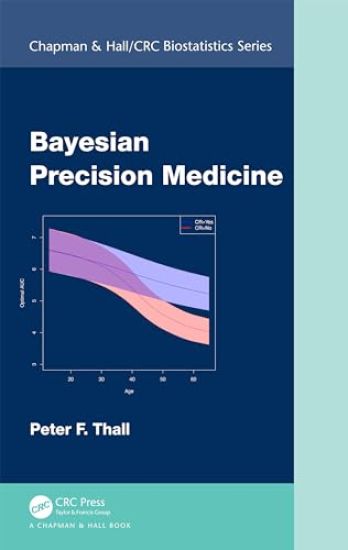
Bayesian Precision Medicine presents modern Bayesian statistical models and methods for identifying treatments tailored to individual patients using their prognostic variables and predictive biomarkers. The process of evaluating and comparing treatments is explained and illustrated by practical examples, followed by a discussion of causal analysis and its relationship to statistical inference. A wide array of modern Bayesian clinical trial designs are presented, including applications to many oncology trials. The later chapters describe Bayesian nonparametric regression analyses of datasets arising from multistage chemotherapy for acute leukemia, allogeneic stem cell transplantation, and targeted agents for treating advanced breast cancer. Features:Describes the connection between causal analysis and statistical inferenceReviews modern personalized Bayesian clinical trial designs for dose-finding, treatment screening, basket trials, enrichment, incorporating historical data, and confirmatory treatment comparison, illustrated by real-world applicationsPresents adaptive methods for clustering similar patient subgroups to improve efficiencyDescribes Bayesian nonparametric regression analyses of real-world datasets from oncologyProvides pointers to software for implementationBayesian Precision Medicine is primarily aimed at biostatisticians and medical researchers who desire to apply modern Bayesian methods to their own clinical trials and data analyses. It also might be used to teach a special topics course on precision medicine using a Bayesian approach to postgraduate biostatistics students. The main goal of the book is to show how Bayesian thinking can provide a practical scientific basis for tailoring treatments to individual patients.
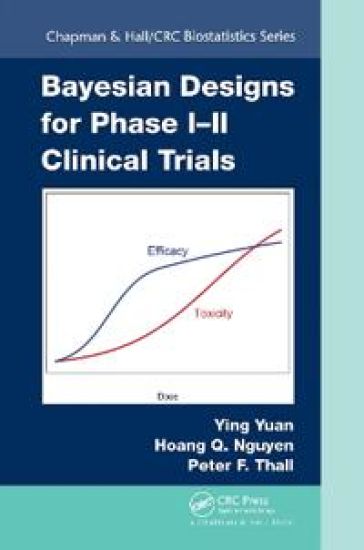
Bayesian Designs for Phase I-II Clinical Trials

Bayesian Designs for Phase I-II Clinical Trials

Ying Yuan; Hoang Q. Nguyen; Peter F. Thall

TAYLOR FRANCIS LTD
2021
nidottu
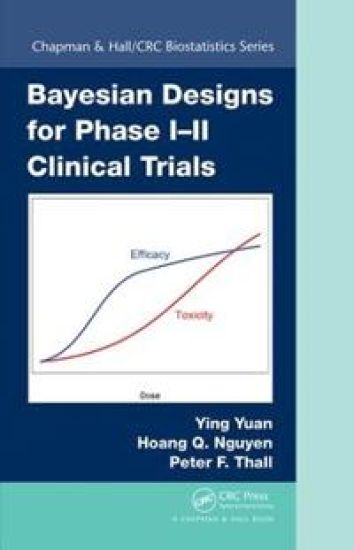
Reliably optimizing a new treatment in humans is a critical first step in clinical evaluation since choosing a suboptimal dose or schedule may lead to failure in later trials. At the same time, if promising preclinical results do not translate into a real treatment advance, it is important to determine this quickly and terminate the clinical evaluation process to avoid wasting resources. Bayesian Designs for Phase I–II Clinical Trials describes how phase I–II designs can serve as a bridge or protective barrier between preclinical studies and large confirmatory clinical trials. It illustrates many of the severe drawbacks with conventional methods used for early-phase clinical trials and presents numerous Bayesian designs for human clinical trials of new experimental treatment regimes. Written by research leaders from the University of Texas MD Anderson Cancer Center, this book shows how Bayesian designs for early-phase clinical trials can explore, refine, and optimize new experimental treatments. It emphasizes the importance of basing decisions on both efficacy and toxicity.
Statistical Remedies for Medical Researchers

Statistical Remedies for Medical Researchers

Peter F. Thall

Springer Nature Switzerland AG
2021
nidottu
This book illustrates numerous statistical practices that are commonly used by medical researchers, but which have severe flaws that may not be obvious. For each example, it provides one or more alternative statistical methods that avoid misleading or incorrect inferences being made. The technical level is kept to a minimum to make the book accessible to non-statisticians. At the same time, since many of the examples describe methods used routinely by medical statisticians with formal statistical training, the book appeals to a broad readership in the medical research community.
Statistical Remedies for Medical Researchers

Statistical Remedies for Medical Researchers

Peter F. Thall

Springer Nature Switzerland AG
2020
sidottu
This book illustrates numerous statistical practices that are commonly used by medical researchers, but which have severe flaws that may not be obvious. For each example, it provides one or more alternative statistical methods that avoid misleading or incorrect inferences being made. The technical level is kept to a minimum to make the book accessible to non-statisticians. At the same time, since many of the examples describe methods used routinely by medical statisticians with formal statistical training, the book appeals to a broad readership in the medical research community.
Bayesian Designs for Phase I-II Clinical Trials

Bayesian Designs for Phase I-II Clinical Trials

Ying Yuan; Hoang Q. Nguyen; Peter F. Thall

Productivity Press
2016
sidottu
Reliably optimizing a new treatment in humans is a critical first step in clinical evaluation since choosing a suboptimal dose or schedule may lead to failure in later trials. At the same time, if promising preclinical results do not translate into a real treatment advance, it is important to determine this quickly and terminate the clinical evaluation process to avoid wasting resources. Bayesian Designs for Phase I–II Clinical Trials describes how phase I–II designs can serve as a bridge or protective barrier between preclinical studies and large confirmatory clinical trials. It illustrates many of the severe drawbacks with conventional methods used for early-phase clinical trials and presents numerous Bayesian designs for human clinical trials of new experimental treatment regimes. Written by research leaders from the University of Texas MD Anderson Cancer Center, this book shows how Bayesian designs for early-phase clinical trials can explore, refine, and optimize new experimental treatments. It emphasizes the importance of basing decisions on both efficacy and toxicity.