Kirjojen hintavertailu – 12 903 724 kirjaa ja 27 kauppaa
Kirjailija
Peter Felten
Kirjat ja teokset yhdessä paikassa: 7 kirjaa, julkaisuja vuosilta 2013–2025, suosituimpiin kuuluu The Undergraduate Experience. Vertaile teosten hintoja ja tarkista saatavuus suomalaisista kirjakaupoista.
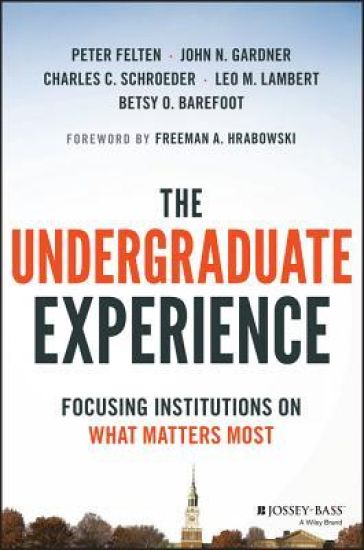
A clear, practical framework for getting higher education back on track The Undergraduate Experience is a guide for significantly improving student learning and institutional performance in the rapidly changing world of higher education. Written by recognized experts in undergraduate education, this book encourages college and university leaders to rethink current practices that fragment the student experience, and to focus on creating powerful, integrated undergraduate learning for all students. Drawing from their own deep experience and the latest research, the authors reveal key principles that enable institutional change and enhance student outcomes in any higher education setting. Coverage includes high-impact practices for engagement, the importance of strategic leadership, the necessity of setting and maintaining high expectations, and insight on fostering excellence through systematic planning. Through its core themes and action principles, this book can be a valuable resource for faculty, staff, administrators, and governing boards at all types of postsecondary institutions. The book provides a practical framework for achieving excellence in undergraduate education by focusing on: LearningRelationshipsExpectationsAlignmentImprovementLeadership The value of an undergraduate education is under greater scrutiny than ever before, and campus leaders must be able to convey the value of their institutions to students, boards, donors, and legislators. Is a college or university degree worth the increasing cost? Are today's students academically adrift? What's the difference between a degree and an education? Responding to these questions requires focused action by individuals and institutions. The Undergraduate Experience offers practical guidance for creating and sustaining excellence in the face of disruption and change in higher education.
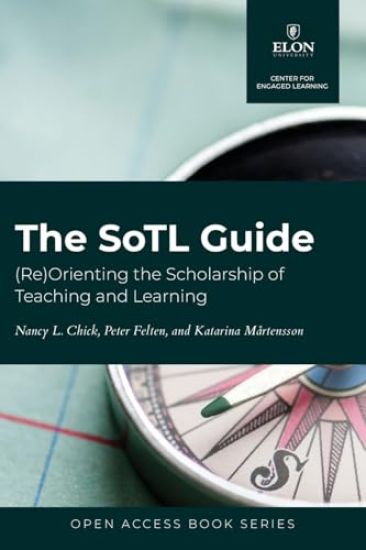
Center for Engaged Learning Open Access Book Series Series Editors: Jessie L Moore and Peter Felten The SoTL Guide is a practical, accessible, and engaging book that explicitly guides readers through clear steps to develop their own scholarship of teaching and learning (SoTL) project. The book is applicable to readers from across disciplines, nations, career stages, and familiarity with SoTL through clear language, defined terms, uncovered assumptions, and practical, illustrative examples. The authors invite readers to share an expansive and inclusive view of what "doing SoTL" might mean, which they see as beginning before even thinking about a project and extending well after a project is "finished." The book is also more than a step-by-step manual for doing SoTL; it will help readers more broadly understand what SoTL is and does, and why. The book explores the important, intermediate aspect of improvement in SoTL: the improvement of oneself as a professional academic teacher, of one's teaching practices, and most importantly of one's students' learning. The authors argue for the important "going public" part of SoTL as an act of goodwill and generosity-as potential for collective improvement. What People Are Saying "Whether you're new to the scholarship of teaching and learning or an old hand, this book should be on your (virtual) shelf. Shaped by the experience of three of the field's most thoughtful-and welcoming-practitioners, it brings together examples and insights from the last several decades while also holding up an ambitious vision for future work, work with the potential for changing the culture of higher education itself. In short, The SoTL Guide is a gift from the field to the field, and a great pleasure to read."- Pat Hutchings, Senior Scholar, National Institute for Learning Outcomes Assessment (NILOA), and Senior Scholar, Bay View Alliance (BVA) "The SoTL Guide is much more than a manual-it is an invitation to rediscover the human, ethical, and transformative essence of the Scholarship of Teaching and Learning. Chick, Felten, and M rtensson weave wisdom, humility, and relational scholarship into a generous roadmap that connects inquiry, identity, and community. This book reorients SoTL toward its deepest purpose: to cultivate meaning, dignity, and public good in higher education. For those of us in the Global South, it resonates as a call to make SoTL a collective act of care and justice." - Oscar Jerez Ya ez, Associate Professor in the Department of Health Sciences Education and Director of the Teaching and Learning Center, School of Medicine, University of Chile "The authors have adeptly threaded the needle of providing rich content that will appeal to both SoTL-curious readers and to deeply SoTL-embedded scholars looking to reflect on their methods, assumptions, and practices. As authors from different cultural and institutional contexts, they highlight how these contextual factors have shaped their own SoTL journeys and practices, and by highlighting a wide range of scholars across contexts and countries, they have meaningfully broadened the SoTL author "set" that is commonly featured in SoTL dialogue." - Sarah Bunnell, Director of the Center for the Advancement of Teaching and Learning and Associate Professor of Psychology, Elon University
A practical guide to building the connections students need to thrive in and after college from the authors of the best-selling Relationship-Rich Education. Decades of research demonstrate how important the relationships with peers and professors are for students academically, personally, and professionally. Yet many students lack the strategies to develop educationally purposeful relationships in college. Connections Are Everything shows students the simple steps they can take to make their own college experience meaningful and transformational. In short, practical chapters, this guide helps readers learn how to build relationships through various strategies, including using "relationship accelerators" like internships and mentorships, undergraduate research, and campus employment. Undergraduate demographics have changed dramatically as students of color and first-generation students become the new majority at colleges and universities across the United States. Connections are particularly significant for these students; the positive—and negative—impacts of peer, faculty, and staff relationships are magnified. Higher education cannot meet students' needs or achieve equity, justice, and inclusion without relationship-rich education. This book empowers students to seek out relationships by demystifying the varied ways they can cultivate significant connections.
A mentor, advisor, or even a friend? Making connections in college makes all the difference. What single factor makes for an excellent college education? As it turns out, it's pretty simple: human relationships. Decades of research demonstrate the transformative potential and the lasting legacies of a relationship-rich college experience. Critics suggest that to build connections with peers, faculty, staff, and other mentors is expensive and only an option at elite institutions where instructors have the luxury of time with students. But in this revelatory book brimming with the voices of students, faculty, and staff from across the country, Peter Felten and Leo M. Lambert argue that relationship-rich environments can and should exist for all students at all types of institutions. In Relationship-Rich Education, Felten and Lambert demonstrate that for relationships to be central in undergraduate education, colleges and universities do not require immense resources, privileged students, or specially qualified faculty and staff. All students learn best in an environment characterized by high expectation and high support, and all faculty and staff can learn to teach and work in ways that enable relationship-based education. Emphasizing the centrality of the classroom experience to fostering quality relationships, Felten and Lambert focus on students' influence in shaping the learning environment for their peers, as well as the key difference a single, well-timed conversation can make in a student's life. They also stress that relationship-rich education is particularly important for first-generation college students, who bring significant capacities to college but often face long-standing inequities and barriers to attaining their educational aspirations. Drawing on nearly 400 interviews with students, faculty, and staff at 29 higher education institutions across the country, Relationship-Rich Education provides readers with practical advice on how they can develop and sustain powerful relationship-based learning in their own contexts. Ultimately, the book is an invitation—and a challenge—for faculty, administrators, and student life staff to move relationships from the periphery to the center of undergraduate education.
A guide to developing productive student-faculty partnerships in higher education Student-faculty partnerships is an innovation that is gaining traction on campuses across the country. There are few established models in this new endeavor, however. Engaging Students as Partners in Learning and Teaching: A Guide for Faculty offers administrators, faculty, and students both the theoretical grounding and practical guidelines needed to develop student-faculty partnerships that affirm and improve teaching and learning in higher education. Provides theory and evidence to support new efforts in student-faculty partnershipsDescribes various models for creating and supporting such partnershipsHelps faculty overcome some of the perceived barriers to student-faculty partnershipsSuggests a range of possible levels of partnership that might be appropriate in different circumstancesIncludes helpful responses to a range of questions as well as advice from faculty, students, and administrators who have hands-on experience with partnership programs Balancing theory, step-by-step guidelines, expert advice, and practitioner experience, this book is a comprehensive why- and how-to handbook for developing a successful student-faculty partnership program.
The recent trend of trying to measure higher education's return on investment misses a fundamental point, argue Charity Johansson and Peter Felten. The central purpose of a college or university is to transform the lives of students-not to merely change them or help them mature. This transformation is an ongoing process of intentionally aligning one's behavior with one's core sense of personal identity. It is the university's central role to lead students in this transformation, a process that shapes students into intentional, critical, and engaged individuals. Recognizing the remarkable influence of the college experience on peoples' lives, the authors offer a guide to how colleges and universities can effectively lead students through this life-changing process. Drawn from extensive interviews with students and graduates, faculty and staff, Transforming Students gathers diverse stories to show how students experience the transformation process, which rarely follows a neat or linear path. The interviews illustrate central themes from the literature on transformative learning and the undergraduate student experience. A sequel of sorts to George Keller's classic Transforming a College - which chronicled Elon University's metamorphosis from struggling college to a top regional university- Transforming Students addresses the school's core educational mission: to shape students into engaged adults who embrace learning as a lifelong endeavor. Given this effect, the college experience is much more than preparation for a career. It is preparation for life.
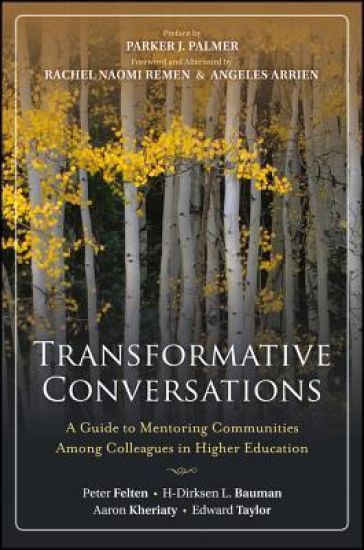
Praise for Transformative Conversations "In the 'superstorm' of writings about the crisis in higher education this little gem of a book stands out like a mindfulness bell. It calls us back to the only thing that truly matters?the energy and wisdom buried in the minds and hearts of dedicated educators." ? Diana Chapman Walsh, president emerita, Wellesley College; trustee emerita, Amherst College; member of the MIT Corporation "This book is revolutionary! It is about transforming the very essence of higher education through the power of authentic conversation, knowing that as the people within the institution evolve, the institution will transform." ? Patricia and Craig Neal, The Art of Convening: Authentic Engagement in Meetings, Gatherings, and Conversations; founders, Heartland Inc. "This is a radical story about how to create a more intimate and relational culture inside the halls of higher education.... for those who long for higher education to return from the abyss of siloed isolation to its original charter as a cooperative learning institution committed to developing the whole person in service of the common good." ? Peter Block, Flawless Consulting and Abundant Community Transformative Conversations offers guidance to help readers create and sustain Formation Mentoring Communities, where faculty, staff, and administrators can speak openly and honestly to the heart of their work as educators and human beings.