Kirjojen hintavertailu – 12 859 818 kirjaa ja 27 kauppaa

Kirjailija

Peter Garnsey

Kirjat ja teokset yhdessä paikassa: 16 kirjaa, julkaisuja vuosilta 1988–2026, suosituimpiin kuuluu Conceptions de L'Esclavage D'Aristote a Saint Augustin. Vertaile teosten hintoja ja tarkista saatavuus suomalaisista kirjakaupoista.

16 kirjaa

Kirjojen julkaisuvuodet: 1988–2026.

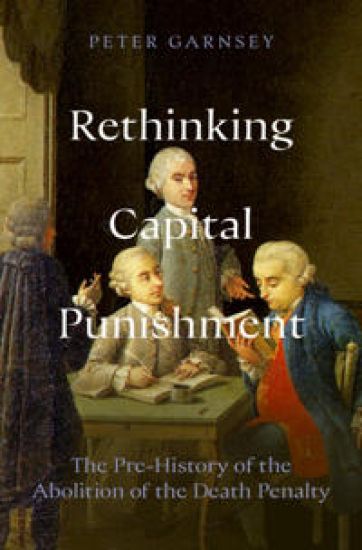
Rethinking Capital Punishment

Rethinking Capital Punishment

Peter Garnsey

Cambridge University Press
2026
sidottu
The death penalty was accepted almost universally until the eighteenth century, when Giuseppe Pelli of Florence and Cesare Beccaria of Milan produced works calling for its abolition. Why was this form of punishment so integrated into laws and customary practices? And what is the pre-history of the arguments in favour of its abolition? This book is the first to trace the origins of these ideas, beginning with the Lex Talionis in the Code of Hammurabi and moving across the Bible, Plato, to the Renaissance, and the emergence of utilitarianism in the 18th century. It also explores how the advance of the abolition of the death penalty was held up for a time in Britain, and stalled, apparently permanently, in America. Peter Garnsey ranges across philosophy, theology, law, and politics to provide a balanced and accessible overview of the beliefs about crime and punishment that underlay the arguments of the first abolitionists. This study is a compelling and original contribution to the history of ideas about capital punishment.
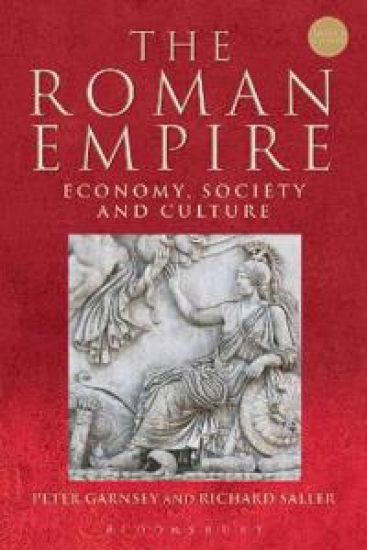
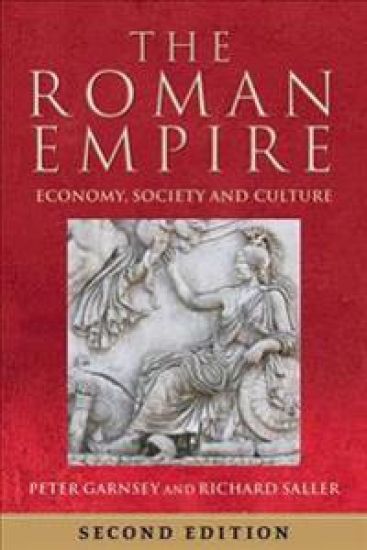
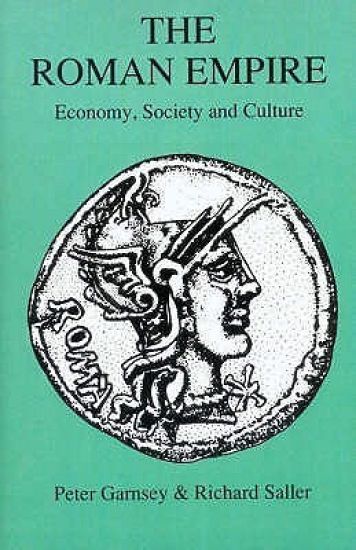
The Roman Empire

The Roman Empire

Peter Garnsey; Richard Saller

Bloomsbury Academic
2014
nidottu
During the Principate (roughly from 27 BC to AD 235), when the empire reached its maximum extent, Roman society and culture were radically transformed. But how was the vast territory of the empire controlled? Did the demands of central government stimulate economic growth or endanger survival? What forces of cohesion operated to balance the social and economic inequalities and high mortality rates? How did the official religion react in the face of the diffusion of alien cults and the emergence of Christianity? These are some of the many questions posed here, in an expanded edition of the original, pathbreaking account of the society, economy and culture of the Roman empire. As an integrated study of the life and outlook of the ordinary inhabitants of the Roman world, it deepens our understanding of the underlying factors in this important formative period of world history. Additions to the second edition include an introductory chapter which sets the scene and explores the consequences for government and the governing classes of the replacement of the Republic by the rule of emperors. A second extra chapter assesses how far Rome’s subjects resisted her hegemony. Addenda to the chapters throughout offer up-to-date bibliography and point to new evidence and approaches which have enlivened Roman history in recent decades.
The Roman Empire: Economy, Society and Culture

The Roman Empire: Economy, Society and Culture

Peter Garnsey; Richard Saller

University of California Press
2014
nidottu
During the Principate (roughly 27 BCE to 235 CE), when the empire reached its maximum extent, Roman society and culture were radically transformed. But how was the vast territory of the empire controlled? Did the demands of central government stimulate economic growth or endanger survival? What forces of cohesion operated to balance the social and economic inequalities and high mortality rates? How did the official religion react in the face of the diffusion of alien cults and the emergence of Christianity? These are some of the many questions posed here, in the new, expanded edition of Garnsey and Saller's pathbreaking account of the economy, society, and culture of the Roman Empire. This second edition includes a new introduction that explores the consequences for government and the governing classes of the replacement of the Republic by the rule of emperors. Addenda to the original chapters offer up-to-date discussions of issues and point to new evidence and approaches that have enlivened the study of Roman history in recent decades. A completely new chapter assesses how far Rome's subjects resisted her hegemony. The bibliography has also been thoroughly updated, and a new color plate section has been added.
Penser La Propriete

Penser La Propriete

Peter Garnsey

Les Belles Lettres
2013
nidottu
La question de la legitimite de la propriete privee fut a l'origine des debats passionnes entre philosophes, theoriciens de la politique, juristes et theologiens a travers les ages. Dans ce livre, Peter Garnsey etudie les textes, les metaphores, les mythes et les configurations narratives qui jouerent un role fondamental dans l'histoire des conceptions de la propriete, ainsi que leur reception de l'Antiquite jusqu'au debut du XIXe siecle. A une epoque ou se revele chaque jour un peu plus l'ampleur des destructions que trente annees de neoliberalisme ont infligees au corps social, il n'est peut-etre pas inutile de rappeler que le droit a la propriete est une construction historique qui cache mal les interets des classes ou des institutions qui le proclamerent naturel, et que la richesse et la propriete sont apparues a de nombreux penseurs de cultures et d'epoques tres differentes comme un scandale aussi bien moral et politique qu'intellectuel. La presente traduction, realisee sous le controle de l'auteur, offre une version revisee et augmentee de l'ouvrage et peut donc etre consideree comme une seconde edition de celui-ci. Peter Garnsey est directeur de recherche a la Faculte d'Histoire de l'Universite de Cambridge. Les Belles Lettres ont publie les traductions de deux de ses ouvrages: Famine et approvisionnement dans le monde greco-romain (1996) et Conceptions de l'esclavage d'Aristote a saint Augustin (2004). Traduit de l'anglais par Alexandre Hasnaoui.
Thinking about Property

Thinking about Property

Peter Garnsey

Cambridge University Press
2007
pokkari
This book explores ancient 'foundational' texts relating to property and their reception by later thinkers in their various contexts up to the early nineteenth century. The texts include Plato's vision of an ideal polity in the Republic, Jesus' teachings on renunciation and poverty, and Golden Age narratives and other evolutionary accounts of the transition of mankind from primeval communality to regimes of ownership. The issue of the legitimacy of private ownership exercises the minds of the major political thinkers as well as theologians and jurists throughout the ages. The book gives full consideration to the historical development of Rights Theory, with special reference to the right to property. It ends with a comparative study of the Declarations of Rights in the American and French Revolutions and seeks to explain, with reference to contemporary documents, why the French recognised an inalienable, human right to property whereas the Americans did not.
Thinking about Property

Thinking about Property

Peter Garnsey

Cambridge University Press
2007
sidottu
This book explores ancient 'foundational' texts relating to property and their reception by later thinkers in their various contexts up to the early nineteenth century. The texts include Plato's vision of an ideal polity in the Republic, Jesus' teachings on renunciation and poverty, and Golden Age narratives and other evolutionary accounts of the transition of mankind from primeval communality to regimes of ownership. The issue of the legitimacy of private ownership exercises the minds of the major political thinkers as well as theologians and jurists throughout the ages. The book gives full consideration to the historical development of Rights Theory, with special reference to the right to property. It ends with a comparative study of the Declarations of Rights in the American and French Revolutions and seeks to explain, with reference to contemporary documents, why the French recognised an inalienable, human right to property whereas the Americans did not.
Conceptions de L'Esclavage D'Aristote a Saint Augustin
Le present ouvrage, unique en son genre, propose une synthese sur la facon dont l'esclavage etait considere par les principaux representants des societes grecques et romaines. Peter Garnsey fait appel a un large eventail de sources, paiennes, juives et chretiennes, qui s'etendent sur une periode de dix siecles, afin de mettre a l'epreuve l'hypothese couramment admise d'un consentement passif a l'egard de l'esclavage, et l'idee correlative selon laquelle, a l'exception d'Aristote, il n'y eut aucune pensee systematique sur l'esclavage. L'ouvrage contient a la fois une typologie des attitudes a l'egard de l'esclavage, qui allaient de la critique a la justification, et des etudes de cas sur les principaux theoriciens de l'esclavage: Aristote et les stoiciens, Philon et Paul, Ambroise et saint Augustin. Le dernier chapitre examine l'emploi de l'esclavage comme metaphore chez les Peres de l'Eglise. Auteur de Famine et approvisionnement dans le monde greco-romain (Les Belles Lettres, 1996), Peter Garnsey est professeur d'Histoire de l'Antiquite classique a l'Universite de Cambridge.
Cities, Peasants and Food in Classical Antiquity

Cities, Peasants and Food in Classical Antiquity

Peter Garnsey

Cambridge University Press
2004
pokkari
Sixteen essays in the social and economic history of the ancient world, by a leading historian of classical antiquity, are here brought conveniently together. Three overlapping parts deal with the urban economy and society, peasants and the rural economy, and food-supply and food-crisis. While focusing on eleven centuries of antiquity from archaic Greece to late imperial Rome, the essays include theoretical and comparative analyses of food-crisis and pastoralism, and an interdisciplinary study of the health status of the people of Rome using physical anthropology and nutritional science. A variety of subjects are treated, from the misconduct of a builders’ association in late antique Sardis, to a survey of the cultural associations and physiological effects of the broad bean.
Food and Society in Classical Antiquity

Food and Society in Classical Antiquity

Peter Garnsey

Cambridge University Press
1999
pokkari
This is the first study of food in classical antiquity that treats it as both a biological and a cultural phenomenon. The variables of food quantity, quality and availability, and the impact of disease, are evaluated and a judgement reached which inclines to pessimism. Food is also a symbol, evoking other basic human needs and desires, especially sex, and performing social and cultural roles which can be either integrative or divisive. The book explores food taboos in Greek, Roman, and Jewish society, and food-allocation within the family, as well as more familiar cultural and economic polarities which are highlighted by food and eating. The author draws on a wide range of evidence new and old, from written sources to human skeletal remains, and uses both comparative historical evidence from early modern and contemporary developing societies and the anthropological literature, to create a case-study of food in antiquity.
Food and Society in Classical Antiquity

Food and Society in Classical Antiquity

Peter Garnsey

Cambridge University Press
1999
sidottu
This is the first study of food in classical antiquity that treats it as both a biological and a cultural phenomenon. The variables of food quantity, quality and availability, and the impact of disease, are evaluated and a judgement reached which inclines to pessimism. Food is also a symbol, evoking other basic human needs and desires, especially sex, and performing social and cultural roles which can be either integrative or divisive. The book explores food taboos in Greek, Roman, and Jewish society, and food-allocation within the family, as well as more familiar cultural and economic polarities which are highlighted by food and eating. The author draws on a wide range of evidence new and old, from written sources to human skeletal remains, and uses both comparative historical evidence from early modern and contemporary developing societies and the anthropological literature, to create a case-study of food in antiquity.
Cities, Peasants and Food in Classical Antiquity

Cities, Peasants and Food in Classical Antiquity

Peter Garnsey

Cambridge University Press
1998
sidottu
Sixteen essays in the social and economic history of the ancient world, by a leading historian of classical antiquity, are here brought conveniently together. Three overlapping parts deal with the urban economy and society, peasants and the rural economy, and food-supply and food-crisis. While focusing on eleven centuries of antiquity from archaic Greece to late imperial Rome, the essays include theoretical and comparative analyses of food-crisis and pastoralism, and an interdisciplinary study of the health status of the people of Rome using physical anthropology and nutritional science. A variety of subjects are treated, from the misconduct of a builders’ association in late antique Sardis, to a survey of the cultural associations and physiological effects of the broad bean.
Ideas of Slavery from Aristotle to Augustine

Ideas of Slavery from Aristotle to Augustine

Peter Garnsey

Cambridge University Press
1996
pokkari

Halvin toimitettuna 56,80 €

This study, unique of its kind, asks how slavery was viewed by the leading spokesmen of Greece and Rome. There was no movement for abolition in these societies, nor a vigorous debate, such as occurred in antebellum America, but this does not imply that slavery was accepted without question. Dr Garnsey draws on a wide range of sources, pagan, Jewish and Christian, over ten centuries, to challenge the common assumption of passive acquiescence in slavery, and the associated view that, Aristotle apart, there was no systematic thought on slavery. The work contains both a typology of attitudes to slavery ranging from critiques to justifications, and paired case-studies of leading theorists of slavery, Aristotle and the Stoics, Philo and Paul, Ambrose and Augustine. A final chapter considers the use of slavery as a metaphor in the Church Fathers.
Roman Empire

Roman Empire

Peter Garnsey; R. Saller; Richard Salter

Bristol Classical Press
1996
nidottu
During the first, stable period of the Principate (roughly from 27 BC to AD 235), when the empire reached its maximum extent, Roman society and culture were radically transformed. But how was the vast territory of the empire controlled? Did the demands of central government stimulate economic growth, or endanger survival? What forces of cohesion operated to balance the social and economic inequalities and high mortality rates? Why did Roman governments freeze the official religion while allowing the diffusion of alien, especially oriental, cults? Are we to see in their attitude to Christianity a policy of toleration or simply confusion and a failure of nerve? These are some of the many questions posed in this book, which offers the first overall account of the society, economy and culture of the Roman Empire. Addressed to non-specialist readers no less than to scholars, it breaks with the traditional historian's preoccupation with narrative and politics. As an integrated study of the life and outlook of the ordinary inhabitants of the Roman world, it deepens our understanding of the underlying factors in this important formative period of world history.
Famine Et Approvisionnement Dans Le Monde Greco-Romain
Entre 600 av. J.-C. et l'an 500 de notre ere, comment la petite cite d'Athenes, comment l'immense cite de Rome et son empire ont-ils affronte les problemes d'approvisionnement en nourriture? Ceux-ci ne provenaientils pas davantage de raisons politiques que de causes naturelles? Quelles mesures ont ete prises? Quelle fut l'attitude de la paysannerie, qui etait la principale categorie de population? Et y eut-il reellement famine, dans le sens ou nous l'entendons aujourd'hui? Voici quelques unes des questions, fondamentales pour l'existence meme des hommes, auxquelles repond cet ouvrage de reference qui, d'une lecture agreable et aisee, eclaire d'une facon nouvelle plus d'un millenaire de notre histoire. Peter Garnsey est professeur d'Histoire ancienne a Cambridge.
Famine and Food Supply in the Graeco-Roman World

Famine and Food Supply in the Graeco-Roman World

Peter Garnsey

Cambridge University Press
1989
pokkari
The first full-length study of famine in antiquity. The study provides detailed case studies of Athens and Rome, the best known states of antiquity, but also illuminates the institutional response to food crisis in the mass of ordinary cities in the Mediterranean world. Ancient historians have generally shown little interest in investigating the material base of the unique civilisations of the Graeco-Roman world, and have left unexplored the role of the food supply in framing the central institutions and practices of ancient society.
Famine and Food Supply in the Graeco-Roman World

Famine and Food Supply in the Graeco-Roman World

Peter Garnsey

Cambridge University Press
1988
sidottu
The first full-length study of famine in antiquity. The study provides detailed case studies of Athens and Rome, the best known states of antiquity, but also illuminates the institutional response to food crisis in the mass of ordinary cities in the Mediterranean world. Ancient historians have generally shown little interest in investigating the material base of the unique civilisations of the Graeco-Roman world, and have left unexplored the role of the food supply in framing the central institutions and practices of ancient society.