Kirjojen hintavertailu – 12 903 737 kirjaa ja 27 kauppaa

Kirjailija

Peter Godfrey-Smith

Kirjat ja teokset yhdessä paikassa: 31 kirjaa, julkaisuja vuosilta 1996–2026, suosituimpiin kuuluu Living on Earth. Vertaile teosten hintoja ja tarkista saatavuus suomalaisista kirjakaupoista.

31 kirjaa

Kirjojen julkaisuvuodet: 1996–2026.

Djupsinne : hur bläckfisken började tänka
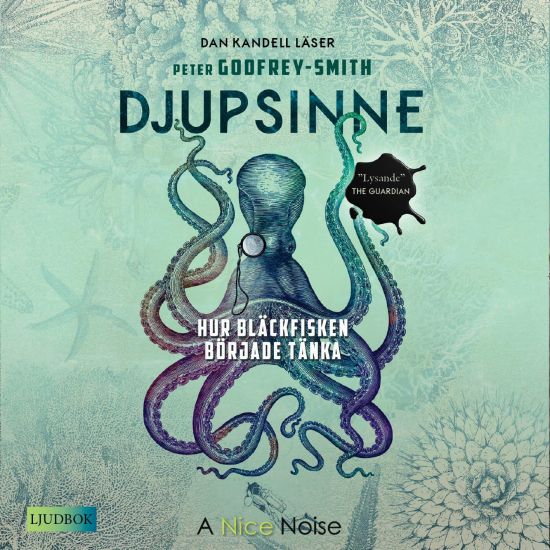
Hur känns det att vara bläckfisk? Djupsinne tar oss med under havsytan till den egensinniga och synnerligen smarta bläckfiskens boplatser. Här får vi möta dessa fascinerande djur som är det närmaste vi kan komma en intelligent utomjording. Genom att följa författaren på sina dykningar utanför Australiens kust får vi följa dessa märkliga djur och samtidigt ta del av sökandet efter livets och medvetandets uppkomst. Sagt om boken"Under läsningen av denna djupt fascinerande bok om bläckfiskar får man också intrycket av att de kommer från en helt annan värld. De har inte bara ett, utan tre hjärtan." Fokus "Djupsinne är en både lärorik och fängslande bok om evolutionsbiologi, interfolierad med fridykning i kognitionsforskningens djupa vatten. Godfrey-Smith har gjort en grundlig research." SvD "De överraskande böckerna är bäst. De som återväcker den ursprungliga läslusten, nyfikenheten som slukar sidor och söker svaren. En bok som handlar bläckfiskars intelligens och omvärldsuppfattning hamnar just i den kategorin, osannolik och ytterst intelligent." Norrbottens-Kuriren "En tänkvärd bok, utmärkt populärvetenskap." BTJ Hänförande och djupsinnig. / Financial Times En oerhört insiktsfull och njutbar bok./ Los Angeles Times Välskriven, tankeväckande och djärv./ The Atlantic Lysande Skönheten i Godfrey-Smiths bok ligger i textens klarhet./ The Guardian En suverän, skimrande bok./ Literary Review Fascinerande och ofta förtjusande /The Times FörfattarenPeter Godfrey-Smith (f 1965) är professor med inriktning på biologisk filosofi vid University of Sydney, Australien.

Djupsinne : hur bläckfisken började tänka

Djupsinne : hur bläckfisken började tänka

Peter Godfrey-Smith

Natur Kultur Allmänlitteratur
2020
sidottu
"Under läsningen av denna djupt fascinerande bok om bläckfiskar får man också intrycket av att de kommer från en helt annan värld. De har inte bara ett, utan tre hjärtan." - Fokus "Djupsinne är en både lärorik och fängslande bok om evolutionsbiologi, interfolierad med fridykning i kognitionsforskningens djupa vatten. Godfrey-Smith har gjort en grundlig research." - SvD Hur känns det att vara bläckfisk? Djupsinne tar oss med under havsytan till den egensinniga och synnerligen smarta bläckfiskens boplatser. Här får vi möta dessa fascinerande djur som är det närmaste vi kan komma en intelligent utomjording. Genom att följa författaren på sina dykningar utanför Australiens kust får vi följa dessa märkliga djur och samtidigt ta del av sökandet efter livets och medvetandets uppkomst. "De överraskande böckerna är bäst. De som återväcker den ursprungliga läslusten, nyfikenheten som slukar sidor och söker svaren. En bok som handlar bläckfiskars intelligens och omvärldsuppfattning hamnar just i den kategorien, osannolik och ytterst intelligent." - Norrbottens-Kuriren "En tänkvärd bok, utmärkt populärvetenskap." - BTJ "Hänförande och djupsinnig." - Financial Times "En oerhört insiktsfull och njutbar bok." - Los Angeles Times "Välskriven, tankeväckande och djärv." - The Atlantic "Lysande Skönheten i Godfrey-Smiths bok ligger i textens klarhet." - The Guardian "En suverän, skimrande bok." - Literary Review "Fascinerande och ofta förtjusande" - The Times
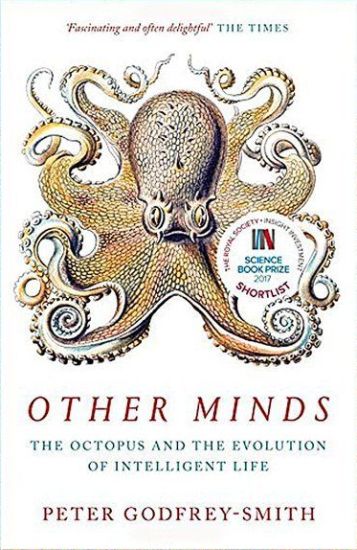
Other Minds

Other Minds

Peter Godfrey-Smith

Harper Collins UK
2018
pokkari

Halvin toimitettuna 19,90 €

BBC R4 Book of the Week â?? Brilliantâ?? Guardian â?? Fascinating and often delightfulâ?? The Times What if intelligent life on Earth evolved not once, but twice? The octopus is the closest we will come to meeting an intelligent alien. What can we learn from the encounter?
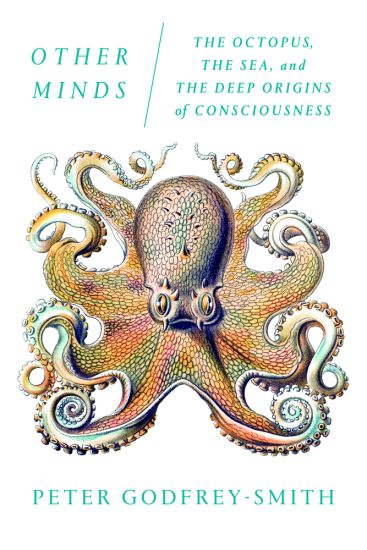
Other Minds: The Octopus, the Sea, and the Deep Origins of Consciousness

Other Minds: The Octopus, the Sea, and the Deep Origins of Consciousness

Peter Godfrey-Smith

Farrar, Straus and Giroux
2017
nidottu

Halvin toimitettuna 21,80 €

Philosopher Peter Godfrey-Smith dons a wet suit and journeys into the depths of consciousness in Other Minds Although mammals and birds are widely regarded as the smartest creatures on earth, it has lately become clear that a very distant branch of the tree of life has also sprouted higher intelligence: the cephalopods, consisting of the squid, the cuttlefish, and above all the octopus. In captivity, octopuses have been known to identify individual human keepers, raid neighboring tanks for food, turn off lightbulbs by spouting jets of water, plug drains, and make daring escapes. How is it that a creature with such gifts evolved through an evolutionary lineage so radically distant from our own? What does it mean that evolution built minds not once but at least twice? The octopus is the closest we will come to meeting an intelligent alien. What can we learn from the encounter? In Other Minds, Peter Godfrey-Smith, a distinguished philosopher of science and a skilled scuba diver, tells a bold new story of how subjective experience crept into being--how nature became aware of itself. As Godfrey-Smith stresses, it is a story that largely occurs in the ocean, where animals first appeared. Tracking the mind's fitful development, Godfrey-Smith shows how unruly clumps of seaborne cells began living together and became capable of sensing, acting, and signaling. As these primitive organisms became more entangled with others, they grew more complicated. The first nervous systems evolved, probably in ancient relatives of jellyfish; later on, the cephalopods, which began as inconspicuous mollusks, abandoned their shells and rose above the ocean floor, searching for prey and acquiring the greater intelligence needed to do so. Taking an independent route, mammals and birds later began their own evolutionary journeys. But what kind of intelligence do cephalopods possess? Drawing on the latest scientific research and his own scuba-diving adventures, Godfrey-Smith probes the many mysteries that surround the lineage. How did the octopus, a solitary creature with little social life, become so smart? What is it like to have eight tentacles that are so packed with neurons that they virtually "think for themselves"? What happens when some octopuses abandon their hermit-like ways and congregate, as they do in a unique location off the coast of Australia? By tracing the question of inner life back to its roots and comparing human beings with our most remarkable animal relatives, Godfrey-Smith casts crucial new light on the octopus mind--and on our own.
Philosophy of Biology

Philosophy of Biology

Peter Godfrey-Smith

Princeton University Press
2016
pokkari

Halvin toimitettuna 31,50 €

This is a concise, comprehensive, and accessible introduction to the philosophy of biology written by a leading authority on the subject. Geared to philosophers, biologists, and students of both, the book provides sophisticated and innovative coverage of the central topics and many of the latest developments in the field. Emphasizing connections between biological theories and other areas of philosophy, and carefully explaining both philosophical and biological terms, Peter Godfrey-Smith discusses the relation between philosophy and science; examines the role of laws, mechanistic explanation, and idealized models in biological theories; describes evolution by natural selection; and assesses attempts to extend Darwin's mechanism to explain changes in ideas, culture, and other phenomena. Further topics include functions and teleology, individuality and organisms, species, the tree of life, and human nature. The book closes with detailed, cutting-edge treatments of the evolution of cooperation, of information in biology, and of the role of communication in living systems at all scales. Authoritative and up-to-date, this is an essential guide for anyone interested in the important philosophical issues raised by the biological sciences.
Philosophy of Biology

Philosophy of Biology

Peter Godfrey-Smith

Princeton University Press
2014
sidottu
This is a concise, comprehensive, and accessible introduction to the philosophy of biology written by a leading authority on the subject. Geared to philosophers, biologists, and students of both, the book provides sophisticated and innovative coverage of the central topics and many of the latest developments in the field. Emphasizing connections between biological theories and other areas of philosophy, and carefully explaining both philosophical and biological terms, Peter Godfrey-Smith discusses the relation between philosophy and science; examines the role of laws, mechanistic explanation, and idealized models in biological theories; describes evolution by natural selection; and assesses attempts to extend Darwin's mechanism to explain changes in ideas, culture, and other phenomena. Further topics include functions and teleology, individuality and organisms, species, the tree of life, and human nature. The book closes with detailed, cutting-edge treatments of the evolution of cooperation, of information in biology, and of the role of communication in living systems at all scales. Authoritative and up-to-date, this is an essential guide for anyone interested in the important philosophical issues raised by the biological sciences.
Darwinian Populations and Natural Selection

Darwinian Populations and Natural Selection

Peter Godfrey-Smith

Oxford University Press
2011
nidottu

Halvin toimitettuna 42,50 €

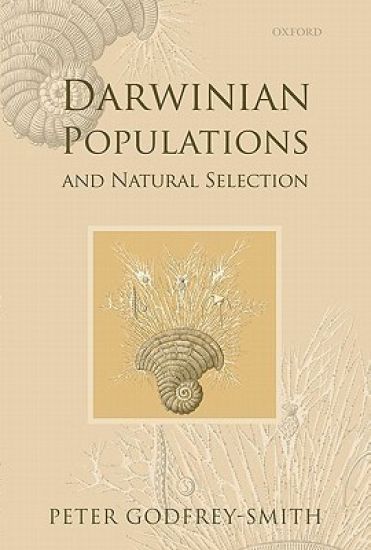
In 1859 Darwin described a deceptively simple mechanism that he called "natural selection," a combination of variation, inheritance, and reproductive success. He argued that this mechanism was the key to explaining the most puzzling features of the natural world, and science and philosophy were changed forever as a result. The exact nature of the Darwinian process has been controversial ever since, however. Godfrey-Smith draws on new developments in biology, philosophy of science, and other fields to give a new analysis and extension of Darwin's idea. The central concept used is that of a "Darwinian population," a collection of things with the capacity to undergo change by natural selection. From this starting point, new analyses of the role of genes in evolution, the application of Darwinian ideas to cultural change, and "evolutionary transitions" that produce complex organisms and societies are developed. Darwinian Populations and Natural Selection will be essential reading for anyone interested in evolutionary theory.
Darwinian Populations and Natural Selection

Darwinian Populations and Natural Selection

Peter Godfrey-Smith

Oxford University Press
2009
sidottu
In 1859 Darwin described a deceptively simple mechanism that he called "natural selection," a combination of variation, inheritance, and reproductive success. He argued that this mechanism was the key to explaining the most puzzling features of the natural world, and science and philosophy were changed forever as a result. The exact nature of the Darwinian process has been controversial ever since, however. Godfrey-Smith draws on new developments in biology, philosophy of science, and other fields to give a new analysis and extension of Darwin's idea. The central concept used is that of a "Darwinian population," a collection of things with the capacity to undergo change by natural selection. From this starting point, new analyses of the role of genes in evolution, the application of Darwinian ideas to cultural change, and "evolutionary transitions" that produce complex organisms and societies are developed. Darwinian Populations and Natural Selection will be essential reading for anyone interested in evolutionary theory
Complexity and the Function of Mind in Nature

Complexity and the Function of Mind in Nature

Peter Godfrey-Smith

Cambridge University Press
1998
pokkari
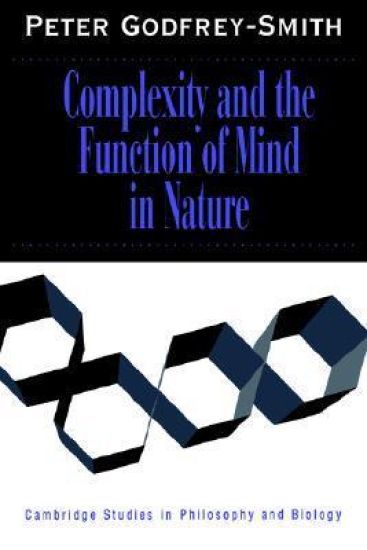
This book explains the relationship between intelligence and environmental complexity, and in so doing links philosophy of mind to more general issues about the relations between organisms and environments, and to the general pattern of ‘externalist’ explanations. The author provides a biological approach to the investigation of mind and cognition in nature. In particular he explores the idea that the function of cognition is to enable agents to deal with environmental complexity. The history of the idea in the work of Dewey and Spencer is considered, as is the impact of recent evolutionary theory on our understanding of the place of mind in nature.
Complexity and the Function of Mind in Nature

Complexity and the Function of Mind in Nature

Peter Godfrey-Smith

Cambridge University Press
1996
sidottu
This book explains the relationship between intelligence and environmental complexity, and in so doing links philosophy of mind to more general issues about the relations between organisms and environments, and to the general pattern of ‘externalist’ explanations. The author provides a biological approach to the investigation of mind and cognition in nature. In particular he explores the idea that the function of cognition is to enable agents to deal with environmental complexity. The history of the idea in the work of Dewey and Spencer is considered, as is the impact of recent evolutionary theory on our understanding of the place of mind in nature.