Kirjojen hintavertailu – 12 859 827 kirjaa ja 27 kauppaa

Kirjailija

Peter Grootenboer

Kirjat ja teokset yhdessä paikassa: 13 kirjaa, julkaisuja vuosilta 2010–2026, suosituimpiin kuuluu Reframing Learning. Vertaile teosten hintoja ja tarkista saatavuus suomalaisista kirjakaupoista.

13 kirjaa

Kirjojen julkaisuvuodet: 2010–2026.

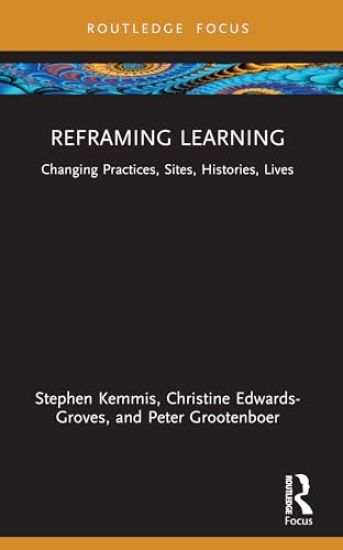
Reframing Learning

Reframing Learning

Stephen Kemmis; Christine Edwards-Groves; Peter Grootenboer

TAYLOR FRANCIS LTD
2026
nidottu
Disrupting the individualism of much conventional psychological research into learning, this book presents a situated, practice-based understanding of learning, based on the theories of situated learning and practice architectures, conceptualising learning as ontological transformation. While accepting that learning is consequential for learners, this book explores how learning matters for and in the world. The authors present a view of learning not just in the context of the lives of learners and those around them, but as part of the dynamic and organic site-ontological processes of world-historical and ecological change. While learners may be stars in their own lives and learning, they are also living, agentic beings who are part of Earth’s community of life and who respond to the changing world in ways that are consequential beyond their own lives. The book explores the place of learning from the point of view of the world as much as from the point of view of the learner. Distinctively, the book conceptualises learning as a social accomplishment and as a process that changes the worlds beyond individual learners. A groundbreaking contribution from the leading scholars in the field, this book will be of great interest to scholars, researchers, and post-graduate students of education, social science, and philosophy, and the specific fields of professional practice, practice theory, learning sciences, and sociology.
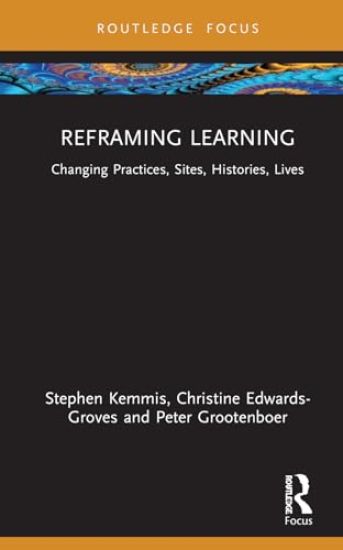
Reframing Learning

Reframing Learning

Stephen Kemmis; Christine Edwards-Groves; Peter Grootenboer

TAYLOR FRANCIS LTD
2024
sidottu
Disrupting the individualism of much conventional psychological research into learning, this book presents a situated, practice-based understanding of learning, based on the theories of situated learning and practice architectures, conceptualising learning as ontological transformation. While accepting that learning is consequential for learners, this book explores how learning matters for and in the world. The authors present a view of learning not just in the context of the lives of learners and those around them, but as part of the dynamic and organic site-ontological processes of world-historical and ecological change. While learners may be stars in their own lives and learning, they are also living, agentic beings who are part of Earth’s community of life and who respond to the changing world in ways that are consequential beyond their own lives. The book explores the place of learning from the point of view of the world as much as from the point of view of the learner. Distinctively, the book conceptualises learning as a social accomplishment and as a process that changes the worlds beyond individual learners. A groundbreaking contribution from the leading scholars in the field, this book will be of great interest to scholars, researchers, and post-graduate students of education, social science, and philosophy, and the specific fields of professional practice, practice theory, learning sciences, and sociology.
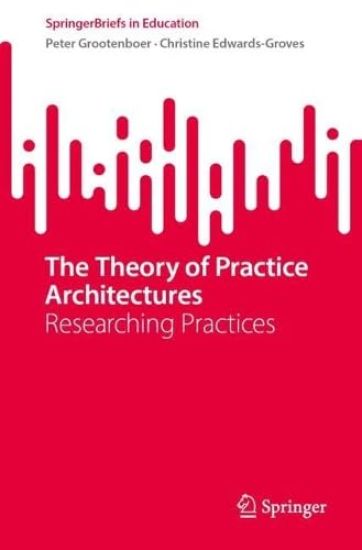
The Theory of Practice Architectures

The Theory of Practice Architectures

Peter Grootenboer; Christine Edwards-Groves

SPRINGER VERLAG, SINGAPORE
2024
nidottu
This book provides an overview of the Theory of Practice Architectures (TPA), and the associated Theory of Ecology of Practices, in a manner accessible for a broader audience. The authors are part of the authorial team that developed the Theory of Practice Architectures from a strong empirical base, with its initial publication in 'Changing Practices, Changing Education' (Kemmis et al., Springer, 2014). This book follows on from that publication with a singluar focus on the Theory of Practice Architectures, and shows how it can be used as a theoretical framework for a range of empirical research projects. It first outlines and describes both the Theory of Practice Architectures and the Theory of Ecology of Practices, illustrating them with a range of relevant practical examples. Then, it focuses explicitly on designing and undertaking empirical research, analyzing data and reporting findings using the Theory of Practice Architectures. In this way, this book shows specifically and overtly explicate ways that research can be designed, and how data can be collected and analyzed, drawing on the Theory of Practice Architectures as a foundational framework. It also showcases a range of specific examples to allow readers to see the ideas as they have been employed in practice.
Middle Leadership in Schools

Middle Leadership in Schools

Peter Grootenboer; Christine Edwards-Groves; Karin Rönnerman

Routledge
2020
sidottu
Middle leading refers to those teachers that both teach and have leadership roles, and thus can bridge the gap between the practices of learning and the managemant of schooling. Focusing on the practices of middle leaders, this book addresses the current lack of support and professional development for middle leaders in educational settings. Middle Leadership in Schools positions middle leaders as professional leaders, and an integral part of educational and professional development in schools and other educational institutions. Drawing on empirical research spanning four countries, this book provides readers with a conceptual framework to understand middle leading and shows how middle leading practices unfold in real educational contexts. This is a valuable resource that goes beyond a theoretical conversation about middle leaders to provide readers with practical applications based on extensive research undertaken by the authors. The book is divided into seven chapters, each of which include reflective discussion questions and recommended readings to promote collaborative engagement with the text. Chapters cover topics such as how middle leading is shaped in practice, its role in professional development and its impact on schools. Illustrating to middle leaders how they can develop their leadership skills, the book will also be of interest to school principals and other senior leaders as a guide to supporting their middle leaders.
Middle Leadership in Schools

Middle Leadership in Schools

Peter Grootenboer; Christine Edwards-Groves; Karin Rönnerman

Routledge
2020
nidottu
Middle leading refers to those teachers that both teach and have leadership roles, and thus can bridge the gap between the practices of learning and the managemant of schooling. Focusing on the practices of middle leaders, this book addresses the current lack of support and professional development for middle leaders in educational settings. Middle Leadership in Schools positions middle leaders as professional leaders, and an integral part of educational and professional development in schools and other educational institutions. Drawing on empirical research spanning four countries, this book provides readers with a conceptual framework to understand middle leading and shows how middle leading practices unfold in real educational contexts. This is a valuable resource that goes beyond a theoretical conversation about middle leaders to provide readers with practical applications based on extensive research undertaken by the authors. The book is divided into seven chapters, each of which include reflective discussion questions and recommended readings to promote collaborative engagement with the text. Chapters cover topics such as how middle leading is shaped in practice, its role in professional development and its impact on schools. Illustrating to middle leaders how they can develop their leadership skills, the book will also be of interest to school principals and other senior leaders as a guide to supporting their middle leaders.
The Practices of School Middle Leadership

The Practices of School Middle Leadership

Peter Grootenboer

Springer Verlag, Singapore
2018
nidottu
This book uses practice theory to examine the role of ‘middle-leadership’. In particular, it investigates the practices of ‘leading in the middle’ in the cultural-discursive, material-economic, and social-political domains – i.e., the sayings, doings and relatings of middle leading. This perspective acknowledges the ecological arrangement of leading practices in schools, and the necessity of considering the unavoidable reality of the site. The analysis is used to promote the need to view leading in the middle as a form of praxis – a morally and ethically informed practice that requires thoughtful decision-making and action in situations where the outcomes are not always clear. This book focuses on the practice of leading for those in ‘middle management’ positions in primary and secondary schools, such as those responsible for curriculum leadership, including senior teachers, assistant principals, and curriculum leaders. In their positions that bridge ‘management’ and ‘the classroom’ they are significant leaders in promoting and sustaining effective pedagogy for good learning outcomes, and they have to continue to provide high-quality teaching in their own classrooms, while simultaneously being a mentor, coach, supporter and evaluator for their colleagues.
Att leda från mitten : lärare som driver professionell utveckling

Att leda från mitten : lärare som driver professionell utveckling

Karin Rönnerman; Christine Edwards-Groves; Peter Grootenboer

Lärarförlaget
2018
nidottu
För en mellanledare är det inte antingen eller utan både och. Mellanledare är ett vanligt inslag i skolan idag. Det handlar om lärare med ledande roller, till exempel handledare, mentorer, förebilder, förhandlare, professionella utvecklare och ledare. Genom sin nyckelroll och sitt nära ledarskap kan de åstadkomma verklig förändring i klassrummet och i skolan. Boken skapar en grundlig förståelse för detta komplexa uppdrag. Den rymmer också gott om förslag och verktyg som hjälper dig som mellanledare att utveckla din egen ledande praktik. Karin Rönnerman är professor i pedagogik vid Göteborgs universitet. Boken bygger på forskning som hon bedrivit tillsammans med de australiska professorerna Christine Edwards-Groves och Peter Grootenboer. Den ges även ut på engelska. "En del böcker vet du att du har saknat redan första gången du läser dem. För mig är det här en av dessa böcker." Ur förordet av Lisbeth Gyllander Torkildsen, forsknings- och utbildningschef i Landskrona. INNEHÅLLFörordEn bok jag har saknat InledningKAPITEL 1 Att leda från mittenVem är mellanledare? MellanledandeAtt förstå mellanledandeGenererat ledarskap och tillitKAPITEL 2 Mellanledande i relation till andra praktikerVarför teori för att förstå praktiken? Mot en förståelse av en teori för social praktikHur mellanledande anknyter till andra praktikerMellanledande i relation till utbildningspraktikernas sammanhangUtrymme för mellanledande i skolanRum för ömsesidigt meningsskapandePraktikarkitekturer möjliggör och begränsar mellanledandePraktikarkitekturer och deras arrangemangMellanledande en praktikutvecklande praktikKAPITEL 3Professionellt lärande, aktionsforskning och förändringAktionsforskning som en väg att förbättra praktikerAtt skapa kommunikativa rumKontinuitet i samtalenUtveckling av olika sorters kunskapFostra nya generationer genererar nya händelserKAPITEL 4Berättelser från fältetReflektion över berättelsernaKAPITEL 5Till sist, vad innebär det att vara mellanledare? Mellanledande innefattar både ledande och undervisandeAtt knyta ihop säckenReferenser
The Practices of School Middle Leadership

The Practices of School Middle Leadership

Peter Grootenboer

Springer Verlag, Singapore
2018
sidottu
This book uses practice theory to examine the role of ‘middle-leadership’. In particular, it investigates the practices of ‘leading in the middle’ in the cultural-discursive, material-economic, and social-political domains – i.e., the sayings, doings and relatings of middle leading. This perspective acknowledges the ecological arrangement of leading practices in schools, and the necessity of considering the unavoidable reality of the site. The analysis is used to promote the need to view leading in the middle as a form of praxis – a morally and ethically informed practice that requires thoughtful decision-making and action in situations where the outcomes are not always clear. This book focuses on the practice of leading for those in ‘middle management’ positions in primary and secondary schools, such as those responsible for curriculum leadership, including senior teachers, assistant principals, and curriculum leaders. In their positions that bridge ‘management’ and ‘the classroom’ they are significant leaders in promoting and sustaining effective pedagogy for good learning outcomes, and they have to continue to provide high-quality teaching in their own classrooms, while simultaneously being a mentor, coach, supporter and evaluator for their colleagues.
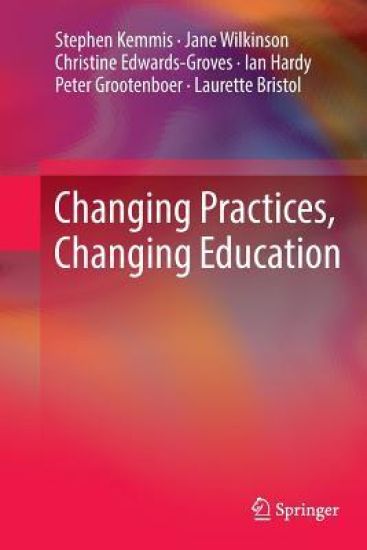
Changing Practices, Changing Education

Changing Practices, Changing Education

Stephen Kemmis; Jane Wilkinson; Christine Edwards-Groves; Ian Hardy; Peter Grootenboer; Laurette Bristol

Springer Verlag, Singapore
2016
nidottu

Halvin toimitettuna 142,50 €

This book aims to help teachers and those who support them to re-imagine the work of teaching, learning and leading. In particular, it shows how transformations of educational practice depend on complementary transformations in classroom-school- and system-level organisational cultures, resourcing and politics. It argues that transforming education requires more than professional development to transform teachers; it also calls for fundamental changes in learning and leading practices, which in turn means reshaping organisations that support teachers and teaching – organisational cultures, the resources organisations provide and distribute, and the relationships that connect people with one another in organisations. The book is based on findings from new research being conducted by the authors – the research team for the (2010-2012) Australian Research Council-funded Discovery Project Leading and Learning: Developing Ecologies of Educational Practice.
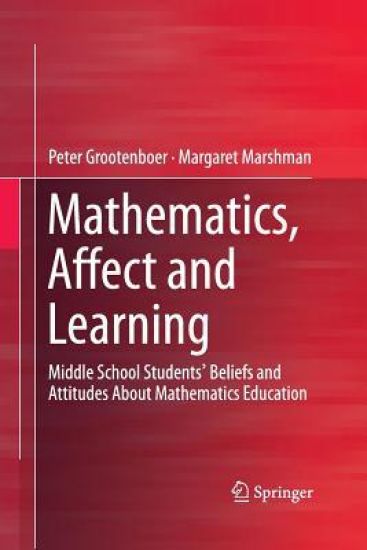
Mathematics, Affect and Learning

Mathematics, Affect and Learning

Peter Grootenboer; Margaret Marshman

Springer Verlag, Singapore
2016
nidottu
This book examines the beliefs, attitudes, values and emotions of students in Years 5 to 8 (aged 10 to 14 years) about mathematics and mathematics education. Fundamentally, this book focuses on the development of affective views and responses towards mathematics and mathematics learning. Furthermore, it seems that students develop their more negative views of mathematics during the middle school years (Years 5 to 8), and so here we concentrate on students in this critical period. The book is based on a number of empirical studies, including an enquiry undertaken with 45 children in Years 5 and 6 in one school; a large-scale quantitative study undertaken with students from a range of schools across diverse communities in New Zealand; and two related small-scale studies with junior secondary students in Australia. This book brings substantial, empirically-based evidence to the widely held perception that many students have negative views of mathematics, and these affective responses develop during the middle years of school. The data for this book were collected with school students, and students who were actually engaged in learning mathematics in their crucial middle school years. The findings reported and discussed here are relevant for researchers and mathematics educators, policy makers and curriculum developers, and teachers and school principals engaged in the teaching of mathematics.
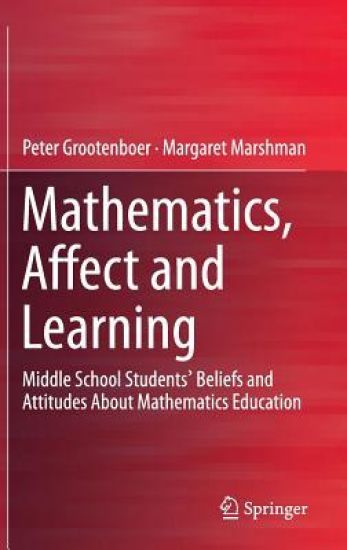
Mathematics, Affect and Learning

Mathematics, Affect and Learning

Peter Grootenboer; Margaret Marshman

Springer Verlag, Singapore
2015
sidottu
This book examines the beliefs, attitudes, values and emotions of students in Years 5 to 8 (aged 10 to 14 years) about mathematics and mathematics education. Fundamentally, this book focuses on the development of affective views and responses towards mathematics and mathematics learning. Furthermore, it seems that students develop their more negative views of mathematics during the middle school years (Years 5 to 8), and so here we concentrate on students in this critical period. The book is based on a number of empirical studies, including an enquiry undertaken with 45 children in Years 5 and 6 in one school; a large-scale quantitative study undertaken with students from a range of schools across diverse communities in New Zealand; and two related small-scale studies with junior secondary students in Australia. This book brings substantial, empirically-based evidence to the widely held perception that many students have negative views of mathematics, and these affective responses develop during the middle years of school. The data for this book were collected with school students, and students who were actually engaged in learning mathematics in their crucial middle school years. The findings reported and discussed here are relevant for researchers and mathematics educators, policy makers and curriculum developers, and teachers and school principals engaged in the teaching of mathematics.
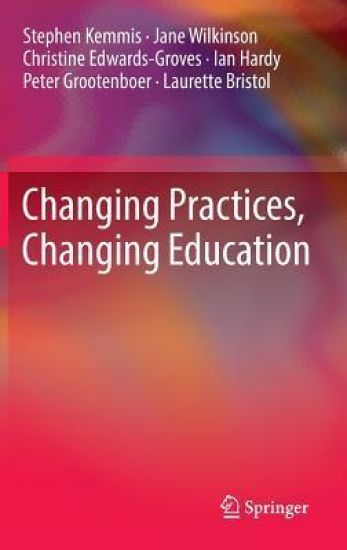
Changing Practices, Changing Education

Changing Practices, Changing Education

Stephen Kemmis; Jane Wilkinson; Christine Edwards-Groves; Ian Hardy; Peter Grootenboer; Laurette Bristol

Springer Verlag, Singapore
2013
sidottu
This book aims to help teachers and those who support them to re-imagine the work of teaching, learning and leading. In particular, it shows how transformations of educational practice depend on complementary transformations in classroom-school- and system-level organisational cultures, resourcing and politics. It argues that transforming education requires more than professional development to transform teachers; it also calls for fundamental changes in learning and leading practices, which in turn means reshaping organisations that support teachers and teaching – organisational cultures, the resources organisations provide and distribute, and the relationships that connect people with one another in organisations. The book is based on findings from new research being conducted by the authors – the research team for the (2010-2012) Australian Research Council-funded Discovery Project Leading and Learning: Developing Ecologies of Educational Practice.