Kirjojen hintavertailu – 12 859 818 kirjaa ja 27 kauppaa

Kirjailija

Peter Heather

Kirjat ja teokset yhdessä paikassa: 30 kirjaa, julkaisuja vuosilta 1991–2026, suosituimpiin kuuluu Geopolitikens återkomst : striden om framtidens historia. Vertaile teosten hintoja ja tarkista saatavuus suomalaisista kirjakaupoista.

30 kirjaa

Kirjojen julkaisuvuodet: 1991–2026.

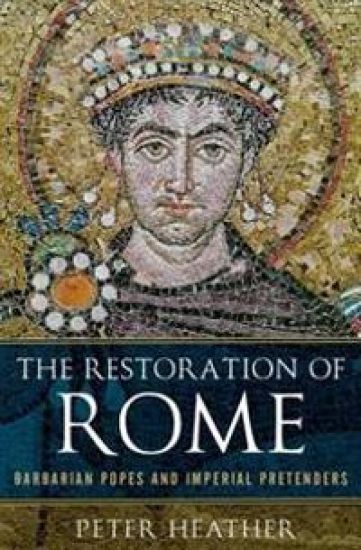
Restoration of Rome: Barbarian Popes and Imperial Pretenders
In 476 AD, the last of Rome's emperors, known as "Augustulus," was deposed by a barbarian general, the son of one of Attila the Hun's henchmen. With the imperial vestments dispatched to Constantinople, the curtain fell on the Roman empire in Western Europe, its territories divided among successor kingdoms constructed around barbarian military manpower. But, if the Roman Empire was dead, Romans across much of the old empire still lived, holding on to their lands, their values, and their institutions. The conquering barbarians, responding to Rome's continuing psychological dominance and the practical value of many of its institutions, were ready to reignite the imperial flame and enjoy the benefits. As Peter Heather shows in dazzling biographical portraits, each of the three greatest immediate contenders for imperial power--Theoderic, Justinian, and Charlemagne--operated with a different power base but was astonishingly successful in his own way. Though each in turn managed to put back together enough of the old Roman West to stake a plausible claim to the Western imperial title, none of their empires long outlived their founders' deaths. Not until the reinvention of the papacy in the eleventh century would Europe's barbarians find the means to establish a new kind of Roman Empire, one that has lasted a thousand years. A sequel to the bestselling Fall of the Roman Empire, The Restoration of Rome offers a captivating narrative of the death of an era and the birth of the Catholic Church.
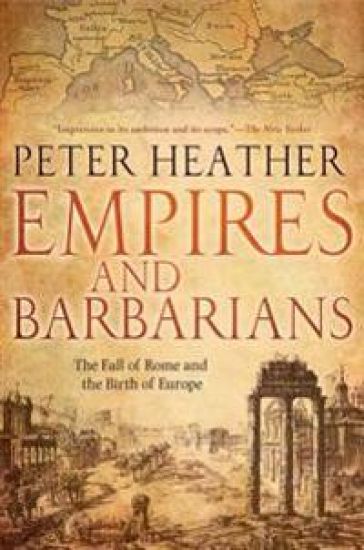
Empires and Barbarians: The Fall of Rome and the Birth of Europe

Empires and Barbarians: The Fall of Rome and the Birth of Europe

Peter Heather

Oxford University Press, USA
2012
nidottu

Halvin toimitettuna 26,90 €

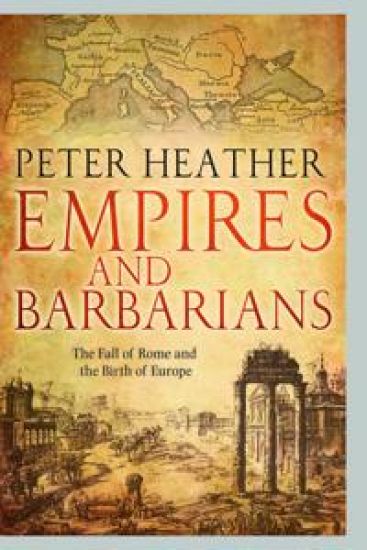
Empires and Barbarians presents a fresh, provocative look at how a recognizable Europe came into being in the first millennium AD. With sharp analytic insight, Peter Heather explores the dynamics of migration and social and economic interaction that changed two vastly different worlds--the undeveloped barbarian world and the sophisticated Roman Empire--into remarkably similar societies and states. The book's vivid narrative begins at the time of Christ, when the Mediterranean circle, newly united under the Romans, hosted a politically sophisticated, economically advanced, and culturally developed civilization--one with philosophy, banking, professional armies, literature, stunning architecture, even garbage collection. The rest of Europe, meanwhile, was home to subsistence farmers living in small groups, dominated largely by Germanic speakers. Although having some iron tools and weapons, these mostly illiterate peoples worked mainly in wood and never built in stone. The farther east one went, the simpler it became: fewer iron tools and ever less productive economies. And yet ten centuries later, from the Atlantic to the Urals, the European world had turned. Slavic speakers had largely superseded Germanic speakers in central and Eastern Europe, literacy was growing, Christianity had spread, and most fundamentally, Mediterranean supremacy was broken. Bringing the whole of first millennium European history together, and challenging current arguments that migration played but a tiny role in this unfolding narrative, Empires and Barbarians views the destruction of the ancient world order in light of modern migration and globalization patterns.
The Fall of the Roman Empire

The Fall of the Roman Empire

Peter Heather

Oxford University Press Inc
2009
nidottu

Halvin toimitettuna 30,00 €

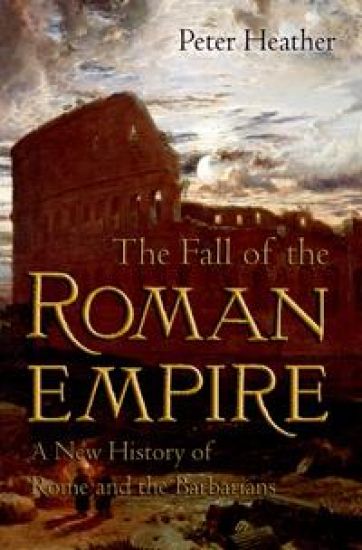
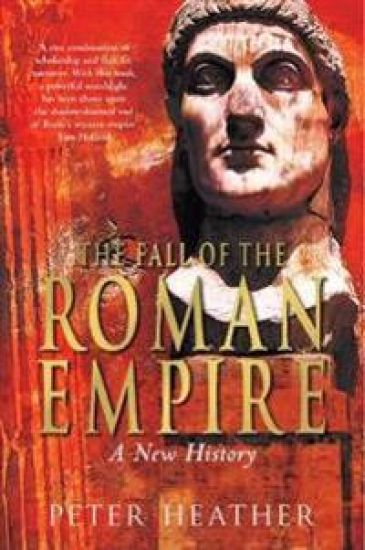
The death of the Roman Empire is one of the perennial mysteries of world history. Now, in this groundbreaking book, Peter Heather proposes a stunning new solution: Centuries of imperialism turned the neighbors Rome called barbarians into an enemy capable of dismantling an Empire that had dominated their lives for so long. A leading authority on the late Roman Empire and on the barbarians, Heather relates the extraordinary story of how Europe's barbarians, transformed by centuries of contact with Rome on every possible level, eventually pulled the empire apart. He shows first how the Huns overturned the existing strategic balance of power on Rome's European frontiers, to force the Goths and others to seek refuge inside the Empire. This prompted two generations of struggle, during which new barbarian coalitions, formed in response to Roman hostility, brought the Roman west to its knees. The Goths first destroyed a Roman army at the battle of Hadrianople in 378, and went on to sack Rome in 410. The Vandals spread devastation in Gaul and Spain, before conquering North Africa, the breadbasket of the Western Empire, in 439. We then meet Attila the Hun, whose reign of terror swept from Constantinople to Paris, but whose death in 453 ironically precipitated a final desperate phase of Roman collapse, culminating in the Vandals' defeat of the massive Byzantine Armada: the west's last chance for survival. Peter Heather convincingly argues that the Roman Empire was not on the brink of social or moral collapse. What brought it to an end were the barbarians.
Empires and Barbarians

Empires and Barbarians

Peter Heather

Oxford University Press Inc
2009
sidottu

Halvin toimitettuna 47,40 €

Empires and Barbarians presents a fresh, provocative look at how a recognizable Europe came into being in the first millennium AD. With sharp analytic insight, Peter Heather explores the dynamics of migration and social and economic interaction that changed two vastly different worlds--the undeveloped barbarian world and the sophisticated Roman Empire--into remarkably similar societies and states. The book's vivid narrative begins at the time of Christ, when the Mediterranean circle, newly united under the Romans, hosted a politically sophisticated, economically advanced, and culturally developed civilization--one with philosophy, banking, professional armies, literature, stunning architecture, even garbage collection. The rest of Europe, meanwhile, was home to subsistence farmers living in small groups, dominated largely by Germanic speakers. Although having some iron tools and weapons, these mostly illiterate peoples worked mainly in wood and never built in stone. The farther east one went, the simpler it became: fewer iron tools and ever less productive economies. And yet ten centuries later, from the Atlantic to the Urals, the European world had turned. Slavic speakers had largely superseded Germanic speakers in central and Eastern Europe, literacy was growing, Christianity had spread, and most fundamentally, Mediterranean supremacy was broken. Bringing the whole of first millennium European history together, and challenging current arguments that migration played but a tiny role in this unfolding narrative, Empires and Barbarians views the destruction of the ancient world order in light of modern migration and globalization patterns.
The Fall of the Roman Empire

The Fall of the Roman Empire

Peter Heather

Pan Books
2006
pokkari

Halvin toimitettuna 22,70 €

The epic story of the inevitable fall of Rome's gloryIn The Fall of the Roman Empire, Peter Heather skillfully weaves a captivating tale of an ancient and long-lasting superpower that crumbled within the short space of a century. Its downfall was not instigated by massive rebellions or towering foes but by a small group of German-speaking asylum-seekers who audaciously defeated a vast Roman army and killed an Emperor, slowly eroding the bedrock of an empire that stood tall for over four hundred years. Heather's engaging narrative exposes the intricate dynamics that culminated in the empire's fateful decline. This extraordinary story pierces the glamour of the gilded imperial court, and delves into Rome’s interactions with Europe's barbarians, who, after centuries of contact, gradually weakened and eventually dismantled the empire. Hailed as 'triumphant' and 'fascinating', The Fall of the Roman Empire offers a masterful blend of meticulous analysis and vivid storytelling, providing fresh insights into an enigmatic chapter of history that continues to captivate the minds of historians and enthusiasts alike.
The Goths

The Goths

Peter Heather

JOHN WILEY AND SONS LTD
1998
nidottu
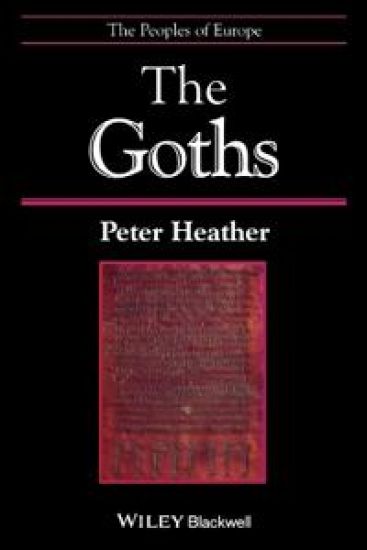
The volume is divided into three parts, corresponding to the three main phases in Gothic history: their early history down to the fourth century, the revolution in Gothic society set in motion by the arrival of the Huns, and the history of the Gothic successor states to the western Roman Empire. At its heart lies a new vision of Gothic identity, and of the social caste by whom it was defined and transmitted.
The Goths

The Goths

Peter Heather

Blackwell Publishers
1996
sidottu
The volume is divided into three parts, corresponding to the three main phases in Gothic history: their early history down to the fourth century, the revolution in Gothic society set in motion by the arrival of the Huns, and the history of the Gothic successor states to the western Roman Empire. At its heart lies a new vision of Gothic identity, and of the social caste by whom it was defined and transmitted.
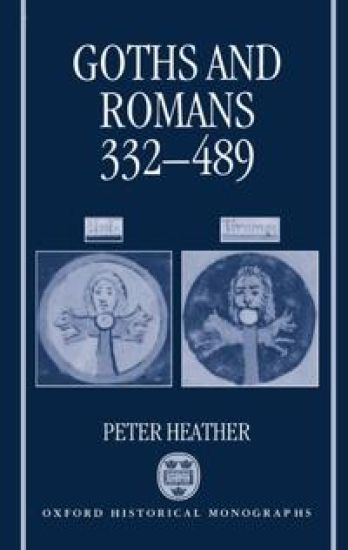
Goths and Romans 332-489

Goths and Romans 332-489

Peter Heather

Clarendon Press
1994
nidottu
This book examines the collision of Goths and Romans in the fourth and fifth centuries. In these years Gothic tribes played a major role in the destruction of the western half of the Roman Empire, establishing successor states in southern France and Spain (the Visigoths) and in Italy (the Ostrogoths). Our understanding of the Goths in this 'Migration Period' has been based upon the Gothic historian Jordanes, whose mid-sixth-century Getica suggests that the Visigothes and Ostrogoths entered the Empire already established as coherent groups and simply conquered new territories. Using more contemporary sources, Peter Heather is able to show that, on the contrary, Visigoths and Ostrogoths were new and unprecedentedly large social groupings, and that many Gothic societies failed even to survive the upheavals of the Migration Period. Dr Heather's scholarly study explores the complicated interactions with Roman power which both prompted the creation of the Visigoths and Ostrogoths around newly emergent dynasties and helped bring about the fall of the Roman Empire.
Goths and Romans 332-489

Goths and Romans 332-489

Peter Heather

Clarendon Press
1991
sidottu
This is a scholarly study of the collision of Goths and Romans in the fourth and fifth centuries. Gothic tribes played a major role in the destruction of the western half of the Roman Empire between 350 and 500, establishing successor kingdoms in southern France and Spain (the Visigoths), and in Italy (the Ostrogoths). Our historical understanding of this `Migration Period' has been based upon the Gothic historian Jordanes, whose mid-sixth-century Getica suggests that the Visigoths and Ostrogoths entered the Empire already established as coherent groups and simply conquered new territories. Using the available contemporary sources, Peter Heather is able to show that, on the contrary, the Visigoths and Ostrogoths were new and unprecedentedly large social groupings at this time, and that many Gothic societies failed even to survive the upheavals of the Migration Period. Dr Heather's scholarly study explores the development of Visigothic and Ostrogothic societies, their rise to power, and the complicated interactions with the Romans which helped bring about the fall of the Roman Empire.