Kirjojen hintavertailu – 12 903 725 kirjaa ja 27 kauppaa

Kirjailija

Peter Heine

Kirjat ja teokset yhdessä paikassa: 10 kirjaa, julkaisuja vuosilta 2004–2026, suosituimpiin kuuluu Food Culture in the Near East, Middle East, and North Africa. Vertaile teosten hintoja ja tarkista saatavuus suomalaisista kirjakaupoista.

10 kirjaa

Kirjojen julkaisuvuodet: 2004–2026.

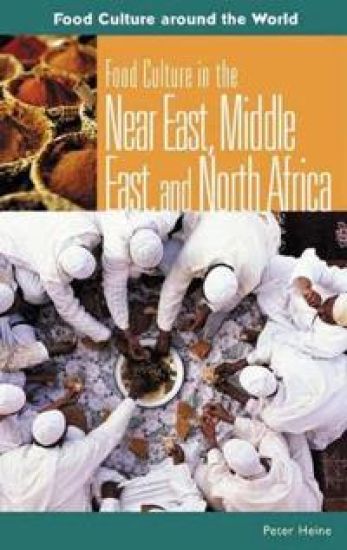
Food Culture in the Near East, Middle East, and North Africa
The similar cuisines of the Near East, Middle East, and North Africa stem from ancient cultures and variable climates, ranging from Mediterranean to desert. The major monotheistic religions developed in the Middle East, and students and other readers will learn how religious strictures on food and drink continue to play an important role in eating habits there today for Muslims, Jews, and Christians. Most of the population in the regions is Arab, and therefore the emphasis in this volume is mainly on the Arab Muslim food cultures. The impact of colonialism, globalization, and modernization of the foodways is also discussed in the topical chapters. This thorough overview provides huge insight into the lives of everyday people in the regions through their food culture. One chapter describes the major foodstuffs and how they are used. Another discusses gender roles and cooking, the use of cookbooks, and details the typical kitchen and its contents, from appliances to utensils. A chapter on typical meals shows the daily rituals of the various peoples. The Eating Out chapter provides a fascinating look at the workings and décor of small, traditional restaurants, the popularity of picnics, and more. Next, food in the context of religious holidays and life-cycle celebrations is discussed. Finally, traditional folk and modern beliefs about diet and health round out the coverage.

The Culinary Crescent

The Culinary Crescent

Peter Heine

Gingko Library
2020
nidottu
The Fertile Crescent region has long been regarded as pivotal to the rise of civilisation. Alongside the story of human development, innovation, and progress, there is a culinary tradition of equal richness and importance. The Culinary Crescent shows Heine’s deep knowledge of the cookery traditions of the Umayyad, Abbasid, Ottoman, Safavid, and Mughal courts. In addition to a fascinating history, Heine presents more than seventy recipes—from the modest to the extravagant—with dishes ranging from those created by the celebrity chefs of the bygone Mughal era, up to gastronomically complex presentations of modern times. Beautifully produced, and designed for both reading and cooking, The Culinary Crescent is sure to provide a delectable window into the history of food in the Middle East.
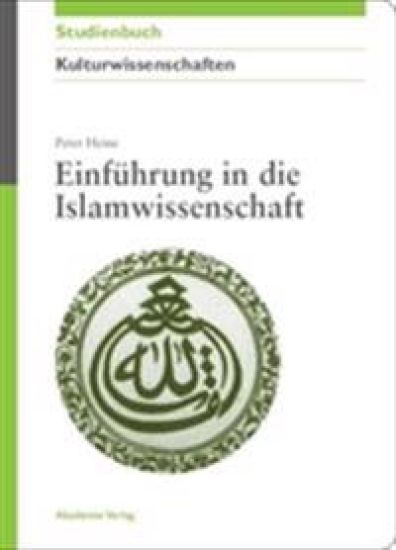
Einführung in die Islamwissenschaft

Einführung in die Islamwissenschaft

Peter Heine

De Gruyter
2018
isokokoinen pokkari
Das Buch bietet einen Überblick über Geschichte und Entwicklung des Islam von den Anfängen zur Weltreligion. Behandelt werden Themen wie Koranauslegungen und Glaubenstraditionen, Rechte und Pflichten der Gläubigen, die Verbreitung des Islam im Abendland, Politik und Religion: Einheit oder Widerspruch? Toleranz oder Terrorismus? Daneben werden Kunst und Architektur untersucht und Aspekte von Kulturtransfer und politischem Austausch beleuchtet.
From Mesopotamia to Iraq

From Mesopotamia to Iraq

Hans J. Nissen; Peter Heine

University of Chicago Press
2009
nidottu
The recent reopening of Iraq's National Museum attracted worldwide attention, underscoring the country's dual image as both the cradle of civilization and a contemporary geopolitical battleground. A sweeping account of the rich history that has played out between these chronological poles, "From Mesopotamia to Iraq" looks back through ten thousand years of the region's deeply significant yet increasingly overshadowed past. Hans J. Nissen and Peter Heine begin by explaining how ancient Mesopotamian inventions - including urban society, a system of writing, and mathematical texts that anticipated Pythagoras - profoundly influenced the course of human history. These towering innovations, they go on to reveal, have sometimes obscured the major role Mesopotamia continued to play on the world stage. Alexander the Great, for example, was fascinated by Babylon and eventually died there. Seventh-century Muslim armies made the region one of their first conquests outside the Arabian peninsula. And the Arab caliphs who ruled for centuries after the invasion built the magnificent city of Baghdad, attracting legions of artists and scientists. Tracing the evolution of this vibrant country into a contested part of the Ottoman Empire, a twentieth-century British colony, a republic ruled by Saddam Hussein, and the democracy it has become, Nissen and Heine repair the fragmented image of Iraq that has come to dominate our collective imagination. In hardly any other continuously inhabited part of the globe can we chart such developments in politics, economy, and culture across so extended a period of time. By doing just that, the authors illuminate nothing less than the forces that have made the world what it is today.
From Mesopotamia to Iraq

From Mesopotamia to Iraq

Hans J. Nissen; Peter Heine

University of Chicago Press
2009
sidottu
The recent reopening of Iraq's National Museum attracted worldwide attention, underscoring the country's dual image as both the cradle of civilization and a contemporary geopolitical battleground. A sweeping account of the rich history that has played out between these chronological poles, "From Mesopotamia to Iraq" looks back through ten thousand years of the region's deeply significant yet increasingly overshadowed past. Hans J. Nissen and Peter Heine begin by explaining how ancient Mesopotamian inventions - including urban society, a system of writing, and mathematical texts that anticipated Pythagoras - profoundly influenced the course of human history. These towering innovations, they go on to reveal, have sometimes obscured the major role Mesopotamia continued to play on the world stage. Alexander the Great, for example, was fascinated by Babylon and eventually died there. Seventh-century Muslim armies made the region one of their first conquests outside the Arabian peninsula. And the Arab caliphs who ruled for centuries after the invasion built the magnificent city of Baghdad, attracting legions of artists and scientists. Tracing the evolution of this vibrant country into a contested part of the Ottoman Empire, a twentieth-century British colony, a republic ruled by Saddam Hussein, and the democracy it has become, Nissen and Heine repair the fragmented image of Iraq that has come to dominate our collective imagination. In hardly any other continuously inhabited part of the globe can we chart such developments in politics, economy, and culture across so extended a period of time. By doing just that, the authors illuminate nothing less than the forces that have made the world what it is today.
Einführung in Die Islamwissenschaft

Einführung in Die Islamwissenschaft

Peter Heine

Walter de Gruyter
2008
pokkari
- Geschichte und Entwicklung des Islams von den Anfangen zur Weltreligion - Koranauslegungen und Glaubenstraditionen, Rechte und Pflichten der Glaubigen - Verbreitung im Abendland - Politik und Religion im Islam: Einheit oder Widerspruch? Toleranz oder Terrorismus? - Kulturtransfer und politischer Austausch: Erfahrung des Fremden in West und Ost - Kunst und Architektur im Islam"
Islam zur Einführung

Islam zur Einführung

Peter Heine

JUNIUS VERLAG GMBH
2005
nidottu
Einen systematischen Überblick zum Thema Islam, verständlich geschrieben und für eine breite Zielgruppe geeignet, bietet die Einführung von Peter Heine, Professor für Islamwissenschaft in Berlin. In dieser Einführung wird deutlich, dass Dschihad und Märtyrervorstellungen, wie sie unmittelbar nach dem 11. September im Vordergrund des Interesses standen, nur Teilaspekte einer alten und komplexen Religion und Kultur sind. Heine erklärt die Glaubensvorstellungen und die rituelle Praxis einer Religion, die mehr als 1400 Jahre alt ist und sich vom Senegal im Westen bis zur indonesisch-malayischen Inselwelt im Osten erstreckt. Zur Sprache kommen dabei u.a. die islamischen Glaubenspflichten, z. B. Gebet, Fasten und Almosen, und das islamische Recht.