Kirjailija
Peter Holland
Kirjat ja teokset yhdessä paikassa: 13 kirjaa, julkaisuja vuosilta 1979–2023, suosituimpiin kuuluu Developing Organisational Competitiveness through New Patterns of Work. Vertaile teosten hintoja ja tarkista saatavuus suomalaisista kirjakaupoista.
13 kirjaa
Kirjojen julkaisuvuodet: 1979–2023.
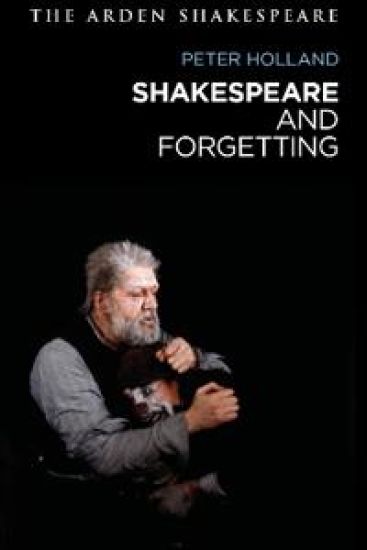
What does it signify when a Shakespearean character forgets something or when Hamlet determines to 'wipe away all trivial fond records'? How might forgetting be an act to be performed, or be linked to forgiveness, such as when in The Winter's Tale Cleomenes encourages Leontes to 'forget your evil. / With them, forgive yourself'? And what do we as readers and audiences forget of Shakespeare's works and of the performances we watch? This is the first book devoted to a broad consideration of how Shakespeare explores the concept of forgetting and how forgetting functions in performance. A wide-ranging study of how Shakespeare dramatizes forgetting, it offers close readings of Shakespeare's plays, considering what Shakespeare forgot and what we forget about Shakespeare. The book touches on an equally broad range of forgetting theory from antiquity through to the present day, of forgetting in recent novels and films, and of creative ways of making sense of how our world constructs the cultural meaning of and anxiety about forgetting. Drawing on dozens of productions across the history of Shakespeare on stage and film, the book explores Shakespeare’s dramaturgy, from characters who forget what they were about to say, to characters who leave the stage never to return, from real forgetting to performed forgetting, from the mad to the powerful, from playgoers to Shakespeare himself.
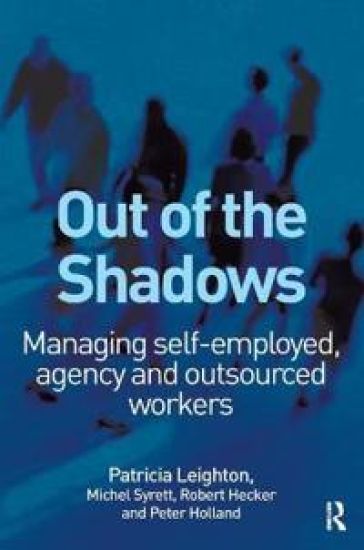
Out of the Shadows
Michel Syrett; Patricia Leighton; Robert Hecker; Peter Holland
Routledge
2017
sidottu
Over half of all people working on behalf of any given organization are typically not their own employees. Some are freelance contractors working in their own right. A significant proportion is employed to provide these services by another firm, under agency or outsourcing service agreements. The services they perform under these agreements are often vital in supporting the organization‘s customer relationships, reputation and brand identity. Yet, remarkably, little attention has been paid to how thesenon-employees are managed, motivated and meaningfully engaged. Management protocol generally sees them as outside the organization‘s remit or control. The law paints them as victims. This ground-breaking book challenges both these assumptions. Through a combination of pioneering legal analysis and rigorous case-study research, it demonstrates that non-employees are often the organization‘s most important hidden resource. Patricia Leighton and her collaborators highlight the limited good practice that is available, based on examples in large corporations, public sector organizations and smaller firms in a variety of countries. More importantly she clearly sets out the issues and imperatives employers should address, supported by new management concepts and models of effective practice developed specifically for the book. Far from being victims, she argues, non-employees often choose flexible working patterns for their own intrinsic ends and have ambitions, career aspirations and workplace needs that can be responded to and exploited by forward-looking employers. Looking at the role they now play, these people are no longer marginal, atypical or peripheral as they are still termed and regarded by both legal and management practitioners. They are, however, still in the shadows in terms of the literature available on how best to de
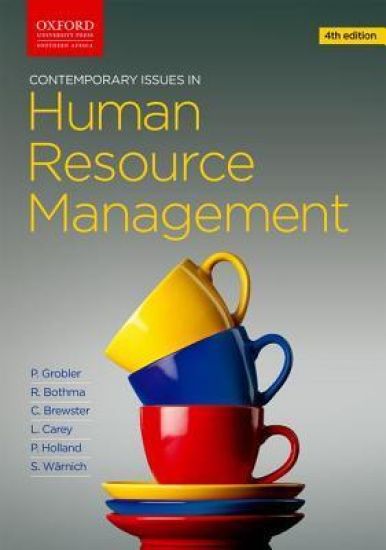
Contemporary Issues in Human Resource Management
Rob Bothma; Chris Brewster; Lorraine Carey; Peter Holland; Surette Warnich
Oxford University Press Southern Africa
2012
nidottu
Contemporary Issues in Human Resource Management 4e, is written by a team of international authors presenting the latest thinking on HRM in today's organisations. There is a strong focus on applying current theories and models to successful companies, both within the global and local contexts. The latest research in the field of HRM is used to demonstrate topical issues with a strategic and innovative perspective.
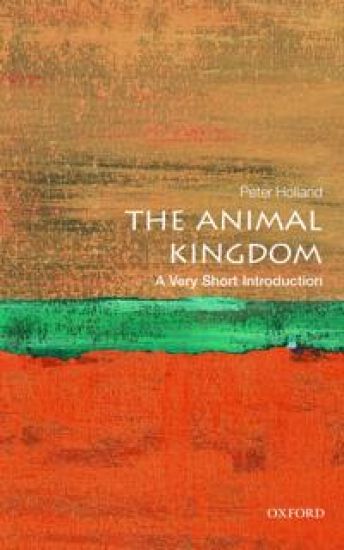
The animal world is immensely diverse, and our understanding of it has been greatly enhanced by analysis of DNA and the study of evolution and development ('evo-devo'). In this Very Short Introduction Peter Holland presents a modern tour of the animal kingdom. Beginning with the definition of animals (not obvious in biological terms), he takes the reader through the high-level groupings of animals (phyla) and new views on their evolutionary relationships based on molecular data, together with an overview of the biology of each group of animals. The phylogenetic view is central to zoology today and the volume will be of great value to all students of the life sciences, as well as providing a concise summary for the interested general reader. ABOUT THE SERIES: The Very Short Introductions series from Oxford University Press contains hundreds of titles in almost every subject area. These pocket-sized books are the perfect way to get ahead in a new subject quickly. Our expert authors combine facts, analysis, perspective, new ideas, and enthusiasm to make interesting and challenging topics highly readable.
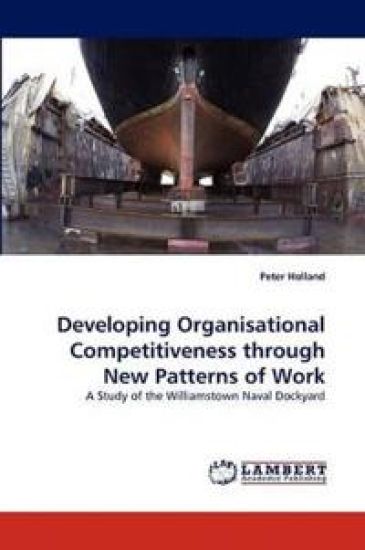
Developing Organisational Competitiveness through New Patterns of Work
Peter Holland
LAP Lambert Academic Publishing
2010
pokkari
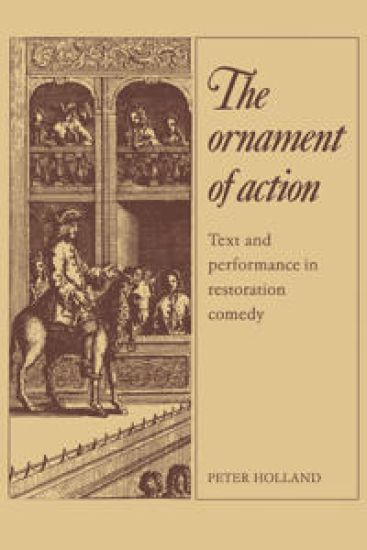
How was Restoration comedies performed on the Restoration stage? How did Wycherley or Congreve expect their plays to be acted? How much were they influenced by theatrical conditions and conventions? What happened in performance, when the plays were graced with 'the ornament of action'? In this book, which was originally published in 1979, Peter Holland brings together the disciplines of theatre history and literary criticism in a close study of the manner and significance of the staging of plays in the Restoration. The dramatists, working with the strengths and weaknesses of their own theatre companies very much in mind, are shown using a whole range of staging techniques in order to help their audience understand their plays. The reader can visualise the plays as they must have looked at the time of the original performance. Throughout he challenges the conventional distinction between text and performance, and seeks to turn us from readers into spectators.
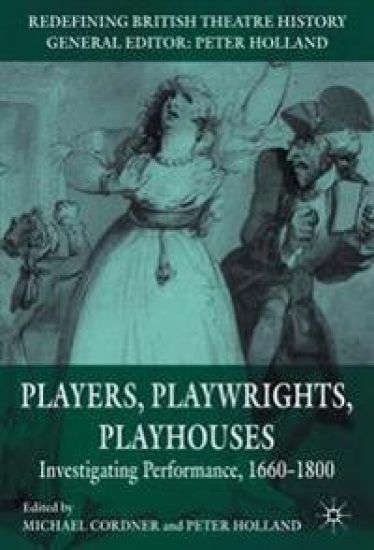
This book brings together theatre historians to identify and exemplify a variety of productive new approaches to the investigation of plays, players, playwrights, playhouses and other aspects of theatre in the long eighteenth century. Their inquiries range from stage censorship and anti-theatricalism to the political resonances of adultery comedy.
Out of the Shadows
Michel Syrett; Patricia Leighton; Robert Hecker; Peter Holland
Butterworth-Heinemann Ltd
2006
nidottu
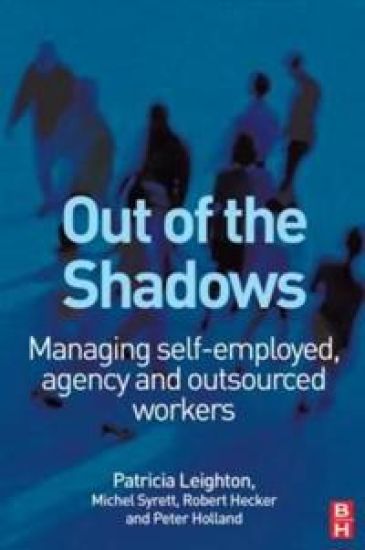
Over half of all people working on behalf of any given organization are typically not their own employees. Some are freelance contractors working in their own right. A significant proportion is employed to provide these services by another firm, under agency or outsourcing service agreements. The services they perform under these agreements are often vital in supporting the organization’s customer relationships, reputation and brand identity. Yet, remarkably, little attention has been paid to how these ‘non-employees’ are managed, motivated and meaningfully engaged. Management protocol generally sees them as outside the organization’s remit or control. The law paints them as victims. This ground-breaking book challenges both these assumptions. Through a combination of pioneering legal analysis and rigorous case-study research, it demonstrates that non-employees are often the organization’s most important hidden resource. Patricia Leighton and her collaborators highlight the limited good practice that is available, based on examples in large corporations, public sector organizations and smaller firms in a variety of countries. More importantly she clearly sets out the issues and imperatives employers should address, supported by new management concepts and models of effective practice developed specifically for the book. Far from being victims, she argues, non-employees often choose flexible working patterns for their own intrinsic ends and have ambitions, career aspirations and workplace needs that can be responded to and exploited by forward-looking employers. “Looking at the role they now play, these people are no longer marginal, atypical or peripheral as they are still termed and regarded by both legal and management practitioners. They are, however, still in the shadows in terms of the literature available on how best to develop and motivate them. This book aims to rectify this.”
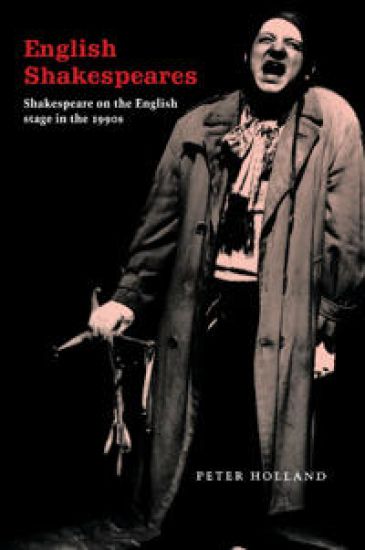
Based on Peter Holland’s wide experience as a reviewer of stage productions, the book explores the full extent of Shakespeare performances in England over the last decade. As a regular reviewer for Shakespeare Survey and the BBC, Holland has examined the variety, the strengths and the problems of English productions. His introduction points out general themes which are taken up in the detailed chronological account of productions by several English companies, including the Royal Shakespeare Company, the National Theatre, Cheek by Jowl, Northern Broadsides and the English Shakespeare Company. A final chapter compares the English experience with productions elsewhere. Peter Holland’s reviews are individually thoughtful, provocative and illuminating; cumulatively they show that there is no one English Shakespeare style but a rich and often bewildering variety.
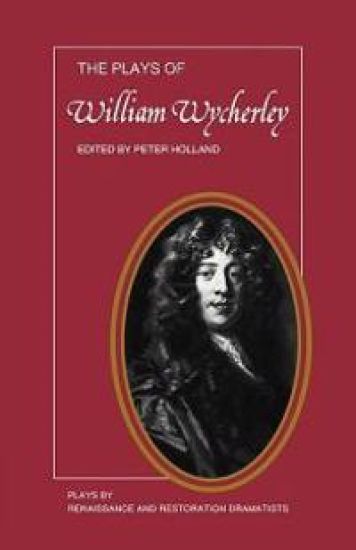
`Mr Wycherley is universally allowed the first place among the English comic poets who have writ since Ben Jonson. His Plain-Dealer is the best comedy that ever was composed in any language.' Yet in spite of the extreme praise many of his contemporaries accorded to his work, William Wycherley (1641–1715) is now only remembered for one play, The Country Wife. Even though The Country Wife is frequently performed by both amateur and professional companies (including a production at the National Theatre in 1977), Wycherley's three other plays, Love in a Wood, The Gentleman Dancing-Master and The Plain-Dealer, are rarely read and even more rarely performed. But Wycherley's satire is as sharp now as ever and his revelation of the follies and crimes of his society is still both wickedly funny and savagely perceptive.
How was Restoration comedies performed on the Restoration stage? How did Wycherley or Congreve expect their plays to be acted? How much were they influenced by theatrical conditions and conventions? What happened in performance, when the plays were graced with 'the ornament of action'? In this book, which was originally published in 1979, Peter Holland brings together the disciplines of theatre history and literary criticism in a close study of the manner and significance of the staging of plays in the Restoration. The dramatists, working with the strengths and weaknesses of their own theatre companies very much in mind, are shown using a whole range of staging techniques in order to help their audience understand their plays. The reader can visualise the plays as they must have looked at the time of the original performance. Throughout he challenges the conventional distinction between text and performance, and seeks to turn us from readers into spectators.