Kirjojen hintavertailu – 12 903 725 kirjaa ja 27 kauppaa

Kirjailija

Peter Hulme

Kirjat ja teokset yhdessä paikassa: 8 kirjaa, julkaisuja vuosilta 1996–2022, suosituimpiin kuuluu The Dinner at Gonfarone’s. Vertaile teosten hintoja ja tarkista saatavuus suomalaisista kirjakaupoista.

8 kirjaa

Kirjojen julkaisuvuodet: 1996–2022.

The Dinner at Gonfarone’s

The Dinner at Gonfarone’s

Peter Hulme

LIVERPOOL UNIVERSITY PRESS
2022
nidottu
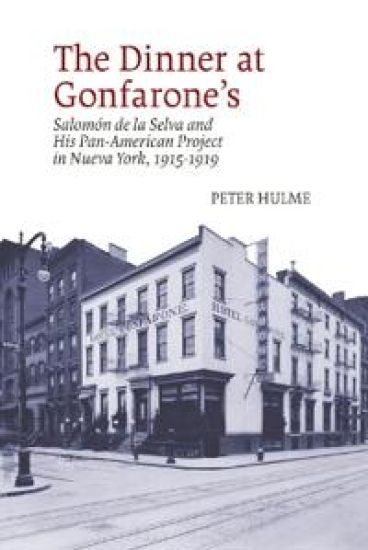
The Dinner at Gonfarone’s is organised as a partial biography, covering five years in the life of the young Nicaraguan poet, Salomón de la Selva, but it also offers a literary geography of Hispanic New York (Nueva York) in the turbulent years around the First World War. De la Selva is of interest because he stands as the largely unacknowledged precursor of Latino writers like Junot Díaz and Julia Álvarez, writing the first book of poetry in English by an Hispanic author. In addition, through what he called his pan-American project, de la Selva brought together in New York writers from all over the American continent. He put the idea of trans-American literature into practice long before the concept was articulated. De la Selva’s range of contacts was enormous, and this book has been made possible through discovery of caches of letters that he wrote to famous writers of the day, such as Edwin Markham and Amy Lowell, and especially Edna St Vincent Millay. Alongside de la Selva’s own poetry – his book Tropical Town (1918) and a previously unknown 1916 manuscript collection – The Dinner at Gonfarone’s highlights other Hispanic writing about New York in these years by poets such as Rubén Darío, José Santos Chocano, and Juan Ramón Jiménez, all of whom were part of de la Selva’s extensive network.
Writing, Travel and Empire

Writing, Travel and Empire

Peter Hulme; Russell McDougall

Bloomsbury Academic
2020
nidottu
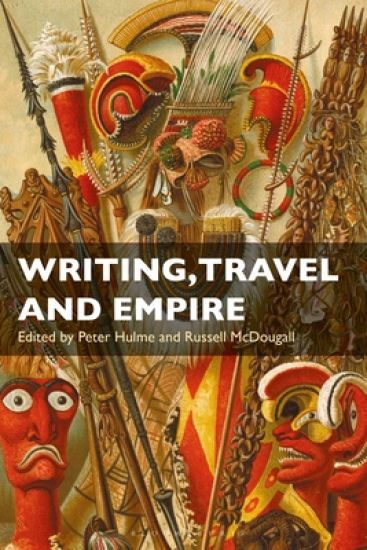
The British Empire drew on the talents of many remarkable figures, whose lives reveal a wonderfully rich involvement with the crucial issues of the period. In many cases they left a legacy of travel writing, novels, biography and ethnography which made important contributions to our knowledge of other cultures." Writing, Travel and Empire" explores the lives and writings of eight such figures, including Sir George Grey, Gertrude Bell, Sir Hugh Clifford, and Roger Casement. All travelled the Empire - from Grey, the renowned colonial governor who undertook dangerous journeys to the interior of Australia, to Tom Harrisson, the emaciated polymath, war hero and Arctic explorer, whose time in the New Hebrides embraced both cannibalistic rituals and a meeting with film legend Douglas Fairbanks Sr, who sought Harrisson out for a Hollywood feature about savage life. All saw themselves as writers, despite their very different approaches and interests, and each was writing against a backdrop of the impending disappearance of indigenous cultures around the world. Writing from the margins of what was shortly to become the more formalised discipline of anthropology, their work yields interesting insights into both the issues of empire and the ways in which academic disciplines define the boundaries of their subject. Embracing themes such as gender and travel, racial science, the globalisation of 'native management' and the internal colonies, and with a geographical coverage that extends from South America to Russia via Africa and the South Seas, "Writing Travel and Empire" will engage all those with an interest in cultural geography, anthropology, history, postcolonial studies, biography and travel writing.
The Dinner at Gonfarone’s

The Dinner at Gonfarone’s

Peter Hulme

Liverpool University Press
2019
sidottu
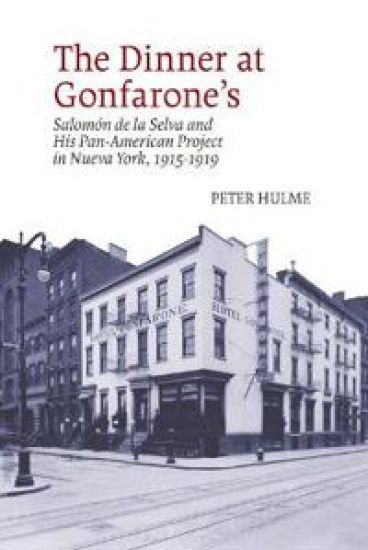
The Dinner at Gonfarone’s is organised as a partial biography, covering five years in the life of the young Nicaraguan poet, Salomón de la Selva, but it also offers a literary geography of Hispanic New York (Nueva York) in the turbulent years around the First World War. De la Selva is of interest because he stands as the largely unacknowledged precursor of Latino writers like Junot Díaz and Julia Álvarez, writing the first book of poetry in English by an Hispanic author. In addition, through what he called his pan-American project, de la Selva brought together in New York writers from all over the American continent. He put the idea of trans-American literature into practice long before the concept was articulated. De la Selva’s range of contacts was enormous, and this book has been made possible through discovery of caches of letters that he wrote to famous writers of the day, such as Edwin Markham and Amy Lowell, and especially Edna St Vincent Millay. Alongside de la Selva’s own poetry – his book Tropical Town (1918) and a previously unknown 1916 manuscript collection – The Dinner at Gonfarone’s highlights other Hispanic writing about New York in these years by poets such as Rubén Darío, José Santos Chocano, and Juan Ramón Jiménez, all of whom were part of de la Selva’s extensive network.
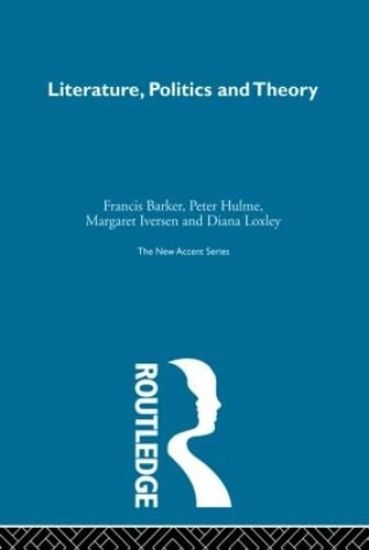
Literature Politics & Theory

Literature Politics & Theory

Francis Barker; Peter Hulme; Margaret Iversen; Diana Loxley

Routledge
2013
nidottu
First Published in 2002. Modes and categories inherited from the past no longer seem to fit the reality experienced by a new generation. ‘New Accents’ is intended as a positive response to the initiative offered by such a situation. Each volume in the series will seek to encourage rather than resist the process of change, to stretch rather than reinforce the boundaries that currently define literature and its academic study. The present selection of papers, made from nearly two hundred published, represents in some measure the diversity of the work at the eight Essex Sociology of Literature Conferences.
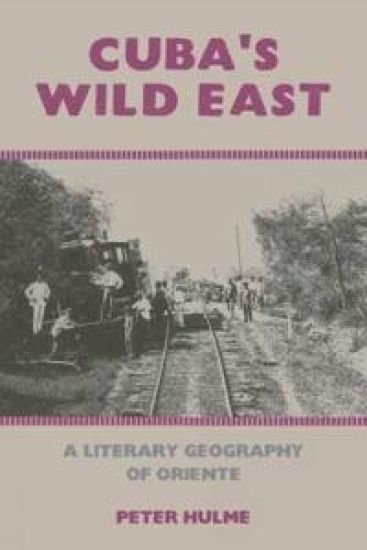
Cuba’s Wild East

Cuba’s Wild East

Peter Hulme

Liverpool University Press
2011
sidottu
Cuba’s Wild East: A Literary Geography of Oriente recounts a literary history of modern Cuba that has four distinctive and interrelated characteristics. Oriented to the east of the island, it looks aslant at a Cuban national literature that has sometimes been indistinguishable from a history of Havana. Given the insurgent and revolutionary history of that eastern region, it recounts stories of rebellion, heroism, and sacrifice. Intimately related to places and sites which now belong to a national pantheon, its corpus—while including fiction and poetry—is frequently written as memoir and testimony. As a region of encounter, that corpus is itself resolutely mixed, featuring a significant proportion of writings by US journalists and novelists as well as by Cuban writers.
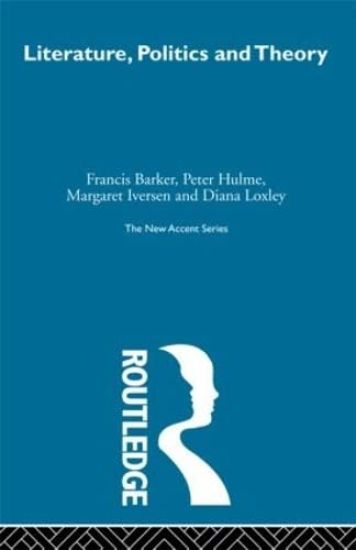
Literature Politics & Theory

Literature Politics & Theory

Francis Barker; Peter Hulme; Margaret Iversen; Diana Loxley

Routledge
2002
sidottu
First Published in 2002. Modes and categories inherited from the past no longer seem to fit the reality experienced by a new generation. ‘New Accents’ is intended as a positive response to the initiative offered by such a situation. Each volume in the series will seek to encourage rather than resist the process of change, to stretch rather than reinforce the boundaries that currently define literature and its academic study. The present selection of papers, made from nearly two hundred published, represents in some measure the diversity of the work at the eight Essex Sociology of Literature Conferences.
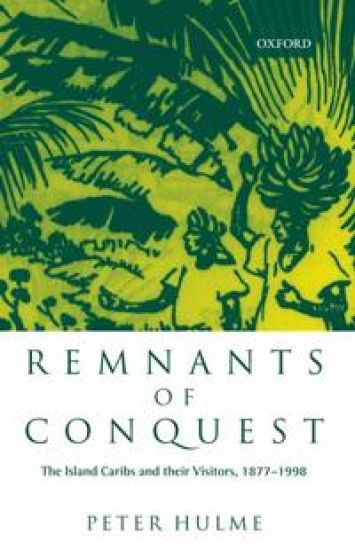
Remnants of Conquest

Remnants of Conquest

Peter Hulme

Oxford University Press
2000
sidottu
In 1877 a US ornithologist stumbled across a small indigenous Caribbean population, the Caribs, still living in a remote part of the small island of Dominica. His account of his stay among the Caribs started a trickle of visitors which grew to a steady stream and is now in the full flood of mass tourism. Remnants of Conquest offers an account and analysis of these visitors' writings as they struggle to understand the way of life of a twentieth-century indigenous community, inhabitants of a postcolonial world. The visitors who have followed the ornithologist's footsteps include the novelist Jean Rhys, who was fulfilling a childhood ambition, a colonial officer who expected to meet Red Indians in warpaint, a British naval officer who bombarded the Reserve with starshells, and an anthropologist who settled on the island with a Carib woman. Through this close focus on a small place extensively written about, Remnants of Conquest raises crucial questions about the postcolonial perceptions of indigeneity.
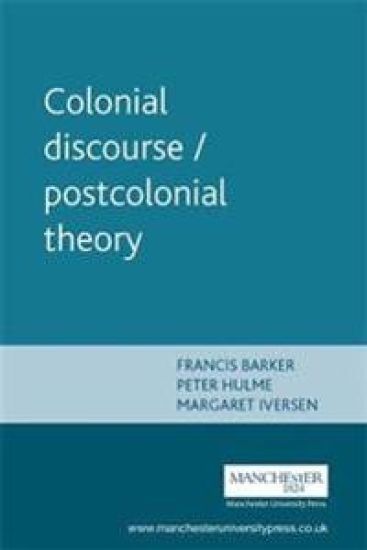
Colonial Discourse / Postcolonial Theory

Colonial Discourse / Postcolonial Theory

Francis Barker; Peter Hulme; Margaret Iverson

Manchester University Press
1996
nidottu
The issues of colonialism and imperialism have recently come to the forefront of thinking in the humanities. Disciplines such as history, literature and anthropology are taking stock of their extensive and usually unacknowledged legacy of Empire. At the same time, contemporary cultural theory has had to respond to post-colonial pressure, with its different registers and agendas. This volume ranges, geographically, from Brazil to India and South Africa, from the Andes to the Caribbean and the USA. This range is matched by a breadth of historical perspectives. Central to the whole volume is a critique of the very idea of the "postcolonial" itself. Contributors include Annie Coombes, Simon During, Peter Hulme, Neil Lazarus, David Lloyd, Anne McClintock, Zita Nunes, Benita Parry, Graham Pechey, Mary Louise Pratt, Renato Rosaldo and Gayatri Chakravorty Spivak.