Kirjojen hintavertailu – 12 859 828 kirjaa ja 27 kauppaa

Kirjailija

Peter J. Hotez

Kirjat ja teokset yhdessä paikassa: 12 kirjaa, julkaisuja vuosilta 2009–2025, suosituimpiin kuuluu Pandemics, Poverty, and Politics. Vertaile teosten hintoja ja tarkista saatavuus suomalaisista kirjakaupoista.

12 kirjaa

Kirjojen julkaisuvuodet: 2009–2025.

Pandemics, Poverty, and Politics

Pandemics, Poverty, and Politics

Tyler B. Evans; Peter J. Hotez; David Mabey

Johns Hopkins University Press
2025
pokkari
A compelling exploration of how socio-political factors like inequality and poverty exacerbate pandemics. In a world where millions perish from preventable diseases amid unprecedented wealth and technological advancement, Pandemics, Poverty, and Politics illuminates a central paradox of our times. This compelling work by a seasoned physician and global health leader unravels the complex web of social, political, and economic factors driving pandemics and other public health crises. Drawing from over two decades of experience in the public health field, Tyler B. Evans, MD, MS, MPH, presents a unique and deeply personal narrative. The book begins with a foundational introduction to social medicine and health systems, as well as the social and political determinants of health. Dr. Evans provides readers with examples of every major pandemic starting with the turn of the twentieth century to current times—beginning with the third plague and ending with COVID-19—highlighting the common social and political drivers of these outbreaks. Fractured health systems worsened by social disruption place inordinate stress on societies and disproportionately impact the most vulnerable. These historic examples of pandemics in addition to more contemporary examples of ongoing epidemics and major public health concerns ranging from malaria and neglected tropical diseases to influenza, HIV/AIDS, diarrheal diseases, Ebola, and tuberculosis reinforce how sociopolitical factors build upon each other. Case in point: high population stress following political repression and unrest in apartheid South Africa contributed to a major outbreak of HIV in the 1990s, as did multinational diamond mining and minimal infrastructure help precipitate the worst ebola outbreak in history in Sierra Leone. While scientific advancements have progressed, the failure to address underlying social inequities leaves us vulnerable to even more devastating health crises. This book is an essential read for public health and health care professionals, policymakers, social science researchers, students, and anyone committed to understanding and mitigating the complex factors that underpin global health emergencies.
Science Under Siege: How to Fight the Five Most Powerful Forces That Threaten Our World

Science Under Siege: How to Fight the Five Most Powerful Forces That Threaten Our World

Michael E. Mann; Peter J. Hotez

PublicAffairs
2025
sidottu

Halvin toimitettuna 28,70 €

Two of the world's most respected scientists reveal the forces behind the dangerous anti-science movement--and show us how to fight back From pandemics to the climate crisis, humanity faces tougher challenges than ever. Whether it's the health of our people or the health of our planet, we know we are on an unsustainable path. But our efforts to effectively tackle these existential crises are now hampered by a common threat: politically and ideologically motivated opposition to science. Michael E. Mann and Peter J. Hotez are two of the most respected and well-known scientists in the world and have spent the last twenty years on the front lines of the battle to convey accurate, reliable, and trustworthy information about science in the face of determined and nihilistic opposition. In this powerful manifesto, they reveal the five main forces threatening science: plutocrats, pros, petrostates, phonies, and the press. It is a call to arms and a road map for dismantling the forces of anti-science. Armed with the information in this book, we can be empowered to promote scientific truths, shine light on channels of dark money, dismantle the corporations poisoning the planet, and ultimately avert disaster.
The Deadly Rise of Anti-science

The Deadly Rise of Anti-science

Peter J. Hotez

Johns Hopkins University Press
2025
pokkari
Dr. Peter Hotez discusses how the antivaccine movement became a dangerous political campaign promoted by elected officials and amplified by news media, causing thousands of American deaths. Shortlisted for the Non-Obvious Book Awards by the Non-Obvious CompanyDuring the height of the COVID-19 pandemic, one renowned scientist, in his famous bowtie, appeared daily on major news networks such as MSNBC, NPR, the BBC, and others. Dr. Peter J. Hotez often went without sleep, working around the clock to develop a nonprofit COVID-19 vaccine and to keep the public informed. During that time, he was one of the most trusted voices on the pandemic and was even nominated for a Nobel Peace Prize for his selfless work. He also became one of the main targets of anti-science rhetoric that gained traction through conservative news media. In this eyewitness story of how the anti-vaccine movement grew into a dangerous and prominent anti-science element in American politics, Hotez describes the devastating impacts it has had on Americans' health and lives. As a scientist who has endured antagonism from anti-vaxxers and been at the forefront of both essential scientific discovery and advocacy, Hotez is uniquely qualified to tell this story. By weaving his personal experiences together with information on how the anti-vaccine movement became a tool of far-right political figures around the world, Hotez opens readers' eyes to the dangers of anti-science. He explains how anti-science became a major societal and lethal force: in the first years of the pandemic, more than 200,000 unvaccinated Americans needlessly died despite the widespread availability of COVID-19 vaccines. Even as he paints a picture of the world under a shadow of aggressive ignorance, Hotez demonstrates his innate optimism, offering solutions for how to combat science denial and save lives in the process.
The Deadly Rise of Anti-science

The Deadly Rise of Anti-science

Peter J. Hotez

Johns Hopkins University Press
2023
sidottu
Dr. Peter Hotez discusses how an antivaccine movement became a dangerous political campaign promoted by elected officials and amplified by news media, causing thousands of American deaths. During the height of the COVID-19 pandemic, one renowned scientist, in his famous bowtie, appeared daily on major news networks such as MSNBC, NPR, the BBC, and others. Dr. Peter J. Hotez often went without sleep, working around the clock to develop a nonprofit COVID-19 vaccine and to keep the public informed. During that time, he was one of the most trusted voices on the pandemic and was even nominated for a Nobel Peace Prize for his selfless work. He also became one of the main targets of anti-science rhetoric that gained traction through conservative news media. In this eyewitness story of how the anti-vaccine movement grew into a dangerous and prominent anti-science element in American politics, Hotez describes the devastating impacts it has had on Americans' health and lives. As a scientist who has endured antagonism from anti-vaxxers and been at the forefront of both essential scientific discovery and advocacy, Hotez is uniquely qualified to tell this story. By weaving his personal experiences together with information on how the anti-vaccine movement became a tool of far-right political figures around the world, Hotez opens readers' eyes to the dangers of anti-science. He explains how anti-science became a major societal and lethal force: in the first years of the pandemic, more than 200,000 unvaccinated Americans needlessly died despite the widespread availability of COVID-19 vaccines. Even as he paints a picture of the world under a shadow of aggressive ignorance, Hotez demonstrates his innate optimism, offering solutions for how to combat science denial and save lives in the process.
Preventing the Next Pandemic

Preventing the Next Pandemic

Peter J. Hotez

Johns Hopkins University Press
2021
sidottu
The last five years saw a significant return of epidemic infectious disease, culminating in COVID-19. In our new post–COVID-19 world, how do we prevent future illnesses by expanding scientific and vaccine diplomacy and cooperation, especially to combat the problems that humans have brought on ourselves? Modern diseases and viruses have been spurred anew by war and conflict as well as shifting poverty, urbanization, climate change, and a new troubling anti-science/anti-vaccination outlook. From such twenty-first-century forces, we have seen declines in previous global health gains, with sharp increases in vaccine-preventable and neglected diseases on the Arabian Peninsula, in Venezuela, in parts of Africa, and even on the Gulf Coast of the United States. In Preventing the Next Pandemic, international vaccine scientist and tropical disease and coronavirus expert Peter J. Hotez, MD, PhD, argues that we can—and must—rely on vaccine diplomacy to address this new world order in disease and global health. Detailing his years in the lab developing new vaccines, Hotez also recounts his travels around the world to shape vaccine partnerships with people in countries both rich and poor in an attempt to head off major health problems. Building on the legacy of Dr. Albert Sabin, who developed the oral polio vaccine with Soviet scientists at the height of the Cold War, he explains how he is still working to refresh and redirect vaccine diplomacy toward neglected and newly emerging diseases. Hotez reveals how—during his Obama-era tenure as the US Science Envoy for the Middle East and North Africa, which coincided with both the rise in these geopolitical forces and climate change—he witnessed tropical infectious diseases and established vaccine partnerships that may still combat them up close. He explores why, since 2015, we've seen the decline of global cooperation and cohesion, to the detriment of those programs that are meant to benefit the most vulnerable people in the world. Unfortunately, Hotez asserts, these negative global events kick off a never-ending loop. Problems in a country may lead to disease outbreaks, but those outbreaks can lead to further problems—such as the impact of coronavirus on China's society and economy, which has been felt around the globe. Zeroing in on the sociopolitical and environmental factors that drive our most controversial and pressing global health concerns, Hotez proposes historically proven methods to soothe fraught international relations while preparing us for a safer, healthier future. He hammers home the importance of public engagement to communicate the urgency of embracing science during troubled times. Touching on a range of disease, from leishmaniasis, schistosomiasis, and Middle East Respiratory Syndrome (MERS) to COVID-19, Preventing the Next Pandemic has always been a timely goal, but it will be even more important in a COVID and post-COVID world.
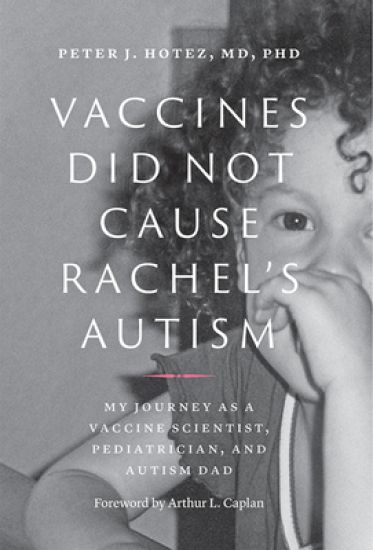
Vaccines Did Not Cause Rachel's Autism

Vaccines Did Not Cause Rachel's Autism

Peter J. Hotez; Arthur L. Caplan

Johns Hopkins University Press
2021
pokkari
Internationally renowned medical scientist, frequent media contributor, and autism dad Dr. Peter J. Hotez explains why vaccines do not cause autism. In 1994, Peter J. Hotez's nineteen-month-old daughter, Rachel, was diagnosed with autism. Dr. Hotez, a pediatrician-scientist who develops vaccines for neglected tropical diseases affecting the world's poorest people, became troubled by the decades-long rise of the influential anti-vaccine community and its inescapable narrative around childhood vaccines and autism. In Vaccines Did Not Cause Rachel's Autism, Hotez draws on his experiences as a pediatrician, vaccine scientist, and father of an autistic child. Outlining the arguments on both sides of the debate, he examines the science that refutes the concerns of the anti-vaccine movement, debunks current conspiracy theories alleging a cover-up by the Centers for Disease Control and Prevention, and critiques the scientific community's failure to effectively communicate the facts about vaccines and autism to the general public, all while sharing his very personal story of raising a now-adult daughter with autism. A uniquely authoritative account, this important book persuasively provides evidence for the genetic basis of autism and illustrates how the neurodevelopmental pathways of autism are under way before birth. Dr. Hotez reminds readers of the many victories of vaccines over disease while warning about the growing dangers of the anti-vaccine movement, especially in the United States and Europe. Now, with the anti-vaccine movement reenergized in our COVID-19 era, this book is especially timely. Vaccines Did Not Cause Rachel's Autism is a must-read for parent groups, child advocates, teachers, health-care providers, government policymakers, health and science policy experts, and anyone caring for a family member or friend with autism." When Peter Hotez—an erudite, highly trained scientist who is a true hero for his work in saving the world's poor and downtrodden—shares his knowledge and clinical insights along with his parental experience, when his beliefs in the value of what he does are put to the test of a life guiding his own child's challenges, then you must pay attention. You should. This book brings to an end the link between autism and vaccination."—from the foreword by Arthur L. Caplan, NYU School of Medicine
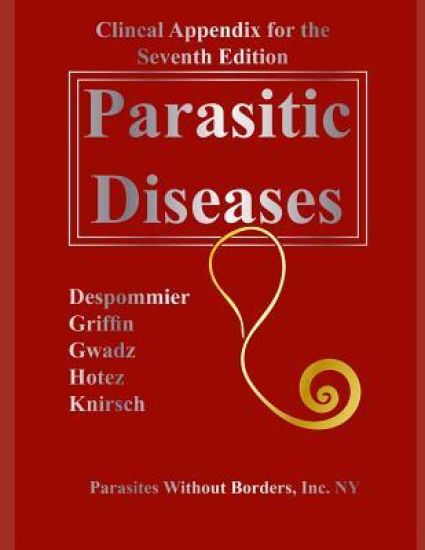
Clincal Appendix for the Seventh Edition Parasitic Diseases

Clincal Appendix for the Seventh Edition Parasitic Diseases

Dickson D. Despommier; Robert W. Gwadz; Peter J. Hotez

Independently Published
2019
nidottu
The accumulation of new knowledge over the last several years has provided the impetus for the 7th edition of Parasitic Diseases. By integrating all the salient information contained in over 1000 new references with the current descriptions of each pathogen, we continue the never-ending process of evaluating, revising, and improving our understanding of these parasitic organisms. New features for the 7th edition are many including this separate clinical appendix.
Parasitic Diseases 7th Edition

Parasitic Diseases 7th Edition

Daniel O. Griffin; Robert W. Gwadz; Peter J. Hotez

Independently Published
2019
nidottu
The accumulation of new knowledge over the last several years has provided the impetus for this, the 7th edition of Parasitic Diseases. By integrating all the salient information contained in over 1000 new references with the current descriptions of each pathogen, we continue the never-ending process of evaluating, revising, and improving our understanding of these parasitic organisms. New features to the 7th edition include a clinical summary section, additional life cycle diagrams and a pronouncer's guide to parasite names. Consideration of the biographies of those notable contributors to the field of parasitology has also been extended. Parasites Without Borders continues to make available, free of charge, the PDF version of Parasitic Diseases in both English and Spanish editions.
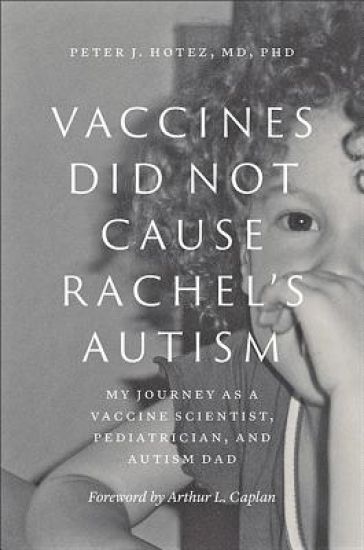
Vaccines Did Not Cause Rachel's Autism

Vaccines Did Not Cause Rachel's Autism

Peter J. Hotez; Arthur L. Caplan

Johns Hopkins University Press
2018
sidottu
Internationally renowned medical scientist, frequent media contributor, and autism dad Dr. Peter J. Hotez explains why vaccines do not cause autism. In 1994, Peter J. Hotez's nineteen-month-old daughter, Rachel, was diagnosed with autism. Dr. Hotez, a pediatrician-scientist who develops vaccines for neglected tropical diseases affecting the world's poorest people, became troubled by the decades-long rise of the influential anti-vaccine community and its inescapable narrative around childhood vaccines and autism. In Vaccines Did Not Cause Rachel's Autism, Hotez draws on his experiences as a pediatrician, vaccine scientist, and father of an autistic child. Outlining the arguments on both sides of the debate, he examines the science that refutes the concerns of the anti-vaccine movement, debunks current conspiracy theories alleging a cover-up by the Centers for Disease Control and Prevention, and critiques the scientific community's failure to effectively communicate the facts about vaccines and autism to the general public, all while sharing his very personal story of raising a now-adult daughter with autism. A uniquely authoritative account, this important book persuasively provides evidence for the genetic basis of autism and illustrates how the neurodevelopmental pathways of autism are under way before birth. Dr. Hotez reminds readers of the many victories of vaccines over disease while warning about the growing dangers of the anti-vaccine movement, especially in the United States and Europe. Now, with the anti-vaccine movement reenergized in our COVID-19 era, this book is especially timely. Vaccines Did Not Cause Rachel's Autism is a must-read for parent groups, child advocates, teachers, health-care providers, government policymakers, health and science policy experts, and anyone caring for a family member or friend with autism." When Peter Hotez—an erudite, highly trained scientist who is a true hero for his work in saving the world's poor and downtrodden—shares his knowledge and clinical insights along with his parental experience, when his beliefs in the value of what he does are put to the test of a life guiding his own child's challenges, then you must pay attention. You should. This book brings to an end the link between autism and vaccination."—from the foreword by Arthur L. Caplan, NYU School of Medicine
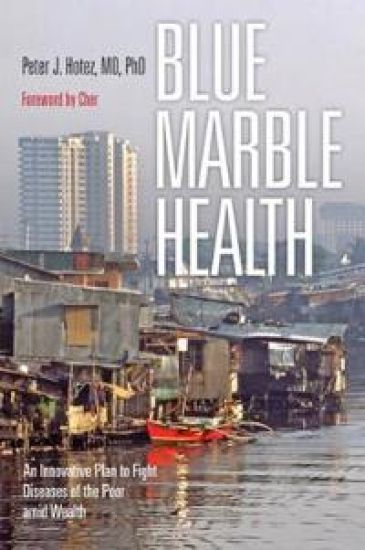
Blue Marble Health

Blue Marble Health

Peter J. Hotez

Johns Hopkins University Press
2016
pokkari
In 2011, Dr. Peter J. Hotez relocated to Houston to launch Baylor's National School of Tropical Medicine. He was shocked to discover that a number of neglected diseases often associated with developing countries were widespread in impoverished Texas communities. Despite the United States' economic prowess and first-world status, an estimated 12 million Americans living at the poverty level currently suffer from at least one neglected tropical disease, or NTD. Hotez concluded that the world's neglected diseases-which include tuberculosis, hookworm infection, lymphatic filariasis, Chagas disease, and leishmaniasis-are born first and foremost of extreme poverty. In this book, Hotez describes a new global paradigm known as "blue marble health," through which he asserts that poor people living in wealthy countries account for most of the world's poverty-related illness. He explores the current state of neglected diseases in such disparate countries as Mexico, South Korea, Argentina, Australia, the United States, Japan, and Nigeria. By crafting public policy and relying on global partnerships to control or eliminate some of the world's worst poverty-related illnesses, Hotez believes, it is possible to eliminate life-threatening disease while at the same time creating unprecedented opportunities for science and diplomacy. Clear, compassionate, and timely, Blue Marble Health is a must-read for leaders in global health, tropical medicine, and international development, along with anyone committed to helping the millions of people who are caught in the desperate cycle of poverty and disease.
Medical Parasitology

Medical Parasitology

Abhay R. Satoskar; Gary L. Simon; Peter J. Hotez; Moriya Tsuji

Landes Bioscience
2009
nidottu
Infections caused by parasites are still a major global health problem. Although parasitic infections are responsible for a significant morbidity and mortality in the developing countries, they are also prevalent in the developed countries. Early diagnosis and treatment of a parasitic infection is not only critical for preventing morbidity and mortality individually but also for reducing the risk of spread of infection in the community. This concise book gives an overview of critical facts for clinical and laboratory diagnosis, treatment and prevention of parasitic diseases which are common in humans and which are most likely to be encountered in a clinical practice. This book is a perfect companion for primary care physicians, residents, nurse practitioners, medical students, paramedics, other public health care personnel and as well as travelers.