Kirjojen hintavertailu – 12 859 819 kirjaa ja 27 kauppaa

Kirjailija

Peter Johnstone

Kirjat ja teokset yhdessä paikassa: 10 kirjaa, julkaisuja vuosilta 1998–2020, suosituimpiin kuuluu Planning and Managing Agricultural and Ecological Experiments. Vertaile teosten hintoja ja tarkista saatavuus suomalaisista kirjakaupoista.

10 kirjaa

Kirjojen julkaisuvuodet: 1998–2020.

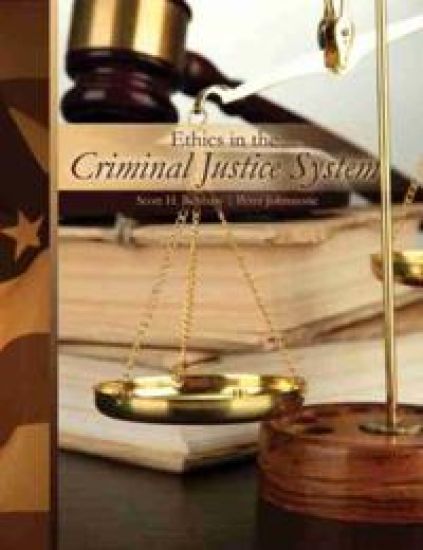
Ethics in the Criminal Justice System

Ethics in the Criminal Justice System

Scott H. Belshaw; Peter Johnstone; Leroy Deboer

Kendall/Hunt Publishing Co ,U.S.
2020
nidottu
Ethics in the Criminal Justice System explores ideas and information in and around ethical decision making as it pertains to criminal justice. As an edited volume, Ethics in the Criminal Justice System features contributing authors who have provided a varied and challenging palette of offerings from pure philosophy to common sense practical professional advice. Boldly luring readers into fascinating discussions, Ethics in the Criminal Justice Systemalerts students to the need for criminal justice practitioners to make informed, ethical judgments. Ethics in the Criminal Justice System:is practical and interesting.is stimulating and informative.is not about absolutes; it is about further questions.will stimulate students to continue the dialog outside of the classroom.""Being ethical pertains to how an individual arrives at conclusions relating to what is right and what is wrong. Individual beliefs vary; therefore, people should attempt to achieve a position that results in fairness and equity within society and respects individual beliefs. Ethical behavior is expressed by an ethos that drives the rationality behind fair, equitable and ethical decision making. Ethics is a matter that should be taken seriously. It is the duty of the criminal justice system to ensure that law and order is maintained and delivered based upon fairness and equity to the benefit of all members of society."" - Scott Belshaw and Peter Johnstone

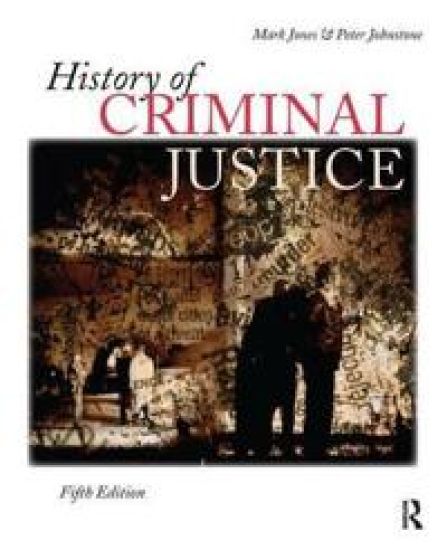
History of Criminal Justice

History of Criminal Justice

Mark Jones; Peter Johnstone

Routledge
2016
sidottu
Covering criminal justice history on a cross-national basis, this book surveys criminal justice in Western civilization and American life chronologically from ancient times to the present. It is an introduction to the historical problems of crime, law enforcement and penology, set against the background of major historical events and movements. Integrating criminal justice history into the scope of European, British, French and American history, this text provides the opportunity for comparisons of crime and punishment over boundaries of national histories. The text now concludes with a chapter that addresses terrorism and homeland security.
Getting Away With Murder: Criminal Clerics in Late Medieval England

Getting Away With Murder: Criminal Clerics in Late Medieval England

Peter Johnstone

Kendall/Hunt Publishing Co ,U.S.
2016
nidottu
During the fourth century Roman emperor Constantine created laws exempting clergymen who committed a felony from having to answer for their actions before a secular court. This set about 1500 years of use and abuse of what became known as Benefit of Clergy. The unusual legal excuse traveled to England where by the middle of the thirteenth century men who were no more than church doormen or bishop's messengers could avoid the executioner's gallows and walk free after a brief appearance before the Christian court. The range of crimes committed by these clerics encompassed all of the criminality occurring throughout the Middle Ages: murder, rape, arson, kidnapping, extortion, theft. Priests belonged to gangs of robbers and murderers, monks supplied their services as thugs to evict legitimate tenants and a bishop ran his own mafia, in 1303 a priest assisted by a group of monks stole the crown jewels. In one particularly gruesome incident a monk assisted a group of villagers in holding a man inside an oven until he burned to death. In another example a priest sexually assaulted a woman and then returned later to assault her again. When she resisted he held her infant child in a fire. During the same period students at Oxford university were permitted to claim the dubious title of cleric; to their discredit they were at one point the most murderous group of citizens throughout the realm. Eventually the church and the crown had little choice but to attempt reform of England's criminal clerics. It took two hundred years. To the surprise of some writers though the excuse was not removed; it was extended. By 1375 it was possible for any Englishman who could read to claim he was a clergyman and be exempted from hanging. This book follows the fascinating and graphic history of the use and abuse of benefit of clergy in England during the twelfth, thirteenth and fourteenth centuries. Previous commentators have largely dismissed the clergy plea as an anomaly, something simply 'evil' or even a 'queer old farce'. That position is challenged in this book and it is suggested that the excuse should be reconsidered against the vibrant social and legal environment of medieval England as one of a range of legal excuses that also included sanctuary, abjuration and outlawry. In theory these three options were not available to clerics. In practice, and at times with the connivance of their bishops, all order of clergymen availed themselves of the opportunity to hide, flea or become a legal outcast. If they failed many then resorted to the cleric's plea as a last option. The story of benefit of clergy has previously been portrayed as an example of the worst excesses of churchmen usurping the law. In this work a new position is argued; one that does not seek to absolve the criminal clergymen of medieval England, but rather more to appreciate better the factors that came to bear upon them in the rapidly changing world of the late Middle Ages and to recognize that the laicization of benefit of clergy was a natural and inevitable growth of the dynamic world during this period. Recent commentary on Benefit of Clergy is sparse. Even less has been said that includes it with sanctuary, abjuration and outlawry. Students of history, legal history, criminal justice, religion and anyone looking for a fascinating read is encouraged to look into Getting away with Murder: Criminal Clerics in Late Medieval England.
Ethics in the Criminal Justice System

Ethics in the Criminal Justice System

Scott H. Belshaw; Peter Johnstone

Kendall/Hunt Publishing Co ,U.S.
2015
nidottu
Ethics in the Criminal Justice System explores ideas and information in and around ethical decision making as it pertains to criminal justice. As an edited volume, Ethics in the Criminal Justice System features contributing authors who have provided a varied and challenging palette of offerings from pure philosophy to common sense practical professional advice. Boldly luring readers into fascinating discussions, Ethics in the Criminal Justice System alerts students to the need for criminal justice practitioners to make informed, ethical judgments. Ethics in the Criminal Justice System:is practical and interesting. is stimulating and informative. is not about absolutes; it is about further questions. will stimulate students to continue the dialog outside of the classroom. ""Being ethical pertains to how an individual arrives at conclusions relating to what is right and what is wrong. Individual beliefs vary; therefore, people should attempt to achieve a position that results in fairness and equity within society and respects individual beliefs. Ethical behavior is expressed by an ethos that drives the rationality behind fair, equitable and ethical decision making. Ethics is a matter that should be taken seriously. It is the duty of the criminal justice system to ensure that law and order is maintained and delivered based upon fairness and equity to the benefit of all members of society."" -Scott Belshaw and Peter Johnstone
Managing Campus Safety and Security in Higher Education

Managing Campus Safety and Security in Higher Education

J. Eric Coleman; Peter Johnstone

Kendall/Hunt Publishing Co ,U.S.
2014
nidottu
The tragedies that have occurred on college campuses across the nation have been increasing the last decade. Taking this into consideration, Managing Campus Safety and Security in Higher Education provides a commentary from some of the leading campus public safety experts in hopes to promote a better understanding of the threats to campus security and how to stop them. Managing Campus Safety and Security in Higher Education was written mainly for graduate students, but also for senior administrators, parents, students, and security personnel alike. Available in Print and eBook editions, Managing Campus Safety and Security in Higher Education:Was written by 11 contributing authors with a wide variety of expertise in the field of campus security Promotes greater understanding of the dangers being faced on college campuses everywhere. Hopes to inspire meaningful discussions on the topic and provide for safer campuses everywhere.
History of Criminal Justice

History of Criminal Justice

Mark Jones; Peter Johnstone

Anderson Publishing
2011
nidottu
Covering criminal justice history on a cross-national basis, this book surveys criminal justice in Western civilization and American life chronologically from ancient times to the present. It is an introduction to the historical problems of crime, law enforcement and penology, set against the background of major historical events and movements. Integrating criminal justice history into the scope of European, British, French and American history, this text provides the opportunity for comparisons of crime and punishment over boundaries of national histories. The text now concludes with a chapter that addresses terrorism and homeland security.