Kirjojen hintavertailu – 12 859 819 kirjaa ja 27 kauppaa

Kirjailija

Peter Kell

Kirjat ja teokset yhdessä paikassa: 5 kirjaa, julkaisuja vuosilta 2002–2015, suosituimpiin kuuluu Appropriating English. Vertaile teosten hintoja ja tarkista saatavuus suomalaisista kirjakaupoista.

5 kirjaa

Kirjojen julkaisuvuodet: 2002–2015.

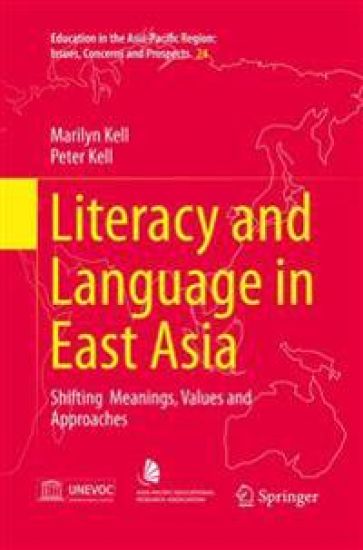
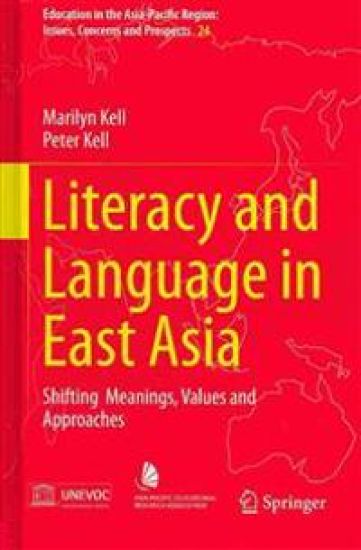
Literacy and Language in East Asia

Literacy and Language in East Asia

Marilyn Kell; Peter Kell

Springer Verlag, Singapore
2015
nidottu
This book critically explores why some Asian nations are on top of the world in students’ achievement tests in reading and literacy, yet governments and industry in these nations are anxious about a crisis in education. Why are governments anxious about the capabilities and skills of school and university graduates in a global economy when there is a Asian economic boom? The authors explore questions about how the Asian countries value test-based examination curriculum and its influence on the practices of teaching learning and the lives of young people in Asia. The authors describe the challenge of change for East Asian nations to develop more relevant approaches to literacy and language and more inclusive societies focussed on the needs of young people and not exam results.
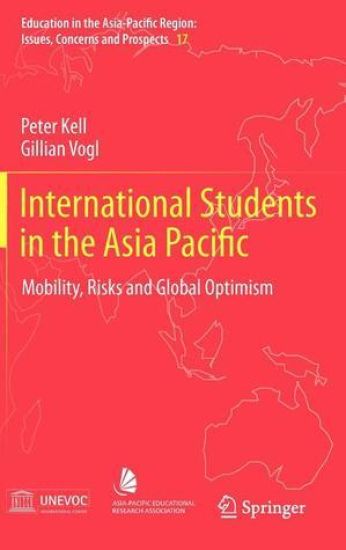
International Students in the Asia Pacific

International Students in the Asia Pacific

Peter Kell; Gillian Vogl

Springer
2014
nidottu
This book documents the growing mobility of international students in the Asia Pacific. International students comprise over 2.7m students and it is estimated by the OECD that this will top 8 million in 2020. The great majority of them are students from the Asian countries who study in the Europe, North America and Asia. In addition countries such as Singapore, Malaysia and Hong Kong are becoming “education hubs” and are proposing to attract international students. Over 42% of international students come from Asia and this is predicted to continue with the strong presence of students from China, India, Korea and Japan continuing. A younger population, a growing middle class and shortages of quality education providers in the Asia Pacific region means that this mobility will be a feature of the future. This book explores questions around the mobility of international students in the context of the global economy and an increasingly competitive trans-national education market. It also explores questions about the experience of international students principally from the Asia Pacific region at a time of increased global insecurity and growing hostile reactions to foreigners in the post September 11th era. This book emerges from empirical work from several research projects funded by the World Bank and several community projects to support international students. The focus is also on the way in which student mobility promotes growing connection within the Asia Pacific, as well as other regions, and provides the foundations for new notions of global citizenships.
Literacy and Language in East Asia

Literacy and Language in East Asia

Marilyn Kell; Peter Kell

Springer Verlag, Singapore
2013
sidottu
This book critically explores why some Asian nations are on top of the world in students’ achievement tests in reading and literacy, yet governments and industry in these nations are anxious about a crisis in education. Why are governments anxious about the capabilities and skills of school and university graduates in a global economy when there is a Asian economic boom? The authors explore questions about how the Asian countries value test-based examination curriculum and its influence on the practices of teaching learning and the lives of young people in Asia. The authors describe the challenge of change for East Asian nations to develop more relevant approaches to literacy and language and more inclusive societies focussed on the needs of young people and not exam results.
International Students in the Asia Pacific

International Students in the Asia Pacific

Peter Kell; Gillian Vogl

Springer
2012
sidottu
This book documents the growing mobility of international students in the Asia Pacific. International students comprise over 2.7m students and it is estimated by the OECD that this will top 8 million in 2020. The great majority of them are students from the Asian countries who study in the Europe, North America and Asia. In addition countries such as Singapore, Malaysia and Hong Kong are becoming “education hubs” and are proposing to attract international students. Over 42% of international students come from Asia and this is predicted to continue with the strong presence of students from China, India, Korea and Japan continuing. A younger population, a growing middle class and shortages of quality education providers in the Asia Pacific region means that this mobility will be a feature of the future. This book explores questions around the mobility of international students in the context of the global economy and an increasingly competitive trans-national education market. It also explores questions about the experience of international students principally from the Asia Pacific region at a time of increased global insecurity and growing hostile reactions to foreigners in the post September 11th era. This book emerges from empirical work from several research projects funded by the World Bank and several community projects to support international students. The focus is also on the way in which student mobility promotes growing connection within the Asia Pacific, as well as other regions, and provides the foundations for new notions of global citizenships.
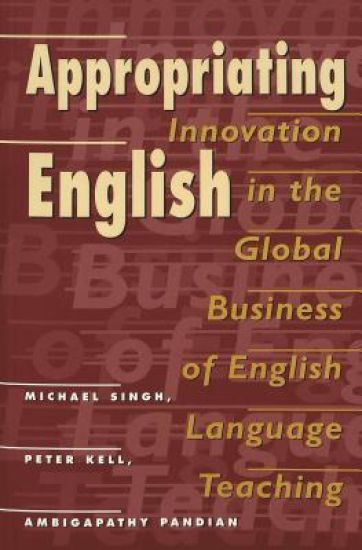
Appropriating English

Appropriating English

Michael Singh; Peter Kell; Ambigapathy Pandian

Peter Lang AG
2002
nidottu
English seems to be becoming the global language as a result of the massive socio-economic, cultural, and technological changes that have been struggled over since the 1950s. For teachers of English to speakers of other languages and for those involved in the education of such teachers, trying to understand the changes brought by the globalization, commodification, and technologization of English language teaching (ELT) is a major challenge in itself. Given the acceleration in language extinction and knowledge death, developing principled responses to these changes is ridden with significant complications and dangers. "Appropriating English" explores challenging possibilities for teachers and teacher educators in the transnational ELT market, providing a basis for informing and mobilizing innovations in the business of teaching English language and literacy to speakers of other languages. While the demand for English grows, its effects on other peoples, their languages, and their knowledge are not always positive. "Appropriating English" adds to the calls for a paradigmatic innovation in the ELT industry. Michael Singh, Peter Kell, and Ambigapathy Pandian offer a new perspective for reinventing the project of globalizing English that situates it within a framework of risk analysis and provides workpoints for making use of multivocal, hybridized Englishes and new digital technologies to help sustain the linguistic diversity of humanity.