Kirjojen hintavertailu – 12 859 828 kirjaa ja 27 kauppaa

Kirjailija

Peter Knight

Kirjat ja teokset yhdessä paikassa: 30 kirjaa, julkaisuja vuosilta 1993–2025, suosituimpiin kuuluu Pulse. Vertaile teosten hintoja ja tarkista saatavuus suomalaisista kirjakaupoista.

30 kirjaa

Kirjojen julkaisuvuodet: 1993–2025.

Learning, Curriculum and Employability in Higher Education
How can universities ensure that they are preparing their students for today's competitive job market? This book tackles the highly topical subject of graduate underemployment with insight and clarity. The authors argue the case for more sophisticated research into employability with passion and vision, discussing how employability-friendly curricula can be developed, even in subjects which have less obvious vocational relevance. The rapid growth of higher education over the past fifty years has seen expectations increase, and governments seeking to widen participation. There is now an urgent need for the Government and higher education institutions to address the issue of graduate employability. The authors of this timely book encourage a pro-active stance, offering a ground-breaking model that can be easily implemented in institutions to make low-cost, high-gain improvements to students' employability. Topics covered include:* The challenge of employability* The study and careers of English graduates* The enhancement of practice* Assessing employability* The Skills Plus project. Based on a set of over 200 in-depth interviews with recent graduates, this book forms a unique account of the meanings of employability in the workplace.
Assessment, Learning And Employability

Assessment, Learning And Employability

Peter Knight; Mantz Yorke

Open University Press
2003
nidottu
What is assessed gets attention: what is not assessed does not. When higher education is expected to promote complex achievements in subject disciplines and in terms of 'employability', problems arise: how are such achievements to be assessed? In the first part of the book, it is argued that existing grading practices cannot cope with the expectations laid upon them, while the potential of formative assessment for the support of learning is not fully realised. The authors argue that improving the effectiveness of assessment depends on a well-grounded appreciation of what assessment is, and what may and may not be expected of it. The second part covers summative judgements for high-stakes purposes. Using established measurement theory, a view is developed of the conditions under which affordable, useful, valid and reliable summative judgements can be made. One conclusion is that many complex achievements resist high-stakes assessment, which directs attention to low-stakes, essentially formative, alternatives. Assessment for learning and employability demands more than module-level changes to assessment methods. The final part discusses how institutions need to respond in policy terms to the challenges that have been posed. The book concludes with a discussion of how institutions can respond in policy terms to the challenges that have been posed. Assessment, Learning and Employability has wide and practical relevance - to teachers, module and programme leaders, higher education managers and quality enhancement specialists.
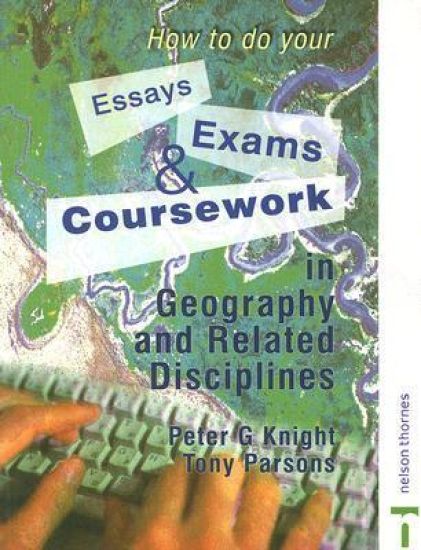
How to do your Essays, Exams and Coursework in Geography and Related Disciplines
Written for students who need help doing their coursework and exams, this book focuses mainly on the skills and techniques that apply to essay writing, but also covers other types of assignment such as posters, talks, PowerPoint^DTM presentations and web pages. Its basis is that all of these different types of work are centred on clear communication of well-supported responses to the questions or tasks that have been set.
Conspiracy Culture

Conspiracy Culture

Peter Knight

Routledge
2000
nidottu
Conspiracy theories are everywhere in post-war American culture. From postmodern novels to The X-Files and from gangsta rap to feminist polemic, there is a widespread suspicion that sinister forces are conspiring to take control of our national destiny, our minds, and even our bodies. Conspiracy explanations can no longer be dismissed as the paranoid delusions of far-right crackpots. Indeed, they have become a necessary response to a risky and increasingly globalized world, in which everything is connected but nothing adds up. Peter Knight provides an engaging and cogent analysis of the development of conspiracy culture, from 1960s' countercultural suspicions about the authorities to the 1990s, where a paranoid attitude is both routine and ironic. Conspiracy Culture analyses conspiracy narratives about familiar topics like the Kennedy assassination, alien abduction, body horror, AIDS, crack cocaine, the New World Order, as well as more unusual ones like the conspiracies of patriarchy and white supremacy. Conspiracy Culture shows how Americans have come to distrust not only the narratives of the authorities, but even the authority of narrative itself to explain What Is Really Going On. From the complexities of Thomas Pynchon's novels to the endless mysteries of The X-Files, Knight argues that contemporary conspiracy culture is marked by an infinite regress of suspicion. Trust no one, because we have met the enemy and it is us.
Conspiracy Culture

Conspiracy Culture

Peter Knight

Routledge
2000
sidottu
Conspiracy theories are everywhere in post-war American culture. From postmodern novels to The X-Files and from gangsta rap to feminist polemic, there is a widespread suspicion that sinister forces are conspiring to take control of our national destiny, our minds, and even our bodies. Conspiracy explanations can no longer be dismissed as the paranoid delusions of far-right crackpots. Indeed, they have become a necessary response to a risky and increasingly globalized world, in which everything is connected but nothing adds up. Peter Knight provides an engaging and cogent analysis of the development of conspiracy culture, from 1960s' countercultural suspicions about the authorities to the 1990s, where a paranoid attitude is both routine and ironic. Conspiracy Culture analyses conspiracy narratives about familiar topics like the Kennedy assassination, alien abduction, body horror, AIDS, crack cocaine, the New World Order, as well as more unusual ones like the conspiracies of patriarchy and white supremacy. Conspiracy Culture shows how Americans have come to distrust not only the narratives of the authorities, but even the authority of narrative itself to explain What Is Really Going On. From the complexities of Thomas Pynchon's novels to the endless mysteries of The X-Files, Knight argues that contemporary conspiracy culture is marked by an infinite regress of suspicion. Trust no one, because we have met the enemy and it is us.
Politics of Professionalism

Politics of Professionalism

Gary McCulloch; Gill Helsby; Peter Knight

Continuum International Publishing Group Ltd.
2000
nidottu
Many commentators feared that the Education Reform Act of 1988 sounded the death knell for teacher professionalism. This text explores the issue by setting the debates in their historical context and by drawing on detailed research findings.
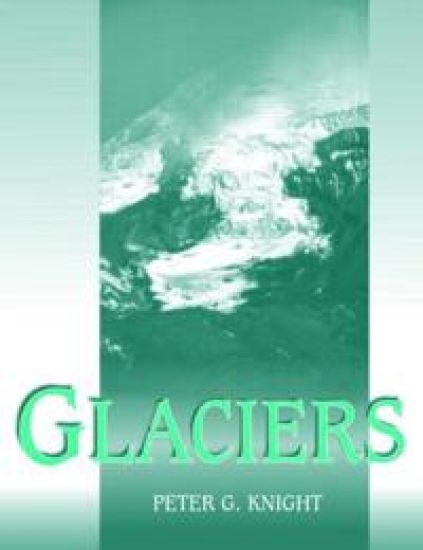
Glaciers

Glaciers

Peter Knight

Nelson Thornes Ltd
1999
nidottu
This book offers a comprehensive and detailed summary of our knowledge and understanding of glaciers and sets them within a global environment context. The text explains the significance both of recent advances in glaciology, and of teh many research problms that remain to be solved. The accessible style adopted in the text facilitates a clear understanding of glaciers and the role they play in global issues such as environmental change, geoorphology and hydrology. The use of complex mathematics is avoided as the reader is introduced to important concepts and techniques in modern glaciology such as deforming beds, migrating ice-divides and stable isotope analysis. This is an essential reference book for sutdents, professional geologists and researchers and would be ideal for those who want either a rapid up-date or an introduction to the subject. The books' discussion of recent discoveries and of reserch issues for the future, supported by a thorough reference list, enables readers to pursue their own areas of particular interest.
Assessing Learners in Higher Education

Assessing Learners in Higher Education

Sally Brown; Peter Knight

Routledge Falmer
1998
nidottu
This study examines the factors influencing the changes in teaching assessment at the higher education level and studies the range of techniques and methods available to the assessor. It evaluates the effectiveness of certain methods and discusses their implementation.
Effective Early Years Education

Effective Early Years Education

Edwards Anne; Peter Knight

Open University Press
1994
nidottu
In this concise and accessible guide, the authors are sympathetic to the particular demands of teaching three to eight year olds and offer practical solutions to the complex issues that are currently faced by early years educators. In recognizing the demands on practitioners, they provide new and challenging frameworks for an understanding of the practice of teaching young children and draw upon international research to offer a sound model of early years subject-structured teaching which has the quality of children's learning at its centre. Their aim is to support teacher expertise through stimulating teachers' thinking about children's development, motivation, ways of learning and the subjects they teach. These topics are clearly set in the complex institutional settings in which practitioners work and ways of taking and evaluating action are offered.
Primary Geography Primary History

Primary Geography Primary History

Peter Knight

David Fulton Publishers Ltd
1993
nidottu
The theme of this book is the teaching and learning of the humanities in the primary years. While it dwells on the National Curriculum, it also examines issues of current international concern, drawing upon international research literature.