Kirjailija
Peter Lucas
Kirjat ja teokset yhdessä paikassa: 16 kirjaa, julkaisuja vuosilta 1991–2026, suosituimpiin kuuluu Noah and the Big, Brave Boat. Vertaile teosten hintoja ja tarkista saatavuus suomalaisista kirjakaupoista.
16 kirjaa
Kirjojen julkaisuvuodet: 1991–2026.
The Thursday Writers Club Anthology
Phil Appleby; Julian Cadman; Peter Lucas
Orange Pi Publishing
2024
pokkari
This anthology was born out of the amazing minds of group of writers that meet every Thursday.
By comparison with Latin Europe, Anglo-Saxon civilization is notable for the amount of literature preserved in contemporary manuscripts in the vernacular language, formerly called 'Anglo-Saxon' but now more usually called 'Old English'. This literature includes some remarkable poetry, which is the subject of the present collection of essays. Some of the earliest poems may well have been written at a time when northern England held the intellectual leadership of Europe. The approach is holistic, investigating important issues in the manuscripts that affect the integrity of the texts to be studied or the way they relate to each other, examining metrical issues that affect the way the poems are appreciated for their compositional skill, studying particular textual problems that require elucidation or even emendation to make the meaning clear, and finally offering readings of particular poems focussing on themes that are central to Old English poetry. A postscript examines Lewis Carroll's Jabberwocky, which is presented as a 'Stanza of Anglo-Saxon Poetry'.
This book explores the theoretical basis of our ethical obligations to others as self-knowing beings - this task being envisaged as an essential supplement to a traditional ethic of respect for persons. Authoritative knowledge of others brings with it certain obligations, which are reflected in (inter alia) the moral and legal safeguards designed to ensure that certain information is ‘put out of play’ for job selection purposes etc. However, the theoretical basis for such obligations has never been fully clarified. This book begins by identifying a distinctive class of ‘interpretive’ moral wrongs (including stereotyping, discrimination and objectification). It then shows how our obligations in respect of these wrongs can be understood, drawing on insights from the tradition of philosophical reflection on recognition. The book will be of interest to anyone concerned with the adequacy of a modern ethic of respect for persons – particularly in applied and professional ethics.
We are facing a future of unbounded complexity. Whether that complexity is harnessed to build a world that is safe, pleasant, humane and profitable, or whether it causes us to careen off a cliff into an abyss of mind-numbing junk is an open question. The challenges and opportunities--technical, business, and human--that this technological sea change will bring are without precedent. Entire industries will be born and others will be laid to ruin as our society navigates this journey. There are already many more computing devices in the world than there are people. In a few more years, their number will climb into the trillions. We put microprocessors into nearly every significant thing that we manufacture, and the cost of routine computing and storage is rapidly becoming negligible. We have literally permeated our world with computation. But more significant than mere numbers is the fact we are quickly figuring out how to make those processors communicate with each other, and with us. We are about to be faced, not with a trillion isolated devices, but with a trillion-node network: a network whose scale and complexity will dwarf that of today’s Internet. And, unlike the Internet, this will be a network not of computation that we use, but of computation that we live in. Written by the leaders of one of America’s leading pervasive computing design firms, this book gives a no-holds-barred insiders’ account of both the promise and the risks of the age of Trillions. It is also a cautionary tale of the head-in-the-sand attitude with which many of today’s thought-leaders are at present approaching these issues. Trillions is a field guide to the future--designed to help businesses and their customers prepare to prosper, in the information.
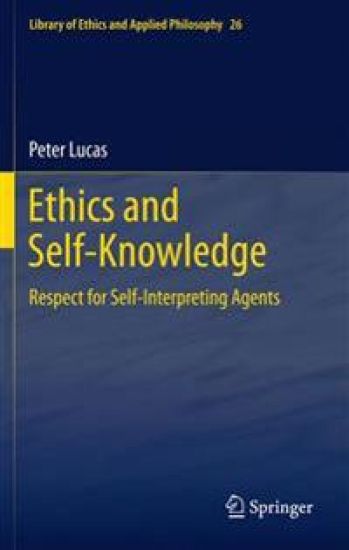
This book explores the theoretical basis of our ethical obligations to others as self-knowing beings - this task being envisaged as an essential supplement to a traditional ethic of respect for persons. Authoritative knowledge of others brings with it certain obligations, which are reflected in (inter alia) the moral and legal safeguards designed to ensure that certain information is ‘put out of play’ for job selection purposes etc. However, the theoretical basis for such obligations has never been fully clarified. This book begins by identifying a distinctive class of ‘interpretive’ moral wrongs (including stereotyping, discrimination and objectification). It then shows how our obligations in respect of these wrongs can be understood, drawing on insights from the tradition of philosophical reflection on recognition. The book will be of interest to anyone concerned with the adequacy of a modern ethic of respect for persons – particularly in applied and professional ethics.
Efficient Numerical Methods to Compute Unsteady Subsonic Flows
Peter Lucas; Hester Bijl
LAP Lambert Academic Publishing
2010
pokkari
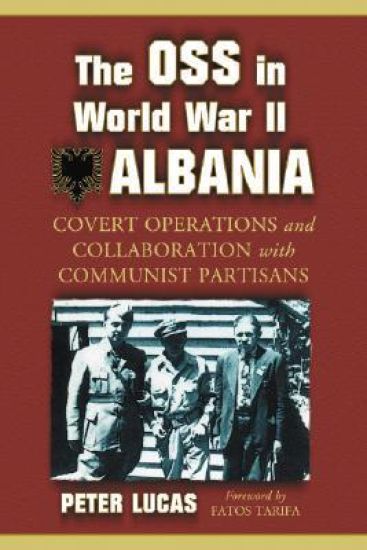
World War II found Albania fighting a war within a war. In addition to the threat faced from the Germans, Albania was engaged in a civil war between the Nazi-sponsored Ballists and the Communist partisans led by Enver Hoxha. While America was reluctant to get involved in the civil conflict, the United States was naturally inclined to lend support to whoever fought the Nazis--even if that meant an alliance with the Communists. On a cold November night in 1943, Dale McAdoo (code named Tank) secretly landed on the Albanian coast with a team of OSS (Office of Strategic Services) agents, including Ismail Carapizzi, an Albanian guide and interpreter who would later be murdered. McAdoo's team, the first of many to follow, set up a base of operations in a deep water level cave on the rocky Albanian coast that served the OSS as it carried out its mission of gathering intelligence to support the Allied war effort and harass the Germans. McAdoo was joined by Captain Tom Stefan (code name Art), an Albanian-speaking OSS officer from Boston, whose assignment was to join Hoxha at his remote mountain headquarters and bond with the reclusive Communist leader to benefit the OSS. This volume describes how the OSS aided the Communist-led partisans in an attempt to weaken the Nazi cause in Albania and neighboring Italy. The book presents an in-depth look at the small core of hardened men who comprised these highly specialized teams, including each member's background and his special fitness for his wartime role behind enemy lines. The American and British presence in Albania during World War II and the later deterioration of Hoxha's relations with Captain Tom Stefan and the OSS mission are discussed in detail. Firsthand interviews with still-living participants and extensive onsite research make this book a unique resource for a little-known dramatic piece of World War II history.

It is not uncommon for diplomats to publish their memoirs after they retire from the Foreign Service. What is unusual for an ambassador, however, is to publicize, after resigning from the service, the chronicle of his day-to-day diplomatic activity both political and public. To Albania, with Love is a collection of these activities during Tarifa's career as the Albanian ambassador to the United States and the Netherlands. Many of the letters included in this volume reveal the methodology of ambassadors in Washington, D. C., and detail the high levels of access Tarifa had developed during his career. This work brings together a selection of Tarifa's letters to high-ranking U. S. and Dutch government officials, lectures, testimonies, public addresses, and remarks. They all illustrate the direction an ambassador's career and activities should take in promoting his country. To be a perceptive visionary who can herald progressive change in the interest of his own country and the broader international community is the goal of a truly accomplished ambassador.
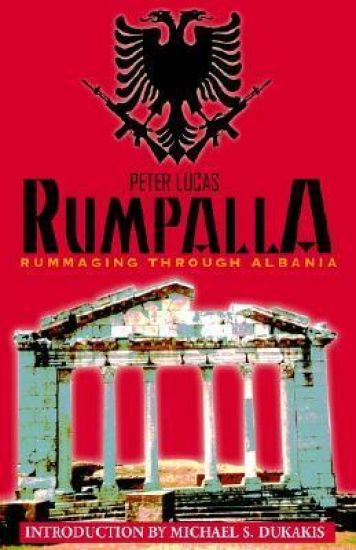
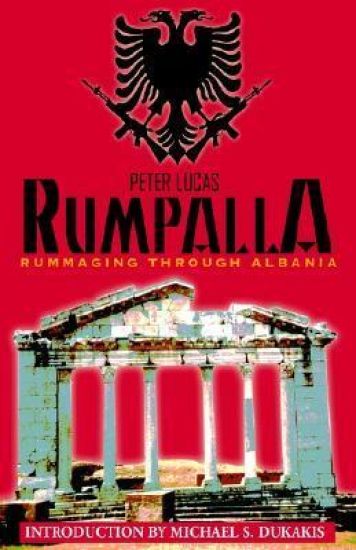
RUMPALLA, RUMMAGING THROUGH ALBANIA is a newspaperman's book. In it Lucas not only writes about his experiences traveling throughout the then-closed, tightly -controlled Communist country in the late 1980s, but he tells the story through the eyes of a reporter. In 1986 he became the first Americana reporter to be allowed into the country in thirty years. Returning again and again, Lucas chronicled the changes the country went through as it broke away from the hard line Communism of Joseph Stalin to join the rest of the nations of Europe as a fledging democracy. In between, the writer found time to search for the site of a World War II American plane crash, find his father's abandoned village, trace the High Albania footsteps of early English traveler Edith Durham, and help Kosovar refugees during the 1999 NATO bombing of Serbia. In between, searching for the heart of Albania, he got to know and interview Albanian peasants and presidents.
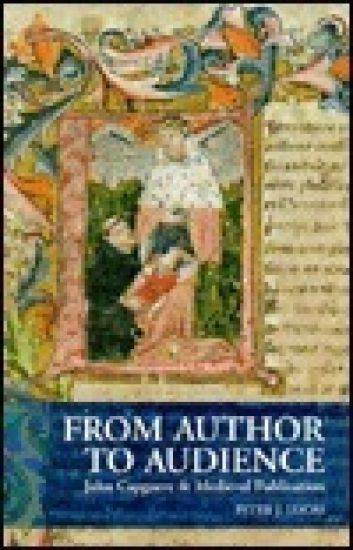
From Author to Audience: John Capgrave and Medieval Publication
peter Lucas
University College Dublin Press
1997
sidottu
The author explores what is known about the medieval publishing process by close study of the work of John Capgrave (1393-1464), a prolific author and one of the most learned Englishmen of his day. In the Middle Ages, before the age of printing, the author was often his own scribe and almost invariably his own editor and publisher. Lucas shows how works newly composed by an author were prepared. Capgrave's linguistic and scribal usages are set in the socio-historical context of the 15th century.