Kirjojen hintavertailu – 12 903 742 kirjaa ja 27 kauppaa

Kirjailija

Peter Mauch

Kirjat ja teokset yhdessä paikassa: 7 kirjaa, julkaisuja vuosilta 1994–2026, suosituimpiin kuuluu The 90-Day ISO 9000 Manual. Vertaile teosten hintoja ja tarkista saatavuus suomalaisista kirjakaupoista.

7 kirjaa

Kirjojen julkaisuvuodet: 1994–2026.

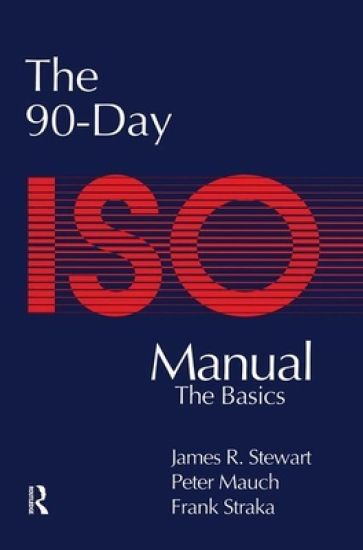
The 90-Day ISO 9000 Manual

The 90-Day ISO 9000 Manual

Peter Mauch; James Stewart; Frank Straka

CRC Press
2020
sidottu
Designed and written by professionals with extensive ISO 9000 Certification experience, the techniques and forms in this Manual have been used successfully to achieve certification at over 50 companies. The 90-Day ISO 9000 Manual provides the basic system you need in place to satisfy an ISO 9000 Audit. First, ISO 9000 is explained and the registration process described in detail. Next, you are taken through exactly what you need to do to prepare for an audit. You are given the working instructions and forms you need to meet certification requirements. The forms are unique and have been designed specifically for ISO 9000 standards. Since ISO 9000 is not designed to be a TQM program the authors have also included a special section that provides the information, instructions and forms needed for quality audits such as Q94 or Z1. If you want to take your program further than just ISO 9000 certification, the material is available to you. The 90-Day ISO 9000 Manual includes the latest published draft of Q91 DIS, which is the formal public review copy. Companies that have recently been audited have noticed that certain improvements in documentation have been expected by registrars. These improvements require rewording the old standards. The new standards have been incorporated in this manual and several schemes have been modified. The authors of The 90-Day ISO 9000 Manual have extensive experience working on ISO 9000 standards review, consulting with companies developing programs, registrar experience and international ISO 9000 activities. This manual will reflect a practical approach to registration for the next five years.
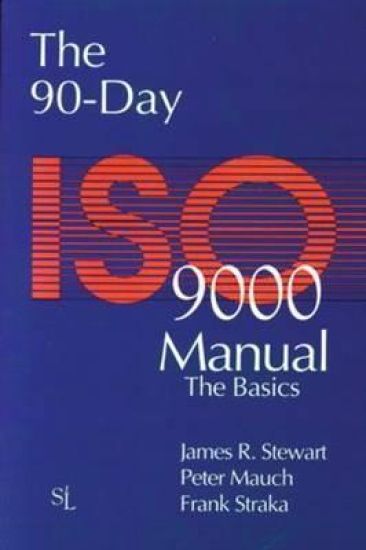
The 90-Day ISO 9000 Manual

The 90-Day ISO 9000 Manual

Peter Mauch; James Stewart; Frank Straka

CRC Press Inc
1994
nidottu
Designed and written by professionals with extensive ISO 9000 Certification experience, the techniques and forms in this Manual have been used successfully to achieve certification at over 50 companies. The 90-Day ISO 9000 Manual provides the basic system you need in place to satisfy an ISO 9000 Audit. First, ISO 9000 is explained and the registration process described in detail. Next, you are taken through exactly what you need to do to prepare for an audit. You are given the working instructions and forms you need to meet certification requirements. The forms are unique and have been designed specifically for ISO 9000 standards. Since ISO 9000 is not designed to be a TQM program the authors have also included a special section that provides the information, instructions and forms needed for quality audits such as Q94 or Z1. If you want to take your program further than just ISO 9000 certification, the material is available to you. The 90-Day ISO 9000 Manual includes the latest published draft of Q91 DIS, which is the formal public review copy. Companies that have recently been audited have noticed that certain improvements in documentation have been expected by registrars. These improvements require rewording the old standards. The new standards have been incorporated in this manual and several schemes have been modified. The authors of The 90-Day ISO 9000 Manual have extensive experience working on ISO 9000 standards review, consulting with companies developing programs, registrar experience and international ISO 9000 activities. This manual will reflect a practical approach to registration for the next five years.
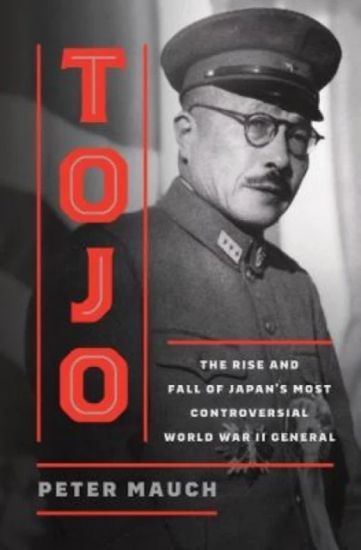
Tojo

Tojo

Peter Mauch

HARVARD UNIVERSITY PRESS
2026
sidottu
The definitive biography of Hideki Tojo, the controversial general who redefined military leadership in Showa-era Japan before his downfall during World War II. The military general who became Emperor Hirohito’s prime minister, Hideki Tojo is most often remembered as an iron-fisted leader who dragged Japan into World War II and—after spectacular losses—was eventually executed as a war criminal. Yet Tojo was far more than his ignominious end. In fact, as Peter Mauch argues, he was one of the twentieth century’s most accomplished military statesmen. Over a career of some forty years, Tojo successfully launched himself into the highest echelons of political power. He was not only a tactical genius, Mauch shows, but also a savvy administrator, a fierce imperialist, and a deeply loyal advisor to the emperor. Tojo’s career took off with the notorious Kwantung Army in Manchuria, where he played a key role in escalating the Sino-Japanese War during the 1930s. As he rose through the ranks, becoming minister of war and then army chief of staff, he honed the efficiency of the Imperial Army and enhanced its influence within the emperor’s court. All the while, he deftly negotiated the fractious military rivalries that arose wherever he went. Brilliant, ambitious, and often ruthless, Tojo reached political heights that were perhaps matched only by his precipitous fall in the final months of World War II. Layered and evocative, Tojo is at once a riveting military history of Showa-era Japan and a nuanced portrait of the relentless personality at its center.
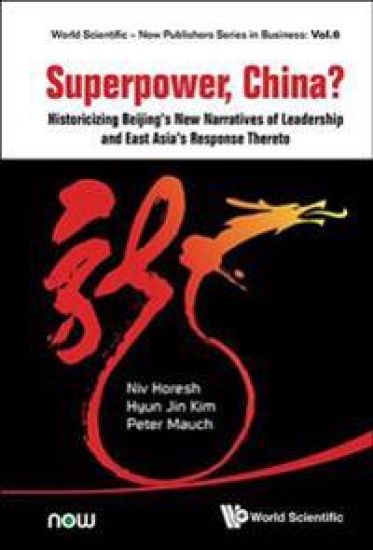
Superpower, China? Historicizing Beijing's New Narratives Of Leadership And East Asia's Response Thereto

Superpower, China? Historicizing Beijing's New Narratives Of Leadership And East Asia's Response Thereto

Niv Horesh; Hyun Jin Kim; Peter Mauch

WSPC co-published with Now Publisher
2014
sidottu
This book sets out to answer how China's rise can best be understood from both East Asian and Western perspectives. It also assesses the prospect of realignment away from the US hegemony in East Asia in light of persistent regional rivalries. Throughout the book, the authors show that for China's neighbours, as well as for its own intellectuals, historicizing the country's rise provides one way of understanding its current ascendant trajectory, on the one hand, and acute social problems, on the other. To which historical precedent should one turn? Did Japanese Prime Minister Abe Shinzo get it right when he recently likened the contemporary Sino-Japanese relationship to that of Germany and Britain on the eve of World War I? Is Harvard Law School's Noah Feldman correct in his assertion that China and the United States are on the verge not of a Cold War but of a “Cool War,” in which a “classic struggle for power is unfolding at the same time as economic cooperation is becoming deeper? The authors examine these questions and also focus on other observations that becloud China's rise.
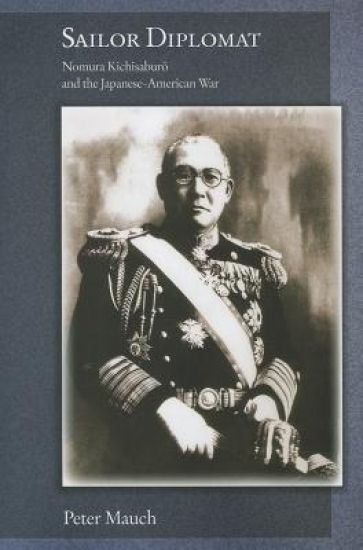
Sailor Diplomat

Sailor Diplomat

Peter Mauch

Harvard University, Asia Center
2011
sidottu
As Japan’s pre–Pearl Harbor ambassador to the United States, Admiral Nomura Kichisaburo (1877–1964) played a significant role in a tense and turbulent period in Japanese–U. S. relations. Scholars tend to view his actions and missteps as ambassador as representing the failure of diplomacy to avert the outbreak of hostilities between the two paramount Pacific powers. This extensively researched biography casts new light on the life and career of this important figure. Connecting his experiences as a naval officer to his service as foreign minister and ambassador, and later as “father” of Japan’s Maritime Self Defense Forces and proponent of the U. S.–Japanese alliance, this study reassesses Nomura’s contributions as a hard-nosed realist whose grasp of the underlying realities of Japanese–U. S. relations went largely unappreciated by the Japanese political and military establishment. In highlighting the complexities and conundrums of Nomura’s position, as well as the role of the Imperial Navy in the formulation of Japan’s foreign policy, Peter Mauch draws upon rarely accessed materials from naval and diplomatic archives in Japan as well as various collections of personal papers, including Nomura’s, which Mauch discovered in 2005 and which are now housed in the National Diet Library.
The A to Z of United States-Japan Relations

The A to Z of United States-Japan Relations

John Van Sant; Peter Mauch; Yoneyuki Sugita

Scarecrow Press
2010
nidottu
The most important bilateral relationship in Asia since the end of World War II is assuredly between the United States and Japan. Despite the geographical and cultural differences between these two nations, as well as the bitterness leftover from the war, an amicable and prosperous relationship has developed between the two countries boasting the world's largest economies. As the 21st century progresses, the continuing goodwill between the U. S. and Japan is of the utmost importance, as the peace and stability of the Asia-Pacific depends on their cooperation and efforts to contain destabilizing factors in the area. The A to Z of United States-Japan Relations traces this 150 year relationship through a chronology, an introduction, appendixes, a bibliography, and cross-referenced dictionary entries on key persons, places, events, institutions, and organizations. Covering everything from Walt Whitman's poem, "A Broadway Pageant," commemorating the visit of the Shogun's Embassy to the U. S. in 1860, to zaibatsu, this ready reference is an excellent starting point for the study of Japan's dealings with the U. S.
Historical Dictionary of United States-Japan Relations

Historical Dictionary of United States-Japan Relations

John Van Sant; Peter Mauch; Yoneyuki Sugita

Scarecrow Press
2007
sidottu
The most important bilateral relationship in Asia since the end of World War II is assuredly between the United States and Japan. Despite the geographical and cultural differences between these two nations, as well as the bitterness leftover from the war, an amicable and prosperous relationship has developed between the two countries boasting the world's largest economies. As the 21st century progresses, the continuing goodwill between the U. S. and Japan is of the utmost importance, as the peace and stability of the Asia-Pacific depends on their cooperation and efforts to contain destabilizing factors in the area. The Historical Dictionary of United States-Japan Relations traces this one hundred and fifty year relationship through a chronology, an introduction, appendixes, a bibliography, and cross-referenced dictionary entries on key persons, places, events, institutions, and organizations. Covering everything from Walt Whitman's poem, A Broadway Pageant, commemorating the visit of the Shogun's Embassy to the U. S. in 1860, to zaibatsu, this ready reference is an excellent starting point for the study of Japan's dealings with the U. S.