Kirjojen hintavertailu – 12 903 724 kirjaa ja 27 kauppaa

Kirjailija

Peter Nolan

Kirjat ja teokset yhdessä paikassa: 39 kirjaa, julkaisuja vuosilta 1993–2026, suosituimpiin kuuluu China and the West. Vertaile teosten hintoja ja tarkista saatavuus suomalaisista kirjakaupoista.

39 kirjaa

Kirjojen julkaisuvuodet: 1993–2026.

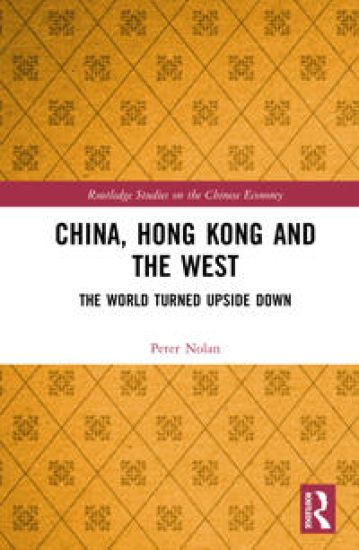
China, Hong Kong and the West

China, Hong Kong and the West

Peter Nolan

TAYLOR FRANCIS LTD
2025
sidottu
This book analyses Hong Kong’s history from a long-run perspective. It examines Britain’s relationship with the city in the context of Hong Kong’s location within the Pearl River Delta and its strategic position within East Asia. Britain’s interaction with Hong Kong commenced in the 1830s. Britain was at the zenith of its economic, political, cultural and military power, while China was approaching the lowest point in its history. The violence and humiliation of the Opium Wars propelled China into a century of economic, political and psycho-social crisis. Two centuries later the position of China and Britain has turned upside down. Hong Kong has returned to China and is part of the hugely dynamic Greater Bay Area. Britain, the First Industrial Nation, has entered an era of deep economic, political and cultural crisis. It is at the forefront of the psycho-social crisis across the west, which was exposed dramatically by the landslide victory of Donald Trump in the US election. Placing the history of Hong Kong in a long-run perspective, the book will be of interest to academics and students within the fields of international relations, development studies, China and East Asian studies, as well as business practitioners and policy makers.
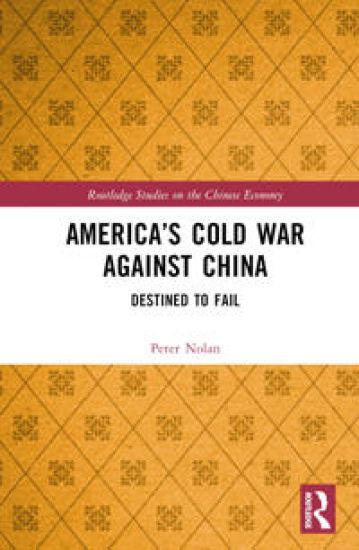
America’s Cold War against China

America’s Cold War against China

Peter Nolan

TAYLOR FRANCIS LTD
2024
sidottu
This book discusses how the USA has launched a new cold war against China. Showing how this New Cold War can only be fully understood by analysing the long-run history of the East and the West, and the fundamental differences between the Old and the New Cold Wars, this book outlines how the New Cold War focuses on issues connected with China’s territorial integrity: Xinjiang, the South China Sea, Hong Kong, Taiwan, and the closely connected conflict over semiconductors. It analyses the way in which China has responded to US-led Western aggression by following the approach suggested by Confucius: instead of ‘returning aggression with kindness’ or ‘returning aggression with aggression’, China has ‘returned aggression with firmness’. The book argues that the United States’ effort to establish hegemony over Eurasia has failed and that, in the face of this reality, there is no choice for the USA other than to cooperate with China in order to resolve the existential issues facing the human species. Demonstrating how US-led aggression has been rendered ineffective, this book will be a valuable resource to students and scholars of international relations and politics, including those in both China and the USA.
China in the Asian Financial Crisis

China in the Asian Financial Crisis

Peter Nolan

TAYLOR FRANCIS LTD
2023
nidottu
The widely held view of the Asian Financial Crisis is that it had no substantial impact on China. In fact, the country was far more vulnerable than most people realized, due to the high possibility of financial contagion entering the system from Hong Kong through Guangdong province. This book analyzes the severe policy challenge that it presented for China’s leaders. The crisis in Guangdong’s financial institutions provided a forewarning of the difficulties that lay ahead as China’s integration with the global financial system deepened. The experience of Guangdong in the Asian Financial Crisis provided a profound lesson for China’s policy-makers as they planned the country’s strategy for financial reform in the following years. China was able to avoid disaster by astute and difficult policy choices, in the face of fierce pressure from outside the country, as well as from different domestic interests at many different levels. The successful resolution of the crisis provided a breathing space for the leadership. It gave it time to undertake necessary reforms in the country's financial system in the decade that followed the crisis.
Finance and the Real Economy

Finance and the Real Economy

Peter Nolan

TAYLOR FRANCIS LTD
2022
nidottu
The different approach taken by China and the West towards finance and the real economy rests upon philosophical foundations that have diverged fundamentally since the Ancient World. Since the Asian Financial Crisis in 1997–98 a tremendous transformation has taken place in the financial systems in both China and the West. China has persisted steadily with reform of its financial system but it remains heavily protected from international competition. In the West regulatory structures have been progressively dismantled, permitting an unprecedented secular expansion of asset prices and debt relative to GDP. The structure crashed to the ground with the collapse of asset prices in 2008–09. In the decade since the GFC asset prices and debt in the West have rebounded. The West’s financial system stands on a knife- edge. In 2018 China announced the intention to accelerate the opening up of the country’s capital markets. The way in which the Chinese and the West’s financial system interact constitutes a central issue in global political economy in the years ahead.
China in the Asian Financial Crisis
The widely held view of the Asian Financial Crisis is that it had no substantial impact on China. In fact, the country was far more vulnerable than most people realized, due to the high possibility of financial contagion entering the system from Hong Kong through Guangdong province. This book analyzes the severe policy challenge that it presented for China’s leaders. The crisis in Guangdong’s financial institutions provided a forewarning of the difficulties that lay ahead as China’s integration with the global financial system deepened. The experience of Guangdong in the Asian Financial Crisis provided a profound lesson for China’s policy-makers as they planned the country’s strategy for financial reform in the following years. China was able to avoid disaster by astute and difficult policy choices, in the face of fierce pressure from outside the country, as well as from different domestic interests at many different levels. The successful resolution of the crisis provided a breathing space for the leadership. It gave it time to undertake necessary reforms in the country's financial system in the decade that followed the crisis.
The Political Economy Of Collective Farms
This book examines the case for and against collective farms in developing countries. Basing his account on a careful analysis of China's rural economy from the 1950s to the 1980s, the author argues that collective farms have serious shortcomings and that they are not the most suitable institutional form for rural economic development in poor count
Finance and the Real Economy

Finance and the Real Economy

Peter Nolan

Routledge
2020
sidottu
The different approach taken by China and the West towards finance and the real economy rests upon philosophical foundations that have diverged fundamentally since the Ancient World. Since the Asian Financial Crisis in 1997–98 a tremendous transformation has taken place in the financial systems in both China and the West. China has persisted steadily with reform of its financial system but it remains heavily protected from international competition. In the West regulatory structures have been progressively dismantled, permitting an unprecedented secular expansion of asset prices and debt relative to GDP. The structure crashed to the ground with the collapse of asset prices in 2008–09. In the decade since the GFC asset prices and debt in the West have rebounded. The West’s financial system stands on a knife- edge. In 2018 China announced the intention to accelerate the opening up of the country’s capital markets. The way in which the Chinese and the West’s financial system interact constitutes a central issue in global political economy in the years ahead.
The Political Economy Of Collective Farms
This book examines the case for and against collective farms in developing countries. Basing his account on a careful analysis of China's rural economy from the 1950s to the 1980s, the author argues that collective farms have serious shortcomings and that they are not the most suitable institutional form for rural economic development in poor countries.
Trang

Trang

Peter Nolan

Peter Nolan
2019
pokkari
Melbourne, Australia, 1996'For you, Trang. The Prime Minister's Office.' Trang took the phone, wondering which of her friends was playing a practical joke. Then a voice, strangely familiar. 'I've called to offer the best gig going in Australia right now, ' John Howard said. 'I'd like you to serve on the Council for the Centenary of Federation.' Trang was momentarily speechless. She quickly rallied, accepting the appointment and thanking the PM. Her schedule was overcrowded as always, but to decline such an opportunity to serve was unthinkable. Yet she struggled to come to grips with the PM's invitation. The holder of Australia's highest political office had called personally to recruit her to a position of great honour. Why her? Yes, she was already a high achiever in both academia and public office. Her successes had raised her profile, especially as a representative of multicultural interests. But this appointment was a much broader recognition. It told her that she had made the transition from successful immigrant to eminent Australian.
China and the West

China and the West

Peter Nolan

Routledge
2018
sidottu
Capitalist globalisation since the 1980s has produced immense benefits in terms of technical progress, poverty reduction and welfare improvement. However, it has been accompanied by profound contradictions, including ecological destruction, global warming, inequality, concentration of business power, and financial instability. Regulation of global political economy in the interests of the majority of the world’s population is essential if the human species is to avoid a Darwinian catastrophe. This book explores China’s rich history of regulating the market in the interests of the mass of the population. For over two thousand years the Chinese bureaucracy has sought pragmatically to find a Way in which to integrate the ‘invisible hand’ of market forces with the ‘visible hand’ of ethically guided government regulation. Instead of seeking confrontation with China, citizens and politicians in the West need to deepen their understanding of the contribution that China can make to globally sustainable development in the decades and centuries ahead.
China and the West

China and the West

Peter Nolan

Routledge
2018
nidottu
Capitalist globalisation since the 1980s has produced immense benefits in terms of technical progress, poverty reduction and welfare improvement. However, it has been accompanied by profound contradictions, including ecological destruction, global warming, inequality, concentration of business power, and financial instability. Regulation of global political economy in the interests of the majority of the world’s population is essential if the human species is to avoid a Darwinian catastrophe. This book explores China’s rich history of regulating the market in the interests of the mass of the population. For over two thousand years the Chinese bureaucracy has sought pragmatically to find a Way in which to integrate the ‘invisible hand’ of market forces with the ‘visible hand’ of ethically guided government regulation. Instead of seeking confrontation with China, citizens and politicians in the West need to deepen their understanding of the contribution that China can make to globally sustainable development in the decades and centuries ahead.
Understanding China

Understanding China

Peter Nolan

Routledge
2017
nidottu
If the West wishes to understand China better, it needs to appreciate the depth of thought and range of debate that is taking place within the Chinese political system. China is entering a new and complicated phase in its development. From a minnow in the 1970s it has become a mighty player on the global stage. It is likely that its role in the global economy and international relations will continue to expand. Today, despite its vast size, China is still a developing country. The country’s leaders in the Communist Party of China face innumerable policy challenges. Two key issues facing the Party are its role in the Asia-Pacific region and the ideological legacy from Karl Marx. The CPC is engaged in deep research, debate and reflection on both of these questions. This study provides a unique, in-depth insight into these critically important issues for the evolution of China’s political economy.
Chinese Firms, Global Firms

Chinese Firms, Global Firms

Peter Nolan

Routledge
2013
sidottu
China has achieved remarkable, sustained economic growth under the policies of ‘reform and opening up’ put into place since the late 1970s. China’s industrial policies have nurtured a large group of firms with high profits and a high market capitalisation. However, few people in the West can name a single Chinese firm. During the modern era of capitalist globalisation firms from the high income countries have spread their business systems across the world. This has presented a profound challenge for industrial policy in developing countries, including even China, the world’s second largest economy. China is unique among large latecomer developing countries in having reached the position of being a huge, fast-growing economy, with a tremendous impact on the rest of the world, but lacking a substantial group of globally competitive firms. This volume explores this paradox. Fully understanding the industrial policy challenge that the era of capitalist globalisation has produced for China is essential for harmonious international relations.
Chinese Firms, Global Firms

Chinese Firms, Global Firms

Peter Nolan

Routledge
2013
nidottu
China has achieved remarkable, sustained economic growth under the policies of ‘reform and opening up’ put into place since the late 1970s. China’s industrial policies have nurtured a large group of firms with high profits and a high market capitalisation. However, few people in the West can name a single Chinese firm. During the modern era of capitalist globalisation firms from the high income countries have spread their business systems across the world. This has presented a profound challenge for industrial policy in developing countries, including even China, the world’s second largest economy. China is unique among large latecomer developing countries in having reached the position of being a huge, fast-growing economy, with a tremendous impact on the rest of the world, but lacking a substantial group of globally competitive firms. This volume explores this paradox. Fully understanding the industrial policy challenge that the era of capitalist globalisation has produced for China is essential for harmonious international relations.
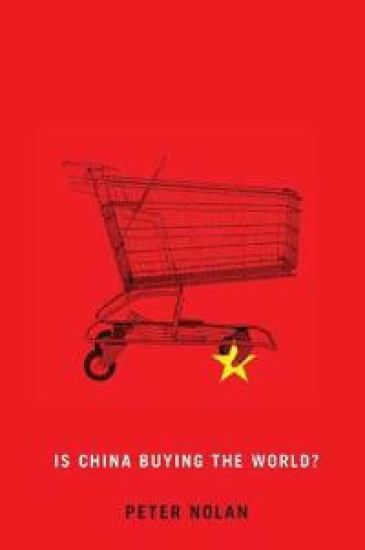
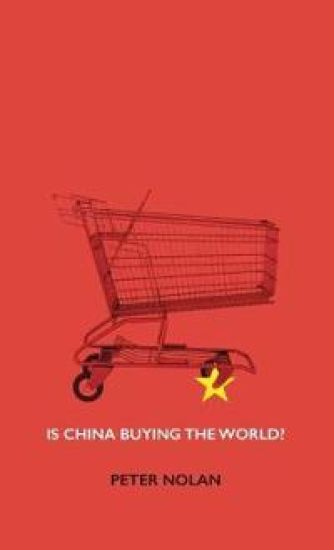
Is China Buying the World?

Is China Buying the World?

Peter Nolan

Polity Press
2013
nidottu
China has become the world's second biggest economy and its largest exporter. It possesses the world's largest foreign exchange reserves and has 29 companies in the FT 500 list of the world's largest companies. ‘China's Rise' preoccupies the global media, which regularly carry articles suggesting that it is using its financial resources to ‘buy the world'. Is there any truth to this idea? Or is this just scaremongering by Western commentators who have little interest in a balanced presentation of China's role in the global political economy? In this short book Peter Nolan - one of the leading international experts on China and the global economy - probes behind the media rhetoric and shows that the idea that China is buying the world is a myth. Since the 1970s the global business revolution has resulted in an unprecedented degree of industrial concentration. Giant firms from high income countries with leading technologies and brands have greatly increased their investments in developing countries, with China at the forefront. Multinational companies account for over two-thirds of China's high technology output and over ninety percent of its high technology exports. Global firms are deep inside the Chinese business system and are pressing China hard to be permitted to increase their presence without restraints. By contrast, Chinese firms have a negligible presence in the high-income countries - in other words, we are ‘inside them' but they are not yet ‘inside us'. China's 70-odd ‘national champion' firms are protected by the government through state ownership and other support measures. They are in industries such as banking, metals, mining, oil, power, construction, transport, and telecommunications, which tend to make use of high technology products rather than produce these products themselves. Their growth has been based on the rapidly growing home market. China has been unsuccessful so far in its efforts to nurture a group of globally competitive firms with leading global technologies and brands. Whether it will be successful in the future is an open question. This balanced analysis replaces rhetoric with evidence and argument. It provides a much-needed perspective on current debates about China's growing power and it will contribute to a constructive dialogue between China and the West.
Is China Buying the World?

Is China Buying the World?

Peter Nolan

Polity Press
2012
sidottu
China has become the world's second biggest economy and its largest exporter. It possesses the world's largest foreign exchange reserves and has 29 companies in the FT 500 list of the world's largest companies. ‘China's Rise' preoccupies the global media, which regularly carry articles suggesting that it is using its financial resources to ‘buy the world'. Is there any truth to this idea? Or is this just scaremongering by Western commentators who have little interest in a balanced presentation of China's role in the global political economy? In this short book Peter Nolan - one of the leading international experts on China and the global economy - probes behind the media rhetoric and shows that the idea that China is buying the world is a myth. Since the 1970s the global business revolution has resulted in an unprecedented degree of industrial concentration. Giant firms from high income countries with leading technologies and brands have greatly increased their investments in developing countries, with China at the forefront. Multinational companies account for over two-thirds of China's high technology output and over ninety percent of its high technology exports. Global firms are deep inside the Chinese business system and are pressing China hard to be permitted to increase their presence without restraints. By contrast, Chinese firms have a negligible presence in the high-income countries - in other words, we are ‘inside them' but they are not yet ‘inside us'. China's 70-odd ‘national champion' firms are protected by the government through state ownership and other support measures. They are in industries such as banking, metals, mining, oil, power, construction, transport, and telecommunications, which tend to make use of high technology products rather than produce these products themselves. Their growth has been based on the rapidly growing home market. China has been unsuccessful so far in its efforts to nurture a group of globally competitive firms with leading global technologies and brands. Whether it will be successful in the future is an open question. This balanced analysis replaces rhetoric with evidence and argument. It provides a much-needed perspective on current debates about China's growing power and it will contribute to a constructive dialogue between China and the West.
China at the Crossroads

China at the Crossroads

Peter Nolan

Polity Press
2003
sidottu
This concise and timely book, written by one of the world's leading authorities on China, argues that the country is at a crossroads in its development and explores the challenges that lie ahead. A concise and timely book about China and its future, which argues that the country it at a crossroads in its development. Written by one of the world’s leading authorities on China. Explores the challenges facing China's leadership in the 21st Century, including poverty and inequality, the global business revolution, the environment, the capability and role of the state, international relations, the communist party, and the economy. Puts forward a concrete view about the course China should follow in the coming decades.
China at the Crossroads

China at the Crossroads

Peter Nolan

Polity Press
2003
nidottu
This concise and timely book, written by one of the world's leading authorities on China, argues that the country is at a crossroads in its development and explores the challenges that lie ahead. A concise and timely book about China and its future, which argues that the country it at a crossroads in its development. Written by one of the world’s leading authorities on China. Explores the challenges facing China's leadership in the 21st Century, including poverty and inequality, the global business revolution, the environment, the capability and role of the state, international relations, the communist party, and the economy. Puts forward a concrete view about the course China should follow in the coming decades.
COMMUNICATING CARE

COMMUNICATING CARE

Brian Brown; Paul Crawford; Peter Nolan

Cengage Learning EMEA
1998
nidottu
The authors of this book use their unique blend of experience to synthesise theoretical studies. They offer critical analysis of a wide range of examples of good and bad use of language, in order to guide nurses towards models of good practice. Full consideration is given to the changing nature of the health care environment, and to the need to address ethical, legal and professional issues beyond the fundamentals of patient-nurse interaction.
China's Rise, Russia's Fall

China's Rise, Russia's Fall

Peter Nolan

Palgrave Macmillan
1995
nidottu
'A lively and well written comparison of economic transformation in China and the USSR/Russia, combining a good knowledge of the Chinese economy with a radical critique of Western transition orthodoxy, this very topical and very controversial book will be useful reading for students, administrators in many countries and international agencies, and business people.' - Michael Ellman, University of Amsterdam `Peter Nolan makes a pungent challenge to conventional wisdom by arguing that the Chinese approach to system reform has been vastly more successful than the shock therapy applied to Russia. His book is based on extensive comparison and deep insight into the political economy of both countries.' - John Toye, Institute of Development Studies, Sussex This book is the first attempt to analyse systematically the dramatic contrast in the results of post-Stalinist reform in China and Russia. It argues that there emerged a 'transition orthodoxy' about how to reform the communist systems of political economy. However, it was deeply flawed. The advice which flowed from this orthodoxy was the primary cause of the Soviet disaster. The decision not to follow it was the main reason for China's enormous success in its reform programme.