Kirjojen hintavertailu – 12 859 827 kirjaa ja 27 kauppaa

Kirjailija

Peter Nyhuis

Kirjat ja teokset yhdessä paikassa: 8 kirjaa, julkaisuja vuosilta 2008–2025, suosituimpiin kuuluu Fundamentals of Production Logistics. Vertaile teosten hintoja ja tarkista saatavuus suomalaisista kirjakaupoista.

8 kirjaa

Kirjojen julkaisuvuodet: 2008–2025.

Logistische Modelle der innerbetrieblichen Lieferkette

Logistische Modelle der innerbetrieblichen Lieferkette

Peter Nyhuis; Matthias Schmidt

Springer Fachmedien Wiesbaden
2025
nidottu
Dieses Buch macht den Stand der Forschung bezüglich der modellbasierten Analyse und Gestaltung von industriellen Lieferketten einem breiten Publikum auch außerhalb der wissenschaftlichen Community zugänglich. Ausgehend von der Theorie der logistischen Kennlinien sind in den letzten Jahren zahlreiche Modellerweiterungen und auch neue Modelle entwickelt worden. Damit ist es inzwischen gelungen, die innerbetriebliche Lieferkette einer Produktion vom Wareneingang bis zur Bereitstellung der gefertigten Produkte für den Versand umfassend zu beschreiben, die Wirkzusammenhänge zwischen den logistischen Zielgrößen aufzuzeigen und deren Beeinflussungsmöglichkeiten durch strukturverändernde Maßnahmen zu quantifizieren. In dem Buch liegt der Fokus nicht auf der mathematischen Herleitung der logistischen Modelle, sondern auf dem Erkenntnisprozess und den Möglichkeiten der Anwendung in der industriellen Praxis. Unterstützt wird dies durch Skizzenmodelle und produktionslogistische Leitsätze, die zum Verständnis der logistischen Abläufe und ihrer Beeinflussungsmöglichkeiten in einer Produktion beitragen und somit zielkonforme Schlussfolgerungen für die Praxis unterstützen.
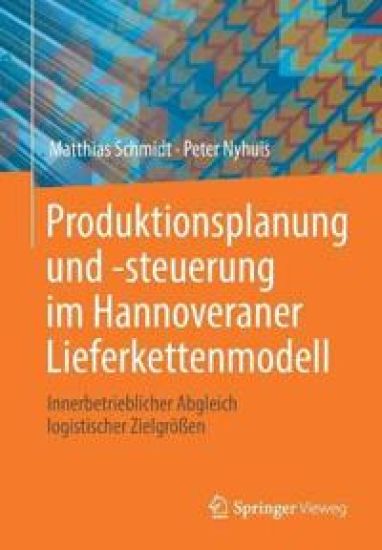
Produktionsplanung und -steuerung im Hannoveraner Lieferkettenmodell

Produktionsplanung und -steuerung im Hannoveraner Lieferkettenmodell

Matthias Schmidt; Peter Nyhuis

Springer Fachmedien Wiesbaden
2021
nidottu
Das Hannoveraner Lieferkettenmodell ist ein Rahmenmodell für die produktionslogistischen Prozesse in Unternehmen. Das Buch stellt seine Zielsysteme in den Kernprozessen der unternehmensinternen Lieferkette Beschaffung, Produktion und Versand dar und zeigt Wechselwirkungen zwischen den teilweise konträr ausgerichteten Zielgrößen auf. Anhand des Hannoveraner Lieferkettenmodells werden die verschiedenen Hauptaufgaben und Aufgaben der Produktionsplanung und -steuerung (PPS) systematisch beschrieben und in einen Gesamtkontext gebracht. Oft werden durch die Erfüllung der PPS-Aufgaben einige Zielgrößen positiv und andere negativ beeinflusst. Aufgrund dieser gegensätzlichen Wirkung der Erfüllung der PPS-Aufgaben sind unternehmerische Entscheidungen zu treffen. Hierfür werden in diesem Buch die zentralen Zielkonflikte der PPS herausgearbeitet und die Wirkung der PPS-Aufgaben auf die Zielgrößen veranschaulicht. So ermöglicht dieses Buch eine Betrachtung der Wirkzusammenhänge zwischen der Produktionsplanung und -steuerung und den logistischen Zielgrößen in der unternehmensinternen Lieferkette.
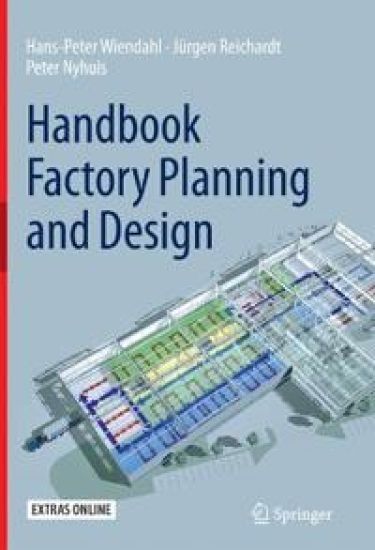
Handbook Factory Planning and Design

Handbook Factory Planning and Design

Hans-Peter Wiendahl; Jürgen Reichardt; Peter Nyhuis

Springer-Verlag Berlin and Heidelberg GmbH Co. KG
2017
nidottu
This handbook introduces a methodical approach and pragmatic concept for the planning and design of changeable factories that act in strategic alliances to supply the ever-changing needs of the global market. In the first part, the change drivers of manufacturing enterprises and the resulting new challenges are considered in detail with focus on an appropriate change potential. The second part concerns the design of the production facilities and systems on the factory levels work place, section, building and site under functional, organisational, architectural and strategic aspects keeping in mind the environmental, health and safety aspects including corporate social responsibility. The third part is dedicated to the planning and design method that is based on a synergetic interaction of process and space. The accompanying project management of the planning and construction phase and the facility management for the effective utilization of the built premises close the book. The AuthorsProf. em. Dr.-Ing. Dr. mult. h.c. Hans-Peter Wiendahl has been director for 23 years of the Institute of Factory planning and Logistics at the Leibniz University of Hannover in Germany. Prof. Dipl.-Ing. Architekt BDA Jürgen Reichardt is Professor at the Muenster school of architecture and partner of RMA Reichardt – Maas – Associate Architects in Essen Germany. Prof. Dr.-Ing. habil. Peter Nyhuis is Managing Director of the Institute of Factory Planning and Logistics at the Leibniz University of Hannover in Germany.
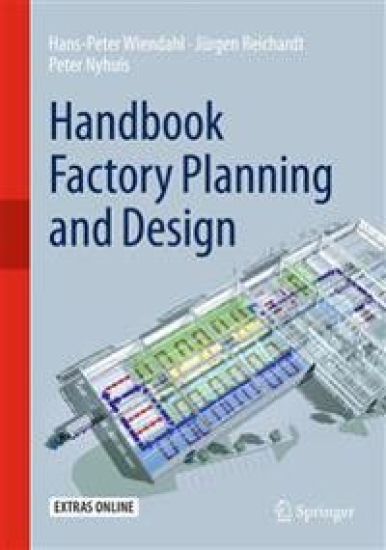
Handbook Factory Planning and Design

Handbook Factory Planning and Design

Hans-Peter Wiendahl; Jürgen Reichardt; Peter Nyhuis

Springer-Verlag Berlin and Heidelberg GmbH Co. K
2015
sidottu
This handbook introduces a methodical approach and pragmatic concept for the planning and design of changeable factories that act in strategic alliances to supply the ever-changing needs of the global market. In the first part, the change drivers of manufacturing enterprises and the resulting new challenges are considered in detail with focus on an appropriate change potential. The second part concerns the design of the production facilities and systems on the factory levels work place, section, building and site under functional, organisational, architectural and strategic aspects keeping in mind the environmental, health and safety aspects including corporate social responsibility. The third part is dedicated to the planning and design method that is based on a synergetic interaction of process and space. The accompanying project management of the planning and construction phase and the facility management for the effective utilization of the built premises close the book. The AuthorsProf. em. Dr.-Ing. Dr. mult. h.c. Hans-Peter Wiendahl has been director for 23 years of the Institute of Factory planning and Logistics at the Leibniz University of Hannover in Germany. Prof. Dipl.-Ing. Architekt BDA Jürgen Reichardt is Professor at the Muenster school of architecture and partner of RMA Reichardt – Maas – Associate Architects in Essen Germany. Prof. Dr.-Ing. habil. Peter Nyhuis is Managing Director of the Institute of Factory Planning and Logistics at the Leibniz University of Hannover in Germany.
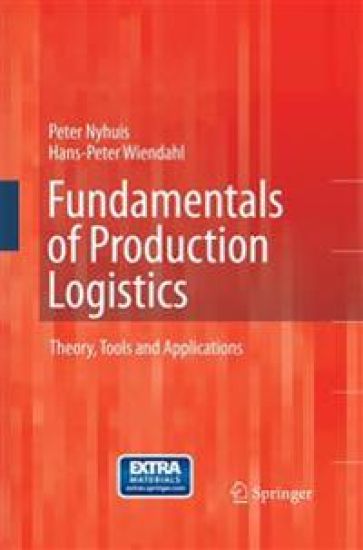
Fundamentals of Production Logistics

Fundamentals of Production Logistics

Peter Nyhuis; Hans-Peter Wiendahl

Springer-Verlag Berlin and Heidelberg GmbH Co. K
2014
nidottu
be copied. Selectively improving performance is thus generally not enough to sustainably fortify a company’s position. It generally provides only short-term improved results and instead of leading to a substantial change in competitive relations it at best gains time [Wild-98]. Sustainable advantages are only attainable when a strategic master plan is - veloped based on an analysis of corporate strengths and weaknesses and customer demands. Furthermore, it has to be built on coordinated measures and a comp- hensive examination in order to not only be able to design and implement it, but to also be able to control it with regards to the desired success. In addition to high quality standards and the price of products, the logistic f- tors delivery time and delivery reliability take on progressively more importance as possibilities with which a company can distinguish itself within the market (Fig. 1. 1) ([Voig-90], [Kear-92], [Baum-93], [Gott-95]). Production, as the p- mary function for fulfilling orders, is thus increasingly called upon to improve effectiveness [Zahn-94]. The goal therefore, is to organize the entire material flow in the supply chain, from procuring raw materials and preliminary products, through the entire production process including all of the interim storage stages, up to supplying distributors or as the case may be, external customers in such a way that the firm can react to the market in the shortest time span.
Logistische Kennlinien

Logistische Kennlinien

Peter Nyhuis; Hans-Peter Wiendahl

Springer-Verlag Berlin and Heidelberg GmbH Co. KG
2012
sidottu
Das Buch beschreibt in geschlossener Form die Modellierungsgrundlagen der Logistischen Kennlinien für Produktions- und Lagerprozesse sowie ihre mathematische Ableitung und Berechnung auf der Basis betriebsüblicher Daten. Damit werden die wechselseitigen Abhängigkeiten der logistischen Ziele - kurze Durchlaufzeit und hohe Termintreue einerseits und niedrige Bestände und hohe Auslastung andererseits - sowie ihre Beeinflussungsmöglichkeiten deutlich. Logistische Kennlinien stellen damit für viele Fälle eine interessante Alternative zur Simulation dar. Sie erschließen häufig verborgene Potenziale in der Durchlaufzeit und den Umlaufbeständen, ohne dass aufwändige Umstrukturierungen und Investitionen erforderlich sind. Die klare Gliederung in Grundlagen, Werkzeuge und zahlreiche Anwendungsbeispiele aus der variantenreichen Serienfertigung machen das Buch zu einem theoretisch fundierten und praxisnahen Leitfaden zur ständigen Verbesserung der logistischen Qualität von Produktionsunternehmen.
Fundamentals of Production Logistics

Fundamentals of Production Logistics

Peter Nyhuis; Hans-Peter Wiendahl

Springer-Verlag Berlin and Heidelberg GmbH Co. K
2008
sidottu
be copied. Selectively improving performance is thus generally not enough to sustainably fortify a company’s position. It generally provides only short-term improved results and instead of leading to a substantial change in competitive relations it at best gains time [Wild-98]. Sustainable advantages are only attainable when a strategic master plan is - veloped based on an analysis of corporate strengths and weaknesses and customer demands. Furthermore, it has to be built on coordinated measures and a comp- hensive examination in order to not only be able to design and implement it, but to also be able to control it with regards to the desired success. In addition to high quality standards and the price of products, the logistic f- tors delivery time and delivery reliability take on progressively more importance as possibilities with which a company can distinguish itself within the market (Fig. 1. 1) ([Voig-90], [Kear-92], [Baum-93], [Gott-95]). Production, as the p- mary function for fulfilling orders, is thus increasingly called upon to improve effectiveness [Zahn-94]. The goal therefore, is to organize the entire material flow in the supply chain, from procuring raw materials and preliminary products, through the entire production process including all of the interim storage stages, up to supplying distributors or as the case may be, external customers in such a way that the firm can react to the market in the shortest time span.