Kirjojen hintavertailu – 12 859 829 kirjaa ja 27 kauppaa

Kirjailija

Peter O'Brien

Kirjat ja teokset yhdessä paikassa: 13 kirjaa, julkaisuja vuosilta 1996–2026, suosituimpiin kuuluu Making Sense of Mass Education. Vertaile teosten hintoja ja tarkista saatavuus suomalaisista kirjakaupoista.

Nimi esiintyy myös muodoissa: Peter O’Brien, Peter O`brien

13 kirjaa

Kirjojen julkaisuvuodet: 1996–2026.

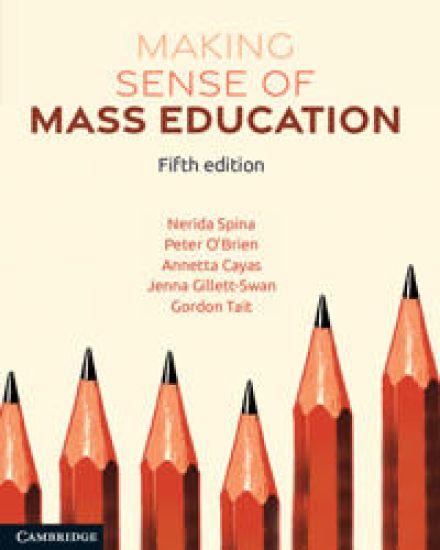
Making Sense of Mass Education

Making Sense of Mass Education

Nerida Spina; Peter O'Brien; Annetta Cayas; Jenna Gillett-Swan; Gordon Tait

Cambridge University Press
2026
pokkari
Making Sense of Mass Education gives a comprehensive overview of the cultural contexts of education, addressing and debunking important myths in the field. This book is an approachable text for undergraduate and postgraduate readers studying the Sociology and Philosophy of Education. The text covers the rise of mass schooling as a disciplinary institution, including the governance of subjectivity and the regulation of childhood and youth. It examines cultural forces on the field of education and addresses the influence of philosophical thought. In the landscape of mass education, change is constant. New topics covered in the fifth edition include education policy, teachers' work, place, online spaces and artificial intelligence. Each chapter features margin definitions and boxes exploring a range of myths, encouraging teachers to think critically. Making Sense of Mass Education continues to be pertinent for pre-service and practising teachers in Australian contexts.
Making Sense of Mass Education

Making Sense of Mass Education

Gordon Tait; Nerida Spina; Jenna Gillett-Swan; Peter O'Brien

Cambridge University Press
2023
muu
Making Sense of Mass Education provides a contemporary analysis of the ideas and issues that have traditionally dominated education research, challenging outdated preconceptions with fundamental theory and discussion. It takes a demythologising approach in assessing these issues and their relevance to schooling and education in Australia. This text examines the cultural context of education and the influence of external media and new technologies, and highlights the many forms of discrimination in education, including social class, race and gender. It looks at alternative approaches to education, including the repercussions of gathering data to measure school performance, and considers the intersection of ethics and philosophy in classroom teaching. The fourth edition expands on these issues with three new chapters: on sexuality, children's rights, and neoliberalism and the marketisation of education. Each chapter challenges and breaks down common myths surrounding these topics, encouraging pre-service teachers to think critically and reflect on their own beliefs.
Financialising City Statecraft and Infrastructure

Financialising City Statecraft and Infrastructure

Andy Pike; Peter O’Brien; Tom Strickland; Graham Thrower; John Tomaney

Edward Elgar Publishing Ltd
2020
nidottu
Infrastructure systems provide the services we all rely upon for our day-to-day lives. Through new conceptual work and fresh empirical analysis, this book investigates how financialisation engages with city governance and infrastructure provision, identifying its wider and longer-term implications for urban and regional development, politics and policy. Proposing a more people-oriented approach to answering the question of 'What kind of urban infrastructure, and for whom?', this book addresses the struggles of national and local governments to fund, finance and govern urban infrastructure. It develops new insights to explain the socially and spatially uneven mixing of managerial, entrepreneurial and financialised city governance in austerity and limited decentralisation across England. As urban infrastructure fixes for the London global city-region risk undermining national 'rebalancing' efforts in the UK, city statecraft in the rest of the country is having uneasily to combine speculation, risk-taking and prospective venturing with co-ordination, planning and regulation. This book will be of interest to researchers and scholars in the fields of business and management, economics, geography, planning, and political science. Its conclusions will be valuable to policymakers and practitioners in both the public and private sectors seeking insights into the intersections of financialisation, decentralisation and austerity in the UK, Europe and globally.
Financialising City Statecraft and Infrastructure

Financialising City Statecraft and Infrastructure

Andy Pike; Peter O’Brien; Tom Strickland; Graham Thrower; John Tomaney

Edward Elgar Publishing Ltd
2019
sidottu
Infrastructure systems provide the services we all rely upon for our day-to-day lives. Through new conceptual work and fresh empirical analysis, this book investigates how financialisation engages with city governance and infrastructure provision, identifying its wider and longer-term implications for urban and regional development, politics and policy. Proposing a more people-oriented approach to answering the question of 'What kind of urban infrastructure, and for whom?', this book addresses the struggles of national and local governments to fund, finance and govern urban infrastructure. It develops new insights to explain the socially and spatially uneven mixing of managerial, entrepreneurial and financialised city governance in austerity and limited decentralisation across England. As urban infrastructure fixes for the London global city-region risk undermining national 'rebalancing' efforts in the UK, city statecraft in the rest of the country is having uneasily to combine speculation, risk-taking and prospective venturing with co-ordination, planning and regulation. This book will be of interest to researchers and scholars in the fields of business and management, economics, geography, planning, and political science. Its conclusions will be valuable to policymakers and practitioners in both the public and private sectors seeking insights into the intersections of financialisation, decentralisation and austerity in the UK, Europe and globally.
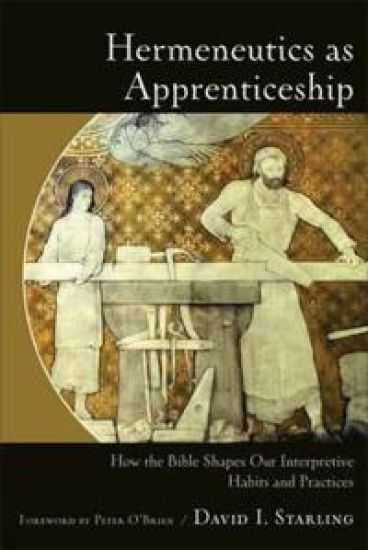
Hermeneutics as Apprenticeship – How the Bible Shapes Our Interpretive Habits and Practices

Hermeneutics as Apprenticeship – How the Bible Shapes Our Interpretive Habits and Practices

David I. Starling; Peter O`brien

Baker Academic, Div of Baker Publishing Group
2016
nidottu
A Fresh Approach to the Art of Biblical InterpretationThis book offers a fresh approach to the art of biblical interpretation, focusing on the ways Scripture itself forms its readers as wise and faithful interpreters. David Starling shows that apprenticing ourselves to the interpretive practices of the biblical writers and engaging closely with texts from all parts of the Bible help us to develop the habits and practices required to be good readers of Scripture. After introducing the principles, Starling works through the canon, providing inductive case studies in interpretive method and drawing out implications for contemporary readers. Offering a fresh contribution to hermeneutical discussions, this book will be an ideal supplement to traditional hermeneutics textbooks for seminarians. It includes a foreword by Peter O'Brien.
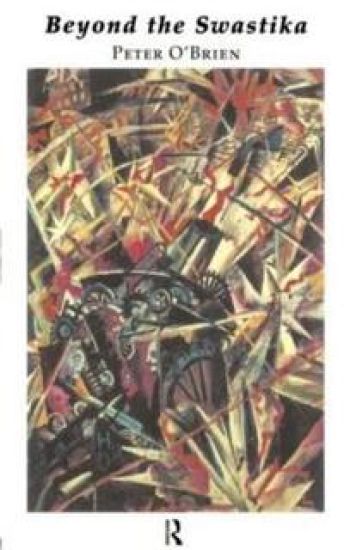
Beyond the Swastika

Beyond the Swastika

Peter O'Brien

Routledge
1996
sidottu
O'Brien argues convincingly that fears of a resurgent German nationalism are exaggerated. He highlights the `technocratic liberalism' of the elite which, paradoxically, hinders full rights of political participation for minorities.
Beyond the Swastika

Beyond the Swastika

Peter O'Brien

Routledge
1996
nidottu
O'Brien argues convincingly that fears of a resurgent German nationalism are exaggerated. He highlights the `technocratic liberalism' of the elite which, paradoxically, hinders full rights of political participation for minorities.
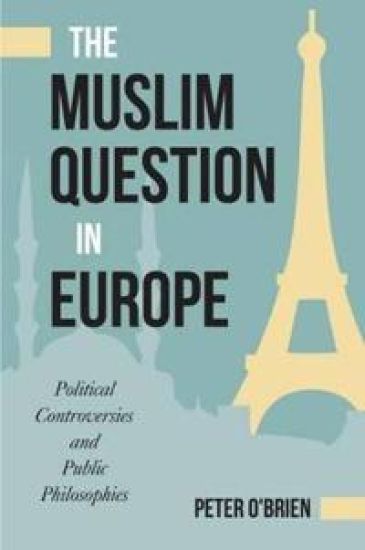
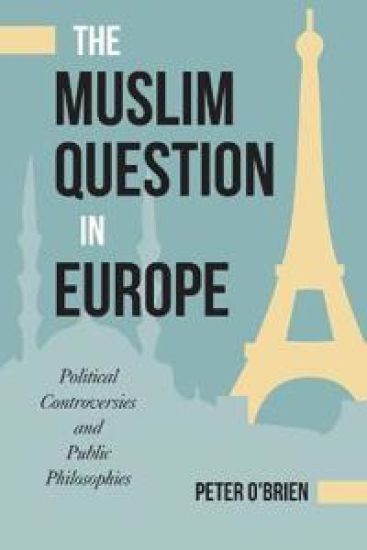
The Muslim Question in Europe

The Muslim Question in Europe

Peter O'Brien

Temple University Press,U.S.
2016
sidottu
An estimated twenty million Muslims now reside in Europe, mostly as a result of large-scale postwar immigration. In The Muslim Question in Europe, Peter O’Brien challenges the popular notion that the hostilities concerning immigration-which continues to provoke debates about citizenship, headscarves, secularism, and terrorism-are a clash between “Islam and the West.” Rather, he explains, the vehement controversies surrounding European Muslims are better understood as persistent, unresolved intra-European tensions. O’Brien contends that the best way to understand the politics of state accommodation of European Muslims is through the lens of three competing political ideologies: liberalism, nationalism, and postmodernism. These three broadly understood philosophical traditions represent the most influential normative forces in the politics of immigration in Europe today. He concludes that Muslim Europeans do not represent a monolithic anti-Western bloc within Europe. Although they vehemently disagree among themselves, it is along the same basic liberal, nationalist, and postmodern contours as non-Muslim Europeans.
The Muslim Question in Europe

The Muslim Question in Europe

Peter O'Brien

Temple University Press,U.S.
2016
pokkari
An estimated twenty million Muslims now reside in Europe, mostly as a result of large-scale postwar immigration. In The Muslim Question in Europe, Peter O’Brien challenges the popular notion that the hostilities concerning immigration-which continues to provoke debates about citizenship, headscarves, secularism, and terrorism-are a clash between “Islam and the West.” Rather, he explains, the vehement controversies surrounding European Muslims are better understood as persistent, unresolved intra-European tensions. O’Brien contends that the best way to understand the politics of state accommodation of European Muslims is through the lens of three competing political ideologies: liberalism, nationalism, and postmodernism. These three broadly understood philosophical traditions represent the most influential normative forces in the politics of immigration in Europe today. He concludes that Muslim Europeans do not represent a monolithic anti-Western bloc within Europe. Although they vehemently disagree among themselves, it is along the same basic liberal, nationalist, and postmodern contours as non-Muslim Europeans.