Kirjojen hintavertailu – 12 859 819 kirjaa ja 27 kauppaa

Kirjailija

Peter Pakesch

Kirjat ja teokset yhdessä paikassa: 4 kirjaa, julkaisuja vuosilta 2010–2023, suosituimpiin kuuluu Meuser. Works 2012-2023. Vertaile teosten hintoja ja tarkista saatavuus suomalaisista kirjakaupoista.

4 kirjaa

Kirjojen julkaisuvuodet: 2010–2023.

Meuser. Works 2012-2023

Meuser. Works 2012-2023

Gregor Jansen; Ulrike Goos; Peter Pakesch

DCV
2023
sidottu
Ever since his studies with Joseph Beuys and Erwin Heerich, since his first exhibitions - for instance at ' Kippenberger's Office' in 1979 - Meuser (b. Essen 1947, lives and works in Karlsruhe) has been a solitaire. His sculptures are unyielding and unruly, just as much as they are vulnerable and tender. They are witty and heart-touchingly charming. Meuser finds his material in the scrapyard. Confidently and empathically, he reinstates form and dignity to the remnants and vestiges of industrial society. As a romantic, he grants things a life of their own and turns them into self-reliant protagonists, once more. Unwaveringly, he works to re-poetize a standardized and maltreated world. The monograph is published on the occasion of Meuser's 75th birthday, presenting works and exhibitions from the past ten years. Eight international authors and scholars create a dazzling mosaic and reveal how Meuser boldly holds his own in face of Duchamp, Minimalism, and Social Sculpture. An open-ended outlook. Meuser studied 1968- 1976 at Art Academy, D sseldorf with Joseph Beuys and Erwin Heerich. 1991 he received the ars viva award. 1992-2015 professorship at Academy of Fine Art, Karlsruhe.
Maria Lassnig – Film Works

Maria Lassnig – Film Works

Eszter Kondor; Michael Loebenstein; Peter Pakesch; Hans Werner Poschauko

Synema Gesellschaft Fur Film u. Medien
2021
nidottu
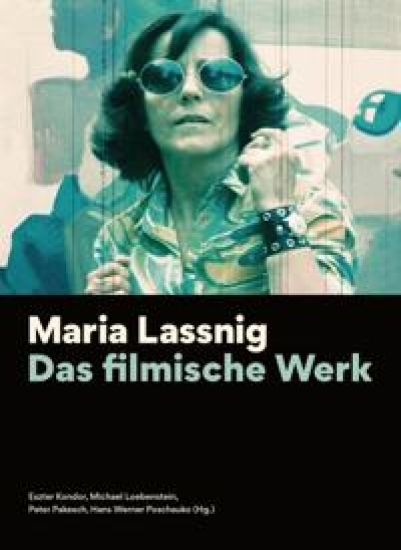
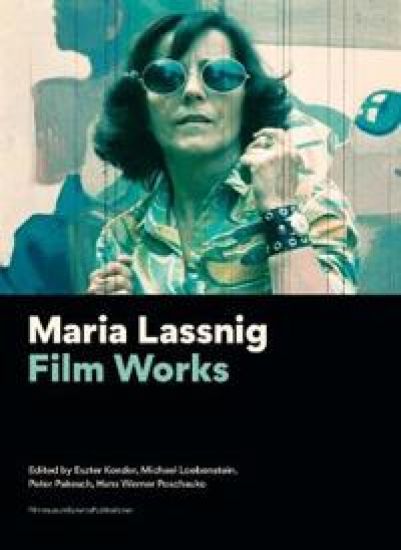
Maria Lassnig (1919–2014) is internationally recognized as one of the most important painters of the 20th and 21st centuries. The leitmotif of her painting, the act of rendering her “body awareness” visible found additional expression in film in the early 1970s. During her time in New York, Lassnig studied animation at the School of Visual Arts and began to film in 8mm and 16mm. While several of these New York films have long since been part of her canonical works (e.g. Selfportrait, Iris, Couples, Shapes), many remained unfinished. These "films in progress" can be regarded as autobiographical notes as well as an artistic experiment featuring many of Lassnig’s recognizable sujets and methods. In 2018, this filmic legacy was restored and in many cases completed according to Lassnig’s original concept and instructions by two close collaborators, artists Hans Werner Poschauko and Mara Mattuschka, and presented to great international acclaim. This English-language publication provides the first comprehensive index of Lassnig’s film works, offering insight into the filmmaker’s world of ideas through a wide selection of Lassnig’s own previously unpublished notes. It also includes a selection of Lassnig's "films in progress" on DVD. Two essays by James Boaden and Stefanie Proksch-Weilguni place Lassnig’s work in the context of the US-American film avant-garde of the 1970s, while conversations with Mara Mattuschka, Hans Werner Poschauko and the restoration team shed a light on the rediscovery of Lassnig’s fascinating films.
Maria Lassnig – Das filmische Werk [German–language Edition]

Maria Lassnig – Das filmische Werk [German–language Edition]

Eszter Kondor; Michael Loebenstein; Peter Pakesch; Hans Werner Poschauko

Synema Gesellschaft Fur Film u. Medien
2021
nidottu
Maria Lassnig (1919–2014) is internationally recognized as one of the most important painters of the 20th and 21st centuries. The leitmotif of her painting, the act of rendering her “body awareness” visible found additional expression in film in the early 1970s. During her time in New York, Lassnig studied animation at the School of Visual Arts and began to film in 8mm and 16mm. While several of these New York films have long since been part of her canonical works (e.g. Selfportrait, Iris, Couples, Shapes), many remained unfinished. These "films in progress" can be regarded as autobiographical notes as well as an artistic experiment featuring many of Lassnig’s recognizable sujets and methods. In 2018, this filmic legacy was restored and in many cases completed according to Lassnig’s original concept and instructions by two close collaborators, artists Hans Werner Poschauko and Mara Mattuschka, and presented to great international acclaim. This German-language publication provides the first comprehensive index of Lassnig’s film works, offering insight into the filmmaker’s world of ideas through a wide selection of Lassnig’s own previously unpublished notes. It also includes a selection of Lassnig's "films in progress" on DVD. Two essays by James Boaden and Stefanie Proksch-Weilguni place Lassnig’s work in the context of the US-American film avant-garde of the 1970s, while conversations with Mara Mattuschka, Hans Werner Poschauko and the restoration team shed a light on the rediscovery of Lassnig’s fascinating films.
Max Neuhaus

Max Neuhaus

Max Neuhaus; Christoph Cox; Branden W. Joseph; Liz Kotz; Ulrich Loock; Peter Pakesch; Alex Potts

Yale University Press
2010
sidottu
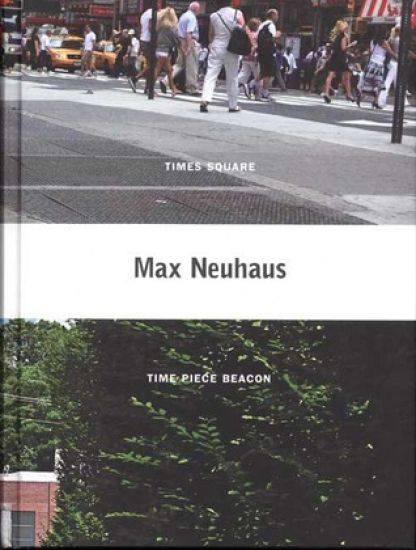
In 1977, Max Neuhaus turned a triangle of pedestrian space between 45th and 46th Streets in Times Square into an island of harmonic sound. The rich textures of that sound continue today, emanating from beneath the sidewalk grating, to anonymously reach an individual’s ears as if one has stumbled upon a secret. Known as Times Square, the celebrated installation was restored in 2002 with support from Dia Art Foundation, which further commissioned a site-specific piece, Time Piece Beacon, from Neuhaus in 2006 for its museum in Beacon, New York. This stunning book—the only volume in print dedicated solely to the work of Neuhaus—takes these two projects as a point of departure from which to consider the singular impact this artist has had in establishing sound as a medium in contemporary art. An interview with Neuhaus is complemented with essays by multidisciplinary scholars who investigate and situate his work within a historical context. Distributed for Dia Art Foundation