Kirjojen hintavertailu – 12 859 829 kirjaa ja 27 kauppaa

Kirjailija

Peter Phillips

Kirjat ja teokset yhdessä paikassa: 22 kirjaa, julkaisuja vuosilta 2003–2024, suosituimpiin kuuluu Liberties Journal of Culture and Politics. Vertaile teosten hintoja ja tarkista saatavuus suomalaisista kirjakaupoista.

22 kirjaa

Kirjojen julkaisuvuodet: 2003–2024.

Liberties Journal of Culture and Politics

Liberties Journal of Culture and Politics

Giles Kepel; Ingrid Rowland; Vladimir Kara-Murza; Enrique Krauze; Paul Muldoon; Mitchell Abidor; Agnes Callard; Henri Cole; William Deresiewicz; Benjamin Moser; David Nirenberg; Peter Phillips; Becca Rothfeld; Paul Starr; David Thomson; Chaim Nacham Bialik

Liberties Journal Foundation
2021
pokkari
“A Meteor of Intelligent Substance” “Something was Missing in our Culture, and Here It Is” “Liberties sure is needed in these times.” In a short time since its launch, Liberties - A Journal of Culture and Politics, a quarterly, has become essential reading for those engaged in the cultural and political issues and causes of our time. The writers in Liberties offer deep experience from across borders, national identities, political affiliations and artistic achievements. As the introductory essay in the inaugural edition noted, “At this journal we are betting on what used to be called the common reader, who would rather reflect than belong and asks of our intellectual life more than a choice between orthodoxies.” Each issue of Liberties features original in-depth essays and compelling new poetry from some of the world's most significant writers, artists, and scholars, as well as introducing new talent, to inspire and impact the intellectual and creative lifeblood of today’s culture and politics. This spring issue of Liberties includes: Giles Kepel on the Murder of Samuel Paty; Ingrid Rowland’s Long Live the Classics!; Vladimir Kara-Murza Surviving Putin’s Poisons; Paul Starr on Reckoning with National Failure from Covid; Becca Rothfeld on Today's Sanctimony Literature; Enrique Krauze explores What is Latin America?; William Deresiewicz on Why Great Visual Art Forces Us to Think; Benjamin Moser on Rediscovering Frans Hals; David Nirenberg on What We Can Learn from Earlier Plagues; Agnes Callard’s view of Romance without Love, Love without Romance; Mitchell Abidor looks back to “Social Media” in 1895 to Understand a Crowd’s “Wisdom”; The Tallis Scholars' Peter Phillips on the Secrets of Josquin; David Thomson on Movies’ Poetic Desire; Poetry from Henri Cole, Chaim Nachman Bialik, and Paul Muldoon; and, Leon Wieseltier (editor) asks "Where Are the Americans?” and Celeste Marcus (managing editor) writes for a Pluralistic Heart.
Carter and the Evidence of Evil

Carter and the Evidence of Evil

Peter Phillips

New Generation Publishing
2024
pokkari
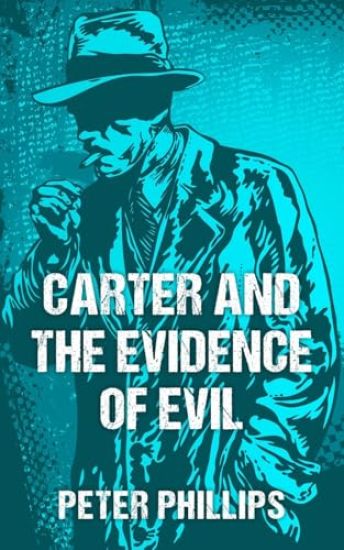
Carter is a unique police officer. He only has one name... Not only found in the force in which he works, the Merseyside constabulary. But in the whole of the country. Carter is the head of an elite group of hand-picked officers known as 'The Major Crime Unit.' Together with a very capable deputy, Woman Detective Superintendant Susan Ford. Their job is to investigate severe cases of crime, force-wide, to relieve the pressure from their restricted divisional CID colleagues. Carter returns to his flat after spending a couple of week's leave with his in-laws, Diane and Martin. Sinclair. The parents of his murdered wife, Helen, their two children, and the duty Armed Protection officer engaged in their protection. A heinous crime conducted by the cohorts of a major criminal gang, hoping by committing the audacious crime, both he and the MCU would implode. It had been some four years since her death, and her parents had come to love Carter as their son. He could always use their farm as a bolthole to escape the rigours of his job. On his return he opened his holdall, and as usual, Diane had washed and ironed his clothes. On completion of his domestic chores, he enters the lounge of his flat, carrying a mug of coffee. On the coffee table, he notices amongst his pile of mail set aside by his domestic Kate, an ornate white envelope with silver edges. He opens it and sees he's been invited to a party at the home of his best friends, David and Hannah Robison. He attends the party and is made a fuss by his hosts. It is while he is relaxing with a drink, and viewing the other guests, when his pager activates, he apologises to his friends, saying he must leave. He is collected by DS Phil Watson, when asked what is going on; all his junior officer knows that a body has been found in a local municipal park. And, so, it begins ...
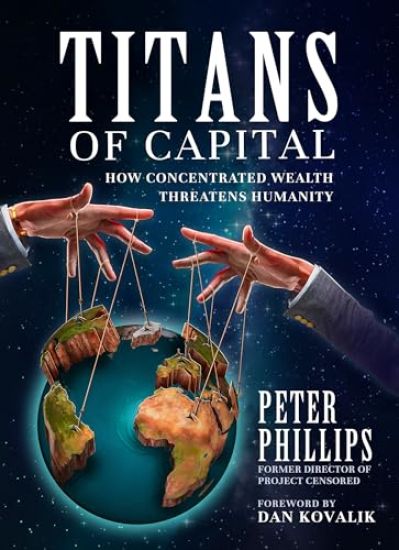
Titans of Capital

Titans of Capital

Peter Phillips; Dan Kovalik

SEVEN STORIES PRESS,U.S.
2024
nidottu

Halvin toimitettuna 23,70 €

A fascinating examination of the rapid concentration of global capital, with chapters that focus on China and Russia. Explores how fewer and larger investment companies now manage the excess financial wealth of the world's 40 million richest people, to the detriment of everyone else and the global environment. Political sociologist Peter Phillips examines the global economy to demonstrate how networks of wealthy individuals have evolved since the COVID-19 pandemic--and how the financial investments of transnational elites threaten human rights and the future of the planet. Focusing on private capital investments, military spending, and the propaganda machine, he poses three key research questions: To what extent do the wealthy influence--or even dominate--decision making that affects all of us in society? Who are the most powerful people? How does the accumulation of capital work? Titans of Capital examines changes in the global economy during the past five years that demonstrate how networks of wealthy individuals have evolved since the COVID-19 pandemic, and how the financial investments of transnational elites threaten human rights and the future of the planet. Private capital investments serve as the primary operating funds for international arms sales, private prisons, and other socially negative activities. These investments fuel the continued use of carbon-based energy leading to amplified global warming and climate change. Military spending is a critical component of continued wealth concentration and political power in the world. Spending on arms and intelligence is a required aspect of maintaining global power and control. Dealing with Russia, China, Iran and other "rogue" states is a continuing agenda for agents of the world power elites. Propaganda machines in Western capitalist governments serve to protect elite wealth by promoting military conflicts to open new regions for economic investment. Phillips warns that while continued concentration of global capital increases the profits enjoyed by the global economy's "Titans,", it also increases global inequality, starvation, and civil unrest, threatening the lives of the hundreds of millions of people living in extreme poverty. It is imperative to ask how we can reverse the concentration of Titan wealth and revitalize grassroots democracy unbridled by extreme wealth. Identifying 117 global Titans by name and exposing the networks and interests that unite them provides readers opposed to militarism and committed to economic equality with crucial tools to directly engage the power elite who endanger life on earth.
The Tragedy of Nazi Germany

The Tragedy of Nazi Germany

Peter Phillips

Routledge
2021
nidottu
Originally published in 1969, this book discusses the many factors which atomised German society from 1870 onwards and thus assisted Nazi evil, and it shows that Hitler and Nazism were mere phenomena of a mass age. The author wrote with the twin qualifications as historian and survivor of the camps. To have lived through it and then dissect it as a scholar is an astonishing achievement and it is this achievement that this book records.
GM Agriculture and Food Security

GM Agriculture and Food Security

Stuart Smyth; William Kerr; Peter Phillips

CABI Publishing
2019
sidottu
Efforts to improve food security in the developing world have been hampered due to myths surrounding GM agriculture. This book explores the theory, evidence and rhetoric of the impact of food production on the environment, and the impact of the environment on food production. The chapters address: food security and technology; expertise and opportunism; the promise of technology; the politicization of risk; industrial agriculture; the meaning of 'natural'; the potential of the local food movement; food labelling; genetic diversity in the agro-industrial era; sustainability and chemical application; plant vitality; and future prospects for food security. Each chapter includes a personal introduction from the authors about the issues at hand, followed by a detailed analysis with further references. The book considers the origins of concerns and then examines the evidence around the issues, and the impacts in terms of policy, regulation and agricultural practice. It also: - Refutes common consumer and environmental organization myths about biotechnology. - Highlights the importance of food security in both the developing and developed world. - Provides a pro-science approach to increasing food security. This book will be of interest to students and researchers in biotechnology, food security and public understanding of science, and also to policy makers, regulators and industry managers.
GM Agriculture and Food Security

GM Agriculture and Food Security

Stuart Smyth; William Kerr; Peter Phillips

CABI Publishing
2019
nidottu
Efforts to improve food security in the developing world have been hampered due to myths surrounding GM agriculture. This book explores the theory, evidence and rhetoric of the impact of food production on the environment, and the impact of the environment on food production. The chapters address: food security and technology; expertise and opportunism; the promise of technology; the politicization of risk; industrial agriculture; the meaning of 'natural'; the potential of the local food movement; food labelling; genetic diversity in the agro-industrial era; sustainability and chemical application; plant vitality; and future prospects for food security. Each chapter includes a personal introduction from the authors about the issues at hand, followed by a detailed analysis with further references. The book considers the origins of concerns and then examines the evidence around the issues, and the impacts in terms of policy, regulation and agricultural practice. It also: - Refutes common consumer and environmental organization myths about biotechnology. - Highlights the importance of food security in both the developing and developed world. - Provides a pro-science approach to increasing food security. This book will be of interest to students and researchers in biotechnology, food security and public understanding of science, and also to policy makers, regulators and industry managers.
The Tragedy of Nazi Germany

The Tragedy of Nazi Germany

Peter Phillips

Routledge
2019
sidottu
Originally published in 1969, this book discusses the many factors which atomised German society from 1870 onwards and thus assisted Nazi evil, and it shows that Hitler and Nazism were mere phenomena of a mass age. The author wrote with the twin qualifications as historian and survivor of the camps. To have lived through it and then dissect it as a scholar is an astonishing achievement and it is this achievement that this book records.
Carter's Return

Carter's Return

Peter Phillips

New Generation Publishing
2019
pokkari
Carter recently promoted to the rank of, Deputy Commander CID, had on receipt of his new rank, asked to be allowed a twelve month sabbatical on personal grounds. His immediate boss, Commander Tony Frost CID, although knowing how much he'd be missed, consented. The main reason for Carter's sabbatical was due mainly to the tragic death of his wife, Helen and their two children, murdered on the orders of a psychopath, in an effort to slow Carter and his team down on their investigations. It had been four years since the loss of Helen. During his time off from the force, he visited and spent two months with Helens' parents, making frequent visit to the grave of both Helen, and their children. He found it a wrench having to say good bye to her parents, but realised that he had to head home to his own place. Carter returns home after two months, he was greeted by Mrs Murphy, his housekeeper. Carter is left mulling about his flat constantly recalling the happy times that he had spent with Helen. He saw Helen as a true friend, partner, and wife. He strongly believed that police officers who spend so much time delving into the cesspit of life, which seems to manifest itself when dealing with high end crime, should have a bolt hole such as a warm, and tender home life. Both Carter and Helen found a perfect life. He unpacks his belongings. The following morning he attends at Tom's deli, for a full English breakfast. It's whilst he is eating that he notices an attractive lady, who shows an equal interest. Unbeknown to Carter, the attractive lady works for Sam, Lloydie's partner. Carter is invited to a dinner party at, Sam and Lloydie's flat. He there meets Penny, the very same lady from, 'Tom's deli.' A relationship evolves. One morning Penny tells Carter, that his pager has activated. Carter is sent for, by his boss, Commander Frost. And so it begins.
Carter's Tragedy

Carter's Tragedy

Peter Phillips

New Generation Publishing
2019
pokkari
DCI Carter and his team are yet again called upon to deal with the deaths of four victims' the team followed up after uniform officers responded to 'shots fired' in the Kensington area of the city. The officers attended at a derelict property in beech Street. They found four bodies, two in the downstairs lounge, and two upstairs in one of the bedrooms. All had been shot in their backs, and in the back of their heads. Carter's team noticed that the four victims were dressed I new clothes, yet they were found in utter squalor. Another four victims are found in two major parks all having the same MO. Whilst carrying out his investigation Carter receives a call late at night, he immediately attends at The Liverpool Royal, were he meets a smartly dressed man, who tells Carter he is the son of, Kathy Clark an infamous prostitute, and drug addict. Kathy had asked Carter to try and trace her son placed in care, and Carter had found him, the man standing in front of him. Kathy Clark was in the trauma unit and demanded to see Carter she had been badly beaten up, and manages to tell Carter of a drug gang who are using young teenagers to act as mules in the shifting of drugs up and down the country. Kathy passes away as a result of her injuries. Carter's team act on information and set up surveillance, which involves the team following two mules up to Glasgow. Due to an error in the force control room the leader of the gang follows Carter's team who are following the mules hoping they would lead them to the gang leader. Unfortunately the team are boxed in at a junction and attacked by fire bombs and explosives. Carter and his team mates are taken to hospital. The team realise they have a fight on their hands. Eventually Carter realises that he is dealing with a psychopath who knows no bounds, he is hell bent in getting his drugs out, and doesn't care who he treads on, killing anyone who gets in his way. One such morning Carter, is sent for by, Tony Frost the Commander of the CID. Carter enters his office to be told that the gang had attacked his flat killing his wife's protection officer, his wife and two young babies. Carter throws himself into driving the team to find the culprits. He is told there is a conflict of interest, but asks if he can manage and advise the team, yet not get involved in any enquiries. Carter has to resign to the fact. The team driven by his number two DI Susan Ford continue to make headway in this terrible case.
100 Cases in UK Paramedic Practice

100 Cases in UK Paramedic Practice

Christoph Schroth; Peter Phillips

Routledge
2018
nidottu
Pre-hospital care plays an increasingly important part in contemporary healthcare delivery and the skills of paramedics, emergency medical technicians and emergency care assistants are a vital part of this. This casebook supports readers to develop the necessary assessment and decision-making skills they need in order to effectively manage a variety of cases typically seen in UK paramedic practice. 100 Cases in UK Paramedic Practice allows for learning and revision through 100 scenarios which aim to encompass cases that may be seen in daily practice. The book covers scenarios that can occur at any moment of the day, from an ambulance shift to primary care settings to event standby duties. The bite-size structure of this book allows the reader to focus on body systems or random case scenarios, depending on their preference. This is an essential, evidence-based guide for students of pre-hospital care and a useful reference for qualified staff as a source of continued professional development or as a revision tool.
100 Cases in UK Paramedic Practice

100 Cases in UK Paramedic Practice

Christoph Schroth; Peter Phillips

Routledge
2018
sidottu
Pre-hospital care plays an increasingly important part in contemporary healthcare delivery and the skills of paramedics, emergency medical technicians and emergency care assistants are a vital part of this. This casebook supports readers to develop the necessary assessment and decision-making skills they need in order to effectively manage a variety of cases typically seen in UK paramedic practice. 100 Cases in UK Paramedic Practice allows for learning and revision through 100 scenarios which aim to encompass cases that may be seen in daily practice. The book covers scenarios that can occur at any moment of the day, from an ambulance shift to primary care settings to event standby duties. The bite-size structure of this book allows the reader to focus on body systems or random case scenarios, depending on their preference. This is an essential, evidence-based guide for students of pre-hospital care and a useful reference for qualified staff as a source of continued professional development or as a revision tool.
Giants

Giants

Peter Phillips

Seven Stories Press,U.S.
2018
nidottu
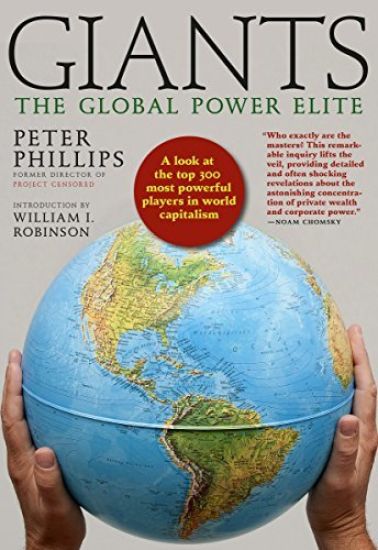
A look at the top 200 most powerful players in world capitalism, who are at the controls of our economic future. Who holds the purse strings to the majority of the world's wealth? There is a new global elite at the controls of our economic future, and here former Project Censored director and media monitoring sociologist Peter Phillips unveils for the general reader just who these players are. The book includes such power players as Mark Zuckerberg, Bill Gates, Jeff Bezos, Jamie Dimon, and Warren Buffett. As the number of men with as much wealth as half the world fell from sixty-two to just eight between January 2016 and January 2017, according to Oxfam International, fewer than 200 super-connected asset managers at only 17 asset management firms--each with well over a trillion dollars in assets under management--now represent the financial core of the world's transnational capitalist class. Members of the global power elite are the management--the facilitors--of world capitalism, the firewall protecting the capital investment, growth, and debt collection that keeps the status quo from changing. Each chapter in Giants identifies by name the members of this international club of multi-millionaires, their 17 global financial companies--and including ngos such as the Group of Thirty and the Trilateral Commission--and their transnational military protectors, so the reader, for the first time anywhere, can identify who consitutes this network of influence, where the wealth is concentrated, how it suppresses social movements, and how it can be redistributed for maximum systemic change.
Victorians at Home and Away

Victorians at Home and Away

Janet Phillips; Peter Phillips

Routledge
2017
nidottu
First published in 1978, this book explores everyday Victorian likes and dislikes, manners, fashions, ideals and illusions. It discusses their changing attitudes to women, children, the poor, the common soldier and their country. It explains the rise and fall of home entertainment, the growth of soccer, racing and cricket to national sports, the rise of public schools and new professions as well as the appeal of missionary work. It is argued that all this happened not because the Victorians were fools, hypocrites or villains, but because they sensibly adapted themselves to peculiar and novel circumstances. This title will be of interest to students of history.
Victorians at Home and Away

Victorians at Home and Away

Janet Phillips; Peter Phillips

Routledge
2016
sidottu
First published in 1978, this book explores everyday Victorian likes and dislikes, manners, fashions, ideals and illusions. It discusses their changing attitudes to women, children, the poor, the common soldier and their country. It explains the rise and fall of home entertainment, the growth of soccer, racing and cricket to national sports, the rise of public schools and new professions as well as the appeal of missionary work. It is argued that all this happened not because the Victorians were fools, hypocrites or villains, but because they sensibly adapted themselves to peculiar and novel circumstances. This title will be of interest to students of history.
Financial Institutions, Instruments and Markets

Financial Institutions, Instruments and Markets

Christopher Viney; Peter Phillips

McGraw-Hill Education / Australia
2015
nidottu
The eighth edition of Financial Institutions, Instruments and Markets sees well-regarded authors Christopher Viney and Peter Phillips team up once again to deliver the latest information in financial institutions management. The new edition includes changes to important market items, updated discussions of the GFC, Murray report, Basel II and III, updated and expanded treatment of futures, derivatives markets and regulatory reforms, as well as an entire new discussion on behavioural finance. To ensure the content’s relevancy and applicability, 21 new Australian and international case studies illustrate the material covered in each chapter, while the integrated worked examples and in-chapter exercises all further students’ learning. The latest edition of Financial Institutions, Instruments and Markets is more user-friendly than ever – the structure of the content better aligns with teaching units so specific content is easily located while the design and layout of the text has been updated for readability.
Innovation in Agri-food Clusters

Innovation in Agri-food Clusters

Peter Phillips; Jeremy Karwandy; Graeme Webb; Camille Ryan

CABI Publishing
2012
sidottu
Innovation has moved through a range of revolutionary epochs, but there is no clear picture of how, or even if, innovation can be managed. This book explores the models, methods and metrics of innovation analysis in the context of a single centre: the Global Oilseeds Complex centred in Saskatoon, Canada. It is a single, coherent volume that outlines the theory and practices related to innovation, offering a critical assessment of the strengths and weaknesses of the different approaches, backed up with empirical evidence.
The Prologue of the Fourth Gospel

The Prologue of the Fourth Gospel

Peter Phillips

T. T.Clark Ltd
2006
sidottu
Phillips undertakes a sequential reading of the Prologue of John's Gospel. By using the reading strategies of Iser, Emmott, and Eco, the book establishes a reading strategy termed sequential disclosure, which is then applied to the text. In order to arrive at the reading, preliminary chapters focus both on historical interpretation of the Prologue in terms of reader response and on the role of the author, the use of persuasion and the development of irony. Special focus is given to the role of the dramatic prologue, as well as the interaction between rhetoric, irony and community. As such, the book discusses the role of the reading process in developing a specific community language. The book focuses on the didactic role of the Prologue in teaching readers this language and so including them into the Johannine community. The reading of the Prologue highlights the key aspects of the reading process: ambiguity and disambiguation; resemanticization; antilanguage; community development and intertextuality. A sequential reading of the Prologue highlights the didactic and evangelistic role of this text. JSNTS 294