Kirjojen hintavertailu – 12 859 819 kirjaa ja 27 kauppaa

Kirjailija

Peter R. Breggin

Kirjat ja teokset yhdessä paikassa: 9 kirjaa, julkaisuja vuosilta 1996–2018, suosituimpiin kuuluu Att sluta med psykofarmaka : handbok för förskrivare, behandlare, patienter och deras anhöriga. Vertaile teosten hintoja ja tarkista saatavuus suomalaisista kirjakaupoista.

Nimi esiintyy myös muodoissa: Peter R Breggin

9 kirjaa

Kirjojen julkaisuvuodet: 1996–2018.

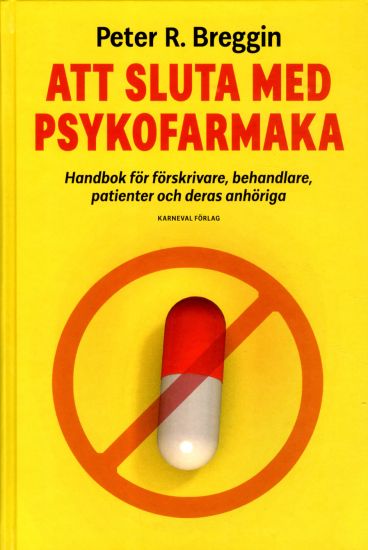
Att sluta med psykofarmaka : handbok för förskrivare, behandlare, patienter och deras anhöriga
Psykofarmaka är väsentligt mer farliga än vi någonsin har fått veta av läkarna som skriver ut dem. Det är psykiatrikern Peter R. Breggins djupa övertygelse sedan decennier tillbaka. Därför har han skrivit Att sluta med psykofarmaka, den första allmänt tillgäng­liga och heltäckande handboken i ämnet. Den ger nödvändig och detaljerad information om när en minskning eller utsättning av psykofarmaka lämpligast kan inledas och hur detta kan åstadkommas så säkert, snabbt och problemfritt som möjligt. "Breggins bok är mycket viktig. Den borde vara obliga­to­risk läsning för alla läkare som använder psykofarmaka." Peter C. Gøtzsche, chef för Nordic Cochrane Center "Peter Breggins bok fyller ett stort behov och bör läsas av alla psykiatriker, psykologer, sjuksköterskor, terapeuter, patienter och anhöriga till patienter." Kathleen Wheeler, PhD och professor "Jag vet ingen annan informationskälla om detta ämne som är lika lättfatt­ligt och överskådligt skriven." Douglas C. Smith, MD, psykiatriker, f.d. klinikchef Peter R. Breggin är psykiatriker, verksam på en privat mottagning i New York. Han har publicerat över 40 referentgranskade ­vetenskapliga artiklar och ett tjugotal fackböcker. Bland de senare kan nämnas Toxic Psychiatry (1991), Talking Back to Ritalin (2001), Anti­depressant Fact Book (2001), Your Drug May Be Your Problem (2007), Medication Madness: The Role of Psychiatric Drugs in ­Cases of Violence, Suicide, and Crime (2008). Att sluta med psyko­farmaka är den första av författarens böcker som översatts till svenska.
Psychosocial Approaches to Deeply Disturbed Persons

Psychosocial Approaches to Deeply Disturbed Persons

E Mark Stern; Peter R Breggin

Routledge
2016
nidottu
At a time when biological psychiatry claims that drugs and electroshock are the best methods for helping deeply disturbed persons, mental health professionals need to be reminded that psychological and social approaches to mental illnesses remain more effective, less harmful, and much more able to address the real needs of recovery, growth, and development for affected persons. Psychosocial Approaches to Deeply Disturbed Persons empowers counselors, psychiatrists, psychologists, and social workers to trust their intuitive and clinical understanding of how to help seriously disturbed people through humane, caring approaches. Psychosocial Approaches to Deeply Disturbed Persons introduces mental health professionals to an array of psychological and social alternatives that are available for helping patients considered “psychotic” or very emotionally disturbed. Focusing on psychological and social approaches to helping people who become labeled “psychotic” or who carry serious psychiatric diagnoses, contributors show mental health professionals psychological, social, and spiritual alternatives for approaching or treating these individuals. Readers learn about:a successful model for nonmedical, non-drug residential treatment centers utilizing the artwork of psychotic patients case histories of psychoanalytic therapy group therapy to help families with a “schizophrenic” member improve communication Re-evaluation Counseling (RC) with disturbed individuals psychoanalytically-oriented therapy World Health Organization research which demonstrates the positive effect of extended family and social relationships and the negative effect of modern biopsychiatric treatment research demonstrating the efficacy of psychotherapy with persons labeled “schizophrenic”These chapters combined with a review of empirical studies demonstrate to readers the efficacy of psychotherapy with psychotic patients. Students or experienced professionals in any of the mental health fields, including psychotherapy, counseling, clinical psychology, clinical social work, and Re-evaluation Counseling will find Psychosocial Approaches to Deeply Disturbed Persons a necessity for most effectively and humanely treating clients with serious psychiatric diagnoses.
Guilt, Shame, and Anxiety

Guilt, Shame, and Anxiety

Peter R. Breggin

Prometheus Books
2015
pokkari
With the first unified theory of guilt, shame, and anxiety, this pioneering psychiatrist and critic of psychiatric diagnoses and drugs examines the causes and effects of psychological and emotional suffering from the perspective of biological evolution, child development, and mature adult decision-making. Drawing on evolution, neuroscience, and decades of clinical experience, Dr. Breggin analyzes what he calls our negative legacy emotions-the painful emotional heritage that encumbers all human beings. The author marshals evidence that we evolved as the most violent and yet most empathic creatures on Earth. Evolution dealt with this species-threatening conflict between our violence and our close-knit social life by building guilt, shame, and anxiety into our genes. These inhibiting emotions were needed prehistorically to control our self-assertiveness and aggression within intimate family and clan relationships. Dr. Breggin shows how guilt, shame, and anxiety eventually became self-defeating and demoralizing legacies from our primitive past that no longer play any useful or positive role in mature adult life. He then guides the reader through the Three Steps to Emotional Freedom, starting with how to identify negative legacy emotions and then how to reject their control over us. Finally, he describes how to triumph over and transcend guilt, shame, and anxiety on the way to greater emotional freedom and a more rational, loving, and productive life.
Psychiatric Drug Withdrawal

Psychiatric Drug Withdrawal

Peter R. Breggin

Springer Publishing Co Inc
2012
nidottu
As a physician who specializes in addiction medicine and drug withdrawal and written widely on them, I recommend Dr. Breggin's book to every health professional who deals with anyone taking psychiatric drugs. He gives highly useful information and reasons for stopping or avoiding them. It's an excellent one-stop source of information about psychiatric drug effects and withdrawal. Prescribers, therapists, patients, and families will benefit from this guidebook. Charles L. Whitfield, MD Bestselling author of Healing the Child Within and many other books Peter Breggin has more experience in safely withdrawing psychiatric patients from medication than any other psychiatrist. In this book he shares his lifetime of experience. All of our patients deserve the benefit of our obtaining that knowledge. Bertram Karon, PhD Professor of Psychology, Michigan State University Author, The Psychotherapy of Schizophrenia Former President of the Division of Psychoanalysis of the American Psychological Association This is such an important book. Describing the problem of withdrawal from psychiatric drugs in detail, and providing clear advice regarding how to deal with this problem as Peter has done so well in this book, is long overdue. For decades, the belief system that is mainstream psychiatry has denied the existence of withdrawal problems from the substances they prescribe so widely. In reality, withdrawal problems with psychiatric drugs is a common occurrence. Because of psychiatry's reckless denial of this real and common problem, millions of people worldwide have not had the support and care they desperately need when attempting to come off psychiatric drugs, often been erroneously advised that these problems are confirmation of the existence of their supposed original so-called 'psychiatric illness.' Dr. Breggin's book is therefore both timely and necessary." Terry Lynch, MD Physician and Psychotherapist Author of Beyond Prozac: Healing Mental Suffering Without Drugs and Selfhood: A Key to the Recovering of Emotional Well Being, Mental Health and the Prevention of Mental Health Problems Dr. Peter Breggin has written an invaluable reference for mental health professionals and lay-persons alike who are seeking a way out of dependency on psychiatric drugs. He describes the many dangers of psychiatric medication in straightforward research-based and contextually nuanced terms. Most helpfully, he articulates a method of empathic, person-centered psychotherapy as an alternative to the prevailing emotionally and system disengaged drug-centered approach. In this book, Dr. Breggin systematically outlines how to safely withdraw a patient from psychiatric medication with rich case examples drawn with the detail and sensitivity to individual and situational differences that reveal not only his extensive clinical experience, but his clear, knowledgeable, and compassionate vision of a more humane form of treatment. In this volume, Dr. Peter Breggin has again demonstrated that he is a model of what psychiatry can and should be. This is an indispensable text for both mental health trainees and experienced practitioners seeking a practical alternative to the dominant drug-centric paradigm. Gerald Porter, PhD Vice President for Academic Affairs School of Professional Psychology at Forest Institute This much needed book and guide to psychiatric medication withdrawal is clearly written and easy to understand. As people become more empowered and able to inform themselves about the effects of pharmaceuticals, practitioners will be called upon to wean their patients off of damaging medications. This book will provide that guidance. Thank you Dr. Breggin for having the courage to oppose conventional psychiatric thinking and the caring to improve the quality of life for individuals who are ready to experience their own innate healing instead of reaching for a pill to mask the symptoms. Melanie Sears, RN, MBA Author, Humanizing Health Care and Choose Your Words Today many psychologists, nurses, social workers, and counselors are struggling with how to help adults and the parents of children who are over-medicated or who wish to reduce or stop taking their psychiatric drugs. Dr. Breggin's book shows non-prescribing professionals, as well as prescribers, how to respond to their patient's needs in an informed, ethical, and empowering fashion. Sarton Weinraub, PhD Clinical Psychologist Director, New York Person-Centered Resource Center, NYC This is the first book to establish guidelines and to assist prescribers and therapists in withdrawing their patients from psychiatric drugs, including those patients with long-term exposure to antipsychotic drugs, benzodiazepines, stimulants, antidepressants, and mood stabilizers. It describes a method developed by the author throughout years of clinical experience, consultations with experienced colleagues, and scientific research. Based on a person-centered collaborative approach, with patients as partners, this method builds on a cooperative and empathic team effort involving prescribers, therapists, patients, and their families or support network. The author, known for such books as Talking Back to Prozac, Toxic Psychiatry, and Medication Madness, is a lifelong reformer and scientist in mental health whose work has brought about significant change in psychiatric practice. This book provides critical information about when to consider psychiatric drug reduction or withdrawal, and how to accomplish it as safely, expeditiously, and comfortably as possible. It offers the theoretical framework underlying this approach along with extensive scientific information, practical advice, and illustrative case studies that will assist practitioners in multiple ways, including in how to: Recognize common and sometimes overlooked adverse drug effects that may require withdrawal Treat emergencies during drug therapy and during withdrawal Determine the first drugs to withdraw during multi-drug therapy Distinguish between withdrawal reactions, newly occurring emotional problems, and recurrence of premedication issues Estimate the length of withdrawal

Wow, I'm an American

Wow, I'm an American

Peter R. Breggin

Lake Edge Press
2009
nidottu
"Wow, I'm an American " is written by Harvard-trained psychiatrist and best-selling author Peter R. Breggin, MD. In a bold new approach to the lives of our Founders and the principles they embraced, this book shows how the same ideals that inspired the American Revolution and the Declaration of Independence can motivate and guide us to live happier and more satisfying lives. "Wow, I'm an American " demonstrates for the first time how the Founding principles of freedom, responsibility, gratitude, and love apply not only to government policy but also to the everyday challenges in our personal lives. At a time when the Constitution and traditional American values are threatened as never before, "Wow, I'm an American " revitalizes the American spirit. Founders like George Washington, John and Abigail Adams, Benjamin Franklin, Thomas Jefferson, Samuel Adams, James Madison and Benjamin Rush built this country's government and their personal lives around the "inalienable rights" to life, liberty, property, and the pursuit of happiness. Our great political documents like the Bill of Rights express the integrity of their overall approach to life. No other book so imaginatively captures the essence of what makes America great, while showing us how to apply these principles to everyday living. Written in the spirit that simplicity is the test of truth and usefulness, Dr. Breggin's words can help the entire family to understand and to live like our Founding heroes. ... WILLIAM GLASSER, MD, PSYCHIATRIST AND AUTHOR: "Takes a fresh new approach to American history that will give you a deeper appreciation of the people who founded our nation and how to apply their beliefs to your everyday life." ... BARRY STRAUSS, PH. D., CORNELL UNIVERSITY PROFESSOR OF HISTORY: "As a historian, I admire Peter Breggin's insight into the American past. If you want one book that explains for the whole family what America is all about, look no further." ... CHRISTOPHER HARPER, TEMPLE UNIVERSITY ASSOCIATE PROFESSOR OF JOURNALISM AND FORMER WASHINGTON CORRESPOND FOR NEWSWEEK: "Peter Breggin's book describes the magic and majesty of what the founders did for us. An inspiring book that my family, including my 16-year-old daughter, enjoyed."
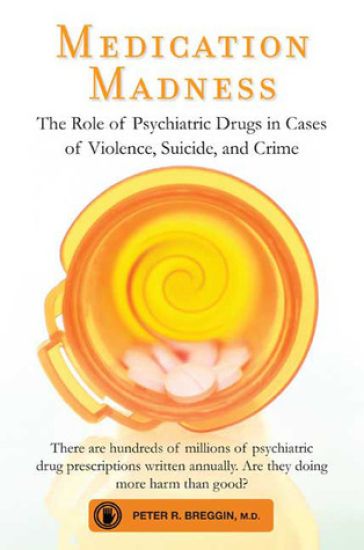
Medication Madness: The Role of Psychiatric Drugs in Cases of Violence, Suicide, and Crime
In Medication Madness, psychiatrist Peter R. Breggin, M. D., describes how people taking psychiatric medication can experience abnormal behavioral reactions, including suicide, violence, emotional breakdowns, and criminal acts. Dr. Breggin explains his concept of "medication spellbinding" individuals taking psychiatric drugs may have no idea whatsoever that their mental conditions are deteriorating and that their actions are no longer under control. He proves his argument by documenting dozens of cases from his practice and his consultations in legal cases. Reading like a thriller, the book also examines how the FDA, the pharmaceutical industry, and the medical establishment continue to oversell the value of these drugs, and he provides information on how to safely stop taking psychiatric medications. Medication Madness is a compelling and frightening read as well as a cautionary tale about our reliance on medicine to fix what ails us.
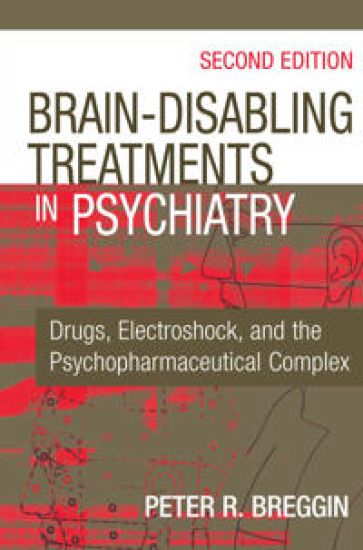
Brain-Disabling Treatments in Psychiatry

Brain-Disabling Treatments in Psychiatry

Peter R. Breggin

Springer Publishing Co Inc
2007
sidottu

Halvin toimitettuna 112,90 €

From the author of Toxic Psychiatry and Talking Back to Prozac: Peter Breggin is the conscience of American psychiatry. Once more he updates us on the real evidence with respect to the safety and effectiveness of specific psychiatric medications and ECT. This information is needed by all mental health professionals, as well as patients and families." --Bertram Karon, Ph. D., Professor of Psychology, Michigan State University, Author of The Psychotherapy of Schizophrenia "Nowhere does false medical thinking do more harm than in the modern psychiatric argument that mental illness is easily diagnosed and then cured by a side-effect free drug. Nowhere is the correct psychiatric thinking more evident than in the books by Peter Breggin. -- William Glasser, MD, psychiatrist, author of Reality Therapy In Brain Disabling Treatments in Psychiatry, renowned psychiatrist Peter R. Breggin, M. D., presents startling scientific research on the dangerous behavioral abnormalities and brain dysfunctions produced by the most widely used and newest psychiatric drugs such as Prozac, Paxil, Zoloft, Cymbalta, Effexor, Xanax, Ativan, Ritalin, Adderall, Concerta, Strattera, Risperdal, Zyprexa, Geodon, Abilify, lithium and Depakote. Many of Breggin's earlier findings have improved clinical practice, led to legal victories against drug companies, and resulted in FDA-mandated changes in what the manufacturers must admit about their drugs. Yet reliance on these drugs has continued to escalate in the last decade, and drug company interests have overwhelmed psychiatric practice. This greatly expanded second edition, supported by the latest evidence-based research, shows that psychiatric drugs achieve their primary or essential effect by causing brain dysfunction, and that they tend to do far more harm than good. New scientific analyses in this completely updated edition include: Chapters covering every new antidepressant and stimulant drug Twenty new guidelines for how to conduct non-drug therapy A chapter describing how to safely withdraw from psychiatric drugs A discussion of "medication spellbinding," explaining how patients fail to appreciate their drug-induced mental dysfunctions Documentation of how the drug companies control research and the flow of information about psychiatric treatments
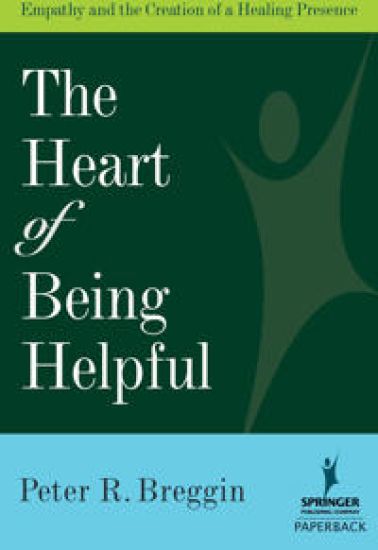
Heart of Being Helpful

Heart of Being Helpful

Peter R. Breggin

Springer Publishing Co Inc
2006
nidottu
Based on more than 30 years of clinical experience as a psychiatrist and a therapist, Dr. Breggin's book, now available in an affordable paperback, illustrates the importance of developing a therapeutic bond--or healing presence--between helping professionals and their clients. The author provides useful vignettes, case studies, and personal insights to help both beginning and experienced therapists develop more empathy in therapeutic relationships. He asserts that the first step toward effective treatment is empathic self-transformation in the therapist. It is empathy and self-transformation that lie at the heart of being helpful. Topics include vulnerability, nurturing, helplessness, forgiveness, and spirituality, as well as tips for working with clients in extreme emotional crises, children and families, and patients of culturally diverse backgrounds.
Psychosocial Approaches to Deeply Disturbed Persons

Psychosocial Approaches to Deeply Disturbed Persons

E Mark Stern; Peter R Breggin

Routledge Member of the Taylor and Francis Group
1996
sidottu
At a time when biological psychiatry claims that drugs and electroshock are the best methods for helping deeply disturbed persons, mental health professionals need to be reminded that psychological and social approaches to mental illnesses remain more effective, less harmful, and much more able to address the real needs of recovery, growth, and development for affected persons. Psychosocial Approaches to Deeply Disturbed Persons empowers counselors, psychiatrists, psychologists, and social workers to trust their intuitive and clinical understanding of how to help seriously disturbed people through humane, caring approaches. Psychosocial Approaches to Deeply Disturbed Persons introduces mental health professionals to an array of psychological and social alternatives that are available for helping patients considered “psychotic” or very emotionally disturbed. Focusing on psychological and social approaches to helping people who become labeled “psychotic” or who carry serious psychiatric diagnoses, contributors show mental health professionals psychological, social, and spiritual alternatives for approaching or treating these individuals. Readers learn about:a successful model for nonmedical, non-drug residential treatment centers utilizing the artwork of psychotic patients case histories of psychoanalytic therapy group therapy to help families with a “schizophrenic” member improve communication Re-evaluation Counseling (RC) with disturbed individuals psychoanalytically-oriented therapy World Health Organization research which demonstrates the positive effect of extended family and social relationships and the negative effect of modern biopsychiatric treatment research demonstrating the efficacy of psychotherapy with persons labeled “schizophrenic”These chapters combined with a review of empirical studies demonstrate to readers the efficacy of psychotherapy with psychotic patients. Students or experienced professionals in any of the mental health fields, including psychotherapy, counseling, clinical psychology, clinical social work, and Re-evaluation Counseling will find Psychosocial Approaches to Deeply Disturbed Persons a necessity for most effectively and humanely treating clients with serious psychiatric diagnoses.