

Kirjailija
Peter Reuter
Kirjat ja teokset yhdessä paikassa: 27 kirjaa, julkaisuja vuosilta 1940–2024, suosituimpiin kuuluu Mu .... Vertaile teosten hintoja ja tarkista saatavuus suomalaisista kirjakaupoista.
27 kirjaa
Kirjojen julkaisuvuodet: 1940–2024.









Crime and Justice, Volume 49 – Organizing Crime: Mafias, Markets, and Networks
Michael Tonry; Peter Reuter
University of Chicago Press
2021
nidottu
For most Americans, The Godfather, The Sopranos, and the Cosa Nostra exemplify organized crime. In Asia the term conjures up images of Japanese yakuza and Chinese triads, in Italy the Cosa Nostra and ‘Ndrangheta, in Latin America Mexican narco-gangs and Colombian drug cartels, in the Netherlands transnational drug and human trafficking, and in Scandinavia outlaw motorcycle gangs. Some but not all those organizations are “mafias” with centuries-long histories, distinctive cultures, and complicated relationships with local communities and governments. Others are new, large but transitory and with no purpose other than maximizing profits from illegal markets. Organized crime organizations have existed for centuries. Serious scholarly, as opposed to journalistic or law enforcement, efforts to understand them, however, date back only a few decades. Authoritative overviews were, until very recently, impossible. Rigorous, analytically acute, and methodologically sophisticated literatures did not exist. They have begun to emerge. They have developed in many countries, involve work in different languages and disciplines, and deploy a wide range of methods. Organizing Crime: Mafias, Markets, and Networks provides the most exhaustive overview ever published of knowledge about organized crime. It provides intensive accounts of American, Italian, and Dutch developments, covers both national mafias and transnational criminality, and delves in depth into gender, human capital, and money laundering issues. The writers are based in seven countries. To a person they are, or are among, the world’s most distinguished specialists in their subjects. At last, credible explanations and testable hypotheses are available concerning when, why, and under what circumstances mafias and other organized crime organizations come into being, what makes them distinctive, what they do and with what effects, and how to contain them.

Crime and Justice, Volume 49 – Organizing Crime: Mafias, Markets, and Networks
Michael Tonry; Peter Reuter
University of Chicago Press
2020
sidottu
For most Americans, The Godfather, The Sopranos, and the Cosa Nostra exemplify organized crime. In Asia the term conjures up images of Japanese yakuza and Chinese triads, in Italy the Cosa Nostra and ‘Ndrangheta, in Latin America Mexican narco-gangs and Colombian drug cartels, in the Netherlands transnational drug and human trafficking, and in Scandinavia outlaw motorcycle gangs. Some but not all those organizations are “mafias” with centuries-long histories, distinctive cultures, and complicated relationships with local communities and governments. Others are new, large but transitory and with no purpose other than maximizing profits from illegal markets. Organized crime organizations have existed for centuries. Serious scholarly, as opposed to journalistic or law enforcement, efforts to understand them, however, date back only a few decades. Authoritative overviews were, until very recently, impossible. Rigorous, analytically acute, and methodologically sophisticated literatures did not exist. They have begun to emerge. They have developed in many countries, involve work in different languages and disciplines, and deploy a wide range of methods. Organizing Crime: Mafias, Markets, and Networks provides the most exhaustive overview ever published of knowledge about organized crime. It provides intensive accounts of American, Italian, and Dutch developments, covers both national mafias and transnational criminality, and delves in depth into gender, human capital, and money laundering issues. The writers are based in seven countries. To a person they are, or are among, the world’s most distinguished specialists in their subjects. At last, credible explanations and testable hypotheses are available concerning when, why, and under what circumstances mafias and other organized crime organizations come into being, what makes them distinctive, what they do and with what effects, and how to contain them.

Drug Policy and the Public Good
Thomas Babor; Jonathan Caulkins; Benedikt Fischer; David Foxcroft; Keith Humphreys; María Elena Medina-Mora; Isidore Obot; Jürgen Rehm; Peter Reuter; Robin Room; Ingeborg Rossow; John Strang
Oxford University Press
2018
nidottu
Illegal psychoactive substances and illicit prescription drugs are currently used on a daily basis all over the world. Affecting public health and social welfare, illicit drug use is linked to disease, disability, and social problems. Faced with an increase in usage, national and global policymakers are turning to addiction science for guidance on how to create evidence-based drug policy. Drug Policy and the Public Good is an objective analytical basis on which to build global drug policies. It presents the accumulated scientific knowledge on drug use in relation to policy development on a national and international level. By also revealing new epidemiological data on the global dimensions of drug misuse, it questions existing regulations and highlights the growing need for evidence-based, realistic, and coordinated drug policy. A critical review of cumulative scientific evidence, Drug Policy and the Public Good discusses four areas of drug policy; primary prevention programs in schools and other settings; supply reduction programs, including legal enforcement and drug interdiction; treatment interventions and harm reduction approaches; and control of the legal market through prescription drug regimes. In addition, it analyses the current state of global drug policy, and advocates improvements in the drafting of public health policy. Drug Policy and the Public Good is a global source of information and inspiration for policymakers involved in public health and social welfare. Presenting new research on illicit and prescription drug use, it is also an essential tool for academics, and a significant contribution to the translation of addiction research into effective drug policy.


Wörterbuch Immunologie und Onkologie / Dictionary of Immunology and Oncology
Peter Reuter; Christine Reuter
Springer-Verlag Berlin and Heidelberg GmbH Co. K
2013
nidottu
- Topaktuelles Worterbuch fur Onkologie und Immunologie - Je ca. 20.000 Stichworte im deutsch-englischen und englisch-deutschen Lexikonteil - Amerikanisches wie britisches Englisch wurde berucksichtigt - Unentbehrlich fur medizinische Berufe und Ubersetzer - Ausfuhrlicher Anhang mit Akronymen und Chemotherapieprotokollen - Beinhaltet anatomisches Glossar mit ca. 10.000 Eintragen, das auf der neuesten Version der "Terminologica anatomica" basiert - Up-to-date dictionary for oncology and immunology - About 20.000 entries each German-English and English-German, American and British English included - Essential for medical professions and translators - Detailed annexe including acronyms and chemotherapeutical protocols and an anatomical glossary with about 10.000 entries based on the current "International Anatomical Terminology"
Cannabis Policy
Robin Room; Benedikt Fischer; Wayne Hall; Simon Lenton; Peter Reuter; Covenor: Amanda Feilding
Oxford University Press
2010
nidottu
Cannabis, marijuana, pot, ganja - it goes by many names -- is by far the most widely used illegal substance, and accounts for more arrests than any other drug. Barely a week goes by without this drug appearing in the newpapers, and politicians have famously tied themselve in knots, trying to decide just how to deal with this recreational drug. While there have been many drug policy books on other substances - both legal and illegal, few have focused on this drug. Cannabis Policy: Moving beyond Stalemate is unique in providing the materials needed for deciding on policy about cannabis in its various forms. It reviews the state of knowledge on the health and psychological effects of cannabis, and its dangerousness relative to other drugs. It considers patterns and trends in use, the size and character of illicit markets, and the administration of current policies, including arrests and diversion to treatment, under the global prohibition regime. It looks at the experience of a number of countries which have tried reforming their regimes and softening prohibition, exploring the kinds of changes or penalties for use for possession: including depenalization, decriminalization, medical control, and different types of legalization. It evaluates such changes and draws on them to assess the effects on levels and patterns of use, on the market, and on adverse consequences of prohibition. For policymakers willing to look outside the box of the global prohibition regime, the book examines the options and possibilities for a country or group of countries to bring about change in, or opt out of, the global control system. Throughout, the book examines cannabis within a global frame, and provides in accessible form information which anyone considering reform will need in order to make decisions on cannabis policy (much of which is new or has not been readily available). This book will be essential for those involved in policymaking and be of interest to a wide range of readers interested in drugs and drug policy, as well as being an excellent supplementary text for university courses in criminology, policy science, social science, or public health. Published with the BECKLEY FOUNDATION PRESS
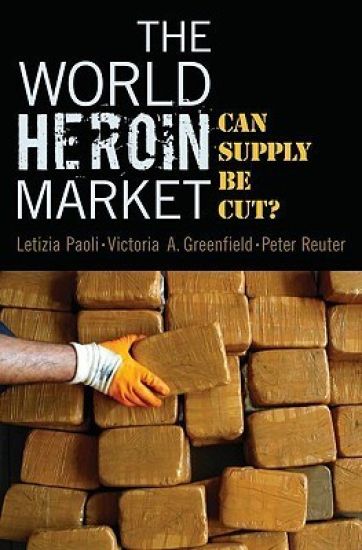
The World Heroin Market
Letizia Paoli; Victoria Greenfield; Peter Reuter
Oxford University Press Inc
2009
sidottu
During 2000-1 in Afghanistan, the Taliban achieved a longtime goal of national and international drug policy agencies: a large, sudden, and unanticipated reduction in world opium production. This cutback provides an unprecedented opportunity to study the dynamics of the world opiate market and ask whether further interventions could effectively reduce the flows of drugs. Based on an extended, multi-national study, the authors construct a new model for the trafficking of drugs and revenues and offer the first account of the world market in heroin and other illicit opiates during and after the 2001 ban. The authors' broader findings demonstrate how robust production, trafficking, and consumption combine to make successful long-term interventions on the supply-side rare exceedingly difficult, though specific policies can impact the organization and behavior of markets. For reductions in both production and consumption, where the cultivation of opium is entrenched in the normal life and legitimate economy of millions of people, international agencies and foreign governments must provide adequate and long-term support to foster both alternative development policies and law enforcement programs.
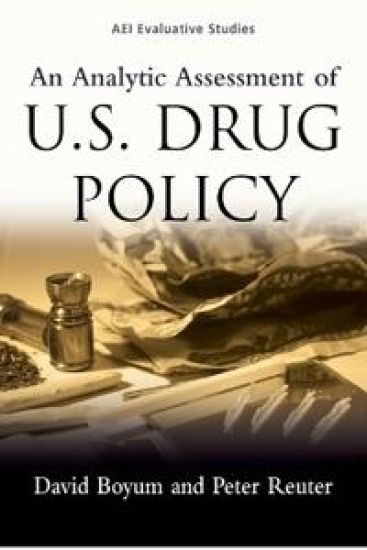
In its efforts to control the use of cocaine, heroin, marijuana, and other illegal drugs, the United States spends about $35 billion per year in public funds. Almost half a million dealers and users are under incarceration. In this book, David Boyum and Peter Reuter provide an assessment of how well this massive investment of tax dollars and government authority is working. Boyum and Reuter show that America's drug problem is mainly a legacy of the epidemics of heroin, cocaine, and crack use during the 1970s and 1980s, which left us with aging cohorts of criminally active and increasingly sick users. Newer drugs, such as Ecstasy and methamphetamine, perennially threaten to become comparable problems, but so far have not. Using a market framework, the book discusses the nature and effectiveness of efforts to tackle the nation's drug problems. Drug policy has become increasingly punitive, with the number of drug offenders in jail and prison growing tenfold between 1980 and 2003. Nevertheless, there is strikingly little evidence that tougher law enforcement can materially reduce drug use. By contrast, drug treatment services remain in short supply, even though research indicates that treatment expenditures easily pay for themselves in terms of reduced crime and improved productivity. Boyum and Reuter conclude that America's drug policy should be reoriented in several ways to be more effective. Enforcement should focus on reducing drug-related problems, such as violence associated with drug markets, rather than on locking up large numbers of low-level dealers. Treatment services for heavy users, particularly methadone and other opiate maintenance therapies, need more money and fewer regulations. And programs that coerce convicted drug addicts to enter treatment and maintain abstinence as a condition of continued freedom should be expanded. The AEI Evaluative Studies series aims to promote greater understanding and continuing review of major activities of the federal government. Each study focuses on a gov