Kirjailija
Peter Robinson
Kirjat ja teokset yhdessä paikassa: 199 kirjaa, julkaisuja vuosilta 1992–2027, suosituimpiin kuuluu The Selected Writings of David Williams Vol 3. Vertaile teosten hintoja ja tarkista saatavuus suomalaisista kirjakaupoista.
199 kirjaa
Kirjojen julkaisuvuodet: 1992–2027.
Vintage Peter Robinson: a standalone LAPD crime thriller, written and set 20 years ago - never before available in the United Kingdom, with a foreword from Michael Connelly.
From New York Times bestselling and Edgar award-winning author Peter Robinson comes this brilliant novel of suspense--a thrilling tale of family secrets and past evils that have spread from one generation to another and wreaked havoc on an unsuspecting town. One phone call from a concerned neighbor has inadvertently led police to Terence Payne, the elusive serial killer known only as "Chameleon." Now Payne is in custody, perhaps dying, and a long nightmare appears to be over at last. But is it? For Alan Banks - currently head of the local police force - too many questions remain unanswered at the chamber of horrors the press will dub the "House of Payne." Because the darkness has not yet lifted, the casualties are still mounting...and there are still monsters loose in the world. Showcasing the dark forces of human nature, master of suspense Peter Robinson is at the height of his storytelling powers in a novel that will leave readers guessing until the final page.
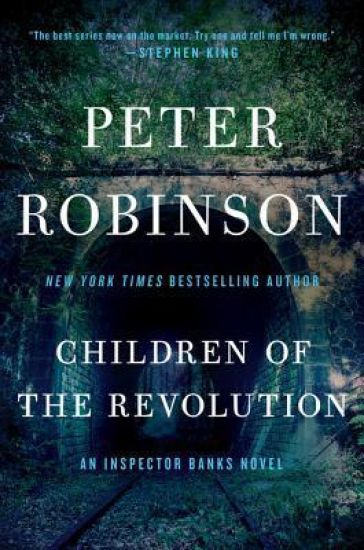
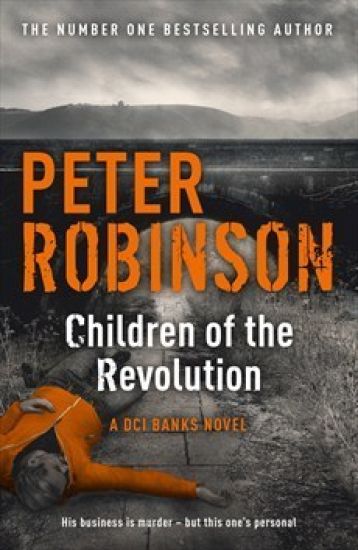
"A disgraced college lecturer is found murdered on a disused railway line near his home. He has 5,000 euros in his pocket, yet in the four years since his dismissal has been living a poverty-stricken and hermit-like existence. There are many suspects, mostly at the college where he used to teach, but Detective Chief Inspector Alan Banks, much to the chagrin of his boss, soon becomes fixated on Lady Veronica Chalmers, who appears to have links with the victim going back to the early 1970s at the University of Essex, then a hotbed of political activism. Banks suspects that Lady Chalmers is not telling the whole truth, and after he pushes his inquiries a bit too far, he is called on the carpet and warned to lay off. He must continue to conduct his investigation surreptitiously. When the breakthroughs come, they are not the ones that Banks and his team expected, and everything turns in a different direction and moves into very high gear"--
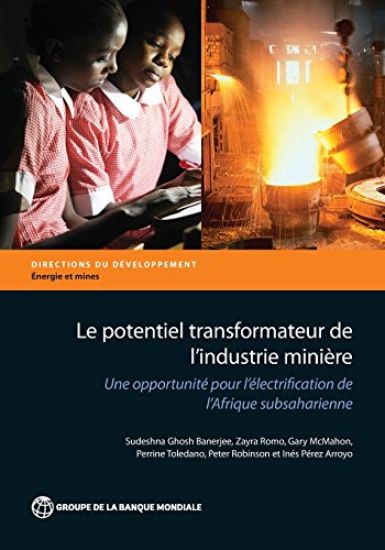
Le Potentiel Transformateur De L'industrie Miniere En Afrique
Sudeshna Ghosh Banerjee; Zayra Romo; Gary McMahon; Perrine Toledano; Peter Robinson
World Bank Publications
2015
nidottu
The mining industry could play a key role in Africa's energy sector, since it requires power in large quantity and reliable quality to run its processes. The integration of mining with power system development, with appropriate risk mitigation mechanisms, could bring a win-win solution to utilities, mines, and people at large.
Banks is called to investigate his most grisly case yet in the twenty-second DCI Banks novel, by Number One bestselling author Peter Robinson.
Hearing Rilke quoted at the Co-op, an experience evoked in the title poem to Peter Robinson's latest collection, Buried Music, the poet continues his work of discovering poetry in everyday, anywhere places. It is as if, as Roy Fisher intuited, 'he carries a listening device, alert for the moments when the tectonic plates of mental experience slide quietly one beneath another to create paradoxes and complexities that call for poems to be made.' Prompted by varieties of losses - health, hopes, friends or relatives - his listening unearths a rhythmic contour from such opening cracks in the terrain. Buried Music finds poetry in its absence, presence in the place of what's missing. For those who have followed his trajectory, this new book offers a fresh opportunity to tune in to the work of what Poetry Review has called 'a major English poet', one according to The London Magazine, who is 'writing at the height of his powers' and producing, in the words of the selectors for the Poetry Book Society in 2012, 'his finest work to date.' For those new to his writing, this world is all before you.
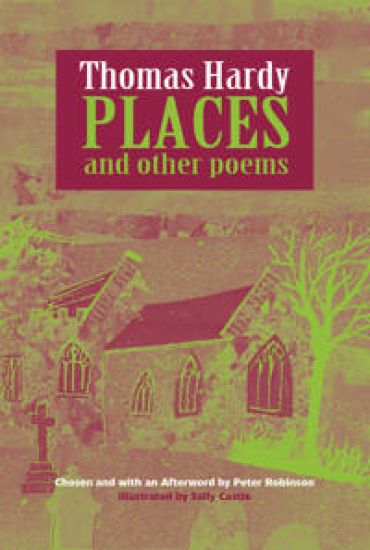
Creator of the lightly fictionalized region of Wessex, where Reading features as Aldbrickham, Thomas Hardy is naturally considered one of England’s most topographically sensitive authors. In this new collection of his poems, each selected for its relation to a specific locale, and finely illustrated by Sally Castle, Hardy’s imagination appears most intensely engaged, as Peter Robinson’s afterword explores, by interrelations of personal experience and the circumstances in which it happens to befall. So ‘After a Romantic Day’, one of the poems gathered here, proposes that, where human passions are involved, a ‘bald steep cutting, rigid, rough, / And moon-lit, was enough / For poetry of place…’
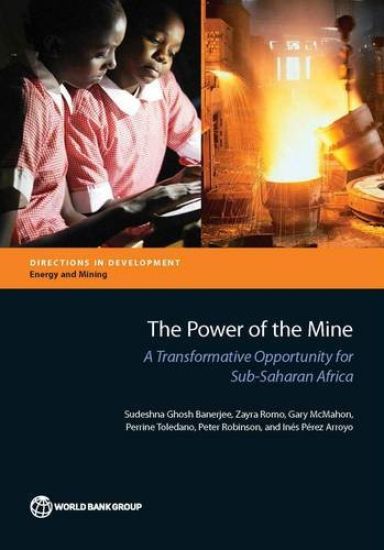
The Power of the Mine
Sudeshna Ghosh Banerjee; Zayra Romo; Gary McMahon; Perrine Toledano; Peter Robinson
World Bank Publications
2014
nidottu
Africa needs power - to grow its economies and enhance the welfare of its people. Power for all is still a long distance away – two thirds of the population remains without electricity and enterprises rank electricity as a top constraint to doing business. This sub-optimal situation coexists while vast energy resources remain untapped. One solution to harness these resources could be to tap into the concept of anchor load. Mining industry lends itself to the concept of anchor load as it needs power in large quantity and reliable quality to run its processes. Underpinned by a comprehensive database of mining projects between 2000 and 2020, this report explores the potential and challenges of using mining demand for power as anchor load for national power system development and expansion of electrification. This report finds that mining demand can indeed be a game-changer – an opportunity where policymakers and international community can make a difference in tapping the enormous mineral wealth of Africa for the benefit of so many people. The utilities would benefit from having mining companies as creditworthy consumers that facilitate generation and transmission investments producing economies of scale needed for large infrastructure projects, benefiting all consumers in the system. The mines would benefit from grid supply—typically priced much lower than self-supply—which allows them to focus on their core business, greatly enhancing their competitiveness. The country would benefit from more exports and tax revenues from mines, more job opportunities in local firms selling goods and services to the mines, and a higher GDP. The report estimates that mining demand for power can triple since 2000 going upto 23 GW in 2030. While South Africa will continue to be the dominant presence in mining landscape, its importance will reduce and other countries, primarily in Southern African region, will emerge as important contributers of mining demand for power. Simulations in countries with minimal power-mining interface suggests that bringing this demand explicitly into the power planning process can ensure more investments in both grid and off-grid power systems and potentially superior service delivery outcomes for mines as well as communities. These opportunities can also be attractive investment destinations for private sector. However, there are also risks and institutional roadblocks in power-mining integration – addressing many of them and employing risk mitigation mechanism are within the control of policymakers.
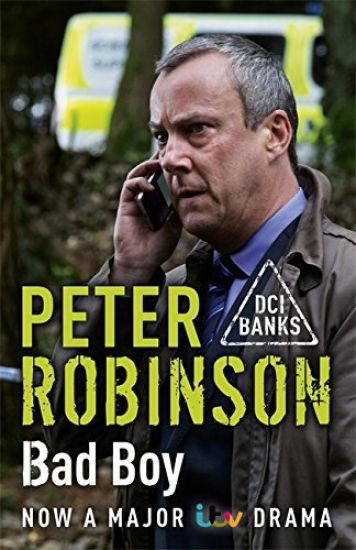
Banks isn't back, and that's the problem. If DCI Alan Banks had been in his office when his old neighbour came calling, perhaps it would have turned out differently. Perhaps an innocent man would still be alive. And perhaps Banks's daughter wouldn't be on the run with a wanted man. But Banks is on holiday, blissfully unaware of the terrible chain of events set in motion by the discovery of a loaded gun in a young woman's bedroom, and his daughter's involvement with the ultimate bad boy . . .
As volunteers clean up after a huge outdoor rock concert in Yorkshire in 1969, they discover the body of a young woman wrapped in a sleeping bag. She has been brutally murdered. The detective assigned to the case, Stanley Chadwick, is a hard-headed, strait-laced veteran of the Second World War. He could not have less in common with - or less regard for - young, disrespectful, long-haired hippies, smoking marijuana and listening to the pulsing sounds of rock and roll. But he has a murder to solve, and it looks as if the victim was somehow associated with the up-and-coming psychedelic pastoral band the Mad Hatters. In the present, Inspector Alan Banks is investigating the murder of a freelance music journalist who was working on a feature about the Mad Hatters for MOJO magazine. This is not the first time that the Mad Hatters, now aging rock superstars, have been brushed by tragedy. Banks finds he has to delve into the past to find out exactly what hornets' nest the journalist inadvertently stirred up.
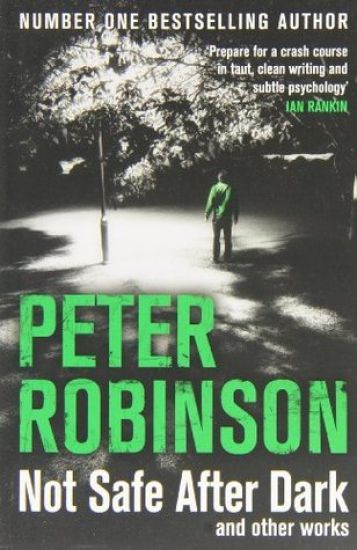
Not Safe After Dark is a complete collection of Peter Robinson’s short crime tales including four stories featuring Inspector Banks, a private-eye story set in Florida, a romantic Parisian mystery, and the modern classic, ‘Innocence’ – winner of the Crime Writer of Canada’s Best Short Story Award. Whether writing pure detective fiction or heartbreaking noir, Peter Robinson is one of the crime world’s finest stylists. This anthology explores our hidden paranoia, challenges all that we take for granted and lures us to new, exotic places, only to make us wish that we could run back home.
The twenty-first novel in Number One bestselling author Peter Robinson's critically acclaimed DCI Banks series. Ex-college lecturer Gavin Miller is found dead; his distorted body strewn across a disused railway track near his home. There's no sign of a struggle, and no concrete evidence except for one distinguishing package: £5,000 of cash, tucked inside the man's pocket. But when DCI Banks delves into Miller's past, he uncovers a troubled existence tarnished by accusations of abuse and misconduct which throws up an array of puzzling questions. What really occurred at the college where the victim used to teach? How was he embroiled in political activism at Essex University, over forty years ago? And what links him to an upstanding pillar of the community, who also harbours a dark secret from her past? One thing is clear: someone will stop at nothing - even murder - to prevent Banks from discovering the truth . . .
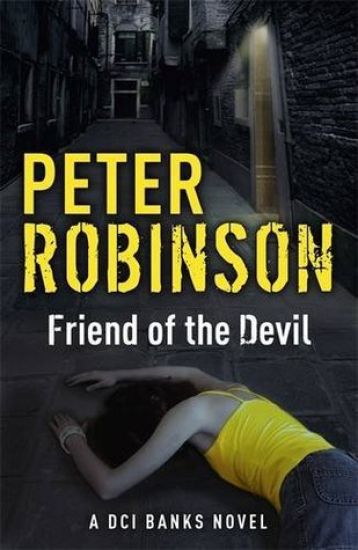
The seventeenth instalment in the Number One bestselling DCI Banks seriesWhen Karen Drew is found sitting in her wheelchair staring out to sea with her throat cut one chilly morning, DI Annie Cabbot, on loan to Eastern Area, gets lumbered with the case. Back in Eastvale, that same Sunday morning, 19-year-old Hayley Daniels is found raped and strangled in the Maze, a tangle of narrow alleys behind Eastvale's market square, after a drunken night on the town with a group of friends, and DCI Alan Banks is called in. Banks finds suspects galore, while Annie seems to hit a brick wall - until she reaches a breakthrough that spins her case in a shocking and surprising new direction, one that also involves Banks. Then another incident occurs in the Maze which seems to link the two cases in a bizarre and mysterious way. As Banks and Annie dig into the past to uncover the deeper connections, they find themselves also dealing with the emotional baggage and personal demons of their own relationship. It soon becomes clear that there are two killers in their midst, and that at any moment either one might strike again.
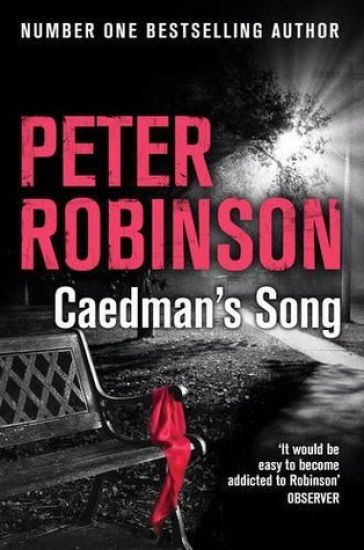
Peter Robinson's psychological thriller Caedmon's Song follows two characters and their mysterious connection. On a balmy June night, Kirsten, a young university student, strolls home through a silent moonlit park. Suddenly her tranquil mood is shattered as she is viciously attacked. When she awakes in hospital, she has no recollection of that brutal night. But then, slowly and painfully, details reveal themselves – dreams of two figures, one white and one black, hovering over her; wisps of a strange and haunting song; the unfamiliar texture of a rough and deadly hand . . . In another part of England, Martha Browne arrives in Whitby, posing as an author doing research for a book. But her research is of a particularly macabre variety. Who is she hunting with such deadly determination? And why?
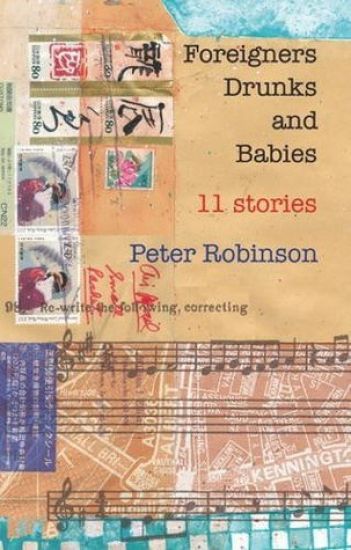
The stories brought together in Foreigners, Drunks and Babies cast the slanting light of a poet's sensibility on the Imperial Academy of an ancient Eastern empire; detail the musical education of a northern realist parish priest and his sons; travel through the West of Ireland with a couple facing various extinctions; spy on the shadowy private life of a Cold War warrior; engage in hand-to-hand fighting with a classroom full of Soviet teachers; follow the adventures of an Italian girl visiting her sick boyfriend in hospital; discover how hard it can be to get a passport for your first-born; find out why everyone pretends you're not there; investigate a seemingly victimless crime; reveal reasons for a Japanese girl's committing suicide; and realize that there's no need to be forgiven for things you didn't know you hadn't done. In this first collection of his imaginative fiction, Peter Robinson, winner of the Cheltenham Prize, the John Florio Prize, and two Poetry Book Society Recommendations for his poems and translations, brings a characteristic perceptiveness, rhythmical accuracy, and vividness of evocation to these eleven examples of what he's been doing in the gaps between his other writings. His new and returning readers may be both surprised and entertained.