Kirjojen hintavertailu – 12 859 818 kirjaa ja 27 kauppaa
Kirjailija
Peter Sarris
Kirjat ja teokset yhdessä paikassa: 11 kirjaa, julkaisuja vuosilta 2006–2026, suosituimpiin kuuluu Empires of Faith. Vertaile teosten hintoja ja tarkista saatavuus suomalaisista kirjakaupoista.
Raina Abouzeid; Jon B. Alterman; Ali M. Ansari; James Barr; Ali Fathollah-Nejad; Peter Frankopan; Chaim Gans; Amber Gartrell; Kim Ghattas; Andrew S. Gilmour; Martin Goodman; Sir John Jenkins; Halil M. Karaveli; Elisabeth Kendall; Hugh Kennedy; Stephen Kotkin; Nelly Lahoud; Göran Larsson; Gabriel Martinez-Gros; General Sir Simon Mayall; Yossef Rapoport; Mark Ronan; Stefanie Rudolf; Peter Sarris; Nathan Shachar; Brendan Simms; Selena Wisnom
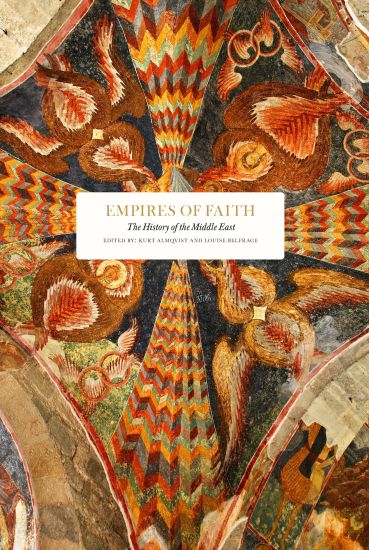
Mellanöstern har alltid varit en central plats för handel och erövringar. Läget har medfört enorma rikedomar, kulturellt utbyte och intellektuell vitalitet – men också konflikter, instabilitet och ihållande geopolitiska spänningar. Att förstå regionens förflutna är avgörande för att förstå dess nutid. Antologin Empires of Faith utforskar Mellanösterns långa historia – från Mesopotamien, de persiska kungarikena och Alexander den store till kristendomens och islams uppkomst, det bysantinska och ottomanska riket, och 1900-talets dramatiska omvandling av regionen. Hur har religion, civilisation och imperialistiska ambitioner format regionen? Vilka arv lämnade de stora imperierna efter sig och hur påverkade de lagstiftning, kultur, styre och undersåtarnas vardagsliv? Och i vilken utsträckning är historiens efterverkningar fortfarande synliga i dagens politiska och religiösa landskap? Boken utkommer även på svenska våren 2027.
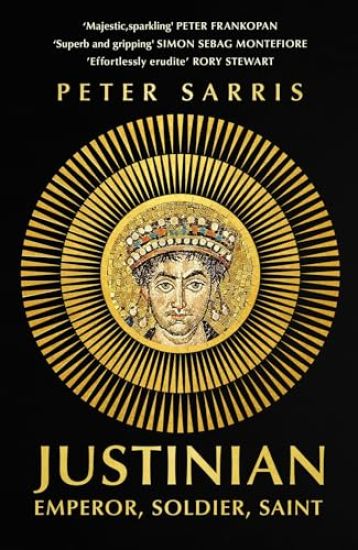
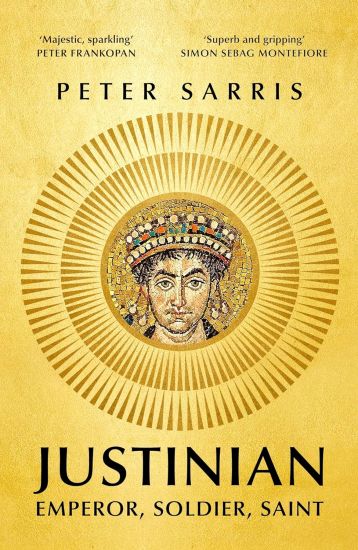
WINNER OF THE LONDON HELLENIC PRIZESHORTLISTED FOR THE RUNCIMAN AWARDA Sunday Times, BBC History Magazine, and Evening Standard Book of the Year'Majestic, sparkling' Peter Frankopan'Superb and gripping' Simon Sebag Montefiore'Effortlessly erudite' Rory Stewart'Masterful' Anita Anand'Spectacularly good' Dominic SandbrookThe definitive story of the Roman Emperor who shaped modern times. This groundbreaking biography gives us an intimate insight into Justinian, a man who, from the humblest beginnings, rose to become ruler of much of the known world achieving an almost god-like status. An emperor who infused even the most mundane tasks with spiritual significance. A gifted administrator obsessed with detail. A middle-aged lover who fell for a dancing girl, ruling with empress Theodora by his side for over twenty years. A brilliant military strategist who was never on the frontline. The challenges he faced - climate change, battles over culture and identity, the first recorded global pandemic - and many of the solutions he found still resonate with us today. His legacy remains all around us. In this tour de force, Sarris shows us that in all his complexity and contradictions Justinian was, in many ways, a very modern emperor.
A SUNDAY TIMES, BBC HISTORY MAGAZINE AND EVENING STANDARD BOOK OF THE YEAR'Majestic, sparkling . . . this is modern history writing at its finest' Peter Frankopan'Superb and gripping' Simon Sebag Montefiore'Effortlessly erudite' Rory Stewart'Masterful' Anita Anand'Wonderful' William DalrympleThe definitive story of the Roman Emperor who shaped modern times. This groundbreaking biography gives us an intimate insight into Justinian, a man who, from the humblest beginnings, rose to become ruler of much of the known world and achieved an almost god-like status. An emperor who infused even the most mundane tasks with spiritual significance. A gifted administrator obsessed with detail. A middle-aged lover who fell for a dancing girl, ruling with Empress Theodora by his side for over twenty years. A brilliant military strategist who was never on the frontline. The challenges he faced - climate change, battles over culture and identity, the first recorded global pandemic - and many of the solutions he found still resonate with us today. His legacy remains all around us. In this tour de force, Sarris shows us that in all his complexity and contradictions Justinian was, in many ways, a very modern emperor.
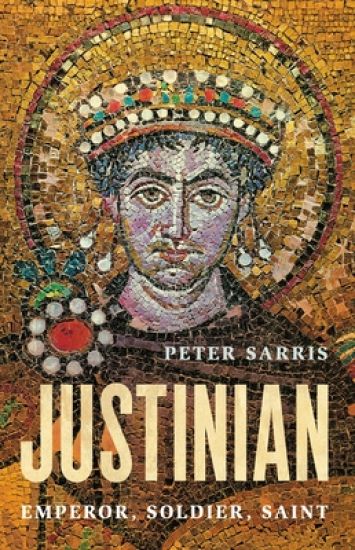
A definitive new biography of the Byzantine emperor Justinian Justinian is a radical reassessment of an emperor and his times. In the sixth century CE, the emperor Justinian presided over nearly four decades of remarkable change, in an era of geopolitical threats, climate change, and plague. From the eastern Roman--or Byzantine--capital of Constantinople, Justinian's armies reconquered lost territory in Africa, Italy, and Spain. But these military exploits, historian Peter Sarris shows, were just one part of a larger program of imperial renewal. From his dramatic overhaul of Roman law, to his lavish building projects, to his fierce persecution of dissenters from Orthodox Christianity, Justinian's vigorous statecraft--and his energetic efforts at self-glorification--not only set the course of Byzantium but also laid the foundations for the world of the Middle Ages. Even as Justinian sought to recapture Rome's past greatness, he paved the way for what would follow.
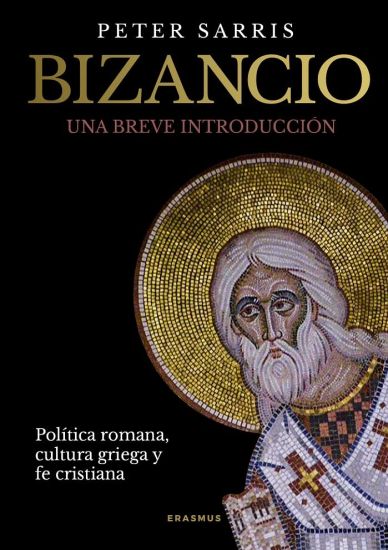
After surviving the fifth century fall of the Western European Roman Empire, the Byzantine Empire flourished as one of the most powerful economic, cultural, and military forces in Europe for a thousand years. In this Very Short Introduction Peter Sarris introduces the reader to the unique fusion of Roman political culture, Greek intellectual tradition and Christian faith that took place in the imperial capital of Byzantium under the emperor Constantine and his heirs. Using examples from Byzantine architecture, art and literature, Sarris shows how their legacy was re-worked and re-invented in the centuries ahead, in the face of external challenges and threats. Charting the impact of warfare with the Persian and Islamic worlds to the east, Sarris explores the creativity of Byzantine statecraft and strategy, as well as the empire's repeated (but ultimately forlorn) attempts to enlist aid from the Christian powers of Western Europe to ensure its survival. ABOUT THE SERIES: The Very Short Introductions series from Oxford University Press contains hundreds of titles in almost every subject area. These pocket-sized books are the perfect way to get ahead in a new subject quickly. Our expert authors combine facts, analysis, perspective, new ideas, and enthusiasm to make interesting and challenging topics highly readable.
Drawing upon the latest historical and archaeological research, Dr Peter Sarris provides a panoramic account of the history of Europe, the Mediterranean, and the Near East from the fall of Rome to the rise of Islam. The formation of a new social and economic order in western Europe in the fifth, sixth, and seventh centuries, and the ascendancy across the West of a new culture of military lordship, are placed firmly in the context of on-going connections and influence radiating outwards from the surviving Eastern Roman Empire, ruled from the great imperial capital of Constantinople. The East Roman (or 'Byzantine') Emperor Justinian's attempts to revive imperial fortunes, restore the empire's power in the West, and face down Constantinople's great superpower rival, the Sasanian Empire of Persia, are charted, as too are the ways in which the escalating warfare between Rome and Persia paved the way for the development of new concepts of 'holy war', the emergence of Islam, and the Arab conquests of the Near East. Processes of religious and cultural change are explained through examination of social, economic, and military upheavals, and the formation of early medieval European society is placed in a broader context of changes that swept across the world of Eurasia from Manchuria to the Rhine. Warfare and plague, holy men and kings, emperors, shahs, caliphs, and peasants all play their part in a compelling narrative suited to specialist, student, and general readership alike.
The reign of the Byzantine Emperor Justinian (527–65) stands out in late Roman and medieval history. Justinian re-conquered far-flung territories from the barbarians, overhauled the Empire's administrative framework and codified for posterity the inherited tradition of Roman law. This work represents a modern study in English of the social and economic history of the Eastern Roman Empire in the reign of the Emperor Justinian. Drawing upon papyrological, numismatic, legal, literary and archaeological evidence, the study seeks to reconstruct the emergent nature of relations between landowners and peasants, and aristocrats and emperors in the late antique Eastern Empire. It provides a social and economic context in which to situate the Emperor Justinian's mid-sixth-century reform programme, and questions the implications of the Eastern Empire's pattern of social and economic development under Justinian for its subsequent, post-Justinianic history.