Kirjojen hintavertailu – 12 859 818 kirjaa ja 27 kauppaa

Kirjailija

Peter Szendy

Kirjat ja teokset yhdessä paikassa: 26 kirjaa, julkaisuja vuosilta 2008–2025, suosituimpiin kuuluu ENSEIGNER LA COMPOSITION. Vertaile teosten hintoja ja tarkista saatavuus suomalaisista kirjakaupoista.

26 kirjaa

Kirjojen julkaisuvuodet: 2008–2025.

Hits

Hits

Peter Szendy

Fordham University Press
2012
pokkari
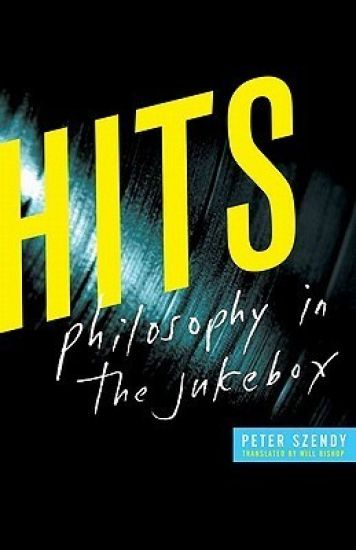
Hits: Philosophy in the Jukebox is an extraordinary foray into what apple has convinced us is "the soundtrack of our lives." How does music come to inhabit us, to possess and haunt us? What does it mean that a piece of music can insert itself—Szendy's term for this, borrowed from German, is the earworm—into our ears and minds? In this book, Peter Szendy probes the ever-growing and ever more global phenomenon of the hit song. Hits is the culmination of years of singular attentiveness to the unheard, the unheard-of, and the overheard, as well as of listening as it occurs when one pays anything but attention. Szendy takes us through our musical bodies, by way of members and instruments, playing and governing apparatuses, psychic and cinematic doublings, political and economic musings. The hit song, Szendy concludes, functions like a myth, a force of repetition that grows by force of repetition. In the repetition generated by the song's relation to itself, Szendy locates its production as a fetishized commodity, a self-producing structure, and a self-desiring machine. Like a Deleuzian machine, then, the hit song is a technology of the self, or better, a technology of rule, a bio-melo-technology. After reading this book, one can no longer avoid realizing that music is more than a soundtrack: It is the condition of our lives. We are all melomaniacs, Szendy tells us in his unique style of writing and of thought. We are melo-obsessive subjects, not so much driven to a frenzy by a music we hardly have time to listen to as governed and ruled by it.
Hits

Hits

Peter Szendy

Fordham University Press
2012
sidottu
Hits: Philosophy in the Jukebox is an extraordinary foray into what apple has convinced us is "the soundtrack of our lives." How does music come to inhabit us, to possess and haunt us? What does it mean that a piece of music can insert itself—Szendy's term for this, borrowed from German, is the earworm—into our ears and minds? In this book, Peter Szendy probes the ever-growing and ever more global phenomenon of the hit song. Hits is the culmination of years of singular attentiveness to the unheard, the unheard-of, and the overheard, as well as of listening as it occurs when one pays anything but attention. Szendy takes us through our musical bodies, by way of members and instruments, playing and governing apparatuses, psychic and cinematic doublings, political and economic musings. The hit song, Szendy concludes, functions like a myth, a force of repetition that grows by force of repetition. In the repetition generated by the song's relation to itself, Szendy locates its production as a fetishized commodity, a self-producing structure, and a self-desiring machine. Like a Deleuzian machine, then, the hit song is a technology of the self, or better, a technology of rule, a bio-melo-technology. After reading this book, one can no longer avoid realizing that music is more than a soundtrack: It is the condition of our lives. We are all melomaniacs, Szendy tells us in his unique style of writing and of thought. We are melo-obsessive subjects, not so much driven to a frenzy by a music we hardly have time to listen to as governed and ruled by it.
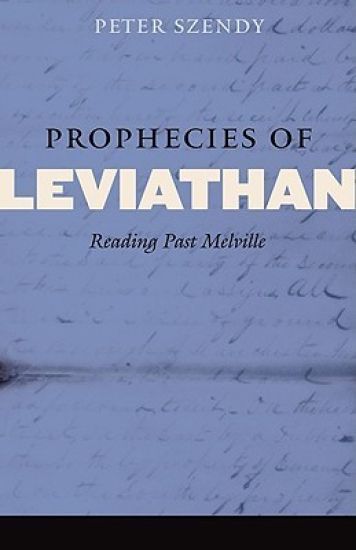
Prophecies of Leviathan

Prophecies of Leviathan

Peter Szendy

Fordham University Press
2010
pokkari
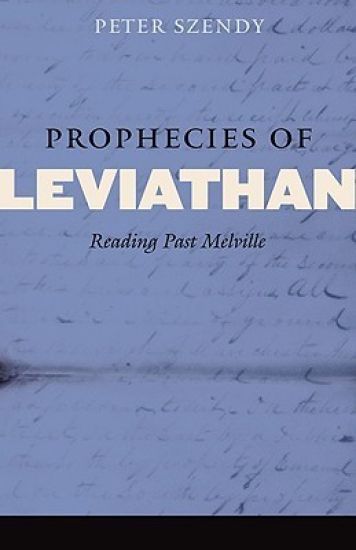
Reading Melville is not only reading. Reading Melville means being already engaged in the abyssal process of reading reading. Reading what reading is and what reading does. With Melville, Prophecies of Leviathan argues that reading, beyond its apparent linearity, is essentially prophetic, not only because Moby Dick, for example, may appear to be full of unexpected prophecies (Ishmael seems to foretell a "Grand Contested Election for the Presidency of the United States" followed by a "bloody battle in Afghanistan") but also, and more deeply, because reading itself is a prophetic experience that Melville captured in a unique way. Reading, according to Melville, might just be the prophecy of the text to come. This apparently tautological view has great consequences for the theory of literature and its relation to politics. As Szendy suggests, the beheading of Melville's "Leviathan" (which, Ishmael says, "is the text") should be read against Hobbes's sovereign body politic. Szendy's reading of Melville urges us to revisit Jacques Derrida's all too famous sentence: "There is no hors-texte." And it also urges us-as the preface to this English edition makes clear-to reflect on the (Christian) categories that we apply to the text: its life, death, and, above all, afterlife or suicide. The infinite finitude of the text: that is what reading is about. In his brilliant and thorough afterword, Gil Anidjar situates Prophecies of Leviathan among Szendy's other works and shows how the seemingly tautological self-prophecy really announces a new "ipsology," a "pluralization of the self" through a "narcissism of the other thing."
Prophecies of Leviathan

Prophecies of Leviathan

Peter Szendy

Fordham University Press
2010
sidottu
Reading Melville is not only reading. Reading Melville means being already engaged in the abyssal process of reading reading. Reading what reading is and what reading does. With Melville, Prophecies of Leviathan argues that reading, beyond its apparent linearity, is essentially prophetic, not only because Moby Dick, for example, may appear to be full of unexpected prophecies (Ishmael seems to foretell a "Grand Contested Election for the Presidency of the United States" followed by a "bloody battle in Afghanistan") but also, and more deeply, because reading itself is a prophetic experience that Melville captured in a unique way. Reading, according to Melville, might just be the prophecy of the text to come. This apparently tautological view has great consequences for the theory of literature and its relation to politics. As Szendy suggests, the beheading of Melville's "Leviathan" (which, Ishmael says, "is the text") should be read against Hobbes's sovereign body politic. Szendy's reading of Melville urges us to revisit Jacques Derrida's all too famous sentence: "There is no hors-texte." And it also urges us-as the preface to this English edition makes clear-to reflect on the (Christian) categories that we apply to the text: its life, death, and, above all, afterlife or suicide. The infinite finitude of the text: that is what reading is about. In his brilliant and thorough afterword, Gil Anidjar situates Prophecies of Leviathan among Szendy's other works and shows how the seemingly tautological self-prophecy really announces a new "ipsology," a "pluralization of the self" through a "narcissism of the other thing."
Listen

Listen

Peter Szendy; Jean-Luc Nancy

Fordham University Press
2008
pokkari
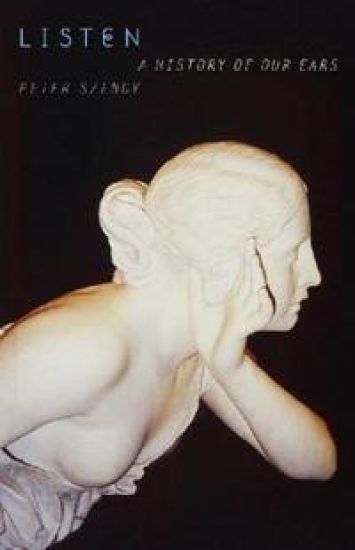
In this intimate meditation on listening, Peter Szendy examines what the role of the listener is, and has been, through the centuries. The role of the composer is clear, as is the role of the musician, but where exactly does the listener stand in relation to the music s/he listens to? What is the responsibility of the listener? Does a listener have any rights, as the author and composer have copyright? Szendy explains his love of musical arrangement (since arrangements allow him to listen to someone listening to music), and wonders whether it is possible in other ways to convey to others how we ourselves listen to music. How can we share our actual hearing with others? Along the way, he examines the evolution of copyright laws as applied to musical works and takes us into the courtroom to examine different debates on what we are and aren't allowed to listen to, and to witness the fine line between musical borrowing and outright plagiarism. Finally, he examines the recent phenomenon of DJs and digital compilations, and wonders how technology has affected our habits of listening and has changed listening from a passive exercise to an active one, whereby one can jump from track to track or play only selected pieces.
Listen

Listen

Peter Szendy; Jean-Luc Nancy

Fordham University Press
2008
sidottu
In this intimate meditation on listening, Peter Szendy examines what the role of the listener is, and has been, through the centuries. The role of the composer is clear, as is the role of the musician, but where exactly does the listener stand in relation to the music s/he listens to? What is the responsibility of the listener? Does a listener have any rights, as the author and composer have copyright? Szendy explains his love of musical arrangement (since arrangements allow him to listen to someone listening to music), and wonders whether it is possible in other ways to convey to others how we ourselves listen to music. How can we share our actual hearing with others? Along the way, he examines the evolution of copyright laws as applied to musical works and takes us into the courtroom to examine different debates on what we are and aren’t allowed to listen to, and to witness the fine line between musical borrowing and outright plagiarism. Finally, he examines the recent phenomenon of DJs and digital compilations, and wonders how technology has affected our habits of listening and has changed listening from a passive exercise to an active one, whereby one can jump from track to track or play only selected pieces.