Kirjojen hintavertailu – 12 859 818 kirjaa ja 27 kauppaa

Kirjailija

Peter Ten Hoopen

Kirjat ja teokset yhdessä paikassa: 6 kirjaa, julkaisuja vuosilta 2009–2026, suosituimpiin kuuluu Ikat Textiles of Timor. Vertaile teosten hintoja ja tarkista saatavuus suomalaisista kirjakaupoista.

6 kirjaa

Kirjojen julkaisuvuodet: 2009–2026.

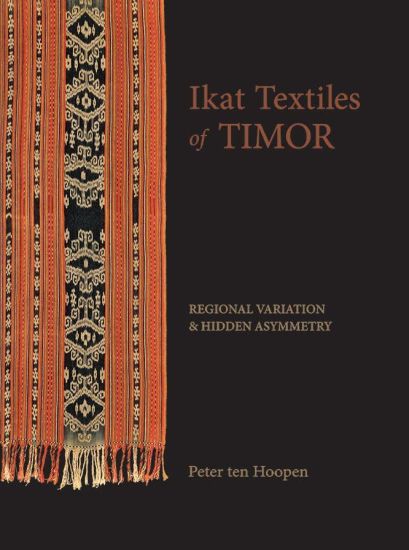
Ikat Textiles of Timor

Ikat Textiles of Timor

Peter Ten Hoopen

HONG KONG UNIVERSITY PRESS
2026
sidottu
Ikat Textiles of Timor offers an in-depth overview of regional textile styles from both West and East Timor, while also contributing significant new insights into their design traditions. In academic literature, the ikated men’s wraps from Timor have long been described as symmetrical. However, Dr Peter ten Hoopen’s examination of early examples from museums and private collections reveals that, historically, two thirds of these textiles were actually asymmetrical. This discovery challenges an academic consensus that has persisted since 1912, and highlights a previously overlooked level of creative ingenuity—inviting greater admiration for the women who wove these complex designs. Today’s ikat weavers on Timor, like many foreign scholars before them, seem unaware that asymmetry was once a dominant design principle. Many continue to assert that perfect symmetry has always been the tradition. Yet the historical textiles tell a different story. Ten Hoopen’s groundbreaking findings justify his focus on early specimens, which often display a greater degree of design sophistication than their contemporary counterparts. It is striking that earlier researchers failed to recognise or report the prevalence of asymmetry in Timorese textiles. In early pieces, asymmetry is not only present but often dominant. This oversight reflects a broader pattern of neglect: textiles have historically been marginalised in Southeast Asian material culture studies, overshadowed by architecture, sculpture, weaponry, and jewellery. The author hopes that his historical investigations help correct this imbalance by demonstrating that these textiles embody far more artistic ingenuity, intellectual depth, and craftswomanship than previously acknowledged.
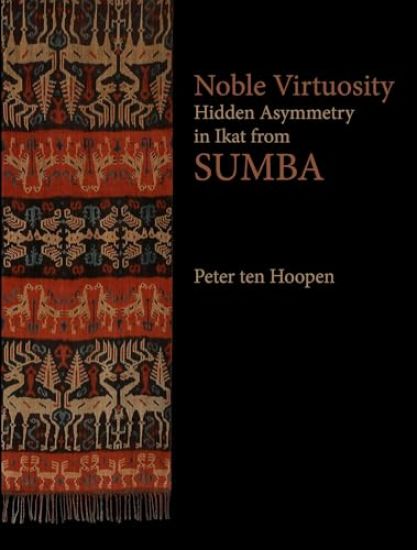
Noble Virtuosity

Noble Virtuosity

Peter Ten Hoopen

The University of Hong Kong. University Museum and Art Gallery
2024
sidottu
An examination of the surprising asymmetry hidden in the work of Sumbanese weavers. In this new study, Peter ten Hoopen reveals levels of virtuosity in the work of Sumbanese textile artists that remained overlooked for over a century of Indonesian textile research. Their richly decorated men's wraps, hinggi, have commonly been described as symmetric along both axes. But as ten Hoopen's investigation at Leiden University uncovered, this supposed canon only survived because crucial design elements were overlooked. Sumba's noble weavers managed to create asymmetry by hiding tiny visual elements that disrupted symmetry and were made to be overlooked. This virtuosity was a product of Sumba's competitive culture, suffused by an ancient headhunting ethos and marked by secrecy. Ten Hoopen's findings reveal not just the Sumbanese dyers' talent, but also their playfulness and the element of "flow" that inspired their work. This ode to the Sumbanese weavers' ingenuity aims to create a new global class of initiates and to inspire even greater admiration for their art.
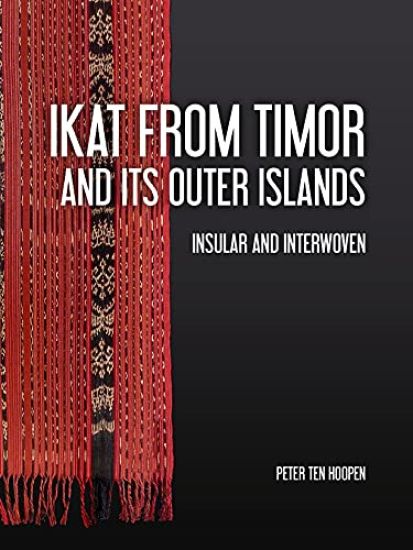
Ikat from Timor and its outer Islands

Ikat from Timor and its outer Islands

Peter Ten Hoopen

SIDESTONE PRESS
2022
sidottu
This is the first study to focus on ikat of the Timor region from a technical perspective, including microscopy and design analysis of asymmetry, an understudied subject. Paradoxically this technical perspective highlights the human factor. Focused on the last century of the colonial period, we see the weaver’s decisions in close-up, as if we are sitting next to her. This yields rich insights, not just in materiality, but also in the weavers’ creativity. Asymmetry is widely distributed in the region, yet has largely been ignored. This is curious, because asymmetry is highly interesting: it goes against ikat’s technical diktat (which prescribes the production of two identical panels in parallel), hence requires extra work. Seven distinct ways to achieve asym­metry are differentiated, including visual tricks and illusions, flagrant displays of virtuosity and intellectual superiority. On Sumba, women of the nobility made thrilling and amusing efforts to hide their virtuosity, dyeing into their men’s cloths tiny visual devices, secret keys, which revealed that their work was not just good, but luar biasa, out of the ordinary. Ironically, because these late 19th- and early 20th-century dyers were such great masters at hiding their virtuosity, it remained overlooked by generations of researchers. Taking up Marie Jeanne Adams's 1969 call, so far unheeded, to deepen the study of Indonesian ikat textiles by means of microscopy, the author shot thousands of micro-photographs, allowing a study of yarn development over time, as well as the differentiation of 21 distinct weave types, a number far exceeding expectation, and their distribution across 41 ikat weaving regions in the Indonesian archipelago. In the final chapter the author analyses what may have spurred the weavers of the region to create their most intricate, most time consuming, feats of artistry, and develops a view of these women as far more inventive and intelligent than they have been credited with before - and more assertive, using ikat’s prestige to spin their men into a web of taboos and prescriptions.
Ikat from Timor and its outer Islands

Ikat from Timor and its outer Islands

Peter Ten Hoopen

SIDESTONE PRESS
2022
nidottu
This is the first study to focus on ikat of the Timor region from a technical perspective, including microscopy and design analysis of asymmetry, an understudied subject. Paradoxically this technical perspective highlights the human factor. Focused on the last century of the colonial period, we see the weaver’s decisions in close-up, as if we are sitting next to her. This yields rich insights, not just in materiality, but also in the weavers' creativity. Asymmetry is widely distributed in the region, yet has largely been ignored. This is curious, because asymmetry is highly interesting: it goes against ikat’s technical diktat (which prescribes the production of two identical panels in parallel), hence requires extra work. Seven distinct ways to achieve asym­metry are differentiated, including visual tricks and illusions, flagrant displays of virtuosity and intellectual superiority. On Sumba, women of the nobility made thrilling and amusing efforts to hide their virtuosity, dyeing into their men’s cloths tiny visual devices, secret keys, which revealed that their work was not just good, but luar biasa, out of the ordinary. Ironically, because these late 19th- and early 20th-century dyers were such great masters at hiding their virtuosity, it remained overlooked by generations of researchers. Taking up Marie Jeanne Adams’s 1969 call, so far unheeded, to deepen the study of Indonesian ikat textiles by means of microscopy, the author shot thousands of micro-photographs, allowing a study of yarn development over time, as well as the differentiation of 21 distinct weave types, a number far exceeding expectation, and their distribution across 41 ikat weaving regions in the Indonesian archipelago. In the final chapter the author analyses what may have spurred the weavers of the region to create their most intricate, most time consuming, feats of artistry, and develops a view of these women as far more inventive and intelligent than they have been credited with before - and more assertive, using ikat’s prestige to spin their men into a web of taboos and prescriptions.
The Enlightened Leader

The Enlightened Leader

Peter ten Hoopen; Fons Trompenaars

John Wiley Sons Inc
2009
sidottu
With the stunning public cases of leadership gone awry, the search is on for a type of leadership that incorporates human values in an otherwise exploitative business world. In this book, the authors take the scalpel and address deeply ingrained nefarious management theory, and show the way to healing, opening fresh fields of ambition, new degrees of passion, and creativity. A synthesis of the best Western thinking and Eastern wisdom teachings, the book introduces "The Chakras of Leadership," a model of leadership that differentiates seven levels of human energy use.