Kirjojen hintavertailu – 12 903 725 kirjaa ja 27 kauppaa
Kirjailija
Peter Theroux
Kirjat ja teokset yhdessä paikassa: 6 kirjaa, julkaisuja vuosilta 1992–2024, suosituimpiin kuuluu In Obscura Part I. Vertaile teosten hintoja ja tarkista saatavuus suomalaisista kirjakaupoista.
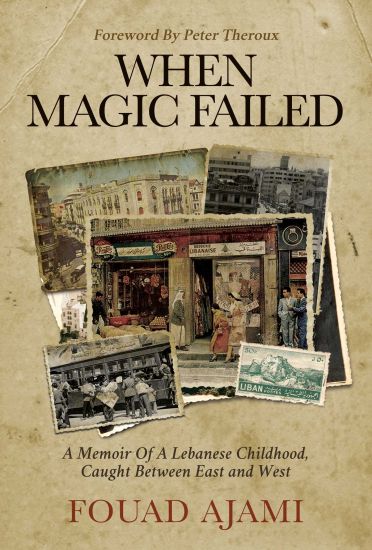
From the author of The Arab Predicament and Dream Palace of the Arabs comes a beautiful and haunting memoir of growing up in Lebanon in the ’50s and ’60s—the story of a sensitive young man and budding intellectual caught between tradition and modernity, east and west. As one of the most profound and insightful scholars of the Middle East, Fouad Ajami’s sensibility was powerfully shaped by his childhood and youth in Lebanon in the ’50s and ’60s. The time was a transitional one—not only for the Middle East, but for America and the world. Lebanon in this era was just coming into its own as a cosmopolitan destination of the international jet set as well as earnest American educators seeking to modernize Arab society. The disruptive forces of the Middle East—the Cold War, the Palestinian conflict, religious extremism, the money and oil of the Gulf—were only just beginning to appear. In this haunting and beautifully written memoir of his Lebanese childhood, the late Middle East scholar, Fouad Ajami, casts a discerning light into the corners and alleyways of an Arab reality that would later erupt into full view.
The University of Arkansas Press Award for Arabic Literature in Translation, 1997In this, the first Nubian novel ever translated, Awad Shalali, a Nubian worker in modern Egypt, dreams of Dongola—the capital of medieval Nubia, now lost to the flood waters of the Aswan High Dam. In Dongola, the Nubians reached their zenith. They defeated and dominated Upper Egypt, and their archers, deadly accurate in battle, were renowned as “the bowman of the glance. Helima, Awad’s wife, must deal with the reality of today’s Nubia, a poverty-stricken bottomland. Men like Awad now work in Cairo for good wages while the women remain at home in squalor, dominated by the Islam of their conquerors and ignorant of the glory now covered by the Nile’s water. Left to tend Awad’s sick mother and his dying country, Halima grows despondent and learns the truths behind the Upper Egyptian lyric: “Time, you are a traitor—what have you done with my love? Through his characters’ pain and suffering, Idris Ali paints in vibrant detail, with wit and a keen sense of history’s absurdities, the story of cultures and hearts divided, of lost lands, impossible dreams, and abandoned lives.
The University of Arkansas Press Award for Arabic Literature in Translation, 1997 In this, the first Nubian novel ever translated, Awad Shalali, a Nubian worker in modern Egypt, dreams of Dongola—the capital of medieval Nubia, now lost to the flood waters of the Aswan High Dam. In Dongola, the Nubians reached their zenith. They defeated and dominated Upper Egypt, and their archers, deadly accurate in battle, were renowned as “the bowman of the glance. Helima, Awad’s wife, must deal with the reality of today’s Nubia, a poverty-stricken bottomland. Men like Awad now work in Cairo for good wages while the women remain at home in squalor, dominated by the Islam of their conquerors and ignorant of the glory now covered by the Nile’s water. Left to tend Awad’s sick mother and his dying country, Halima grows despondent and learns the truths behind the Upper Egyptian lyric: “Time, you are a traitor—what have you done with my love? Through his characters’ pain and suffering, Idris Ali paints in vibrant detail, with wit and a keen sense of history’s absurdities, the story of cultures and hearts divided, of lost lands, impossible dreams, and abandoned lives.
At a time when it is America’s leading candidate for the star role of Armageddon, Los Angeles still reigns as the destination par excellence and de facto trendsetter for the United States. Despite its curse of ancient and modern-day plagues—what other city can claim the rights to earthquakes and smog as well as riots and gang warfare?—Los Angeles remains the mythical source for the blood flowing through the American heart: the "pot of gold" that lies on the other coast of the rainbow. In Translating LA, Peter Theroux leads us beyond the rainbow in an affectionate and anecdotal guide to the human centers of Los Angeles. By bringing LA's thousand-and-one ethnic enclaves together with its broad range of social classes, Theroux understands LA by stretching across its fault lines with results that are "surprising and illuminating" (LA Reader). With its genuine sensitivity towards past, present, and future, Translating LA searches the souls of Angelenos to deliver a remarkable commentary on America's most complex and diverse city.
In this provocative and incisive memoir, Peter Theroux reveals the Middle East only as a true insider can. Stationed as a journalist in Riyadh, Saudi Arabia, for most of his seven years in the region, Theroux explodes the romantic images of Arabia, but replaces them with the even more intriguing reality of fanatic Muslims, overwhelmingly rich and powerful royal families, and the vast gulf in understanding between Arabs and westerners.