Kirjojen hintavertailu – 12 903 725 kirjaa ja 27 kauppaa

Kirjailija

Peter Thonemann

Kirjat ja teokset yhdessä paikassa: 12 kirjaa, julkaisuja vuosilta 2011–2022, suosituimpiin kuuluu The Birth of Classical Europe: A History from Troy to Augustine. Vertaile teosten hintoja ja tarkista saatavuus suomalaisista kirjakaupoista.

12 kirjaa

Kirjojen julkaisuvuodet: 2011–2022.

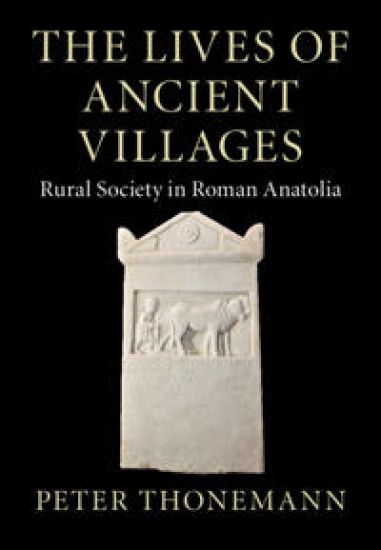
The Lives of Ancient Villages

The Lives of Ancient Villages

Peter Thonemann

Cambridge University Press
2022
sidottu
Our conception of the culture and values of the ancient Greco-Roman world is largely based on texts and material evidence left behind by a small and atypical group of city-dwellers. The people of the deep Mediterranean countryside seldom appear in the historical record from antiquity, and almost never as historical actors. This book is the first extended historical ethnography of an ancient village society, based on an extraordinarily rich body of funerary and propitiatory inscriptions from a remote upland region of Roman Asia Minor. Rural kinship structures and household forms are analysed in detail, as are the region's demography, religious life, gender relations, class structure, normative standards and values. Roman north-east Lydia is perhaps the only non-urban society in the Greco-Roman world whose culture can be described at so fine-grained a level of detail: a world of tight-knit families, egalitarian values, hard agricultural labour, village solidarity, honour, piety and love.
Teos and Abdera

Teos and Abdera

Mustafa Adak; Peter Thonemann

Oxford University Press
2022
sidottu
In late summer 2017, ongoing Turkish excavations at the site of Teos in Ionia uncovered one of the largest and most important Greek inscriptions to have been discovered this century. It records, in thrilling and moving detail, the assistance provided by the Teians in the repopulation and rebuilding of their daughter-city, Abdera in Thrace, after its sack by the Romans in 170 BC during the Third Macedonian War. The new text, published here for the first time, is startling testimony to the ancestral friendship- and support-networks that existed between Greek poleis in the Hellenistic world, and includes (among other things) the longest surviving description of an honorific statue to survive from the ancient world. In the light of the new inscription, the authors offer a full reassessment of the epigraphic and literary evidence for relations between Teos and Abdera, thereby providing a comprehensive long-term history of the two cities, from the sixth to the second century BC. The book also includes major new editions of the 'Teian Dirae' (public curses at Teos and Abdera in the early fifth century BC) and the second-century decree of Abdera for the Teian ambassadors Amymon and Megathymos, as well as two further new texts from the sanctuary of Dionysos at Teos.
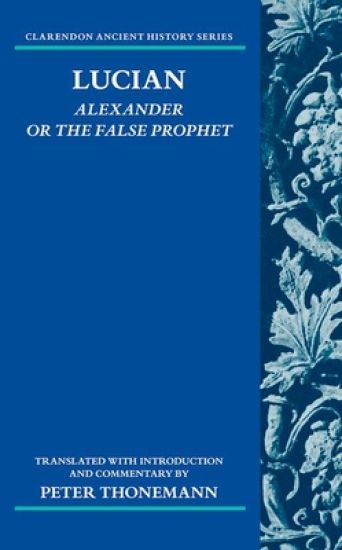
Lucian: Alexander Or The False Prophet

Lucian: Alexander Or The False Prophet

Peter Thonemann

Oxford University Press
2021
sidottu
Lucian's Alexander Or The False Prophet is a satiric biography of the religious entrepreneur and career fraudster Alexander of Abonouteichos. It recounts how, during the reign of Antoninus Pius (AD 138-161), Alexander succeeded in setting up a fraudulent new oracular cult of the snake-god Glykon in his home-town of Abonouteichos in Paphlagonia. In the Alexander, Lucian sets out to debunk the oracle as a scam, its founder as a debauched crook, and its clients as gullible idiots. The Alexander is an extraordinary and unclassifiable work: part biography, part invective, part Epicurean critique of divination. It casts a uniquely vivid light on social mores and religious beliefs in the Antonine age, and was a major influence on Erasmus, Ben Jonson, and Henry Fielding. The present volume is the first full-length treatment of the Alexander in English, and includes an extended historical and literary introduction, a new English translation, and a detailed commentary on the text. The volume also includes a translation of the surviving fragments of Oinomaos of Gadara's The Exposure of Sorcerers, a contemporary Cynic attack on oracular divination. All Greek is translated throughout.
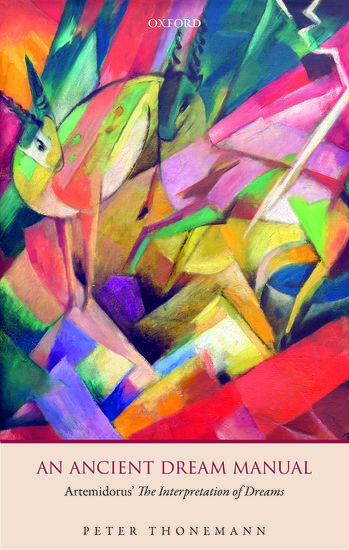
An Ancient Dream Manual

An Ancient Dream Manual

Peter Thonemann

Oxford University Press
2020
sidottu
Artemidorus' Oneirocritica ('The Interpretation of Dreams') is the only dream-book which has been preserved from Graeco-Roman antiquity. Composed around AD 200, it comprises a treatise and manual on dreams, their classification, and the various analytical tools which should be applied to their interpretation, making Artemidorus both one of the earliest documented and arguably the single most important predecessor and precursor of Freud. Artemidorus travelled widely through Greece, Asia, and Italy to collect people's dreams and record their outcomes, in the process casting a vivid light on social mores and religious beliefs in the Severan age: this volume, published as a companion to the new translation of The Interpretation of Dreams by Martin Hammond in the Oxford World's Classics series, aims to provide the non-specialist reader with a readable and engaging road-map to this vast and complex text. It offers a detailed analysis of Artemidorus' theory of dreams and the social function of ancient dream-interpretation, while also aiming to foster an understanding of the ways in which Artemidorus might be of interest to the cultural or social historian of the Graeco-Roman world. Alongside chapters on Artemidorus' life, career, and world-view, it also provides valuable insights into his conceptions of the human body, sexuality, the natural world, and the gods; his attitudes towards Rome, the contemporary Greek polis, and the social order; and his knowledge of Greek literature, myth, and history. In addition, its accessible exploration of the differences and similarities between ancient traditions of dream-analysis and modern psychoanalytic approaches will make this volume of interest to anybody with an interest in the history of dreams and dream interpretation.
The Hellenistic Age

The Hellenistic Age

Peter Thonemann

Oxford University Press
2018
nidottu
The three centuries which followed the conquests of Alexander are perhaps the most thrilling of all periods of ancient history. This was an age of cultural globalization: in the third century BC, a single language carried you from the Rhône to the Indus. A Celt from the lower Danube could serve in the mercenary army of a Macedonian king ruling in Egypt, and a Greek philosopher from Cyprus could compare the religions of the Brahmins and the Jews on the basis of first-hand knowledge of both. Kings from Sicily to Tajikistan struggled to meet the challenges of ruling multi-ethnic states, and Greek city-states came together under the earliest federal governments known to history. The scientists of Ptolemaic Alexandria measured the circumference of the earth, while pioneering Greek argonauts explored the Indian Ocean and the Atlantic coast of Africa. Drawing on inscriptions, papyri, coinage, poetry, art, and archaeology, in this Very Short Introduction Peter Thonemann opens up the history and culture of the vast Hellenistic world, from the death of Alexander the Great (323 BC) to the Roman conquest of the Ptolemaic kingdom (30 BC). ABOUT THE SERIES: The Very Short Introductions series from Oxford University Press contains hundreds of titles in almost every subject area. These pocket-sized books are the perfect way to get ahead in a new subject quickly. Our expert authors combine facts, analysis, perspective, new ideas, and enthusiasm to make interesting and challenging topics highly readable.
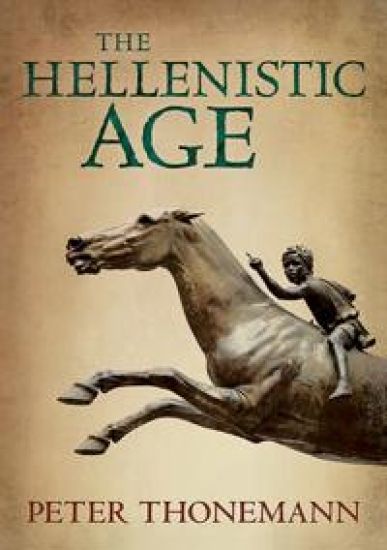
The Hellenistic Age

The Hellenistic Age

Peter Thonemann

Oxford University Press
2016
sidottu
The three centuries which followed the conquests of Alexander are perhaps the most thrilling of all periods of ancient history. This was an age of cultural globalization: in the third century BC, a single language carried you from the Rhône to the Indus. A Celt from the lower Danube could serve in the mercenary army of a Macedonian king ruling in Egypt, and a Greek philosopher from Cyprus could compare the religions of the Brahmins and the Jews on the basis of first-hand knowledge of both. Kings from Sicily to Tajikistan struggled to meet the challenges of ruling multi-ethnic states, and Greek city-states came together under the earliest federal governments known to history. The scientists of Ptolemaic Alexandria measured the circumference of the earth, while pioneering Greek argonauts explored the Indian Ocean and the Atlantic coast of Africa. Drawing on inscriptions, papyri, coinage, poetry, art, and archaeology Peter Thonemann opens up the history and culture of the vast Hellenistic world, from the death of Alexander the Great (323 BC) to the Roman conquest of the Ptolemaic kingdom (30 BC).
The Hellenistic World

The Hellenistic World

Peter Thonemann

Cambridge University Press
2016
pokkari
Coinage is one of our key sources for the rich and fascinating history of the Hellenistic world (323–31 BC). This book provides students of the period with an up-to-date introduction to Hellenistic gold, silver and bronze coins in their cultural and economic contexts. It also offers new perspectives on four major themes in contemporary Hellenistic history: globalisation, identity, political economy and ideology. With more than 250 illustrations, and written in a lucid and accessible style, this book sheds new light on the diverse and multicultural societies of the Hellenistic world, from Alexander to Augustus. The author assumes no prior knowledge of Hellenistic history, and all Greek and Latin texts are translated throughout.
The Hellenistic World

The Hellenistic World

Peter Thonemann

Cambridge University Press
2016
sidottu
Coinage is one of our key sources for the rich and fascinating history of the Hellenistic world (323–31 BC). This book provides students of the period with an up-to-date introduction to Hellenistic gold, silver and bronze coins in their cultural and economic contexts. It also offers new perspectives on four major themes in contemporary Hellenistic history: globalisation, identity, political economy and ideology. With more than 250 illustrations, and written in a lucid and accessible style, this book sheds new light on the diverse and multicultural societies of the Hellenistic world, from Alexander to Augustus. The author assumes no prior knowledge of Hellenistic history, and all Greek and Latin texts are translated throughout.
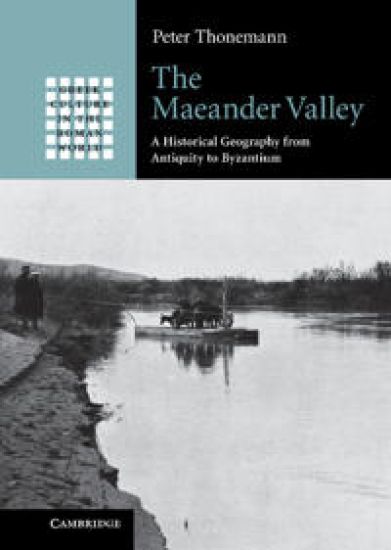
The Maeander Valley

The Maeander Valley

Peter Thonemann

Cambridge University Press
2015
pokkari
This book is a study of the long-term historical geography of Asia Minor, from the fourth century BC to the thirteenth century AD. Using an astonishing breadth of sources, ranging from Byzantine monastic archives to Latin poetic texts, ancient land records to hagiographic biographies, Peter Thonemann reveals the complex and fascinating interplay between the natural environment and human activities in the Maeander valley. Both a large-scale regional history and a profound meditation on the role played by geography in human history, this book is an essential contribution to the history of the Eastern Mediterranean in Graeco-Roman antiquity and the Byzantine Middle Ages.
The Birth of Classical Europe: A History from Troy to Augustine
An innovative and intriguing look at the foundations of Western civilization from two leading historians; the first volume in the Penguin History of Europe The influence of ancient Greece and Rome can be seen in every aspect of our lives. From calendars to democracy to the very languages we speak, Western civilization owes a debt to these classical societies. Yet the Greeks and Romans did not emerge fully formed; their culture grew from an active engagement with a deeper past, drawing on ancient myths and figures to shape vibrant civilizations. In The Birth of Classical Europe, the latest entry in the much-acclaimed Penguin History of Europe, historians Simon Price and Peter Thonemann present a fresh perspective on classical culture in a book full of revelations about civilizations we thought we knew. In this impeccably researched and immensely readable history we see the ancient world unfold before us, with its grand cast of characters stretching from the great Greeks of myth to the world-shaping Caesars. A landmark achievement, The Birth of Classical Europe provides insight into an epoch that is both incredibly foreign and surprisingly familiar.
The Maeander Valley

The Maeander Valley

Peter Thonemann

Cambridge University Press
2011
sidottu
This book is a study of the long-term historical geography of Asia Minor, from the fourth century BC to the thirteenth century AD. Using an astonishing breadth of sources, ranging from Byzantine monastic archives to Latin poetic texts, ancient land records to hagiographic biographies, Peter Thonemann reveals the complex and fascinating interplay between the natural environment and human activities in the Maeander valley. Both a large-scale regional history and a profound meditation on the role played by geography in human history, this book is an essential contribution to the history of the Eastern Mediterranean in Graeco-Roman antiquity and the Byzantine Middle Ages.
The Birth of Classical Europe

The Birth of Classical Europe

Peter Thonemann; Simon Price

Penguin Books Ltd
2011
pokkari

Halvin toimitettuna 24,40 €

'The Penguin History of Europe series ... is one of contemporary publishing's great projects' New StatesmanTo an extraordinary extent we continue to live in the shadow of the classical world. At every level from languages to calendars to political systems, we are the descendants of a 'classical Europe', using frames of reference created by ancient Mediterranean cultures. As this consistently fresh and surprising new book makes clear, however, this was no less true for the inhabitants of those classical civilizations themselves, whose myths, history, and buildings were an elaborate engagement with an already old and revered past filled with great leaders and writers, emigrations and battles. Indeed, much of the reason we know so much about the classical past is the obsessive importance it held for so many generations of Greeks and Romans, who interpreted and reinterpreted their changing casts of heroes and villains. Figures such as Alexander the Great and Augustus Caesar loom large in our imaginations today, but they were themselves fascinated by what had preceded them. The Birth of Classical Europe is therefore both an authoritative history, and also a fascinating attempt to show how our own changing values and interests have shaped our feelings about an era which is by some measures very remote but by others startlingly close.