Kirjojen hintavertailu – 12 903 725 kirjaa ja 27 kauppaa

Kirjailija

Peter Topping

Kirjat ja teokset yhdessä paikassa: 6 kirjaa, julkaisuja vuosilta 1999–2023, suosituimpiin kuuluu Enclosures in Neolithic Europe. Vertaile teosten hintoja ja tarkista saatavuus suomalaisista kirjakaupoista.

6 kirjaa

Kirjojen julkaisuvuodet: 1999–2023.

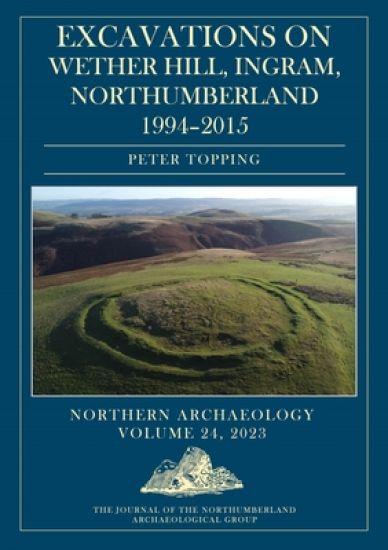
Excavations on Wether Hill, Ingram, Northumberland, 1994–2015
The Northumberland Archaeological Group’s (NAG) Wether Hill project spanned the years 1994–2015 and was located on the eponymous hilltop overlooking the mouth of the Breamish Valley in the Northumberland Cheviots. The project had been inspired by the RCHME’s ‘Southeast Cheviots Project’ that had discovered and recorded extensive prehistoric and later landscapes. The NAG project investigated several sites. Over the 11 seasons of excavation, NAG recorded evidence of residual Mesolithic activity (microliths), a burial cairn containing two Beakers in an oak coffin, which was superseded by a stone-built cist containing three Food Vessels, Iron Age cord rig cultivation and clearance cairns, a series of Middle/Late Iron Age timber-built palisaded enclosures, a cross-ridge dyke, which protected the southern approach to the Wether Hill fort, and sampled the multi-period bivallate hillfort. The hillfort sequence on Wether Hill began with a succession of palisaded enclosures, which were later replaced by bivallate earth and stone defenses; both phases appear to have been associated with timber-built houses. Eventually the fort was abandoned, and three stone-built roundhouses were constructed in the fort. The 18 radiocarbon dates obtained from various contexts in the hillfort makes this site one of the better dated forts in the Borders. The chronology of the Wether Hill fort spanned the Middle/Late Iron Age, which corresponds with dates from palisaded enclosures excavated elsewhere on the hilltop spur. Taken together, this evidence provides a snapshot of settlement hierarchies and agricultural practices during the later Iron Age in this part of the Northumberland Cheviots. The excavations also help contextualise some of the RCHME survey evidence, providing data to model chronology, potential prehistoric settlement density and land-use patterns at different time periods in the well-preserved archaeological landscapes of the Cheviots.

Neolithic Stone Extraction in Britain and Europe
This book focuses on the introduction of Neolithic extraction practices across Europe through to the Atlantic periphery of Britain and Ireland. The key research questions are when and why were these practices adopted and what role did extraction sites play in Neolithic society. Neolithic mines and quarries have frequently been seen as fulfilling roles linked to the expansion of the Neolithic economy. However, this ignores the fact that many communities chose to selectively dig for certain types of stone in preference to others and why the products from these sites were generally deposited in special places such as wetlands. To address this question, 168 near-global ethnographic studies were analysed to identify common trends in traditional extraction practises to produce robust statistics about their motivations and material signatures. Repeated associations emerged between storied locations, the organisation of extraction practices, long-distance distribution of products, and the material evidence such activities left behind. This suggests that we can now probably identify mythologised/storied sites, seasonality, ritualised extraction, and the use-life of extraction site products. The ethnographic model was tested against data from 223 near-global archaeological extraction sites, which confirmed a similar patterning in both material records. It was used to analyse the social context of 79 Neolithic flint mine and 51 axe quarry excavations in Britain and Ireland and to review their European origins. The evidence that emerges confirms the pivotal role played by Neolithic extraction practices in European Neolithisation and that the interaction of indigenous foragers with migrant miners/farmers was fundamental to the adoption of the new agropastoral lifestyle.
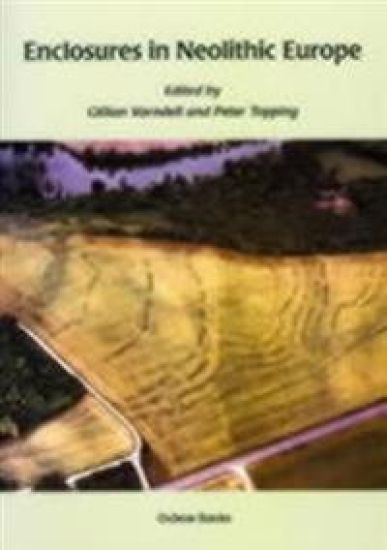
Enclosures in Neolithic Europe

Enclosures in Neolithic Europe

G Varndell; Peter Topping

Oxbow Books
2016
nidottu
These papers come from a conference on Neolithic Causewayed Enclosures in Europe held in London in 1999. They present a series of snapshots of some of the sites and regions at the forefront of current research on causewayed enclosures in Europe, and as such are a complement to the Royal Commission on the Historical Monuments of England (RCHME) project which has systematically recorded all known Neolithic enclosures in England by both analytical topographic survey techniques and aerial transcription. The detailed regional data collected by the RCHME project has allowed a radical reinterpretation of these sites and the recognition that there are regional groups of enclosures. This series of papers serves to broaden the discussion about the structure and form of causewayed monuments beyond lowland England, looking at a wide geographical range of sites across central Europe, as well as considering some sites which do not conform to the traditional type but which have been proved by excavation to have a Neolithic context. This collection of papers provides a long-awaited and important addition to the debate on these enigmatic prehistoric sites. Contents: Neolithic Enclosures of Scandinavia (Niels H Anderson) ; The Causewayed Enclosures of West-Central France from the beginning of the Fourth to the End of the Third Millennium (Claude Burnez and Catherine Louboutin) ; Le Mourral, Trèbes (Aude) and the Final Neolithic Circular Enclosures of the Languedoc (Jean Vaquer) ; The Late Neolithic Settlement of La Hersonnais, Pléchatel in its Regional Context (Jean-Yves Tinevez) ; The Neolithic Ditched Enclosures of the Tavoliere, South-East Italy (Robin Skeates) ; An Interrupted Ditch Alignment at Rivoli, Italy, in the Context of Neolithic Interrupted Ditch/Pit Systems (Lawrence Barfield) ; Aerial Survey and Neolithic Enclosures in Central Europe (Otto Braasch) ; From Lilliput to Brobdingnag: The Traditions of Enclosure in the Irish Neolithic (Gabriel Cooney) ; Billown Neolithic Enclosures, Isle of Man (Timothy Darvill) ; Lithic Artefacts from Neolithic Causewayed Enclosures: Character and Meaning (Alan Saville) ; A Causewayed Enclosure at Husbands Bosworth, Leicestershire (Adrian Butler, Patrick Clay and John Thomas) ; The Howe Robin Story: An Unusual Enclosure on Crosby Ravensworth Fell (Moraig Brown) ; The Seventieth Causewayed Enclosure in the British Isles? (Peter D Horne, David MacLeod and Alastair Oswald) ; Rethinking the Carrock Fell Enclosure (Trevor Pearson and Peter Topping) .
Lectures on the Ricci Flow

Lectures on the Ricci Flow

Peter Topping

Cambridge University Press
2006
pokkari
Hamilton's Ricci flow has attracted considerable attention since its introduction in 1982, owing partly to its promise in addressing the Poincaré conjecture and Thurston's geometrization conjecture. This book gives a concise introduction to the subject with the hindsight of Perelman's breakthroughs from 2002/2003. After describing the basic properties of, and intuition behind the Ricci flow, core elements of the theory are discussed such as consequences of various forms of maximum principle, issues related to existence theory, and basic properties of singularities in the flow. A detailed exposition of Perelman's entropy functionals is combined with a description of Cheeger-Gromov-Hamilton compactness of manifolds and flows to show how a 'tangent' flow can be extracted from a singular Ricci flow. Finally, all these threads are pulled together to give a modern proof of Hamilton's theorem that a closed three-dimensional manifold whichcarries a metric of positive Ricci curvature is a spherical space form.
The Neolithic Flint Mines of England

The Neolithic Flint Mines of England

Martyn Barber; David Field; Peter Topping

Royal Commission on Historical Monuments
1999
nidottu
Only rarely in Europe do the surface remains of Neolithic flint mines remain so dramatically for all to see as those located along the South Downs and in the Breckland of England. Even within England they represent a diminishing resource and only ten sites have been recorded with any certainty. As examples of our earliest industrial heritage they represent archaeological sites of the first importance and have a special part to play in the history of technology. However, despite a lengthy history of archaeological investigation, they have rarely been considered nationally as a class of monument. Although some sites such as Grime's Graves are well known through excavation campaigns, others are known only through obscure articles and unpublished archival material. Many of those that survive as earthworks or cropmarks have never been surveyed previously or accurately planned. Consequently, English Heritage has compiled detailed plans of the surface areas of all of the known flint mines and investigated the sites of other potential examples. Using a combination of field survey, aerial photography and archival research, this volume looks at each site in its own right as a major and important complex and - for the first time - offers a synthesis of the evidence to date.