Kirjojen hintavertailu – 12 903 725 kirjaa ja 27 kauppaa
Kirjailija
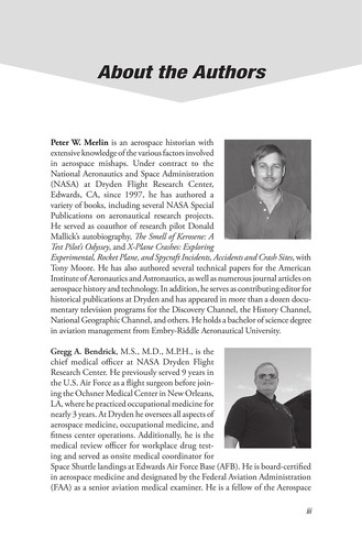
Peter W. Merlin
Kirjat ja teokset yhdessä paikassa: 18 kirjaa, julkaisuja vuosilta 2005–2023, suosituimpiin kuuluu The Smell of Kerosene. Vertaile teosten hintoja ja tarkista saatavuus suomalaisista kirjakaupoista.
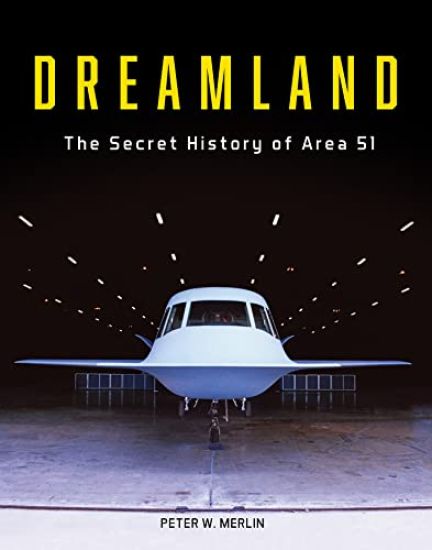
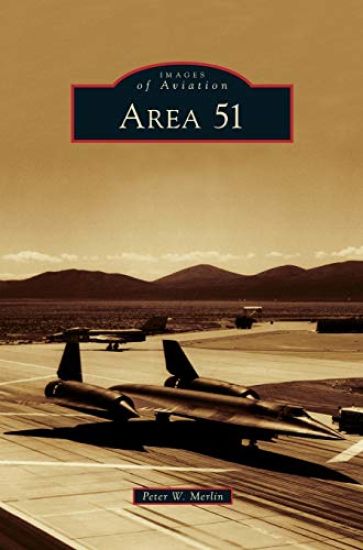
A highly detailed look into the Groom Lake test site known as Area 51, from the early years (circa 1955 to 1969) through to present day Area 51, a top-secret military installation hidden in the desert northwest of Las Vegas, has been shrouded in mystery since 1955. Now, aerospace historian Peter Merlin cuts through the myths and conspiracy folklore to reveal in extraordinary detail the true story of how a ramshackle temporary outpost was ultimately transformed into one of the nation’s premier flight test and evaluation facilities for advanced aviation technology and high-tech weapons. This compelling narrative is based on a treasure trove of declassified documents and interviews, and is richly illustrated with more than 700 images, many never published before. Author Peter Merlin has appeared in more than a dozen film and television documentaries for the History Channel, Discovery, National Geographic, Smithsonian, and others. Dreamland was edited to the same rigorous academic standard as the author’s works published by NASA and the American Institute for Aeronautics and Astronautics.
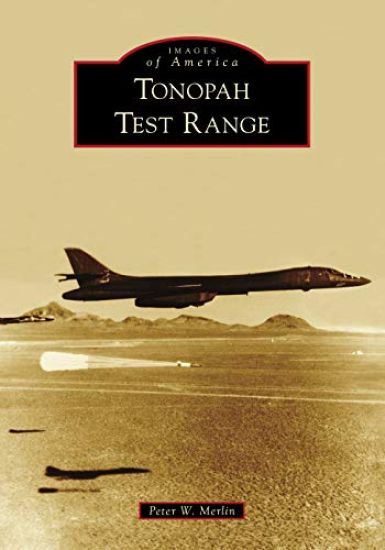
Established by Sandia Corporation in 1957, Tonopah Test Range (TTR) in Nevada provided an isolated place for the Atomic Energy Commission and successor agencies to test ballistic characteristics and non-nuclear components of atomic bombs. Also known as Area 52, the vast outdoor laboratory served this purpose throughout the Cold War arms race and continues to play a vital role in the stewardship and maintenance of the United States' nuclear arsenal. The range has been used for training exercises, testing rockets, development of electronic warfare systems and unmanned aerial vehicles, and nuclear safety experiments. During the late 1970s, the Air Force constructed an airfield for a clandestine squadron of captured Russian fighter planes that were used for tactical evaluations and to provide realistic air combat training for thousands of US airmen. The TTR airfield also served as the first operational base for the F-117A stealth fighter, an airplane designed to be virtually invisible to detection by radar. Now operated primarily by Sandia National Laboratories for the Department of Energy and, in part, by the Air Force Materiel Command, TTR remains a valuable national asset with unparalleled capabilities.
Established by Sandia Corporation in 1957, Tonopah Test Range (TTR) in Nevada provided an isolated place for the Atomic Energy Commission and successor agencies to test ballistic characteristics and non-nuclear components of atomic bombs. Also known as Area 52, the vast outdoor laboratory served this purpose throughout the Cold War arms race and continues to play a vital role in the stewardship and maintenance of the United States' nuclear arsenal. The range has been used for training exercises, testing rockets, development of electronic warfare systems and unmanned aerial vehicles, and nuclear safety experiments. During the late 1970s, the Air Force constructed an airfield for a clandestine squadron of captured Russian fighter planes that were used for tactical evaluations and to provide realistic air combat training for thousands of US airmen. The TTR airfield also served as the first operational base for the F-117A stealth fighter, an airplane designed to be virtually invisible to detection by radar. Now operated primarily by Sandia National Laboratories for the Department of Energy and, in part, by the Air Force Materiel Command, TTR remains a valuable national asset with unparalleled capabilities.
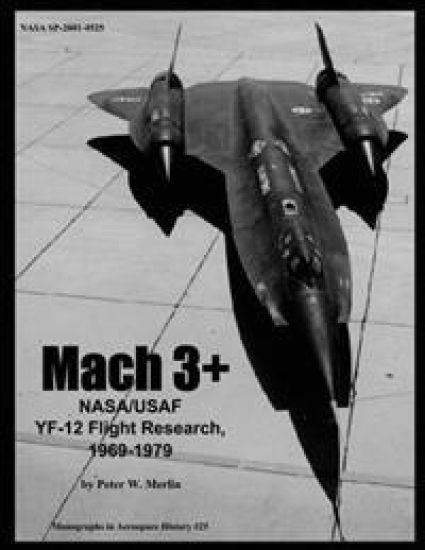
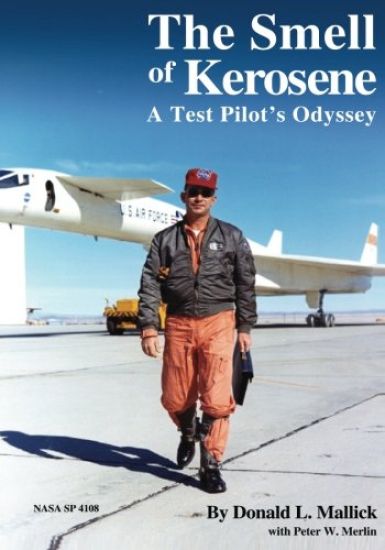
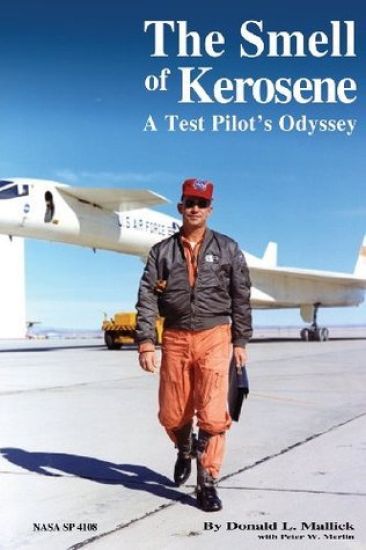
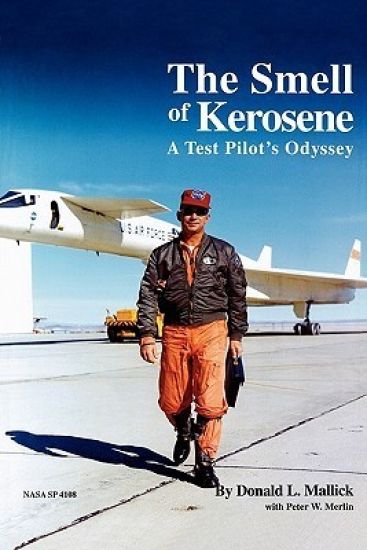
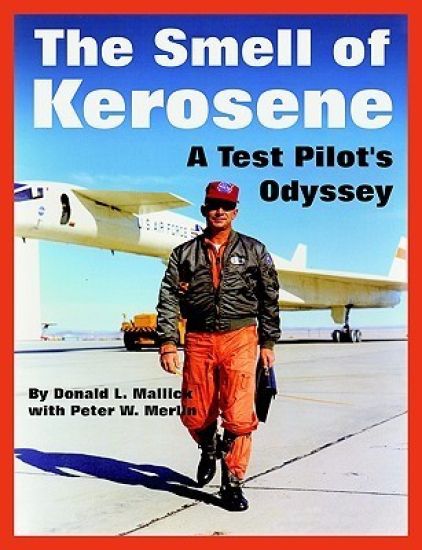
The Smell of Kerosene tells the dramatic story of a NASA research pilot who logged over 11,000 flight hours in more than 125 types of aircraft. Donald Mallick gives the reader fascinating first- hand descriptions of his early naval flight training, carrier operations, and his research flying career with NASA and its predecessor agency, the National Advisory Committee for Aeronautics (NACA). Mallick joined the NACA as a research pilot at the Langley Memorial Aeronautical Laboratory at Hampton, Virginia, where he flew modified helicopters and jets, and witnessed the NACA's evolution into the National Aeronautics and Space Administration. After transferring to the NASA Flight Research Center (now NASA Dryden Flight Research Center) at Edwards, California, he became involved with projects that further pushed the boundaries of aerospace technology. These included the giant delta-winged XB-70 supersonic research airplane, the wingless M2-F1 lifting body vehicle, and the triple-sonic YF-12 Blackbird. Mallick also test flew the Lunar Landing Research Vehicle (LLRV) and helped develop techniques used in training astronauts to land on the Moon. This book puts the reader in the pilot's seat for a "day at the office" unlike any other. Donald L. Mallick joined the National Advisory Committee for Aeronautics as a research pilot in 1957. He retired in 1987 as Deputy Chief of the Aircraft Operations Division at NASA Dryden Flight Research Center. During his distinguished career, Mallick logged over 11,000 flight hours in more than 125 different types of aircraft. He is a Fellow of the Society of Experimental Test Pilots. Peter W. Merlin has worked as an archivist in the NASA Dryden Flight ResearchCenter History Office since June 1997. He has published Mach 3+: NASA/USAF YF-12 Flight Research, 1969-1979 (NASA SP-2001-4525) as well as many articles on aerospace history.