
Kirjojen hintavertailu – 12 903 725 kirjaa ja 27 kauppaa

Kirjailija

Petr Mariel

Kirjat ja teokset yhdessä paikassa: 2 kirjaa, julkaisuja vuosilta 2020–2025, suosituimpiin kuuluu Environmental Valuation with Discrete Choice Experiments. Vertaile teosten hintoja ja tarkista saatavuus suomalaisista kirjakaupoista.

2 kirjaa

Kirjojen julkaisuvuodet: 2020–2025.

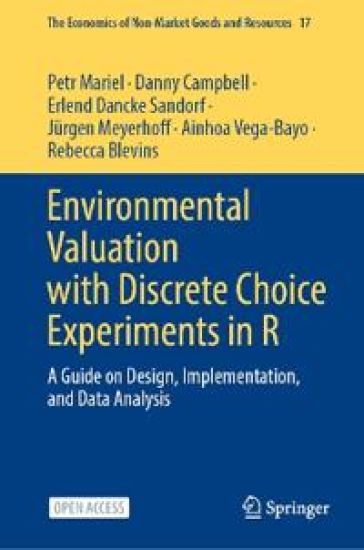
Environmental Valuation with Discrete Choice Experiments in R

Environmental Valuation with Discrete Choice Experiments in R

Petr Mariel; Danny Campbell; Erlend Dancke Sandorf; Jürgen Meyerhoff; Ainhoa Vega-Bayo; Rebecca Blevins

Springer International Publishing AG
2025
sidottu
This open access book offers advice and practical guidance for conducting discrete choice experiments (DCEs) in environmental valuation. It covers essential aspects of designing, implementing, and analysing choice experiments. Each chapter includes scripts and guidance, showcasing how to execute every step of a DCE using the free statistical computing and graphics software, R. This feature enhances accessibility and versatility for researchers in the field. While not providing strict guidelines, the book assists readers in steering clear of common mistakes encountered in applied work. With its insights and expertise, it equips researchers and practitioners to effectively navigate the complexities of DCEs.
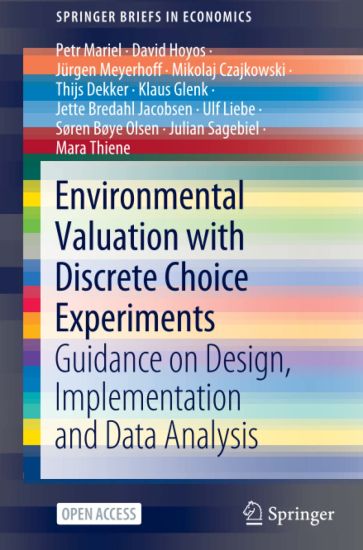
Environmental Valuation with Discrete Choice Experiments

Environmental Valuation with Discrete Choice Experiments

Petr Mariel; David Hoyos; Jürgen Meyerhoff; Mikolaj Czajkowski; Thijs Dekker; Klaus Glenk; Jette Bredahl Jacobsen; Ulf Liebe; Søren Bøye Olsen; Julian Sagebiel; Mara Thiene

Springer Nature Switzerland AG
2020
nidottu
This open access book offers up-to-date advice and practical guidance on how to undertake a discrete choice experiment as a tool for environmental valuation. It discusses crucial issues in designing, implementing and analysing choice experiments. Compiled by leading experts in the field, the book promotes discrete choice analysis in environmental valuation through a more solid scientific basis for research practice. Instead of providing strict guidelines, the book helps readers avoid common mistakes often found in applied work. It is based on the collective reflections of the scientific network of researchers using discrete choice modelling in the field of environmental valuation (www.envecho.com).