Kirjojen hintavertailu – 12 903 724 kirjaa ja 27 kauppaa

Kirjailija

Petros C. Mavroidis

Kirjat ja teokset yhdessä paikassa: 23 kirjaa, julkaisuja vuosilta 2002–2025, suosituimpiin kuuluu European Integration and International Co-ordination. Vertaile teosten hintoja ja tarkista saatavuus suomalaisista kirjakaupoista.

23 kirjaa

Kirjojen julkaisuvuodet: 2002–2025.

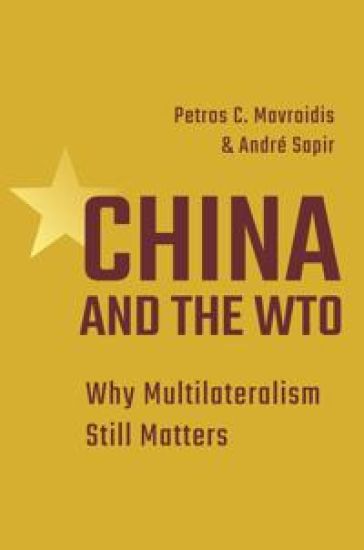
China and the WTO

China and the WTO

Petros C. Mavroidis; Andre Sapir

PRINCETON UNIVERSITY PRESS
2025
pokkari
An examination of China’s participation in the World Trade Organization, the conflicts it has caused, and how WTO reforms could ease them China’s accession to the World Trade Organization (WTO) in 2001 was rightly hailed as a huge step forward in international cooperation. However, China’s participation in the WTO has been anything but smooth, with China alienating some of its trading partners, particularly the United States. The mismatch between the WTO framework and China’s economic model has undermined the WTO’s ability to mitigate tensions arising from China’s size and rapid growth. What has to change? China and the WTO demonstrates that unilateral pressure, by the United States and others, is not the answer. Instead, Petros Mavroidis and André Sapir show that if the WTO enacts judicious reforms, it could induce China’s cooperation, leading to a renewed confidence in the WTO system. The WTO and its predecessor, the General Agreement on Tariffs and Trade, are predicated on liberal domestic policies. They managed the previous accessions of socialist countries and big trading nations, but none were as large or powerful as China. Mavroidis and Sapir contend that for the WTO to function smoothly and accommodate China’s unique geopolitical position, it needs to translate some of its implicit principles into explicit treaty language. To make their point, they focus on two core complaints—that Chinese state-owned enterprises (SOEs) benefit from unfair trade advantages, and that domestic companies, private as well as SOEs, impose forced technology transfer on foreign companies as a condition for accessing the Chinese market—and they lay out specific proposals for WTO reforms. In an age of global trade disputes, China and the WTO offers a timely exploration of unprecedented challenges to the current multilateral system and fresh ideas for lasting solutions.
Industrial Policy, National Security, and the Perilous Plight of the WTO
The WTO is facing an unprecedented crisis, one that threatens to critically erode its relevance and destabilize global trade. Some member states have become increasingly distrustful of other WTO members, invoking trade-restrictive measures in the name of economic security. Petros C. Mavroidis's new book provides insight into current international trade, national security, and environmental challenges facing the world community, of which the World Trade Organization (WTO) is at the epicenter. Even if the WTO overcame its current crisis, its adjudication branch is insufficiently equipped to address the aforementioned challenges and the WTO contract itself is in dire need of updating. Yet, as Mavroidis argues, ensuring the survival of the WTO is crucial for rebuilding the trust of the global trading community. In this direction, Mavroidis offers concrete proposals toward improving the function of the WTO and reigniting global collaboration.
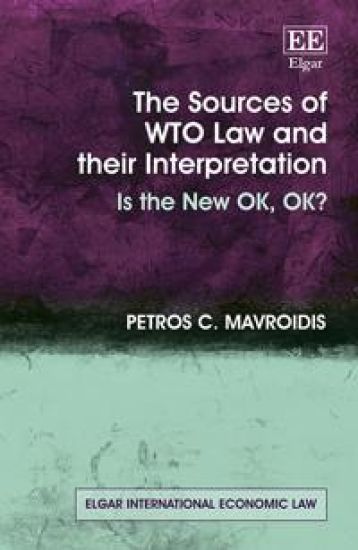
The Sources of WTO Law and their Interpretation

The Sources of WTO Law and their Interpretation

Petros C. Mavroidis

EDWARD ELGAR PUBLISHING LTD
2023
nidottu
In this incisive book, Petros C. Mavroidis examines the complex practice of interpreting the various sources of World Trade Organization (WTO) law. Written by a leading expert in WTO scholarship, the book serves as a broad grounding in the legal theory of the WTO contract and its sources, as well as its application in practice. Delving into the workings of the Vienna Convention of the Law of Treaties (VCLT) and its use within the WTO courts, the author provides a critical assessment of the interpretation of the WTO contract and illuminates the role of WTO adjudicators and the Secretariat in clarifying obligations. Mavroidis then explores the uncertainty and distortion that emerge as a result of the discretion from adjudicators invited by the VCLT, explaining why this matters and offering steps towards resolving these issues. Providing an expansive analysis of the interpretation of WTO treaties, this book will be an invaluable resource for scholars and students in the field of WTO law, as well as international trade and economic law more broadly. Its discussion of the possible future of dispute settlement, particularly its proposal for a re-evaluation of the judicial selection process, will also prove insightful to practitioners in this area.
The Sources of WTO Law and their Interpretation

The Sources of WTO Law and their Interpretation

Petros C. Mavroidis

EDWARD ELGAR PUBLISHING LTD
2022
sidottu
In this incisive book, Petros C. Mavroidis examines the complex practice of interpreting the various sources of World Trade Organization (WTO) law. Written by a leading expert in WTO scholarship, the book serves as a broad grounding in the legal theory of the WTO contract and its sources, as well as its application in practice. Delving into the workings of the Vienna Convention of the Law of Treaties (VCLT) and its use within the WTO courts, the author provides a critical assessment of the interpretation of the WTO contract and illuminates the role of WTO adjudicators and the Secretariat in clarifying obligations. Mavroidis then explores the uncertainty and distortion that emerge as a result of the discretion from adjudicators invited by the VCLT, explaining why this matters and offering steps towards resolving these issues. Providing an expansive analysis of the interpretation of WTO treaties, this book will be an invaluable resource for scholars and students in the field of WTO law, as well as international trade and economic law more broadly. Its discussion of the possible future of dispute settlement, particularly its proposal for a re-evaluation of the judicial selection process, will also prove insightful to practitioners in this area.
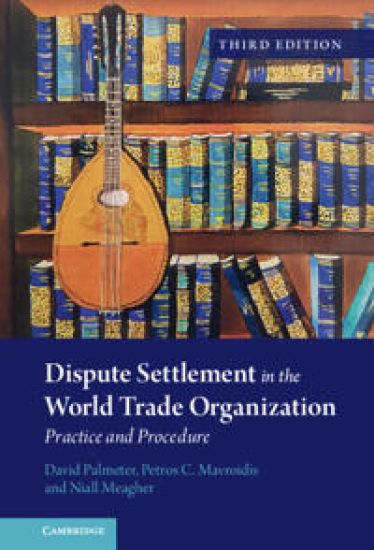
Dispute Settlement in the World Trade Organization

Dispute Settlement in the World Trade Organization

David Palmeter; Petros C. Mavroidis; Niall Meagher

Cambridge University Press
2022
pokkari
The WTO dispute settlement process has evolved in recent years into one of the most successful, yet complex, systems of international arbitration. In this extensively revised new edition of Palmeter, Mavroidis, and Meagher's authoritative book on WTO dispute settlement, the authors provide a comprehensive overview of each step of the WTO dispute settlement process, examining both the history of the system, the governing legal rules, and the more informal procedural aspects of the process in detail. This edition takes into account the jurisprudence of panels and the Appellate Body up to the end of 2020 and includes an analysis of the current crisis in the WTO Appellate Body. This volume is an essential tool for practitioners, diplomats, government lawyers, and students of WTO law and should equally be of interest to students of other forms of international arbitration.
Dispute Settlement in the World Trade Organization

Dispute Settlement in the World Trade Organization

David Palmeter; Petros C. Mavroidis; Niall Meagher

Cambridge University Press
2022
sidottu
The WTO dispute settlement process has evolved in recent years into one of the most successful, yet complex, systems of international arbitration. In this extensively revised new edition of Palmeter, Mavroidis, and Meagher's authoritative book on WTO dispute settlement, the authors provide a comprehensive overview of each step of the WTO dispute settlement process, examining both the history of the system, the governing legal rules, and the more informal procedural aspects of the process in detail. This edition takes into account the jurisprudence of panels and the Appellate Body up to the end of 2020 and includes an analysis of the current crisis in the WTO Appellate Body. This volume is an essential tool for practitioners, diplomats, government lawyers, and students of WTO law and should equally be of interest to students of other forms of international arbitration.
China and the WTO

China and the WTO

Petros C. Mavroidis; Andre Sapir

PRINCETON UNIVERSITY PRESS
2021
sidottu
An examination of China’s participation in the World Trade Organization, the conflicts it has caused, and how WTO reforms could ease them China’s accession to the World Trade Organization (WTO) in 2001 was rightly hailed as a huge step forward in international cooperation. However, China’s participation in the WTO has been anything but smooth, with China alienating some of its trading partners, particularly the United States. The mismatch between the WTO framework and China’s economic model has undermined the WTO’s ability to mitigate tensions arising from China’s size and rapid growth. What has to change? China and the WTO demonstrates that unilateral pressure, by the United States and others, is not the answer. Instead, Petros Mavroidis and André Sapir show that if the WTO enacts judicious reforms, it could induce China’s cooperation, leading to a renewed confidence in the WTO system. The WTO and its predecessor, the General Agreement on Tariffs and Trade, are predicated on liberal domestic policies. They managed the previous accessions of socialist countries and big trading nations, but none were as large or powerful as China. Mavroidis and Sapir contend that for the WTO to function smoothly and accommodate China’s unique geopolitical position, it needs to translate some of its implicit principles into explicit treaty language. To make their point, they focus on two core complaints—that Chinese state-owned enterprises (SOEs) benefit from unfair trade advantages, and that domestic companies, private as well as SOEs, impose forced technology transfer on foreign companies as a condition for accessing the Chinese market—and they lay out specific proposals for WTO reforms. In an age of global trade disputes, China and the WTO offers a timely exploration of unprecedented challenges to the current multilateral system and fresh ideas for lasting solutions.
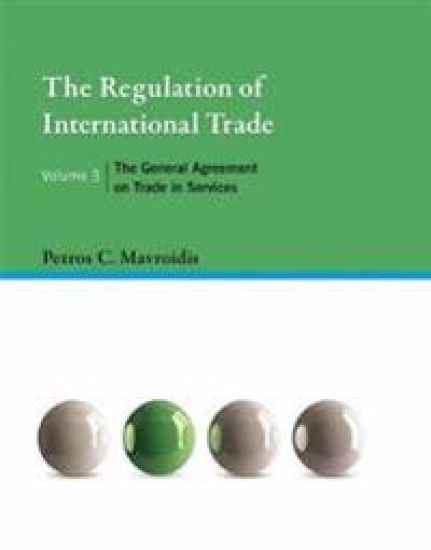
The Regulation of International Trade, Volume 3
A comprehensive analysis of GATS that considers its historical context, the national preferences that shaped it, and a path to a GATS 2.0. The previous two volumes in The Regulation of International Trade analyzed the General Agreement on Tariffs and Trade (GATT), the first successful agreement to generate multilateral trade liberalization, and the World Trade Organization (WTO), for which the GATT laid the groundwork. In this third volume, Petros Mavroidis turns to the General Agreement on Trade in Services (GATS), a WTO treaty that took effect in 1995, and offers a comprehensive analysis that considers the historical context of the GATS, the national preferences that shaped it, and a path to a GATS 2.0. Mavroidis examines the GATS through its negotiating record, considering whether the GATS as it is can appropriately address the concerns of the world trading community. The GATS deals exclusively with non-tariff barriers (NTBs)--precisely the instrument that the WTO has not managed to tame--and one of some significance in light of the digital revolution, which has enlarged the scope of cross-border transactions in which neither supplier nor consumer needs to travel for a service to be consumed. Mavroidis argues that the GATS has brought about a platform to liberalize services, and has locked in some pre-GATS liberalization. What is missing, he contends, is a "GATS-Think" that would generate liberalization from now on.
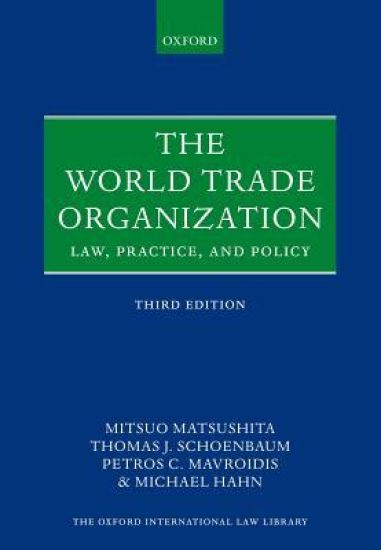
The World Trade Organization

The World Trade Organization

Mitsuo Matsushita; Thomas J. Schoenbaum; Petros C. Mavroidis; Michael Hahn

Oxford University Press
2017
nidottu
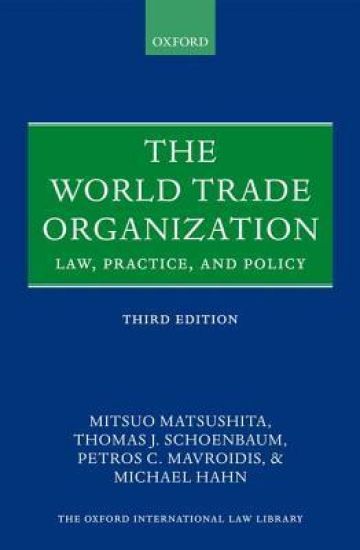
The WTO is one of the most important intergovernmental organizations in the world, yet the way in which it functions as an organization and the scope of its authority and power are still poorly understood. This comprehensively revised new edition of the acclaimed work by an outstanding team of WTO law specialists provides a complete overview of the law and practice of the WTO. The authors begin with the institutional law of the WTO (such as the sources of law and remedies of the dispute settlement system), then tackle the principal substantive obligations of the WTO regime (including tariffs, quotas, and MFN). They then move on to consider unfair trade, regional trading arrangements, and developing countries. In its final section the book deals with the consequences of globalization: first, where free trade is seen to be incompatible with environmental protection and, second, where WTO law confronts legal regimes governing issues of competition and intellectual property.
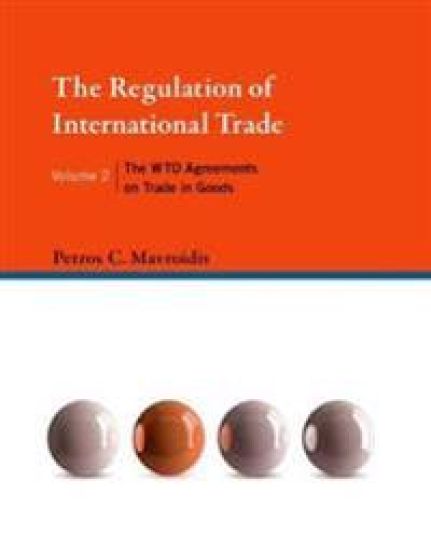
The Regulation of International Trade

The Regulation of International Trade

Petros C. Mavroidis

MIT Press
2016
sidottu
A detailed examination of WTO agreements regulating trade in goods, discussing legal context, policy background, economic rationale, and case law. The General Agreement on Tariffs and Trade (GATT) has extended its institutional arsenal since the Kennedy round in the early 1960s. The current institutional design is the outcome of the Uruguay round and agreements reached in the ongoing Doha round (begun in 2001). One of the institutional outgrowths of GATT is the World Trade Organization (WT0), created in 1995. In this book, Petros Mavroidis offers a detailed examination of WTO agreements regulating trade in goods, discussing legal context, policy background, economic rationale, and case law. Each chapter examines a given legal norm and its subsequent practice. In particular, he discusses agreements dealing with customs clearance; "contingent protection" instruments, which allow WTO members unilaterally to add to the negotiated amount of protection when a certain contingency (for example, dumping) has occurred; TBT (Technical Barriers to Trade) and SPS (Sanitary and Phyto-sanitary Measures) agreements, both of which deal with such domestic instruments as environmental, health policy, or consumer information; the agreement on Trade Related Investment Measures (TRIM); sector-specific agreements on agriculture and textiles; plurilateral agreements (binding a subset of WTO membership) on government procurement and civil aviation; and transparency in trade relations. This book's companion volume examines the GATT regime for international trade.
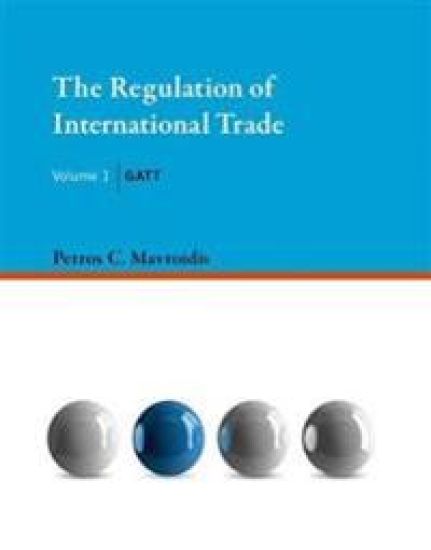
The Regulation of International Trade

The Regulation of International Trade

Petros C. Mavroidis

MIT Press
2015
sidottu
A detailed examination of the GATT regime for international trade, discussing the negotiating record, policy background, economic rationale, and case law. The General Agreement on Tariffs and Trade (GATT) was created alongside other towering achievements of the post-World War II era, including the United Nations, the World Bank, and the International Monetary Fund. GATT, the first successful agreement to generate multilateral trade liberalization, became the principal institution to administer international trade for the next six decades. In this book, Petros Mavoidis offers detailed examination of the GATT regime for international trade, discussing the negotiating record, policy background, economic rationale, and case law. Mavroidis offers a substantive first chapter that provides a detailed historical background to GATT that stretches from the 1927 World Economic Conference through Bretton Woods and the Atlantic Charter. Each of the following chapters examines the disciplines agreed to, their negotiating record, their economic rationale, and subsequent practice. Mavroidis focuses on cases that have influenced the prevailing understanding of the norm, as well as on literature that has contributed to its interpretation, and the final outcome. In particular, he examines quantitative restrictions and tariffs; the most favored nation clause (MFN), the cornerstone of the GATT edifice; preferential trade agreements and special treatment for products originating in developing countries; domestic instruments; and exceptions to the obligations assumed under GATT. This book's companion volume examines World Trade Organization (WTO) agreements regulating trade in goods.
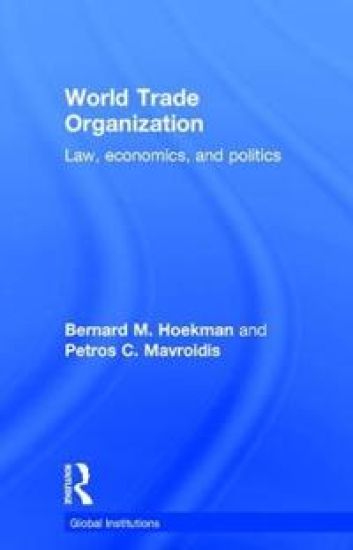
World Trade Organization (WTO)

World Trade Organization (WTO)

Bernard M. Hoekman; Petros C. Mavroidis

Routledge
2015
sidottu
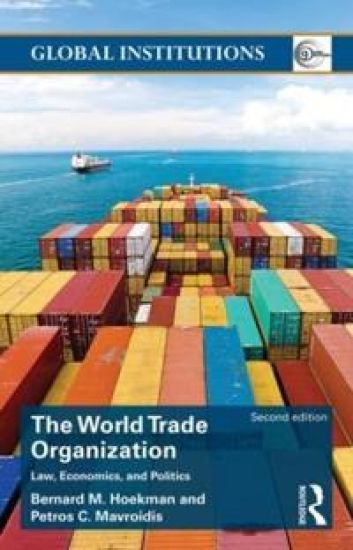
The World Trade Organization (WTO) is one of the most important international organizations in existence today. It contains a set of disciplines that affect the ability of governments to impose trade restrictions, and has helped to support the steady expansion of international trade since the 1950s. The WTO has been the focus of vociferous protests by anti-globalization activists and has experienced great difficulties in agreeing to new trade rules since its establishment. At the same time it has become the premier global forum for the settlement of trade disputes and has proven to provide a robust framework for international cooperation in the trade area. This book separates the facts from the propaganda and provides an accessible overview of the WTO’s history, structure and policies as well as a discussion of the future of the organization. It also confronts the criticisms of the WTO and assesses their validity. New to the second edition: discussion of legislative amendments to the WTO Agreement, in particular Aid for Trade, the Agreement on Trade Facilitation and the Bali Package evaluation of case law developments and major disputes since 2007, including analysis of the WTO and the financial crisis – in particular the trade policy responses of WTO Members and institutional response reflection on recent shifts to mega-regional agreements (TPP, TISA, TTIP) and their implications what next post Bali? Fully updated throughout, this book continues to be essential reading for students of international trade, international political economy, commercial law and international organizations as well as activists and others interested in a balanced account of a key global institution.
The World Trade Organization

The World Trade Organization

Mitsuo Matsushita; Thomas J. Schoenbaum; Petros C. Mavroidis; Michael Hahn

Oxford University Press
2015
sidottu
The WTO is one of the most important intergovernmental organizations in the world, yet the way in which it functions as an organization and the scope of its authority and power are still poorly understood. This comprehensively revised new edition of the acclaimed work by an outstanding team of WTO law specialists provides a complete overview of the law and practice of the WTO. The authors begin with the institutional law of the WTO (such as the sources of law and remedies of the dispute settlement system), then tackle the principal substantive obligations of the WTO regime (including tariffs, quotas, and MFN). They then move on to consider unfair trade, regional trading arrangements, and developing countries. In its final section the book deals with the consequences of globalization: firstly, where free trade is seen to be incompatible with environmental protection and, secondly, where WTO law confronts legal regimes governing issues of competition and intellectual property.
World Trade Organization (WTO)

World Trade Organization (WTO)

Bernard M. Hoekman; Petros C. Mavroidis

Routledge
2015
nidottu
The World Trade Organization (WTO) is one of the most important international organizations in existence today. It contains a set of disciplines that affect the ability of governments to impose trade restrictions, and has helped to support the steady expansion of international trade since the 1950s. The WTO has been the focus of vociferous protests by anti-globalization activists and has experienced great difficulties in agreeing to new trade rules since its establishment. At the same time it has become the premier global forum for the settlement of trade disputes and has proven to provide a robust framework for international cooperation in the trade area. This book separates the facts from the propaganda and provides an accessible overview of the WTO’s history, structure and policies as well as a discussion of the future of the organization. It also confronts the criticisms of the WTO and assesses their validity. New to the second edition: discussion of legislative amendments to the WTO Agreement, in particular Aid for Trade, the Agreement on Trade Facilitation and the Bali Package evaluation of case law developments and major disputes since 2007, including analysis of the WTO and the financial crisis – in particular the trade policy responses of WTO Members and institutional response reflection on recent shifts to mega-regional agreements (TPP, TISA, TTIP) and their implications what next post Bali? Fully updated throughout, this book continues to be essential reading for students of international trade, international political economy, commercial law and international organizations as well as activists and others interested in a balanced account of a key global institution.
Trade in Goods

Trade in Goods

Petros C. Mavroidis

Oxford University Press
2012
sidottu
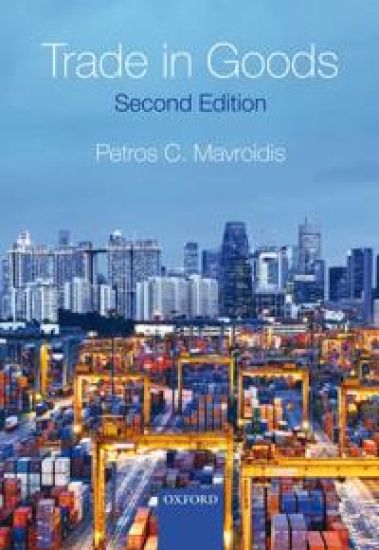
This new edition of Trade in Goods is an authoritative work on international trade by one of the most influential scholars in the field. It provides a comprehensive and detailed analysis of every WTO agreement dealing with trade in goods. The focus of the book is on the reasoning behind the various WTO agreements and their provisions, and the manner in which they have been understood in practice. It introduces both the historic as well as the economic rationale for the emergence of the multilateral trading system, before dealing with WTO practice in all areas involving trade in goods. It contests the claim that the international trade agreements themselves represent 'incomplete contracts', realized through interpretation by the WTO and other judicial bodies. The book comprehensively analyses the WTO's case law, and it argues that a more rigorous theoretical approach is needed to ensure a greater coherence in the interpretation of the core provisions regulating trade in goods. This second edition readdresses and moves beyond the discussion of the GATT presented in the first edition to assess in significant detail every trade in goods agreement at the WTO, both multilateral as well as plurilateral. The book is written to be accessible to those new to the field, with an authoritiative level of detail and analysis that makes it essential reading for lawyers and economists alike.
The Law and Economics of Contingent Protection in the WTO

The Law and Economics of Contingent Protection in the WTO

Petros C. Mavroidis; Patrick A. Messerlin; Jasper M. Wauters

Edward Elgar Publishing Ltd
2010
nidottu
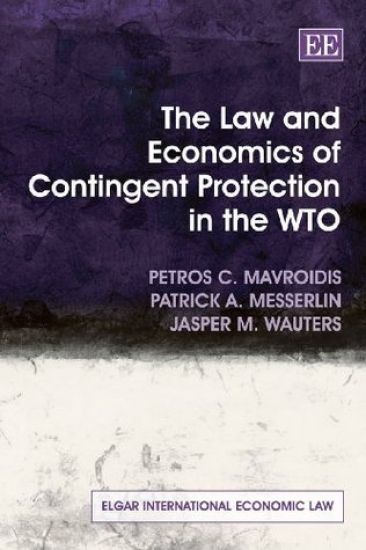
In this important book, three of the leading authors in the field of international economic law discuss the law and economics of the three most frequently used contingent protection instruments: anti-dumping, countervailing measures, and safeguards. When discussing countervailing measures, the authors also discuss legal challenges against prohibited and/or actionable subsidies. The authors' choice is mandated by the fact that the effects of a subsidy cannot always be confined to the market of the WTO Member wishing to react against it. Assuming there are effects outside its market, an injured WTO Member can challenge the scheme as such before a WTO Panel. Taking the three agreements for granted as a starting point, the book provides comprehensive discussion of both the original contracts, and the case law that has substantially contributed to the understanding of these agreements. The agreements discussed by the authors provide generally worded disciplines on Members and leave a lot of discretion to the investigating authorities of such Members. A great number of the many questions that arise in the course of a domestic trade remedies investigation are not explicitly addressed in these agreements. In such a situation, the authors highlight the important role that the judge has to play. Much like domestic investigating authorities adopt a line which is either more liberal or more protectionist in the application of trade remedies, the WTO adjudicator on numerous occasions was faced with similar policy problems in applying the general rules to the facts of the case before them. The authors point out that the adjudicating bodies have insisted on the unfair character of dumping in order to substantiate their relatively deferential standard of review. In the anti-dumping / countervailing duties context, case law has generally emphasized the limited character of the obligations on investigating authorities. This implies that domestic investigating authorities, following the evolution of case law, are now facing a deferential standard of review when imposing anti-dumping and countervailing duties. The book offers a contrasting view of the Agreement on Safeguards, an instrument the use of which, according to the authors, could, in principle, be defensible: WTO Members will have extra incentives to make commitments within a flexible contract. Moreover, safeguards can, in their view, help ease the pressures from domestic lobbies by facilitating (sometimes necessary) adjustment costs. However, the case law is described by the authors as having adopted a rather inflexible stance, the end result of which is that no imposition of safeguards has survived the test of consistency with WTO law. They identify the apparent rationale for the case law as an over-insistence on what they label the highly uninformative fair/unfair trade distinction. The economic analysis employed by the authors would suggest that - in the light of the unsatisfactory nature of anti-dumping measures, contrasted with the positive incentives inherent in safeguards - ultimately one could envisage merging the three instruments of contingent protection into one new safeguards instrument. Equally, they argue, this economic approach, combined with legal doctrine, offers great insight into the current provisions, allowing them to be interpreted in a more coherent and meaningful manner.
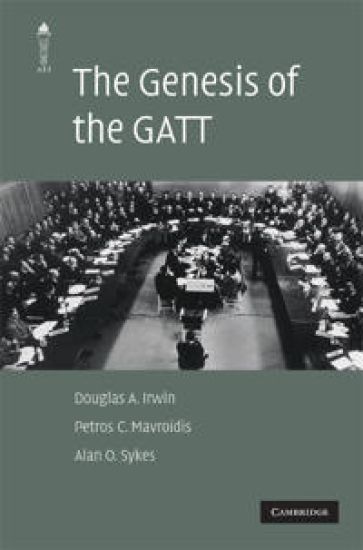
The Genesis of the GATT

The Genesis of the GATT

Douglas A. Irwin; Petros C. Mavroidis; Alan O. Sykes

Cambridge University Press
2009
pokkari
This book is part of a wider project on the economic logic behind the General Agreement on Tariffs and Trade (GATT). This volume asks: What does the historical record indicate about the aims and objectives of the framers of the GATT? Where did the provisions of the GATT come from and how did they evolve through various international meetings and drafts? To what extent does the historical record provide support for one or more of the economic rationales for the GATT? This book examines the motivations and contributions of the two main framers of the GATT, the United States and the United Kingdom, as well as the smaller role of other countries. The framers desired a commercial agreement on trade practices as well as negotiated reductions in trade barriers. Both were sought as a way to expand international trade to promote world prosperity, restrict the use of discriminatory policies to reduce conflict over trade, and thereby establish economic foundations for maintaining world peace.
The Genesis of the GATT

The Genesis of the GATT

Douglas A. Irwin; Petros C. Mavroidis; Alan O. Sykes

Cambridge University Press
2008
sidottu
This book is part of a wider project on the economic logic behind the General Agreement on Tariffs and Trade (GATT). This volume asks: What does the historical record indicate about the aims and objectives of the framers of the GATT? Where did the provisions of the GATT come from and how did they evolve through various international meetings and drafts? To what extent does the historical record provide support for one or more of the economic rationales for the GATT? This book examines the motivations and contributions of the two main framers of the GATT, the United States and the United Kingdom, as well as the smaller role of other countries. The framers desired a commercial agreement on trade practices as well as negotiated reductions in trade barriers. Both were sought as a way to expand international trade to promote world prosperity, restrict the use of discriminatory policies to reduce conflict over trade, and thereby establish economic foundations for maintaining world peace.