
Kirjojen hintavertailu – 12 903 727 kirjaa ja 27 kauppaa

Kirjailija

Peyman Akhgar

Kirjat ja teokset yhdessä paikassa: 2 kirjaa, julkaisuja vuosilta 2024–2026, suosituimpiin kuuluu Mohsen Foroughi. Vertaile teosten hintoja ja tarkista saatavuus suomalaisista kirjakaupoista.

2 kirjaa

Kirjojen julkaisuvuodet: 2024–2026.

Mohsen Foroughi

Mohsen Foroughi

Peyman Akhgar

BLOOMSBURY PUBLISHING PLC
2026
sidottu
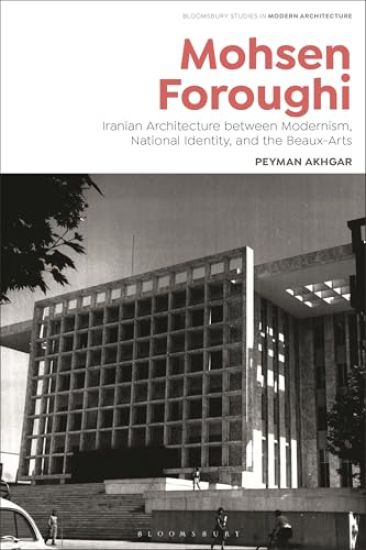
Mohsen Foroughi (1907-1983) was one of the most important and influential Iranian architects of the modern era. Standing at the intersection between modernism, tradition, and the Beaux-Arts, Foroughi’s work traces the major cultural developments of twentieth-century Iran and the Middle East – from the development of a new Iranian nationalism in the 1930s, to the emergence of a high modernist aesthetic of the mid-twentieth century, and finally to a more locally-expressive and formalist approach in the 1960s and 70s. Published as part of the Bloomsbury Studies in Modern Architecture series, which brings to light the work of significant yet overlooked modernist architects, this book reveals Foroughi’s vital roles as a designer, educator, and politician in Iran’s program of modernisation, and explores a selection of case-study buildings including Foroughi’s branches for the Iranian National Bank, the Sa’di Mausoleum, his Senate House of Iran, and the Maison de l’Iran in Paris. This is the first English-language study of the career of an Iranian modernist architect, offering new and unique insights into the expansion of twentieth-century modern architecture into non-Euro-American global contexts.
House Precinct Territory

House Precinct Territory

Rafael Luna; Dongwoo Yim; Peyman Akhgar; Antony Moulis; Silvia Micheli; Graham Crist; John Doyle

Oro Editions
2024
nidottu
The book departs from a reflection on contemporary issues of environmental and social sustainability. With buildings and cities being one of the primary accelerators of climate change, the tightening of urban environments is one of the mechanisms by which architects and urban planners can affect change. To date, models of urban densification and compact cities have been focused on sites of urban consumption — residential, commercial, civic and social spaces. Little thought has been given to the vast productive hinterlands around the world that support cities, through the growing of food, generation of power, production of goods and disposal of waste. Working through three scales of analysis, across three cities in the Asia Pacific Region, and deploying varying design research techniques ranging from critical observation to speculative scenario modelling, the book presents a series of projects that seek to retro-fit an existing urban environment with a productive program. The purpose of this project is to describe a series of models for the folding of production into our cities, with ambition of consolidating all components of human inhabitation within a smaller overall physical and environmental footprint.