
Kirjailija
Phaedrus
Kirjat ja teokset yhdessä paikassa: 55 kirjaa, julkaisuja vuosilta 1992–2024, suosituimpiin kuuluu Fabeln. Text und Kommentar. Vertaile teosten hintoja ja tarkista saatavuus suomalaisista kirjakaupoista.
55 kirjaa
Kirjojen julkaisuvuodet: 1992–2024.


Phaedri Fabulae in Usum Scholarum Selectae
Phaedrus; C. (EDT) Bradley; John T. (CON) White
Kessinger Pub
2009
sidottu
Phaedri Augusti Liberti Fabularum Aesopiarum, Libri Quinque (1838)
Phaedrus
KESSINGER PUBLISHING CO
2009
pokkari

Phaedri Fabulae (1874)
Phaedrus; Johannes Siebelis; Friedrich August Eckstein
KESSINGER PUBLISHING CO
2009
pokkari
The Fables Of Phaedrus, Books 1-2: With A Vocabulary (1872)
Phaedrus
KESSINGER PUBLISHING, LLC
2008
sidottu
The Fables Of Phaedrus, Books 1-2: With A Vocabulary (1872)
Phaedrus
KESSINGER PUBLISHING, LLC
2008
nidottu
Phaedri, Aug. Liberti Fabularum Aesopiarum Libros Quatuor: Ex Codice Olim Pithoeano, Deinde (1830)
Phaedrus
KESSINGER PUBLISHING, LLC
2008
nidottu
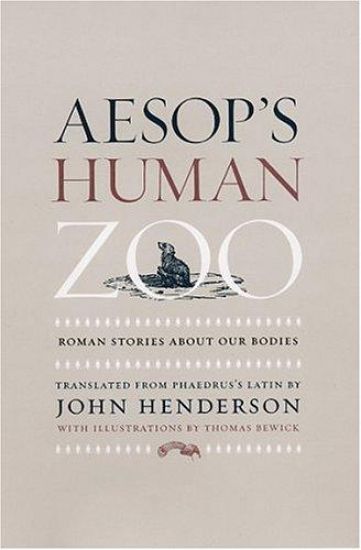
Most of us grew up with the tales of woodland creatures and their underlying morals found in Aesop's Fables. However, the familiar versions of the stories attributed to this enigmatic and astute storyteller are actually based on the Roman slave Phaedrus's adaptations of Aesop's earlier works. But even Phaedrus's renderings have been rewritten so extensively over the centuries that they no longer resemble the originals. In Aesop's Human Zoo, legendary Cambridge classicist John Henderson puts together a surprising set of up-front poems that translate fifty sharp fables by Phaedrus into terse, colloquial English. Providing unusual insights into the heart of Roman civilization, these clever poems open up odd avenues of ancient lore and life as they explore social types and physical aspects of the body, often mocking the limitations of human nature and offering vulgar or promiscuous interpretations of common actions. Beginning to advanced classicists and Latin scholars will appreciate the original Latin text provided in this bilingual edition. And the inclusion of a number of witty nineteenth-century wood engravings by Thomas Bewick, the father of modern English book illustration, renders the collection complete. Including strange proverbs and satirical anecdotes, filled with saucy naughtiness and awful puns, Aesop's Human Zoo will amuse you with its eccentricity and impress you with its undeniably accurate translations and shrewdly (often brutally) candid messages. The entertainment offered in this volume is truly a novelty - a good and knowing laugh through classical literature.

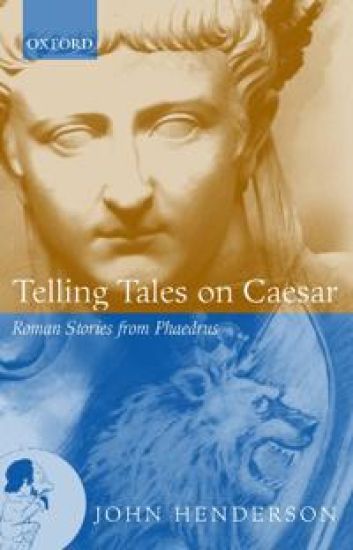
This book contains a dozen entertaining stories written in colloquial Latin verse newly translated and commented on by John Henderson. The author, Phaedrus, was a freeman of Augustus who put Aesop's Fables into five books of verse during the reign of Tiberius. He included a number of stories and anecdotes on everyday life situations as well as assorted satirical bits. Rarely read today, they take the reader to the heart of ancient Rome into everyday corners of classical life and culture, high and low, in the focal period of the first emperors, Augustus and Tiberius. Phaedrus was a member of the imperial staff and his themes include the emperor in private and in court; theatricity in public life; declamation as a site for mythologizing Rome; masculinity in ancient gender coding; patronage for poets under the Caesars; prejudice, wit, cynicism, and tyranny. The stories, combined with an introduction to the Fabulae of Aesop, show the ways Romans thought of, and protested at, Caesars.

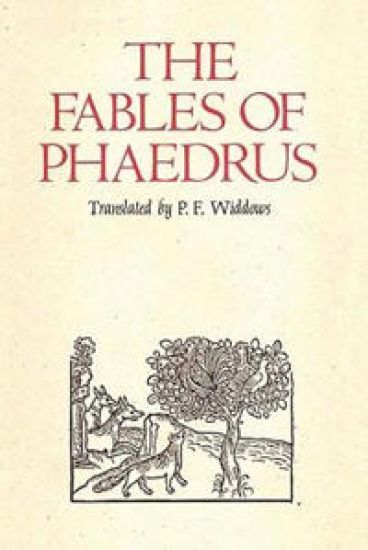
Animal fables are said to have originated with Aesop, a semilegendary Samian slave, but the earliest surviving record of the fables comes from the Latin poet Phaedrus, who introduced the new genre to Latin literature. This verse translation of The Fables is the first in English in more than two hundred years. In addition to the familiar animal fables, about a quarter of the book includes such diverse material as prologues and epilogues, historical anecdotes, short stories, enlarged proverbs and sayings, comic episodes and folk wisdom, and many incidental glimpses of Greek and Roman life in the classical period. The Fables also sheds light on the personal history of Phaedrus, who seems to have been an educated slave, eventually granted his freedom by the emperor Augustus. Phaedrus' style is lively, clean, and sparse, though not at the cost of all detail and elaboration. It serves well as a vehicle for his two avowed purposes-to entertain and to give wise counsel for the conduct of life. Like all fabulists, Phaedrus was a moralist, albeit on a modest and popular level. An excellent introduction by P. F. Widdows provides information about Phaedrus, the history of The Fables, the metric style of the original and of this translation, and something of the place of these fables in Western folklore. The translation is done in a free version of Anglo-Saxon alliterative verse, a form used by W. H. Auden and chosen here to match the popular tone of Phaedrus' Latin verse.