Kirjojen hintavertailu – 12 903 724 kirjaa ja 27 kauppaa

Kirjailija

Pheng Cheah

Kirjat ja teokset yhdessä paikassa: 8 kirjaa, julkaisuja vuosilta 1998–2016, suosituimpiin kuuluu Grounds of Comparison. Vertaile teosten hintoja ja tarkista saatavuus suomalaisista kirjakaupoista.

8 kirjaa

Kirjojen julkaisuvuodet: 1998–2016.

What Is a World?

What Is a World?

Pheng Cheah

Duke University Press
2016
sidottu
In What Is a World? Pheng Cheah, a leading theorist of cosmopolitanism, offers the first critical consideration of world literature’s cosmopolitan vocation. Addressing the failure of recent theories of world literature to inquire about the meaning of world, Cheah articulates a normative theory of literature’s world-making power by creatively synthesizing four philosophical accounts of the world as a temporal process: idealism, Marxist materialism, phenomenology, and deconstruction. Literature opens worlds, he provocatively suggests, because it is a force of receptivity. Cheah compellingly argues for postcolonial literature’s exemplarity as world literature through readings of narrative fiction by Michelle Cliff, Amitav Ghosh, Nuruddin Farah, Ninotchka Rosca, and Timothy Mo that show how these texts open up new possibilities for remaking the world by negotiating with the inhuman force that gives time and deploying alternative temporalities to resist capitalist globalization.
What Is a World?

What Is a World?

Pheng Cheah

Duke University Press
2016
pokkari
In What Is a World? Pheng Cheah, a leading theorist of cosmopolitanism, offers the first critical consideration of world literature’s cosmopolitan vocation. Addressing the failure of recent theories of world literature to inquire about the meaning of world, Cheah articulates a normative theory of literature’s world-making power by creatively synthesizing four philosophical accounts of the world as a temporal process: idealism, Marxist materialism, phenomenology, and deconstruction. Literature opens worlds, he provocatively suggests, because it is a force of receptivity. Cheah compellingly argues for postcolonial literature’s exemplarity as world literature through readings of narrative fiction by Michelle Cliff, Amitav Ghosh, Nuruddin Farah, Ninotchka Rosca, and Timothy Mo that show how these texts open up new possibilities for remaking the world by negotiating with the inhuman force that gives time and deploying alternative temporalities to resist capitalist globalization.
Inhuman Conditions

Inhuman Conditions

Pheng Cheah

Harvard University Press
2007
nidottu
Globalization promises to bring people around the world together, to unite them as members of the human community. To such sanguine expectations, Pheng Cheah responds deftly with a sobering account of how the "inhuman" imperatives of capitalism and technology are transforming our understanding of humanity and its prerogatives. Through an examination of debates about cosmopolitanism and human rights, Inhuman Conditions questions key ideas about what it means to be human that underwrite our understanding of globalization. Cheah asks whether the contemporary international division of labor so irreparably compromises and mars global solidarities and our sense of human belonging that we must radically rethink cherished ideas about humankind as the bearer of dignity and freedom or culture as a power of transcendence. Cheah links influential arguments about the new cosmopolitanism drawn from the humanities, the social sciences, and cultural studies to a perceptive examination of the older cosmopolitanism of Kant and Marx, and juxtaposes them with proliferating formations of collective culture to reveal the flaws in claims about the imminent decline of the nation-state and the obsolescence of popular nationalism. Cheah also proposes a radical rethinking of the normative force of human rights in light of how Asian values challenge human rights universalism.
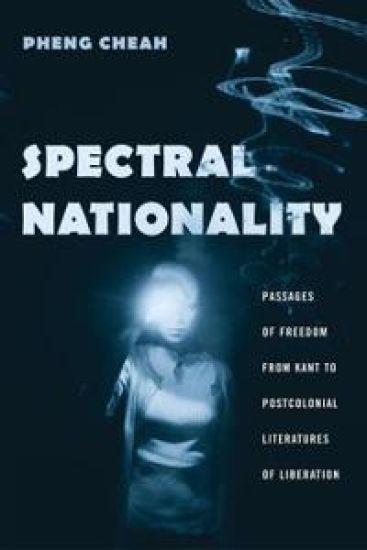
Spectral Nationality

Spectral Nationality

Pheng Cheah

Columbia University Press
2003
pokkari
This far-ranging and ambitious attempt to rethink postcolonial theory's discussion of the nation and nationalism brings the problems of the postcolonial condition to bear on the philosophy of freedom. Closely identified with totalitarianism and fundamentalism, the nation-state has a tainted history of coercion, ethnic violence, and even, as in ultranationalist Nazi Germany, genocide. Most contemporary theorists are therefore skeptical, if not altogether dismissive, of the idea of the nation and the related metaphor of the political body as an organism. Going against orthodoxy, Pheng Cheah retraces the universal-rationalist foundations and progressive origins of political organicism in the work of Kant and its development in philosophers in the German tradition such as Fichte, Hegel, and Marx. Cheah argues that the widespread association of freedom with the self-generating dynamism of life and culture's power of transcendence is the most important legacy of this tradition. Addressing this legacy's manifestations in Fanon and Cabral's theories of anticolonial struggle and contemporary anticolonial literature, including the Buru Quartet by Indonesian writer Pramoedya Ananta Toer, and the Kenyan writer Ngugi Wa Thiong'o's nationalist novels, Cheah suggests that the profound difficulties of achieving freedom in the postcolonial world indicate the need to reconceptualize freedom in terms of the figure of the specter rather than the living organism.
Spectral Nationality

Spectral Nationality

Pheng Cheah

Columbia University Press
2003
sidottu
This far-ranging and ambitious attempt to rethink postcolonial theory's discussion of the nation and nationalism brings the problems of the postcolonial condition to bear on the philosophy of freedom. Closely identified with totalitarianism and fundamentalism, the nation-state has a tainted history of coercion, ethnic violence, and even, as in ultranationalist Nazi Germany, genocide. Most contemporary theorists are therefore skeptical, if not altogether dismissive, of the idea of the nation and the related metaphor of the political body as an organism. Going against orthodoxy, Pheng Cheah retraces the universal-rationalist foundations and progressive origins of political organicism in the work of Kant and its development in philosophers in the German tradition such as Fichte, Hegel, and Marx. Cheah argues that the widespread association of freedom with the self-generating dynamism of life and culture's power of transcendence is the most important legacy of this tradition. Addressing this legacy's manifestations in Fanon and Cabral's theories of anticolonial struggle and contemporary anticolonial literature, including the Buru Quartet by Indonesian writer Pramoedya Ananta Toer, and the Kenyan writer Ngugi Wa Thiong'o's nationalist novels, Cheah suggests that the profound difficulties of achieving freedom in the postcolonial world indicate the need to reconceptualize freedom in terms of the figure of the specter rather than the living organism.
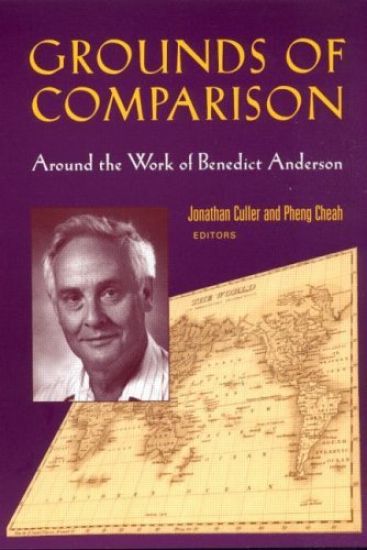
Grounds of Comparison

Grounds of Comparison

Pheng Cheah; Jonathan Culler

Routledge
2003
nidottu
Benedict Anderson, professor at Cornell and specialist in Southeast Asian studies, is best known for his book Imagined Communities: Reflections on the Origin and Spread of Nationalism (1991). It is no understatement to say that this is one of the most influential books of the last twenty years. Widely read both by social scientists and humanists, it has become an unavoidable document. For people in the humanities, Anderson is particularly interesting because he explores the rise of nationalism in connection with the rise of the novel.
Grounds of Comparison

Grounds of Comparison

Pheng Cheah; Jonathan Culler

Routledge
2003
sidottu
Benedict Anderson, professor at Cornell and specialist in Southeast Asian studies, is best known for his book Imagined Communities: Reflections on the Origin and Spread of Nationalism (1991). It is no understatement to say that this is one of the most influential books of the last twenty years. Widely read both by social scientists and humanists, it has become an unavoidable document. For people in the humanities, Anderson is particularly interesting because he explores the rise of nationalism in connection with the rise of the novel.
Cosmopolitics

Cosmopolitics

Pheng Cheah

University of Minnesota Press
1998
nidottu
Eminent contributors look at the present and future of cosmopolitanism and its relationship to nationalism. Nationalism and the nation-state have recently come under siege, their political dominance gradually eroding under the strain of such forces as ethnic strife, religious fundamentalism, homogenizing global capitalism, and the unprecedented movements of people and populations across cultures, countries, even cyberspace. A resurgent cosmopolitanism has emerged as a viable and alternative political project. In Cosmopolitics, a renowned group of scholars and political theorists offers the first sustained examination of that project, its inclusive and often universalist claims, and its tangled and sometimes volatile relationship to nationalism. Understood generally as a fundamental commitment to the interests of humanity, traditional cosmopolitanism has been criticized as a privileged position, an aloof detachment from the obligations and affiliations that constrain nation-bound lives and move people to political action. Yet, as these essays make clear, contemporary cosmopolitanism arises not from a disengagement, but rather from well-defined cultural, historical, and political contexts. The contributors explore a feasible cosmopolitanism now beginning to emerge, and consider the question of whether it can or will displace nationalism, which needs to be rethought rather than dismissed as obsolete. Intellectually provocative and erudite, this interdisciplinary volume presents a diverse array of critical perspectives, assessing both the ideal enterprise and the current realities of the rapidly developing cosmopolitical movement.