Kirjojen hintavertailu – 12 859 818 kirjaa ja 27 kauppaa
Kirjailija
Phil Bonner
Kirjat ja teokset yhdessä paikassa: 4 kirjaa, julkaisuja vuosilta 2008–2012, suosituimpiin kuuluu Alexandra. Vertaile teosten hintoja ja tarkista saatavuus suomalaisista kirjakaupoista.
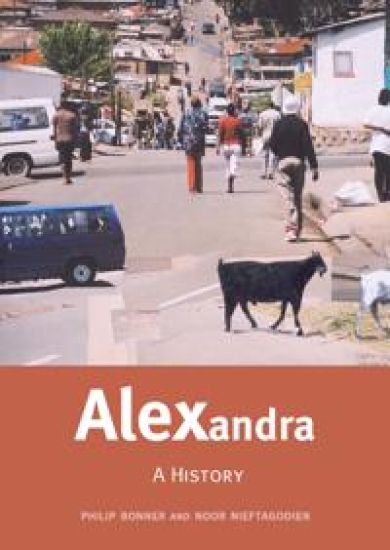
Alexandra: A History is a social and political history of one of South Africa's oldest townships. It begins with the founding of Alexandra as a freehold township in 1912 and traces its growth as a centre of black working-class life through the early years before the Nationalist government, through the struggles of the apartheid era and into the present day. Declared as a location for 'natives and coloureds', Alexandra became home to a diverse population where stand owners, tenants, squatters, hostel-dwellers, workers and migrants from every corner of the country converged to make a new life for themselves near the economic hub of Johannesburg. The stories of ordinary people are at the core of the township's history. Based on numerous life-history interviews with residents and previously unexamined archive sources, the book portrays in vivid detail the daily struggles and tribulations of the people of Alexandra. A significant focus is the rich history of political resistance, in which political organisations and civic movements organised bus boycotts, anti-removal and anti-pass campaigns, and mobilised for housing and a better life for the township's residents. But the book also tells the stories of daily life, of the making of urban cultures and of the infamous Spoilers and Msomi gangs. Over weekends Alexandra came alive as soccer matches, church services and shebeens vie for the attention of residents. Alexandra: A History highlights the social complexities of the township, which at times caused tension between different segments of the population. Above all else, despite a long history of hardship and adversity, the community spirit of the people of Alexandra, expressed in a fiercely loyal love of their township home, has repeatedly triumphed and endured.
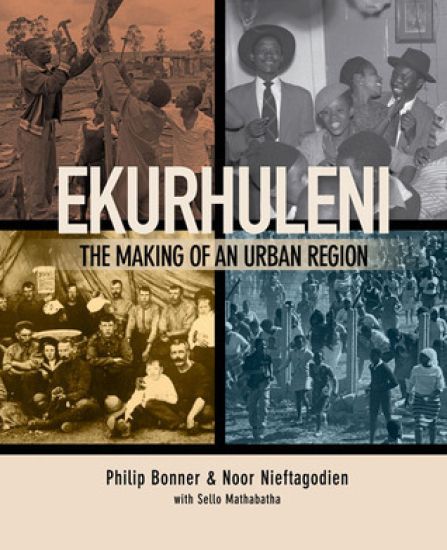
Ekurhuleni - The Making of an Urban Region is the first academic work to provide an historical account and explanation of the development of this extended region to the east of Johannesburg since its origins at the end of the nineteenth century. From the time of the discovery of gold and coal until the turn of the twenty-first century, the region comprised a number of distinctive towns, all with their own histories. In 2000, these towns were amalgamated into a single metropolitan area, but, unlike its counterparts across the country, it does not cohere around a single identity. Drawing on a significant body of academic work as well as original research by the authors, the book traces and examines some of the salient historical strands that constituted what was formerly known as the East Rand and suggests that, notwithstanding important differences between towns and the racial fragmentation generated by apartheid, the region’s history contains significant common features. Arguably, its centrality as a major mining area and then as the country’s engineering heartland gave Ekurhuleni an overarching distinctive economic character.
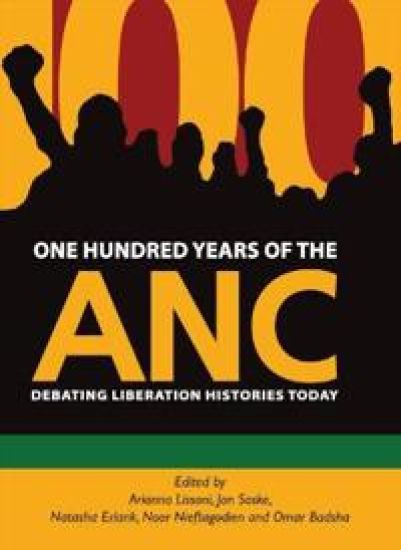
On 8 January 2012 the African National Congress (ANC) of South Africa, the oldest African nationalist organisation on the continent, celebrated its one hundredth anniversary. This historic event has generated significant public debate within both the ANC and South African society at large. There is no better time to critically reflect on the ANC’s historical trajectory and struggle against colonialism and apartheid than in its centennial year. One Hundred Years of the ANC is a collection of new work by renowned South African and international scholars. Covering a broad chronological and geographical spectrum and using a diverse range of sources, the contributors build upon but also extend the historiography of the ANC by tapping into marginal spaces in ANC history. By moving away from the celebratory mode that has characterised much of the contemporary discussions on the centenary, the contributors suggest that the relationship between the histories of earlier struggles and the present needs to be rethought in more complex terms. Collectively, the book chapters challenge hegemonic narratives that have become an established part of South Africa’s national discourse since 1994. By opening up debate around controversial or obscured aspects of the ANC’s century-long history, One hundred years of the ANC sets out an agenda for future research. The book is directed at a wide readership with an interest in understanding the historical roots of South Africa’s current politics will find this volume informative.
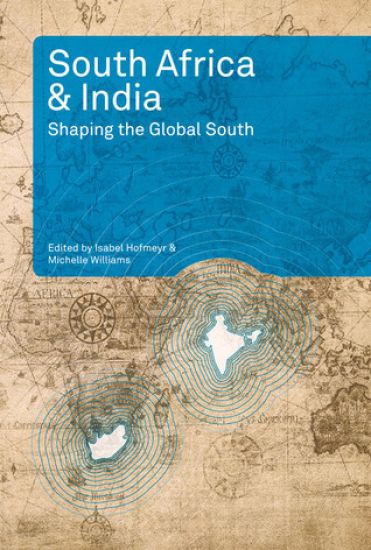
South Africa’s future is increasingly tied up with that of India. While trade and investment between the two countries is intensifying, they share long-standing historical ties and have much in common: both countries are important players in the global South. As India emerges as a major economic power, the need to understand these links becomes ever more pressing. Can the two countries enter balanced forms of exchange or will India inevitably dominate? What forms of transnational political community between these two regions have yet to be researched and understood? South Africa and India addresses these questions and offers new approaches for researching transnational histories.