Kirjojen hintavertailu – 12 859 818 kirjaa ja 27 kauppaa

Kirjailija

Phil Christman

Kirjat ja teokset yhdessä paikassa: 7 kirjaa, julkaisuja vuosilta 2019–2025, suosituimpiin kuuluu Plough Quarterly No. 22 - Vocation. Vertaile teosten hintoja ja tarkista saatavuus suomalaisista kirjakaupoista.

7 kirjaa

Kirjojen julkaisuvuodet: 2019–2025.

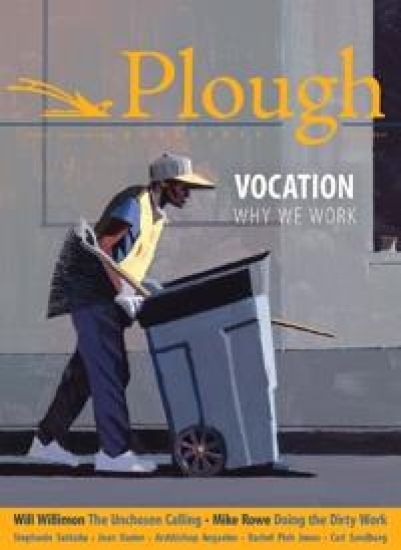
Plough Quarterly No. 22 - Vocation

Plough Quarterly No. 22 - Vocation

Will Willimon; Rachel Pieh Jones; Anne-Sophie Constant; Mike Rowe; Stephanie Saldaña; Scott Beauchamp; Nathan Schneider; Phil Christman; Michael Brendan Dougherty; Julian Peters

Plough Publishing House
2019
pokkari
Your job is not your vocation. Everyone hungers for work that has meaning and purpose. But what gives work meaning? Vocation, or “calling,” is the answer Protestant Christianity offers: each person is called by God to serve the common good in a particular line of work. Your vocation, evidently, might be almost anything: as a nurse, a wilderness guide, a calligrapher, a missionary, an activist, a venture capitalist, a politician, an executioner… Yet, as Will Willimon writes in this issue, the New Testament knows only one form of vocation: discipleship. And discipleship is far more likely to mean leaving father and mother, houses and land, than it is to mean embracing one’s identity as a fisherman or tax collector. This issue of Plough focuses on people who lived their lives with that sense of vocation. Such a life demands self-sacrifice and a willingness to recognize one’s own supposed strengths as weaknesses, as it did for the Canadian philosopher Jean Vanier. It involves a lifelong commitment to a flesh-and-blood church, as Coptic Archbishop Angaelos describes. It may even require a readiness to give up one’s life, as it did for Annalena Tonelli, an Italian humanitarian who pioneered the treatment of tuberculosis in the Horn of Africa. But as these stories also testify, it brings a gladness deeper than any self-chosen path. Also in this issue: - Scott Beauchamp on mercenaries - Nathan Schneider on cryptocurrencies - Stephanie Saldaña on Syrian refugee art - Peter Biles on loneliness at college - Phil Christman on Bible translation - Michael Brendan Dougherty on fatherhood - Insights on vocation from C. S. Lewis, Thérèse of Lisieux, Mother Teresa, Eberhard Arnold, Dorothy Sayers, Jean Vanier, and Gerard Manley Hopkins - poetry by Devon Balwit and Carl Sandburg - reviews of books by Robert Alter, Edwidge Danticat, Matthew D. Hockenos, Amy Waldman, and Jeremy Courtney - art and photography by Pola Rader, Dean Mitchell, Mark Freear, Timothy Jones, Pawel Filipczak, Mary Pal, Harley Manifold, Sami Lalu Jahola, Marc Chagall, and Russell Bain. Plough Quarterly features stories, ideas, and culture for people eager to put their faith into action. Each issue brings you in-depth articles, interviews, poetry, book reviews, and art to help you put Jesus’ message into practice and find common cause with others.

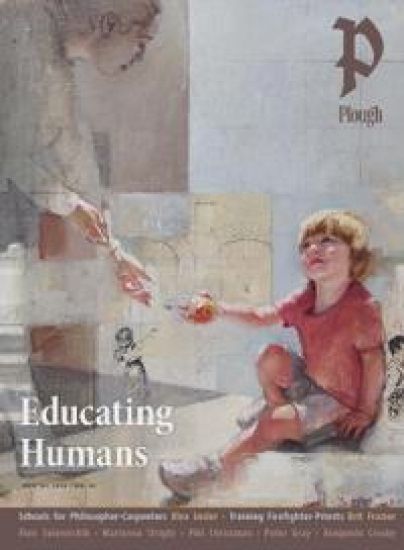
Plough Quarterly No. 42 – Educating Humans

Plough Quarterly No. 42 – Educating Humans

Meir Soloveichik; Grace Hamman; Peter Gray; Claude Wilkinson; Alex Sosler; Brit Frazier; Phil Christman; Stephanie Ebert; Patrick Tomassi; Benjamin Crosby; Marianne Wright; Frederick K. S. Leung; Paul Coleman

PLOUGH PUBLISHING HOUSE
2024
nidottu
Education has become too narrowly focused on academic success and future earning potential. But creative schools and individual teachers are finding ways, new and old, to reverse this trend. From kindergarten to university, writers in this issue of Plough step back to look at education as the holistic task of forming healthy, responsible, passionate humans, and share success stories from the front lines. On this theme: Alex Sosler on innovative schools where students learn a trade and study the humanities. Brit Frazier on becoming a local volunteer firefighter. Peter Gray on why free play is essential. Anthony Garces-Foley on why he chose to teach in a public school. Stephanie Ebert on reading children scary fairy tales. Patrick Tomassi on Lernvergnugenstag, when teachers get to teach what inspires them. Tim Maendel on a public high school that raises deer and fish. Phil Christmas on why everyone still needs literature. Benjamin Crosby on how Christian teaching gets passed on. Frederick K. S. Leung on why math is not merely instrumental. Also in this issue: Rabbi Meir Soloveichik on hearing God in the subway. Grace Hamman on Sister Penelope, mentor to C. S. Lewis. Paul Coleman on religious persecution in Nicaragua and Finland. Reviews of Edwidge Danticat’s We’re Alone, John Inazu’s Learning to Disagree, and H. G. Parry’s The Magician’s Daughter. New poems by Claude Wilkinson. Plough Quarterly features stories, ideas, and culture for people eager to apply their faith to the challenges we face. Each issue includes in-depth articles, interviews, poetry, book reviews, and art.
Plough Quarterly No. 33 – The Vows That Bind

Plough Quarterly No. 33 – The Vows That Bind

Wendell Berry; Lydia S. Dugdale; Phil Christman; Kelsey Osgood; King-Ho Leung; Andreas Knapp; Starlette Thomas; G. K. Chesterton; Norann Voll

PLOUGH PUBLISHING HOUSE
2022
pokkari
In a culture that prizes keeping one’s options open, making commitments offers something more valuable. The consumerism and instant gratification of “liquid modernity” feed a general reluctance to make commitments, a refusal to be pinned down for the long term. Consider the decline of three forms of commitment that involve giving up options: marriage, military service, and monastic life. Yet increasing numbers of people question whether unprecedented freedom might be leading to less flourishing, not more. They are dissatisfied with an atomized way of life that offers endless choices of goods, services, and experiences but undermines ties of solidarity and mutuality. They yearn for more heroic virtues, more sacrificial commitments, more comprehensive visions of the individual and common good. It turns out that the American Founders were right: the Creator did endow us with an unalienable right of liberty. But he has endowed us with something else as well, a gift that is equally unalienable: desire for unreserved commitment of all we have and are. Our liberty is given us so that we in turn can freely dedicate ourselves to something greater. Ultimately, to take a leap of commitment, even without knowing where one will land, is the way to a happiness worth everything. On this theme: - Lydia S. Dugdale asks what happened to the Hippocratic Oath in modern medicine. - Caitrin Keiper looks at competing vows in Victor Hugo’s Les Misérables. - Kelsey Osgood, an Orthodox Jew, asks why lifestyle discipline is admired in sports but not religion. - Wendell Berry says being on the side of love does not allow one to have enemies. - Phil Christman spoofs the New York Times Vows column. - Andreas Knapp tells why he chose poverty. - Norann Voll recounts the places a vow of obedience took her. - Carino Hodder says chastity is for everyone, not just nuns. - Dori Moody revisits her grandparents’ broken but faithful marriage. - Randall Gauger, a Bruderhof pastor, finds that lifelong vows make faithfulness possible. - King-Ho Leung looks at vows, oaths, promises, and covenants in the Bible. Also in the issue: - A young Black pastor reads Clarence Jordan today. - Activists discuss the pro-life movement after Roe and Dobbs. - Children learn from King Arthur, Robin Hood, and the occasional cowboy. - Original poetry by Ned Balbo - Reviews of Montgomery and Biklé’s What Your Food Ate, Mohsin Hamid’s The Last White Man, and Bonnie Kristian’s Untrustworthy - A profile of Sadhu Sundar Singh Plough Quarterly features stories, ideas, and culture for people eager to apply their faith to the challenges we face. Each issue includes in-depth articles, interviews, poetry, book reviews, and art.
Plough Quarterly No. 31 – Why We Make Music

Plough Quarterly No. 31 – Why We Make Music

Christopher Tin; Stephen Michael Newby; Mary Townsend; Maureen Swinger; Joseph Julián González; Phil Christman; Eugene Vodolazkin; Esther Maria Magnis; Ben Crosby; Nathan Schram; Brittany Petruzzi; Norann Voll

PLOUGH PUBLISHING HOUSE
2022
pokkari
Communal music has the power to shape a soul and a society. In many places today, a culture of singing and making music remains robust, despite pressure from the commercial music industry. Or it was until the Covid pandemic hit and we glimpsed what a world without communal music-making could be like. According to Plato, virtuous music is vital for building a virtuous community. Jewish and Christian traditions take this insight even further: good communal music shapes and builds up the people of God. So how can we choose good music and avoid the bad? The sheer ubiquity of music available for consumption – its presence as a near-constant soundtrack to our daily lives – poses a hazard. Digital music on tap is a temptation to chronic distraction of the soul, to a habit of superficiality and non-attention. Fortunately, the remedy is straightforward: spend less time consuming prepackaged tunes and more time making music. This will be doubly rewarding if done with others – singing with one’s family, singing in church, playing in a string quartet, starting a regular jam session. If personal media players tend to cut us off from the physical presence of others, sharing in good music together breaks the spell of isolation and disembodiment. It builds friendship and community. On this theme:- Maureen Swinger’s amateur choir sings Bach’s Saint Matthew Passion.- Stephen Michael Newby says Black spirituals aren’t just for Black people. - Mary Townsend finds Dolly Parton magnificent, but would Aristotle? - Phil Christman finds catharsis in the YouTube comments of eighties songs. - Ben Crosby says congregational singing should be unabashedly weird to visitors.- Joseph Julián González draws on ancient Nahua poets in his music.- Christopher Tin explains why he weaves so many historical influences into his music. - Seven musicians talk about making your own music in schools, churches, prisons, backyards, or children’s bedrooms: Nathan Schram, Esther Keiderling, Norann Voll, Chaka Watch Ngwenya, Eileen Maendel, Adora Wong, and Brittany Petruzzi. Also in the issue: Exclusive excerpts from forthcoming books by Eugene Vodolazkin and Esther Maria Magnis- Thoughts on music from Augustine, Gregory of Nyssa, Hildegard of Bingen, Martin Luther, and Eberhard Arnold- Catholics and Anabaptists unite to commemorate the Radical Reformation- New poems by Jacqueline Saphra- A profile of Argentinian singer Mercedes Sosa.- Reviews of Kate Clifford Larson’s Walk with Me, Rowan Williams’s Shakeshafte, and Sam Quinones’s The Least of UsPlough Quarterly features stories, ideas, and culture for people eager to apply their faith to the challenges we face. Each issue includes in-depth articles, interviews, poetry, book reviews, and art.
How to Be Normal: Essays

How to Be Normal: Essays

Phil Christman

Belt Publishing
2022
nidottu
Phil Christman is one of the best cultural critics working today. Or, as a reviewer of his previous book, Midwest Futures, put it, one of the most underappreciated writers of his] generation. You may also know Phil from his columns in Commonweal and Plough, or his viral essay What Is It Like To Be A Man?, the latter adapted in his new book, How to Be Normal. Christman's second book includes essays on How To Be White, How to Be Religious, How To Be Married, and more, in addition to new versions of the above. Find in it also brilliant analyses of middlebrow culture, bad movies, Mark Fisher, Christian fundamentalism, and more. With exquisite attention to syntax and prose, the astoundingly well-read Christman pairs a deceptively breezy style with radical openness. In his witty, original hands, seemingly normal subjects are rendered exceptional, and exceptionally.
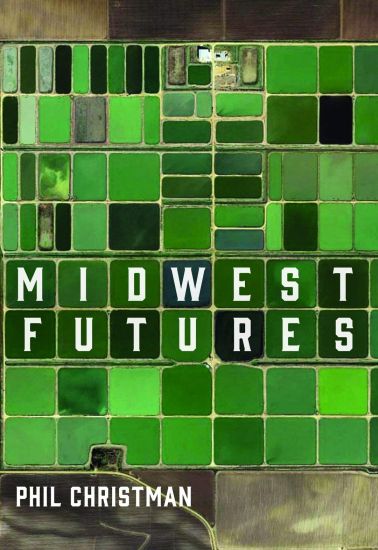
Midwest Futures

Midwest Futures

Phil Christman

Belt Publishing
2022
nidottu
What does the future hold for the Midwest? A vast stretch of fertile farmland bordering one of the largest concentrations of fresh water in the world, the Midwestern US seems ideally situated for the coming challenges of climate change. But it also sits at the epicenter of a massive economic collapse that many of its citizens are still struggling to overcome. The question of what the Midwest is (and what it will become) is nothing new. As Phil Christman writes in this idiosyncratic new book, ambiguity might be the region's defining characteristic. Taking a cue from Jefferson's grid, the famous rectangular survey of the Old Northwest Territory that turned everything from Ohio to Wisconsin into square-mile lots, Christman breaks his exploration of Midwestern identity, past and present, into 36 brief, interconnected essays. The result is a sometimes sardonic, often uproarious, and consistently thought-provoking look at a misunderstood place and the people who call it home.