
Kirjailija
Phil Turner
Kirjat ja teokset yhdessä paikassa: 16 kirjaa, julkaisuja vuosilta 2012–2026, suosituimpiin kuuluu Ghosted?. Vertaile teosten hintoja ja tarkista saatavuus suomalaisista kirjakaupoista.
16 kirjaa
Kirjojen julkaisuvuodet: 2012–2026.

15 Short Walks in Cornwall - Newquay and the North Coast
Phil Turner
CICERONE PRESS
2025
nidottu
Halvin toimitettuna 18,90 €
Would you like to explore the best of Newquay and the North Coast? This guidebook covers 15 of the best short walks in the area (between 3 and 9.6km, all under three hours), including Polly Joke, Watergate Bay, Trevose Head, Padstow, Port Isaac, Camelford and Boscastle. Why choose this guidebook? Easy to moderate walks suitable for almost everyoneShort climbs but no challenging terrainNumbered points which tie OS maps to clear route descriptionFacilities, parking and highlights for every routeRoute Summary Table to help you choose your walk Cicerone’s Short Walks guidebooks contain everything you need to get outdoors and discover the best of an area. The routes are perfect if you’re new to walking or looking for something you can enjoy with the whole family. Let the adventures begin!
As mainstream psychology was never intended for the HCI practitioner, this second edition of A Psychology of User Experience takes the opportunity to create a new chapter specifically written for practitioners, that is, UX-oriented psychology rather than the all-too familiar everyday variety.

15 Short Walks in Cornwall: Land's End and Penzance
Phil Turner
CICERONE PRESS
2024
nidottu
Halvin toimitettuna 18,90 €
Would you like to explore the best of Land's End and Penzance? This guidebook covers 15 of the best short walks in the area (between 2.5 and 8.5km, all under three hours), including St Ives, Mousehole, Penzance, Newlyn, Nine Maidens, Mên-an-Tol, Pendeen Watch, St Michael's Mount, St Just, Gurnard's Head and Botallack Head. Why choose this guidebook? Easy to moderate walks suitable for almost everyoneShort climbs but no challenging terrainNumbered points which tie maps to clear route descriptionDetails of public toilets and refreshments along the routeRoute Summary Table to help you choose your walk Cicerone’s Short Walks guidebooks contain everything you need to get outdoors and discover the best of an area. The short walks are perfect if you’re new to walking or looking for something you can enjoy with the whole family. Let the adventures begin!

15 Short Walks in Cornwall: Falmouth and the Lizard
Phil Turner
CICERONE PRESS
2024
nidottu
Halvin toimitettuna 18,90 €
Would you like to explore the best of Falmouth and the Lizard? This guidebook covers 15 of the best short walks in the area (between 4.5 and 10km, all under three hours), including St Agnes Beacon and Wheal Coates, Truro, Gwennap Pit, St Mawes, Mylor, Frenchman's Creek, Loe Pool, Cadgwith and Lizard Point. Why choose this guidebook? Easy to moderate walks suitable for almost everyoneShort climbs but no challenging terrainNumbered points which tie maps to clear route descriptionDetails of public toilets and refreshments along the routeRoute Summary Table to help you choose your walk Cicerone’s Short Walks guidebooks contain everything you need to get outdoors and discover the best of an area. The short walks are perfect if you’re new to walking or looking for something you can enjoy with the whole family. Let the adventures begin!
As mainstream psychology was never intended for the HCI practitioner, this second edition of A Psychology of User Experience takes the opportunity to create a new chapter specifically written for practitioners, that is, UX-oriented psychology rather than the all-too familiar everyday variety. For example, we discuss our two modes of cognition (fast / slow or controlled / automatic); we underline the importance of familiarity; and how and why we check our phones every few seconds day or night. We also establish the ‘context for user experience’ noting that just about everyone uses a cell phone and very many own a smartphone too and have done so for years (so, how did they learn to use them?). User experience reflects the current vogue for “designing for experience” within HCI which we recognise as something we feel rather than have reasoned about. In the real world, our feelings tell us how we are doing but with UX, they tell us how we feel about using digital technology. Topics are introduced to UX which maybe unfamiliar such as virtual experiences and virtual emotions and the affect associated with the uncontrolled use of digital technology. A Psychology of User Experience stands as a companion text to the author’s HCI Redux text which discusses the contemporary treatment of cognition in human-computer interaction.
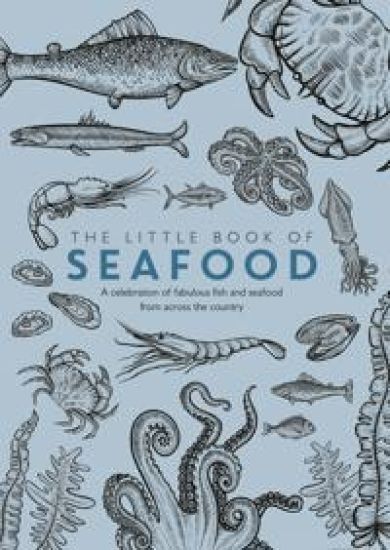
The Little Book of Seafood is a culinary creation containing a range of seafood recipes from chefs across the UK. Dive into this celebration of the most fabulous ways to cook fish, including Galton Blackiston's Pan-Fried Wild Sea Bass and Scutchers Fillet of Wild Turbot. This compilation is part of our 'Get Stuck In' series, celebrating talent and knowledge from people who are passionate about cooking and who create these dishes for a living. The Little Book of Seafood includes tailored tips and tricks to help readers understand the different types of fish and how to cook them. The Little Book of Seafood has a nautical nibble for every occasion and is perfect for anyone who enjoys cooking with fish but doesn't know where to start or wants fresh ideas. From famous restaurants to independent hidden gems, learn to cook the best seafood dishes and discover where to dine out on fine fish all in one place.

Imagination is highly valued and sought-after, yet elusive and ill-defined. Definitions range from narrowly cognitive accounts to those which endow imagination with world-making powers. Imagination underpins our ability to speculate about the future and to re-experience the past. The everyday functioning of society relies on being able to imagine the perspectives of others; and our sense of who we are depends on the stories our imaginations create. Our soaring imaginations have taken us to the moon and allowed Einstein to race a light beam. Unsurprisingly, imagination underlies every aspect of human-computer interaction, from the earliest conceptual sketches, through the realistic possibilities portrayed variously in well-known tools as scenarios and storyboards, through to the wilder shores of design fictions. Yet, curiously, imagination is very rarely addressed directly in the design and HCI literature (and is wholly missing from virtual reality). This book addresses this gap in our accounts of how we imagine, conceptualise, design and use digital technologies. Drawing on many years of practical and academic experience in human computer-interaction, together with a wide range of material from psychology, design, cognitive science and HCI, seasoned with a little philosophy and anthropology, Imagination + Technology first considers imagination itself and the principal farthings of a new account. Later chapters discuss the role of imagination in the design, aesthetics, use and experience of digital technologies before the concluding chapter focusses on the provocative nature of imagination. The book will be stimulating reading for anyone working in the field of interactive technology and related areas, whether academics, students or practitioners.

Imagination is highly valued and sought-after, yet elusive and ill-defined. Definitions range from narrowly cognitive accounts to those which endow imagination with world-making powers. Imagination underpins our ability to speculate about the future and to re-experience the past. The everyday functioning of society relies on being able to imagine the perspectives of others; and our sense of who we are depends on the stories our imaginations create. Our soaring imaginations have taken us to the moon and allowed Einstein to race a light beam. Unsurprisingly, imagination underlies every aspect of human-computer interaction, from the earliest conceptual sketches, through the realistic possibilities portrayed variously in well-known tools as scenarios and storyboards, through to the wilder shores of design fictions. Yet, curiously, imagination is very rarely addressed directly in the design and HCI literature (and is wholly missing from virtual reality). This book addresses this gap in our accounts of how we imagine, conceptualise, design and use digital technologies. Drawing on many years of practical and academic experience in human computer-interaction, together with a wide range of material from psychology, design, cognitive science and HCI, seasoned with a little philosophy and anthropology, Imagination + Technology first considers imagination itself and the principal farthings of a new account. Later chapters discuss the role of imagination in the design, aesthetics, use and experience of digital technologies before the concluding chapter focusses on the provocative nature of imagination. The book will be stimulating reading for anyone working in the field of interactive technology and related areas, whether academics, students or practitioners.
It is well-established that while cognitive psychology provides a sound foundation for an understanding of our interactions with digital technology, this is no longer sufficient to make sense of how we use and experience the personal, relational and ubiquitous technologies that pervade everyday life. This book begins with a consideration of the nature of experience itself, and the user experience (UX) of digital technology in particular, offering a new, broader definition of the term. This is elaborated though a wide-ranging and rigorous review of what are argued to be the three core UX elements. These are involvement, including shared sense making, familiarity, appropriation and “being-with” technologies; affect, including emotions with and about technology, impressions, feelings and mood; and aesthetics, including embodied aesthetics and neuroaesthetics. Alongside this, new insights are introduced into how and why much of our current use of digital technology is simply idling, orkilling time. A particular feature of the book is a thorough treatment of parallel, and sometimes competing, accounts from differing academic traditions. Overall, the discussion considers both foundational and more recent theoretical and applied perspectives from social psychology, evolutionary psychology, folk psychology, neuroaesthetics, neuropsychology, the philosophy of technology, design and the fine arts. This broad scope will be enlightening and stimulating for anyone concerned in understanding UX. A Psychology of User Experience stands as a companion text to the author’s HCI Redux text which discusses the contemporary treatment of cognition in human-computer interaction.

This book explores the role of cognition in the field of human-computer interaction (HCI) assessing how the field has developed over the past thirty years and discusses where the field is heading, as we begin to live in increasingly interconnected digital environments. Taking a broad chronological view, the author discusses cognition in relation to areas like make-believe, and appropriation, and places these more recent concepts in the context of traditional thinking about the psychology of HCI. HCI Redux will appeal to undergraduate and postgraduate students and researchers in psychology, the cognitive sciences and HCI. It will also be of interest to all readers with a curiosity about our everyday use of technology.

This book explores the role of cognition in the field of human-computer interaction (HCI) assessing how the field has developed over the past thirty years and discusses where the field is heading, as we begin to live in increasingly interconnected digital environments. Taking a broad chronological view, the author discusses cognition in relation to areas like make-believe, and appropriation, and places these more recent concepts in the context of traditional thinking about the psychology of HCI. HCI Redux will appeal to undergraduate and postgraduate students and researchers in psychology, the cognitive sciences and HCI. It will also be of interest to all readers with a curiosity about our everyday use of technology.

The county of Ayrshire is located on the Firth of Clyde on the West Coast of Scotland and is known as one of the most fertile areas of the country, famed for its cattle and crops. This guide features 40 moderate walks which explore all aspects of the region, from craggy cliffs and caves to historic castles, ancient forests to sandy shorelines.
Digital technology has become a defining characteristic of modern life. Almost everyone uses it, we all rely on it, and many of us own a multitude of devices. What is more, we all expect to be able to use these technologies "straight out the box." This lecture discusses how we are able to do this without apparent problems. We are able to use digital technology because we have learned to cope with it. "To cope" is used in philosophy to mean "absorbed engagement," that is, we use our smart phones and tablet computers with little or no conscious effort. In human-computer interaction this kind of use is more often described as intuitive. While this, of course, is testament to improved design, our interest in this lecture is in the human side of these interactions. We cope with technology because we are familiar with it. We define familiarity as the readiness to engage with technology which arises from being repeatedly exposed to it—often from birth. This exposure involves the frequent useof it and seeing people all around us using it every day. Digital technology has become as common a feature of our everyday lives as the motor car, TV, credit card, cutlery, or a dozen other things which we also use without conscious deliberation. We will argue that we cope with digital technology in the same way as we do these other technologies by means of this everyday familiarity. But this is only half of the story. We also regularly support or scaffold our use of technology. These scaffolding activities are described as "epistemic actions" which we adopt to make it easier for us to accomplish our goals. With digital technology these epistemic actions include appropriating it to more closer meet our needs. In summary, coping is a situated, embodied, and distributed description of how we use digital technology. Table of Contents: Introduction / Familiarity / Coping / Epistemic Scaffolding / Coping in Context / Bibliography / Author Biography
BIOS Instant Notes in Molecular Biology
Alexander McLennan; Andy Bates; Phil Turner; Michael White
Taylor Francis Ltd
2012
nidottu
Instant Notes in Molecular Biology, Fourth Edition is the perfect text for undergraduates looking for a concise introduction to the subject, or a study guide to use before examinations. Each topic begins with a summary of essential facts-an ideal revision checklist-followed by a description of the subject that focuses on core information, with clear, simple diagrams that are easy for students to understand and recall in essays and exams.

With dramatic mountain ridges towering over the moorland of its northern half, and a lusher, softer landscape in the south, Arran is often dubbed as Scotland in Miniature. The fact is that this is an island with a huge amount to offer packed into small space. This book deals with Arran.