Kirjojen hintavertailu – 12 903 724 kirjaa ja 27 kauppaa

Kirjailija

Philip A. Klinkner

Kirjat ja teokset yhdessä paikassa: 4 kirjaa, julkaisuja vuosilta 1995–2020, suosituimpiin kuuluu Midterm. Vertaile teosten hintoja ja tarkista saatavuus suomalaisista kirjakaupoista.

4 kirjaa

Kirjojen julkaisuvuodet: 1995–2020.

Midterm

Midterm

Philip A. Klinkner

Routledge
2020
nidottu
This book puts 1994 in context with other significant midterm elections, from 1810 to the present. It also captures the very contemporary concerns unique to 1994: the role of the religious right, the "angry white male;' the Contract with America, and the overall tenor of antipathy.
Midterm

Midterm

Philip A. Klinkner

Routledge
2019
sidottu
By all accounts, 1994 represents sweeping electoral and policy change rarely seen in any American election, let alone a midterm. This book puts 1994 in context with other significant midterm elections, from 1810 to the present. It also captures the very contemporary concerns unique to 1994: the role of the religious right, the "angry white male," the Contract with America, and the overall tenor of antipathy as voters turned out (or not) to show the Clinton administration what they thought of its first two years. This collection of original esays by noted political scientists gives us the first thoughtful analysis of the 1994 election results and prepares us to anticipate the certain drama and import of the election of 1996.
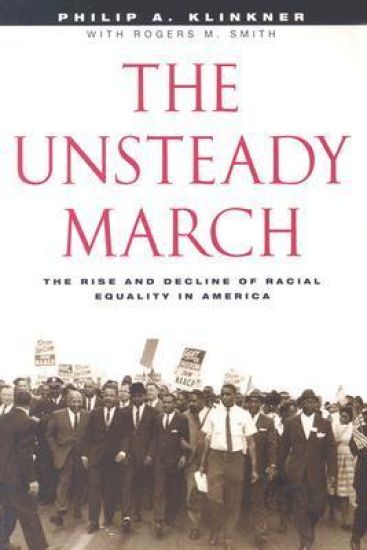
The Unsteady March

The Unsteady March

Philip A. Klinkner; Rogers M. Smith

University of Chicago Press
2002
nidottu
American life is filled with talk of progress and equality, especially when the issue is that of race. But has the history of race in America really been the continuous march toward equality we'd like to imagine it has? This sweeping history of race in America argues quite the opposite; that progress toward equality has been sporadic, isolated, and surrounded by long periods of stagnation and retrenchment.
The Losing Parties

The Losing Parties

Philip A. Klinkner

Yale University Press
1995
sidottu
How do Democratic and Republican party leaders react after their party has lost a presidential election? Is there a pattern of response to defeat that reflects the distinctive cultures of the two parties? This book answers these questions by examining how the two national party organizations have responded to presidential election defeats between 1956 and 1993. Drawing on party documents, interviews with party officials, and contemporary accounts, Philip Klinkner provides detailed case studies of opposition party politics. He shows that Republican national committees have reacted to losses by making organizational changes to improve campaign technology and fundraising and that losing Democrats have sought to refine or make more democratic their internal procedures for selecting delegates to the national convention or for choosing presidential candidates. Klinkner suggests that the reasons for these reactions stem from the historical development of the parties. The organizational response of the Republican party is the result of its long-term relationship with business, its homogeneity and hierarchical structure, and its minority party experience. The Democrats' emphasis on participation and representation for its constituent elements is based on its characteristic composition of social and economic out-groups, its heterogeneity and decentralization, and its tradition as the majority party.