Kirjojen hintavertailu – 12 903 725 kirjaa ja 27 kauppaa

Kirjailija

Philip Armstrong

Kirjat ja teokset yhdessä paikassa: 15 kirjaa, julkaisuja vuosilta 1991–2026, suosituimpiin kuuluu Disturbing Nature in Narrative Literature. Vertaile teosten hintoja ja tarkista saatavuus suomalaisista kirjakaupoista.

15 kirjaa

Kirjojen julkaisuvuodet: 1991–2026.

Disturbing Nature in Narrative Literature

Disturbing Nature in Narrative Literature

Philip Armstrong

TAYLOR FRANCIS LTD
2026
nidottu
Disturbing Nature in Narrative Literature identifies and analyses encounters with unexpected, disconcerting, and unsettling aspects of the natural world, as these have been represented across a wide range of literary texts. It includes in-depth discussion of both familiar and less familiar works from the British, American, and European literary traditions, and from the Classical period to today. The motifs discussed include earthquakes, forests, storms, animals, and oceanic depth, and the writers include Virgil, Ovid, Dante, Shakespeare, Aphra Behn, Voltaire, Heinrich von Kleist, Herman Melville, H. G. Wells, J. R. R. Tolkien, Gabriel García Márquez, José Saramago, Margaret Atwood, and Annie Proulx. Rich in both close textual analysis and contextual discussion, Disturbing Nature in Narrative Literature offers a vivid introduction to several topical approaches to literary-critical analysis, including ecocriticism, new materialism, affect theory, and human-animal studies, thereby demonstrating how literature shapes and is shaped by our response to the pressing questions of our time.
Disturbing Nature in Narrative Literature

Disturbing Nature in Narrative Literature

Philip Armstrong

TAYLOR FRANCIS LTD
2024
sidottu
Disturbing Nature in Narrative Literature identifies and analyses encounters with unexpected, disconcerting, and unsettling aspects of the natural world, as these have been represented across a wide range of literary texts. It includes in-depth discussion of both familiar and less familiar works from the British, American, and European literary traditions, and from the Classical period to today. The motifs discussed include earthquakes, forests, storms, animals, and oceanic depth, and the writers include Virgil, Ovid, Dante, Shakespeare, Aphra Behn, Voltaire, Heinrich von Kleist, Herman Melville, H. G. Wells, J. R. R. Tolkien, Gabriel García Márquez, José Saramago, Margaret Atwood, and Annie Proulx. Rich in both close textual analysis and contextual discussion, Disturbing Nature in Narrative Literature offers a vivid introduction to several topical approaches to literary-critical analysis, including ecocriticism, new materialism, affect theory, and human-animal studies, thereby demonstrating how literature shapes and is shaped by our response to the pressing questions of our time.
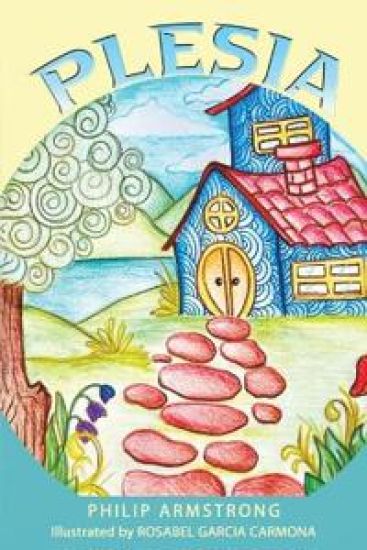
Plesia

Plesia

Philip Armstrong

austin macauley publishers llc
2024
pokkari
Exhausted from the day's trials, Nath collapses into sleep in his New York apartment, only to awaken in the extraordinary world of Plesia. This planet, hailed as the most splendid in the cosmos, is home to 740 eternally youthful inhabitants who, though appearing to be mere eight-year-olds, have thrived on Plesia for millennia. Governed by a benevolent king from a neighboring realm, Plesia is a utopia where every need is seamlessly met. Amidst this perfection, Nath discovers his heritage as a royal prince of Plesia and that his arrival is serendipitously timed. The peaceful planet faces a grave threat, and it is Nath whom the king and the Plesians need. As Nath joins forces with the king and a valiant group of Plesian allies, he must confront perils and navigate the pernicious disease known as Peur et Haine. His journey is one of courage, friendship, and destiny as he rises to defend the idyllic world that is now his home.
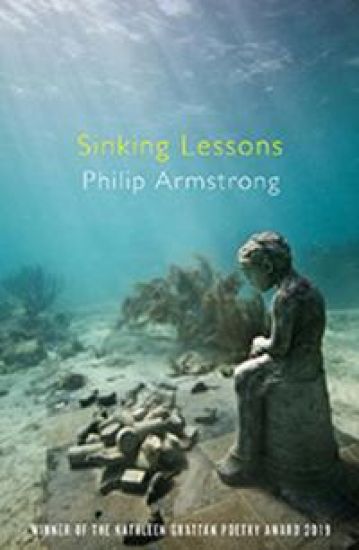
Sinking Lessons

Sinking Lessons

Philip Armstrong

Otago University Press
2020
nidottu
The poems in Sinking Lessons portray the vitality of a world full of things and beings we too often disregard, using language that vibrates in harmony with the lively tales it tells - from small, everyday events to stories of shipwrecks and strandings, resurrections and reanimations, arctic adventures and descents into the underworld. The cast of characters includes members of the poet's family alongside heroes from myth and literature, such as Orpheus, Scheherazade and Frankenstein's Creature. And crowding in upon these, at all times, a multitude of non-human protagonists: sun and stars, wind and water, mud and sand, body fluids, decaying matter, chemicals organic and inorganic, and a great many fishes and birds and beasts. Sinking Lessons is the first collection of poetry from Philip Armstrong, winner of the 2019 Kathleen Grattan Poetry Award.
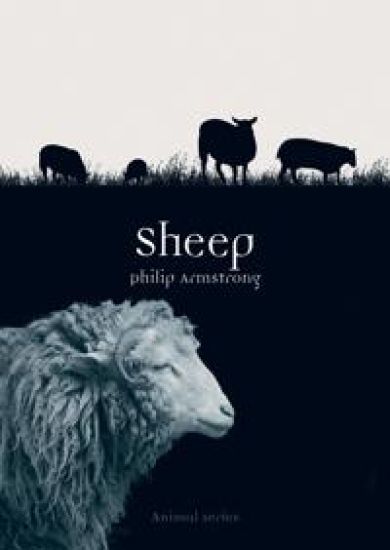
Sheep

Sheep

Philip Armstrong

Reaktion Books
2016
nidottu
The Egyptians worshipped them, the Romans dressed them in ?tted coats, early Christians made the shepherd synonymous with their divine saviour. In Sheep, Philip Armstrong traces the natural and cultural history of both the wild and domestic species of Ovis: from the Old World mou?on to the corkscrew-horned ?ocks of the Egyptians, to the ‘Trojan sheep’ of Homer’s Odyssey, to the vast migratory mobs of Spanish merinos – all the way to Dolly the cloned ewe and the sheep-human hybrids of Haruki Murakami. Above all else, Sheep demonstrates that sometimes the most mundane animals turn out to be the most surprising. Listen to Philip Armstrong discuss some astonishing facts about sheep in this interview with Radio New Zealand.
A New Zealand Book of Beasts

A New Zealand Book of Beasts

Annie Potts; Deidre Brown; Philip Armstrong

Auckland University Press
2013
nidottu
A New Zealand Book of Beasts is a groundbreaking examination of the interactions between humans and ‘nonhuman animals’ – both real and imagined – in New Zealand’s arts and literature, popular culture, historiography, media and everyday life. Structured in four parts – Animal Icons, Animal Companions, Art Animals and Controversial Animals – the Book of Beasts touches on topics as diverse as moa-hunting and the SPCA, pest-control and pet-keeping, whaling and whale-watching; on species ranging from sheep to sperm whales and from pekapeka to possums; and on the works of authors and artists as various as Samuel Butler and Witi Ihimaera, Lady Mary Anne Barker and Janet Frame, Michael Parekowhai and Don Binney, Bill Hammond and Fiona Pardington. In examining through literature, art and culture the ways New Zealanders use and abuse, shape and are shaped by, glorify and co-opt, and describe and imagine animals, the authors tell us a great deal about our society and culture: how we understand our own identities and those of others; how we regard, inhabit and make use of the natural world; and how we think about what to buy, eat, wear, watch and read. This is an engaging, original and scholarly rigorous book of cultural criticism and a thoughtful addition to New Zealand literature.
Reticulations

Reticulations

Philip Armstrong

University of Minnesota Press
2009
nidottu
Revealing how networks reopen our understanding of political discourse todaySignificantly advancing our notion of what constitutes a network, Philip Armstrong proposes a rethinking of political public space that specifically separates networks from the current popular discussion of globalization and information technology. Analyzing a wide range of Jean-Luc Nancy’s works, Reticulations shows how his project of articulating the political in terms of singularities, pluralities, and multiplicities can deepen our understanding of networks and how they influence community and politics. Even more striking is the way Armstrong associates this general complex in Nancy’s writing with his concern for what Nancy calls the retreat of the political. Armstrong highlights what Nancy’s perspective on networks reveals about movement politics as seen in the 1999 protests in Seattle against the World Trade Organization, the impact of technology on citizenship, and finally how this perspective critiques the model of networked communism constructed by Hardt and Negri. Contesting the exclusive link between technology and networks, Reticulations ultimately demonstrates how network society creates an entirely new politics, one surprisingly rooted in community.
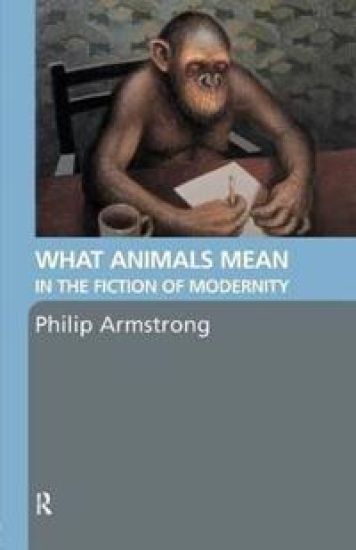
What Animals Mean in the Fiction of Modernity
What Animals Mean in the Fiction of Modernity argues that nonhuman animals, and stories about them, have always been closely bound up with the conceptual and material work of modernity. In the first half of the book, Philip Armstrong examines the function of animals and animal representations in four classic narratives: Robinson Crusoe, Gulliver’s Travels, Frankenstein and Moby-Dick. He then goes on to explore how these stories have been re-worked, in ways that reflect shifting social and environmental forces, by later novelists, including H. G. Wells, Upton Sinclair, D. H. Lawrence, Ernest Hemingway, Franz Kafka, Brigid Brophy, Bernard Malamud, Timothy Findley, Will Self, Margaret Atwood, Yann Martel and J. M. Coetzee. What Animals Mean in the Fiction of Modernity also introduces readers to new developments in the study of human-animal relations. It does so by attending both to the significance of animals to humans, and to animals’ own purposes or designs; to what animals mean to us, and to what they mean to do, and how they mean to live.
What Animals Mean in the Fiction of Modernity
What Animals Mean in the Fiction of Modernity argues that nonhuman animals, and stories about them, have always been closely bound up with the conceptual and material work of modernity. In the first half of the book, Philip Armstrong examines the function of animals and animal representations in four classic narratives: Robinson Crusoe, Gulliver’s Travels, Frankenstein and Moby-Dick. He then goes on to explore how these stories have been re-worked, in ways that reflect shifting social and environmental forces, by later novelists, including H. G. Wells, Upton Sinclair, D. H. Lawrence, Ernest Hemingway, Franz Kafka, Brigid Brophy, Bernard Malamud, Timothy Findley, Will Self, Margaret Atwood, Yann Martel and J. M. Coetzee. What Animals Mean in the Fiction of Modernity also introduces readers to new developments in the study of human-animal relations. It does so by attending both to the significance of animals to humans, and to animals’ own purposes or designs; to what animals mean to us, and to what they mean to do, and how they mean to live.
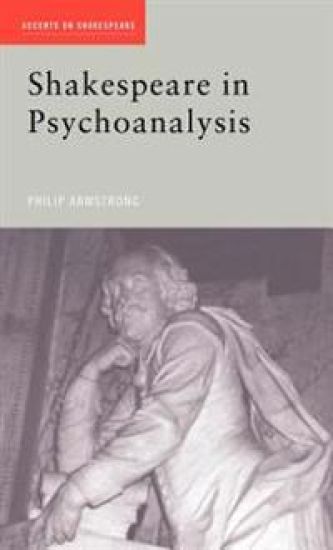
Shakespeare in Psychoanalysis

Shakespeare in Psychoanalysis

Philip Armstrong

Routledge
2001
sidottu
The link between psychoanalysis as a mode of interpretation and Shakespeare's works is well known. But rather than merely putting Shakespeare on the couch, Philip Armstrong focuses on the complex and fascinatingly fruitful mutual relationship between Shakespeare's texts and psychoanalytic theory. He shows how the theories of Freud, Rank, Jones, Lacan, Erikson, and others are themselves in a large part the product of reading Shakespeare. Armstrong provides an introductory cultural history of the relationship between psychoanalytic concepts and Shakespearean texts. This is played out in a variety of expected and unexpected contexts, including: *the early modern stage *Hamlet and The Tempest *Freud's analytic session *the Parisian intellectual scene *Hollywood *the virtual space of the PC.
Shakespeare in Psychoanalysis

Shakespeare in Psychoanalysis

Philip Armstrong

Routledge
2001
nidottu
The link between psychoanalysis as a mode of interpretation and Shakespeare's works is well known. But rather than merely putting Shakespeare on the couch, Philip Armstrong focuses on the complex and fascinatingly fruitful mutual relationship between Shakespeare's texts and psychoanalytic theory. He shows how the theories of Freud, Rank, Jones, Lacan, Erikson, and others are themselves in a large part the product of reading Shakespeare. Armstrong provides an introductory cultural history of the relationship between psychoanalytic concepts and Shakespearean texts. This is played out in a variety of expected and unexpected contexts, including: *the early modern stage *Hamlet and The Tempest *Freud's analytic session *the Parisian intellectual scene *Hollywood *the virtual space of the PC.
Capitalism Since 1945

Capitalism Since 1945

Philip Armstrong; Andrew Glyn; John Harrison

Blackwell Publishers
1991
nidottu
This book charts the development of capitalism in the post-war period and describes the challenges that the system has faced since 1945. It describes the measures that were taken to deal with the post-war slump and the ways in which most capitalist economies achieved steady growth and affluence in the 1950s and 1960s. It goes on to show how this boom was undermined by unemployment ensued.