Kirjojen hintavertailu – 12 903 733 kirjaa ja 27 kauppaa

Kirjailija

Philip Clayton

Kirjat ja teokset yhdessä paikassa: 24 kirjaa, julkaisuja vuosilta 1989–2027, suosituimpiin kuuluu Science and the Sacred. Vertaile teosten hintoja ja tarkista saatavuus suomalaisista kirjakaupoista.

24 kirjaa

Kirjojen julkaisuvuodet: 1989–2027.

In Quest of Freedom

In Quest of Freedom

Philip Clayton

Vandenhoeck Ruprecht GmbH Co KG
2009
sidottu
Science deeply challenges classical descriptions of the human person as 'free' and as 'spirit'. This survey of contemporary neuroscience and evolutionary biology explores why these challenges have arisen. At the same time it finds in the religious dimension of human existence powerful resources for speaking of the 'Emergenz des Geistes' and of a deeper sense of human freedom.
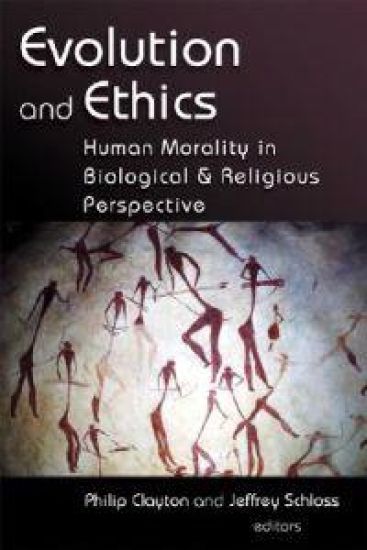
Evolution and Ethics Human Morality

Evolution and Ethics Human Morality

Philip Clayton

William B Eerdmans Publishing Co
2004
nidottu
Christians frequently resist evolutionary theory, believing it to be incompatible with the core values of their tradition. But what exactly are the tensions between evolution and religious faith in the area of human morality? Evolution and Ethics examines the burning questions of human morality from the standpoint of Christian thought and contemporary biology, asking where the two perspectives diverge and where they may complement one another. Representing a significant dialogue between world-class scientists, philosophers, and theologians, this volume explores the central features of biological and religious accounts of human morality, introducing the leading theories and locating the key points of contention. Central to these discussions are the questions of whether human actions are ever genuinely selfless, whether there is something in the moral life that transcends biological function, and whether one can sensibly speak of an overall purpose to the course of evolution. Certain to engage scholars, students, and general readers alike, Evolution and Ethics offers a balanced, levelheaded, constructive approach to an often divisive debate. Contributors: -Larry ArnhartChristopher BoehmCraig A. BoydRobert BoydMichael J. ChapmanPhilip ClaytonLoren HaarsmaJohn HareS. Mark HeimDavid C. LahtiThomas Jay OordGregory R. PetersonJoseph PoulshockPeter J. RichersonPhilip A. RolnickHolmes Rolston IIIMichael RuseJeffrey SchlossRene van Woudenberg-
The Problem of God in Modern Thought

The Problem of God in Modern Thought

Philip Clayton

William B Eerdmans Publishing Co
2000
pokkari
It is widely believed that modern philosophers have dismissed the idea of God and opted instead for a secular humanism. Challenging these stereotypes through a careful study of major philosophical texts written since the Enlightenment, Philip Clayton shows how the main thinkers of the modern period have continued to wrestle with the problem of God and to make proposals for understanding the divine. Following up on his award-winning book God and Contemporary Science, Clayton here explores the constructive resources that modern thought offers to those struggling with the notion of God as infinite and perfect. He finds in the narrative of modern thought about God strong support for panentheism, the new theological movement that maintains the transcendence of God while denying the separation of God and the world.
Explanation from Physics to Theology

Explanation from Physics to Theology

Philip Clayton

Yale University Press
1989
sidottu
In this book Philip Clayton defends the rationality of religious explanations by exploring the parallels between explanatory effects in the sciences and the explanations offered by religious believers, students of religion, and theologians. Clayton begins by surveying the types of religious explanation, offering a synopsis of the most significant competing positions. He then critically examines recent important developments in the philosophy of science regarding the nature of scientific explanations—including the work of Popper, Hempel, Kuhn, and Lakatos in the natural sciences and Habermas, Weber, and Schütz in the social sciences. Clayton outlines the process of rational evaluation in these disciplines, defining the explanatory quest as the attempt to make sense of or bring coherence into subjective and intersubjective worlds. He briefly discusses explanations in philosophy and then turns to the explanatory role of individual religious experience, drawing on a coherence theory of meaning and on the conclusions from his discussion of science. Based on his defense of the doubting or “secular” believer, he concludes by advocating a model of theology in which questions about the truth of a religious tradition are intrinsic to its theology. “A valuable exposition of the thesis that the explanatory work of theology possesses formal similarities with that of the physical sciences, the social sciences, and philosophy. Clayton exhibits an impressive command of a broad area of scholarship, and his reflections are balanced and carefully argued.” –Michael J. Buckley, S. J., professor of religion at the Jesuit Theological Seminary and author of At the Origins of Modern Atheism“I know of no philosopher writing today who has dealt in as informed and thoughtful a way with the broad subject of this book. Clayton guides the reader through important discussions with ease, illuminating the path all along the way.” –Josiah B. Gould, professor of philosophy at the State University of New York, Albany.