Kirjailija
Philip Cooke
Kirjat ja teokset yhdessä paikassa: 22 kirjaa, julkaisuja vuosilta 1997–2017, suosituimpiin kuuluu L'Eredita Della Resistenza: Storia, Cultura, Politiche Dal Dopoguerra a Oggi. Vertaile teosten hintoja ja tarkista saatavuus suomalaisista kirjakaupoista.
22 kirjaa
Kirjojen julkaisuvuodet: 1997–2017.
This book is a study of changes taking place in two advanced technology industries: computing and communications, in Britain and France. It examines whether a good explanation can be provided for the spatial shifts in both global and local industries, with the aid of the regulationist perspective.
Is modernity being replaced by an opposite culture of postmodernity, or is postmodernism simply an internal critique of modernist culture? This key question is central to this stimulating book which explores the transformations taking place in social life, cultural preferences, economic organization and political attitudes, particularly in the context of the contemporary city as a lived or written experience. This book contains accounts of the development of modern ways of life and their erosion in the 20th century. The author argues that a whole set of modern institutions, from the corporation to the novel, are being exposed to internal critique and external competition. As a result, new ways of seeing and thinking are moving us into what some observers see as postmodern culture. However, these tendencies may in fact be the continuation of modernity by other means.
Ending Terrorism in Italy analyses processes of disengagement from terrorism, as well as the connected issues of reconciliation, truth and justice. It examines in a critical and original way how terrorism came to an end in Italy (Part I), and the legacy it has left behind (Part II). The book interrogates a wide array of published memoirs and a considerable number of new face-to-face interviews with both former terrorists and first and second generation victimsIn the last two decades, and especially in recent years, former extreme-right terrorists in Italy have started to talk about their past involvement in terrorist violence, including, for the first time, acts of violence which have for decades been considered taboo, that is to say, bomb attacks against innocent civilians. These narratives add to the perspectives offered by members of left-wing terrorist groups, such as the Red Brigades and Prima Linea. Surprisingly, these narratives have not been systematically examined, yet they form a unique and extremely rich source of first-hand testimony, providing invaluable insights into processes of youth radicalization and de-radicalization, the social re-integration of ex-terrorists, as well as personal and collective healing. Even less attention has been paid to the victims’ narratives or stories. Indeed, the views and activities of the victims and their associations have been seriously neglected in the scholarly literature on terrorism, not just in Italy, but elsewhere in Europe. The book therefore examines the perspectives of the victims and relatives of victims of terrorism, who over the years have formed dedicated associations and campaigned relentlessly to obtain justice through the courts, with little or no support from the state and, especially in the case of the bombing massacres, with increasing awareness that the state played a role in thwarting the course of justice. Ending Terrorism in Italy will be of interest to historians, social scientists and policy makers as well as students of political violence and post-conflict resolution. .

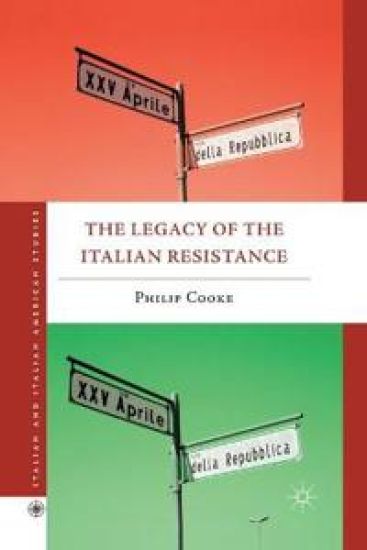
L'Eredita Della Resistenza: Storia, Cultura, Politiche Dal Dopoguerra a Oggi
Philip Cooke
Viella
2015
nidottu
In questo ricco e dettagliato studio a carattere interdisciplinare, lo storico inglese Philip Cooke prende in esame la duratura e contrastata eredita della Resistenza, ricostruendo i mutevoli e ambivalenti atteggiamenti sviluppati dai principali partiti politici e dalle istituzioni repubblicane nel corso del loro ambizioso progetto di edificazione di una nuova nazione sulle rovine del fascismo e della Seconda guerra mondiale. Utilizzando romanzi, film, documentari, giornali, diari, monumenti, quadri, musei, l'autore illustra le modalita con cui, in un lungo arco di tempo, la politica, la storia e la cultura italiane hanno interagito fra loro, mette in discussione stereotipi "di parte", come quello dell'egemonia comunista sulla memoria, e rilegge la storia del secondo dopoguerra da una prospettiva inedita e innovativa, che diventera un imprescindible punto di riferimento per chiunque vorra riflettere sulla Resistenza e con essa sull'intera vicenda dell'Italia contemporanea. Il libro ha vinto il Premio Flaiano per l'Italianistica nel 2012 e il Book Prize dell'American Association for Italian Studies nel 2011.
This volume redefines the genre of sector studies. The first part of the book compares the experiences of Britain and France in the very voltaile world of high-tech industries during the 1980s. The macroeconomic regulation approach is carried over a microeconomic level in the empirical chapters through an analysis of studies of firms, each chapter written by authors well-placed to give a pan-European perspective.
Is modernity being replaced by an opposite culture of postmodernity, or is postmodernism simply an internal critique of modernist culture? This key question is central to this stimulating book which explores the transformations taking place in social life, cultural preferences, economic organization and political attitudes, particularly in the context of the contemporary city as a lived or written experience. This book contains accounts of the development of modern ways of life and their erosion in the 20th century. The author argues that a whole set of modern institutions, from the corporation to the novel, are being exposed to internal critique and external competition. As a result, new ways of seeing and thinking are moving us into what some observers see as postmodern culture. However, these tendencies may in fact be the continuation of modernity by other means.
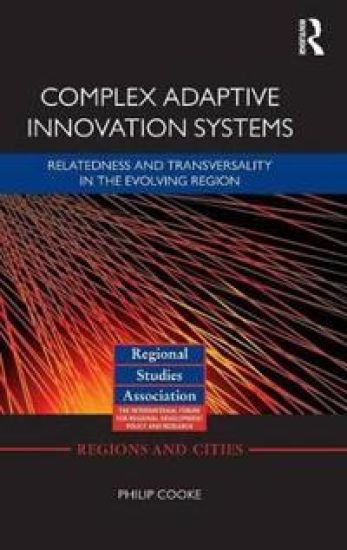
Leading up to the financial crisis of 2008 and onwards, the shortcomings of traditional models of regional economic and environmental development had become increasingly evident. Rooted in the idea that ‘policy’ is an encumbrance to free markets, the stress on supply-side smoothing measures such as clusters and an over reliance on venture capital, the inadequacy of existing orthodoxies has come to be replaced by the notion of transversality. This approach has three strong characteristics that differentiate it from its failing predecessor. First, as the name implies, it seeks to finesse horizontal knowledge interactions as well as vertical ones, thus building ‘platforms’ of industrial interaction. Secondly, it is not a supply, but a demand side model in which needs-driven innovation rather than pure market competition prevails. Finally, it is ongoing through recessionary times, being more robust than over-specialized approaches to economic growth. The intellectual origins of transversality lie in an aspiration to promote eco-innovation, one of the key hopes of assisting Western regional and national economies to re-balance and escape recession. The policy models of key regional exponents of the concept are explored and their goals achievement is assessed. An array of policy instruments and measures is presented for hands-on policy implementation. The book will be of vital interest to academics as teachers and researchers as well as policy advisers and public servants.
This book traces the theoretical explanation for clusters back to the work of classical economists and their more modern disciples, who saw economic development as a process involving serious imbalances in the exploitation of resources. Initially, natural resource endowments explained the formation of nineteenth and early twentieth-century industrial districts. Today, geographical concentrations of scientific and creative knowledge are the key resource. But these require a support system, ranging from major injections of basic research funding, to varieties of financial investment and management, tothe provision of specialist incubators, for economic value to be realised. These are also specialised forms of knowledge that contribute to a serious imbalance in the distribution of economic opportunity.
This groundbreaking book is the first comparative analysis of the relative strengths of global bioregions. Growth Cultures investigates the rapidly growing phenomena of biotechnology and sets this study within a knowledge economy context. Philip Cooke proposes a new knowledge-focused theoretical framework, ‘the New Global Bioeconomy’, against which to test empirical characteristics of biotechnology. In this timely volume, Cooke unifies concepts from the sociology of science, economic sociology and evolutionary economic geography to focus on the problems and prospects for policy agencies worldwide trying to build ‘biotechnology clusters’. He develops a superior policy approach of thinking in terms of platforms that integrate proximities and pipelines, which will be of significant interest for the scientific and technological communities as well as economic development policy communities. Growth Cultures will make fascinating reading for students, policy makers and researchers across management and business studies, innovation and knowledge studies, sociology, science and technology policy, applied economics, development studies and regional science.
Ending Terrorism in Italy analyses processes of disengagement from terrorism, as well as the connected issues of reconciliation, truth and justice. It examines in a critical and original way how terrorism came to an end in Italy (Part I), and the legacy it has left behind (Part II). The book interrogates a wide array of published memoirs and a considerable number of new face-to-face interviews with both former terrorists and first and second generation victimsIn the last two decades, and especially in recent years, former extreme-right terrorists in Italy have started to talk about their past involvement in terrorist violence, including, for the first time, acts of violence which have for decades been considered taboo, that is to say, bomb attacks against innocent civilians. These narratives add to the perspectives offered by members of left-wing terrorist groups, such as the Red Brigades and Prima Linea. Surprisingly, these narratives have not been systematically examined, yet they form a unique and extremely rich source of first-hand testimony, providing invaluable insights into processes of youth radicalization and de-radicalization, the social re-integration of ex-terrorists, as well as personal and collective healing. Even less attention has been paid to the victims’ narratives or stories. Indeed, the views and activities of the victims and their associations have been seriously neglected in the scholarly literature on terrorism, not just in Italy, but elsewhere in Europe. The book therefore examines the perspectives of the victims and relatives of victims of terrorism, who over the years have formed dedicated associations and campaigned relentlessly to obtain justice through the courts, with little or no support from the state and, especially in the case of the bombing massacres, with increasing awareness that the state played a role in thwarting the course of justice. Ending Terrorism in Italy will be of interest to historians, social scientists and policy makers as well as students of political violence and post-conflict resolution. .
This book adds to this growing body of scholarship on the Italian Resistance by analysing, for the first time, how the 'three wars' are represented over the broad spectrum of Resistance culture from 1945 to the present day. Furthermore, it makes this contribution to scholarship by bridging the gap between historical and cultural analysis. Whereas historians frequently use literary texts in their writings, they are often flawed by an insufficiently nuanced understanding of what a literary text is. Likewise, literary critics who have discussed writers such as Calvino and Vittorini, or films such Paisà and La notte di San Lorenzo, only refer in passing to the historical context in which these works were produced. By fusing historical and cultural analysis, author Philip Cooke makes a unique contribution to our understanding of a key period of Italian history and culture.
Leading up to the financial crisis of 2008 and onwards, the shortcomings of traditional models of regional economic and environmental development had become increasingly evident. Rooted in the idea that ‘policy’ is an encumbrance to free markets, the stress on supply-side smoothing measures such as clusters and an over reliance on venture capital, the inadequacy of existing orthodoxies has come to be replaced by the notion of transversality. This approach has three strong characteristics that differentiate it from its failing predecessor. First, as the name implies, it seeks to finesse horizontal knowledge interactions as well as vertical ones, thus building ‘platforms’ of industrial interaction. Secondly, it is not a supply, but a demand side model in which needs-driven innovation rather than pure market competition prevails. Finally, it is ongoing through recessionary times, being more robust than over-specialized approaches to economic growth. The intellectual origins of transversality lie in an aspiration to promote eco-innovation, one of the key hopes of assisting Western regional and national economies to re-balance and escape recession. The policy models of key regional exponents of the concept are explored and their goals achievement is assessed. An array of policy instruments and measures is presented for hands-on policy implementation. The book will be of vital interest to academics as teachers and researchers as well as policy advisers and public servants.
This book adds to this growing body of scholarship on the Italian Resistance by analysing, for the first time, how the 'three wars' are represented over the broad spectrum of Resistance culture from 1945 to the present day. Furthermore, it makes this contribution to scholarship by bridging the gap between historical and cultural analysis. Whereas historians frequently use literary texts in their writings, they are often flawed by an insufficiently nuanced understanding of what a literary text is. Likewise, literary critics who have discussed writers such as Calvino and Vittorini, or films such Paisà and La notte di San Lorenzo, only refer in passing to the historical context in which these works were produced. By fusing historical and cultural analysis, author Philip Cooke makes a unique contribution to our understanding of a key period of Italian history and culture.
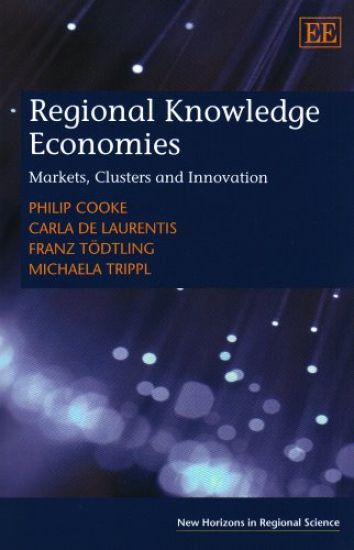
Regional Knowledge Economies
Philip Cooke; Carla De Laurentis; Franz Tödtling; Michaela Trippl
Edward Elgar Publishing Ltd
2009
nidottu
This original and timely book presents the most comprehensive, empirically based analysis of clustering dynamics in the high-technology sector across liberal and co-ordinated market economies. By carefully exploring and comparing ICT and biotechnology in the UK and Austria, the authors find evidence that industry innovation characteristics can overcome some of the supposed constraints of such 'varieties of capitalism' and themselves usher in regulatory reforms. They also provide a first examination of the ways in which firms utilize knowledge spillovers in such settings. In addition, the book highlights the practices of 'free-riders' and the excess land rents that they and more collaborative firms endure as 'diseconomies of agglomeration'. Finally, arising from these findings, the authors present a new post-sectoral, post-cluster policy methodology called 'Innovative Platform Policy', which they believe is more attuned to the dynamics of the knowledge economy. This book will be of great interest to academics, especially regional and industrial economists, economic geographers, regional scientists, political scientists and economic sociologists. It will also appeal to students and researchers, as well as government officials in industry, trade and economic development at national and regional levels.
Regional Knowledge Economies
Philip Cooke; Carla De Laurentis; Franz Tödtling; Michaela Trippl
Edward Elgar Publishing Ltd
2007
sidottu
This original and timely book presents the most comprehensive, empirically based analysis of clustering dynamics in the high-technology sector across liberal and co-ordinated market economies. By carefully exploring and comparing ICT and biotechnology in the UK and Austria, the authors find evidence that industry innovation characteristics can overcome some of the supposed constraints of such 'varieties of capitalism' and themselves usher in regulatory reforms. They also provide a first examination of the ways in which firms utilize knowledge spillovers in such settings. In addition, the book highlights the practices of 'free-riders' and the excess land rents that they and more collaborative firms endure as 'diseconomies of agglomeration'. Finally, arising from these findings, the authors present a new post-sectoral, post-cluster policy methodology called 'Innovative Platform Policy', which they believe is more attuned to the dynamics of the knowledge economy. This book will be of great interest to academics, especially regional and industrial economists, economic geographers, regional scientists, political scientists and economic sociologists. It will also appeal to students and researchers, as well as government officials in industry, trade and economic development at national and regional levels.
This groundbreaking book is the first comparative analysis of the relative strengths of global bioregions. Growth Cultures investigates the rapidly growing phenomena of biotechnology and sets this study within a knowledge economy context. Philip Cooke proposes a new knowledge-focused theoretical framework, ‘the New Global Bioeconomy’, against which to test empirical characteristics of biotechnology. In this timely volume, Cooke unifies concepts from the sociology of science, economic sociology and evolutionary economic geography to focus on the problems and prospects for policy agencies worldwide trying to build ‘biotechnology clusters’. He develops a superior policy approach of thinking in terms of platforms that integrate proximities and pipelines, which will be of significant interest for the scientific and technological communities as well as economic development policy communities. Growth Cultures will make fascinating reading for students, policy makers and researchers across management and business studies, innovation and knowledge studies, sociology, science and technology policy, applied economics, development studies and regional science.
This book traces the theoretical explanation for clusters back to the work of classical economists and their more modern disciples, who saw economic development as a process involving serious imbalances in the exploitation of resources. Initially, natural resource endowments explained the formation of nineteenth and early twentieth-century industrial districts. Today, geographical concentrations of scientific and creative knowledge are the key resource. But these require a support system, ranging from major injections of basic research funding, to varieties of financial investment and management, tothe provision of specialist incubators, for economic value to be realised. These are also specialised forms of knowledge that contribute to a serious imbalance in the distribution of economic opportunity.
Beppe Fenoglio (1922-1963) is one of Italy's major postwar writers. His contemporary Italo Calvino described one of his novels, Una questione privata, as the work that his generation had dreamed of writing. But it is Fenoglio's posthumously published Il partigiano Johnny, based on the author's experience as a partisan in the Langhe hills during World War Two, and written in an intriguing mixture of Italian and English, which is considered to be his master-piece. This new in-depth study argues that Il partigiano Johnny can best be interpreted by understanding the complex narrative techniques that Fenoglio employs, and by firmly placing the work within its historical context. It also proposes a new solution to the puzzle of the language of this fascinating and complex work.
Philip Cooke and Kevin Morgan explore important issues of corporate reorganization in the context of heightened global competition. Their special focus is upon how firms associate with regional milieux. Innovation is a key factor in corporate and regional economic performance and the authors show how interactive innovation based on collective learning and associative practices are becoming increasingly significant. In-depth studies of inter-firm and firm-agency interactions are presented for four European regions: Baden-Württemberg and Emilia-Romagna as accomplished regional economies; Wales and the Basque Country as learning regions. The book is theoretically informed by an evolutionary economics perspective and draws policy conclusions which emphasise the importance of decentralized industrial policy in support of both corporate and regional economic development ambitions. It concludes that the associational economy may be the `third way' between state and market co-ordination of modern economies.