

Kirjailija
Philip Dawson
Kirjat ja teokset yhdessä paikassa: 7 kirjaa, julkaisuja vuosilta 1972–2020, suosituimpiin kuuluu Electric Railways and Tramways. Vertaile teosten hintoja ja tarkista saatavuus suomalaisista kirjakaupoista.
7 kirjaa
Kirjojen julkaisuvuodet: 1972–2020.

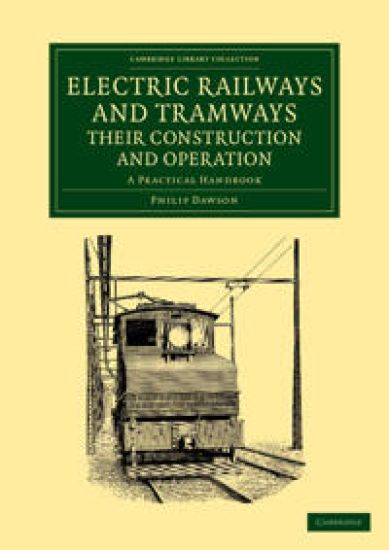
Electric Railways and Tramways, their Construction and Operation
Philip Dawson
Cambridge University Press
2013
pokkari
One of the world's leading electrical engineers and involved in projects across the globe, Sir Philip Dawson (1866–1938) was at the forefront of the new technology of electric locomotion. Published in 1897, less than twenty years after the first successful demonstration of an electric passenger locomotive and just seven years after the opening of London's first electrified underground line, this handbook covers all aspects of the building and running of a successful electric railway, ranging from the construction of the permanent way and different means of delivering current through to financial accounting, staff organisation and discipline. Impressed by the speed of American progress, Dawson is keen to impress upon his reader the need for Europe to keep up. With some 500 illustrations, this work offers a uniquely revealing picture of the earliest days of a technology that is now taken for granted.

Tuna Fish Industry in Thailand
Kulapa S Kuldilok; John Lingard; Philip Dawson
LAP Lambert Academic Publishing
2010
pokkari
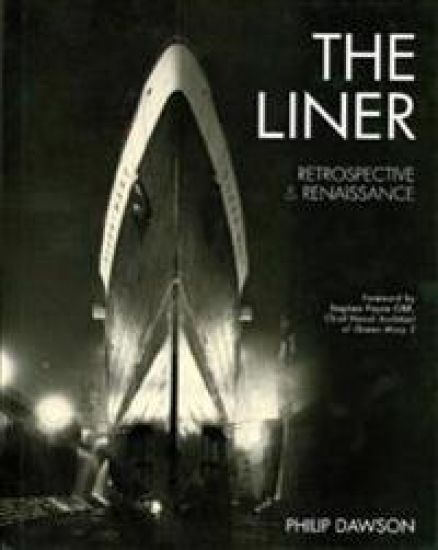
A lavishly illustrated, two-hundred-year retrospective of the ocean liner in transportation and social history documents its roles in mail service, nineteenth-century transportation, wartime, immigration, and tourism, in an account that includes design and construction information for popular and lesser-known ships.
The French Revolution and the Meaning of Citizenship
Philip Dawson; Renee Waldinger; Isser Woloch
Praeger Publishers Inc
1993
sidottu
Citizenship is a fundamental concept in social life, entailing rights, obligations, and relationships with others. Modern citizenship did not emerge from a philosopher's study or a laboratory experiment; instead, it was decisively shaped in the French Revolution. This book is about the processes by which that happened. The creation of a new kind of citizenship was not a simple act. The rights and obligations of citizens were going to be extensive; they needed to be defined and debated. The topics discussed in this book, which detail these rights and obligations, will be of interest to French historians as well as to political scientists and sociologists.

Provincial Magistrates and Revolutionary Politics in France, 1789-1795
Philip Dawson
Harvard University Press
1972
sidottu
It is commonly agreed that the history of France at the end of the eighteenth century was influenced powerfully, at times decisively, by collective interests and group actions. Yet, as Philip Dawson shows, this consensus has been the foundation of endless scholarly argument over the purposes of group actions and their effects on economic, political, and intellectual life, the accuracy of facts reported, the validity of different methods of analysis, and the significance of the whole topic for previous and subsequent human experience. In probing these questions, this monograph contributes research findings to the historical controversy over the political motives and conduct of the upper bourgeoisie during the French Revolution. Chosen for study is a well-defined occupational group near the pinnacle of the bourgeoisie, the 2700 judicial officeholders in the bailliages and sénéchaussées--royal courts from which appeals were taken to the parlements. These lower-court magistrates were generally well-to-do and esteemed personages in the provincial bourgeoisie, who could potentially be drawn to either side in a political struggle between nobility and bourgeoisie. They constituted more than 20 percent of the bourgeois representation in the Estates General of 1789. Revolutionary legislation abolished their offices, but many of them remained active in politics even under the revolutionary republic. Dawson makes use of a variety of manuscript materials pertinent to the magistrates as he treats their activities as members of corporate groups before 1790 and follows many of them as individuals through the revolutionary years to 1795. In part, the book is based on biographical data relating to 230 magistrates--all who were in office in the provinces of Burgundy and Poitou at the outbreak of the revolution. By the end of 1789, the author concludes, most of the magistrates came to accept revolutionary change because alternative courses of action had been made more unacceptable to them. It was their support that helped to make possible the revolutionary process itself. "They were not the leaders of the revolutionary bourgeoisie. Before 1789, they had been in the highest rank of the bourgeoisie and they remained a notable part of it, but most of them had come to support revolution hesitantly, cautiously, with moderation and many a backward glance."