Kirjojen hintavertailu – 12 859 829 kirjaa ja 27 kauppaa
Kirjailija
Philip G. Zimbardo
Kirjat ja teokset yhdessä paikassa: 11 kirjaa, julkaisuja vuosilta 1954–2024, suosituimpiin kuuluu Il paradosso del tempo. La nuova psicologia del tempo che cambierà la tua vita. Vertaile teosten hintoja ja tarkista saatavuus suomalaisista kirjakaupoista.
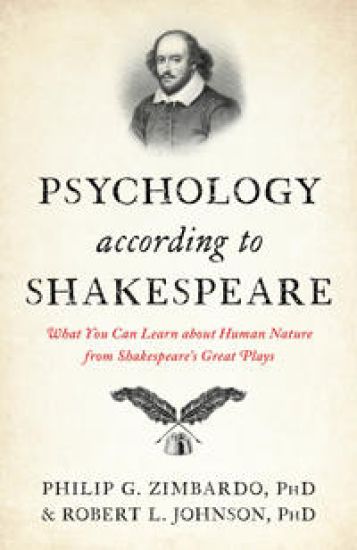
William Shakespeare has undergone psychological analyses ever since Freud diagnosed Hamlet with an Oedipus complex. But now, two psychologists propose to turn the tables by telling how Shakespeare himself understood human behavior and the innermost workings of the human mind. Psychology According to Shakespeare: What You Can Learn About Human Nature From Shakespeare's Great Plays, is an interdisciplinary project that bridges psychological science and literature, bringing together for the first time in one volume, the breadth and depth of The Bard's knowledge of love, jealousy, dreams, betrayal, revenge, and the lust for power and position. Even today, there is no better depiction of a psychopath than Richard III, no more poignant portrayal of dementia than King Lear, nor a more unforgettable illustration of obsessive-compulsive disorder than Lady Macbeth's attempts to wash away the damned blood spot. What has not been revealed before, however, are the many different forms of mental illness The Bard described in terms that are now identifiable in the modern manual of disorders known as the DSM-5. But, as the book shows, the playwright's fascination with human nature extended far beyond mental disorders, ranging across the psychological spectrum, from brain anatomy to personality, cognition, emotion, perception, lifespan development, and states of consciousness. To illustrate, we have stories to tell involving astrology, potions, poisons, the four fluids called "humors," anatomical dissections of freshly hanged criminals, and a mental hospital called Bedlam--all showing how his perspective was grounded in the medicine and culture of his time. Yet, Will Shakespeare's intellect, curiosity, and temperament allowed him to see other ideas and issues that would become important in psychological science centuries later. Many of these connections between Shakespeare and psychology lie scattered in books, articles, and web pages across the public domain, but they have never been brought together into a single volume. So, here the authors retell of his fashioning the felicitous phrase, nature-nurture for Prospero to utter in frustration with Caliban and of how the nature-nurture dichotomy would become central in psychology's quest to understand the tension between heredity and environment. But that was still far from all, for they discovered that his work anticipated multiple other psychological tensions. For example, in Measure for Measure, he made audiences puzzle over which exerts the greater influence on human behavior: internal traits or the external situation. And in Hamlet, he explored the equally enigmatic push-pull between reason and emotion in the mind of the dithering prince. Aside from bringing together The Bard's known psychology, the book is unique in several other respects. It reveals how his interest in mind and behavior ranged across the full spectrum of psychology, including topics that we now call biopsychology and neuroscience, social psychology, thinking and intelligence, motivation and emotion, and reason vs intuition. Further, we show how the psychological concepts he used have evolved over the intervening centuries--for example, the Elizabethan notion of sensus communis eventually became "consciousness" and the old idea of the humors morphed into our current understanding of hormones and neurotransmitters. We also note that some of Mr. Shakespeare's concerns seem especially timely today, as in the subplot of queer vs straight issues complicating the story of Troilus and Cressida and in Shylock's telling of prejudices inflicted on ethnic minorities.
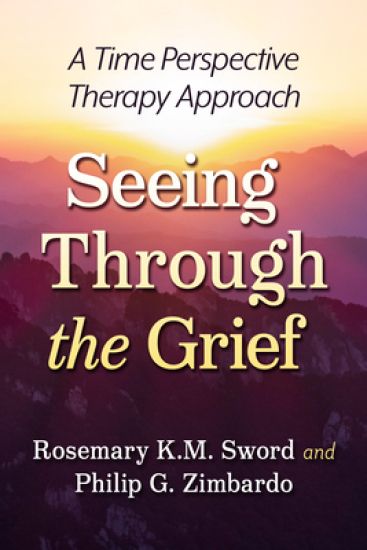
When we experience a great loss, our despair can be so intense that we get stuck, oftentimes facing backwards, reliving painful experiences that may leave us feeling stranded in the past. We can find ourselves living day-to-day on autopilot, going through the motions, while in the back of our minds we might think we don't deserve to be happy anymore. When we try to look at the future, whatever plans we had made prior to our loss now seem impossible to achieve. If this sounds familiar, Time Perspective Therapy (TPT) is designed to help; it provides simple tools to turn your perspective from dark to light, from negative to positive. This book dives deep into the many facets of grief: from depression and caregiver stress to reestablishing relationships that may have fallen to the wayside and making plans for your new and different future. Through real-life intimate stories of those who have suffered loss and grown from the experience, and easy-to-do exercises, it is designed to help you learn how TPT can help you cherish the past, enjoy the present, move toward a new and brighter future, and live a fulfilling, meaningful life.
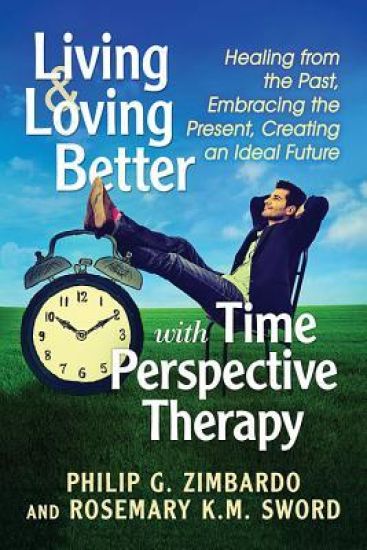
In his 2012 book Time Cure, psychologist Philip Zimbardo introduced a groundbreaking therapeutic approach for PTSD sufferers, co-developed with Rosemary Sword. "Time Perspective Therapy" shifts mental focus from the past to the present, and from negative to positive events, helping anyone achieve a more balanced view of life. Featuring real-life stories, this book describes how TPT helps people living with depression, anxiety or stress to move beyond past negative experiences--from toxic relationships to bullying--toward a more positive future.
From Sterling's hugely popular Milestones series comes this stunningly illustrated book. What could be more fascinating than the workings of the human mind? This stunningly illustrated survey in Sterling's Milestones series chronicles the history of psychology through 250 landmark events, theories, publications, experiments and discoveries. Beginning with ancient philosophies of well-being, it touches on such controversial topics as phrenology, sexual taboos, electroshock therapy, multiple personality disorder and the nature of evil.
Umfassend, bewundernswert klar und ein wirkliches Lesevergn gen. Nassim Nicholas Taleb, Autor von Der schwarze SchwanEin Buch zur rechten ZeitFast jede wichtige Entscheidung, die wir in unserem Leben treffen, wird von einer Kraft beeinflusst, die tief in unserer Psyche verankert ist: von unserer individuellen Zeitperspektive - unserer pers nlichen inneren Zeitzone. So wirksam diese Kraft ist, so wenig sind wir uns ihr gew hnlich bewusst. Doch sobald wir unsere Zeitperspektive erkennen, sind wir in der Lage, sie zu ver ndern und zu einem gl cklicheren und erf llteren Leben zu gelangen. Dies ist ein bahnbrechendes Buch ber die neue Psychologie der Zeit. Philip Zimbardo, einer der einflussreichsten Psychologen der Gegenwart, und sein Forschungskollege John Boyd erl utern darin nicht nur, wie unterschiedlich Menschen sich im Netzwerk von Gegenwart, Vergangenheit und Zukunft positionieren und wie sich diese individuelle Zeitperspektive auf ihr Denken und Handeln auswirkt. Sie bieten ihren Lesern auch konkrete Hilfen an, die eigene Zeitorientierung wahrzunehmen und zu ver ndern. Das Buch] macht deutlich, dass jeder von uns eine einzigartige Zeitpers nlichkeit besitzt. Manche Menschen neigen dazu, hedonistisch ganz im Jetzt zu leben, andere sind von vergangenem Kummer oder von Zukunftspl nen geleitet. Das Buch enth lt einen Fragebogen, mit dem Sie Ihre eigene Zeitzone bestimmen k nnen, und Anregungen, um deren Vorz ge und Fallstricke zu erkunden - alles mit dem Ziel, Ihnen zu helfen, aus Ihrer Zeit das meiste zu machen. O, The Oprah Magazine_____ Die angesehenen Psychologen Philip Zimbardo und John Boyd haben 30 Jahre Pionierarbeit in der Zeitforschung geleistet. Mit diesem Buch wenden sie sich nun erstmals an eine breite ffentlichkeit. Die neue Psychologie der Zeit verkn pft wissenschaftliche Erkenntnisse und Alltagspsychologie, Ratgeber und sozialen Kommentar. Und es zeigt auf, wie die alles durchdringende und machtvolle, aber bislang wenig bekannte Rolle unserer Orientierung in der Zeit sowohl die Motivationslage des Einzelnen als auch die Eigenheiten ganzer Nationen beeinflusst. Zimbardo und Boyd haben zahlreiche Fragen entwickelt, deren Beantwortung unsere pers nliche Zeitperspektive offenbart, beispielsweise: Bringt der Duft frisch gebackener Weihnachtspl tzchen Sie in Ihre Kindheit zur ck? Glauben Sie, dass sich in der Welt eigentlich nichts wirklich ndert? Haben Sie das Gef hl, die Gegenwart sei einzig entscheidend und die Zukunft und Vergangenheit seien eher reine Abstraktionen? Tragen Sie eine Uhr, pr fen Sie Ihre Kontobewegungen und erstellen Sie To-Do-Listen - jeden Tag? Glauben Sie, die Existenz auf Erden sei lediglich die Vorbereitung f r das Leben nach dem Tod? Gr beln Sie ber gescheiterte Beziehungen? Sind Sie der Mittelpunkt jeder Party - immer zu sp t, immer gut drauf und immer pleite? Testen Sie sich in diesem Buch selbst Welche der sieben m glichen Zeitperspektiven nehmen Sie in welchem Ma e ein? Welche Vorteile oder Nachteile erwachsen Ihnen daraus? Zimbardo und Boyd erkl ren dem Leser, wie er seine eigene Einsch tzung der Zeit erkennen und wie er verschobene Wahrnehmungen berwinden kann, die ihn entweder zu sehr in der Vergangenheit leben, zu stark auf unmittelbare Belohnungen warten oder in ungesunder Weise auf Zukunftsziele fixiert sein lassen. Website zum amerikanischen Originalbuch: www.thetimeparadox.comWebsite zu Zimbardos und Boyds Forschung zur Psychologie der Zeit: www.timeperspective.com
Of the twenty-three Brazilian policemen interviewed in depth for this landmark study, fourteen were direct perpetrators of torture and murder during the three decades that included the 1964-1985 military regime. These "violence workers" and the other group of "atrocity facilitators" who had not, or claimed they had not, participated directly in the violence, help answer questions that haunt today's world: Why and how are ordinary men transformed into state torturers and murderers? How do atrocity perpetrators explain and justify their violence? What is the impact of their murderous deeds--on them, on their victims, and on society? What memories of their atrocities do they admit and which become public history?
Dr. Philip G. Zimbardo's ground-breaking studies have found that there are more than 84 million shy people in America today, including such "secretly shy" celebrities as Carol Burnett, Barbara Walters, and Johnny Carson. In this best-selling book, Dr. Zimbardo analyzes shyness with a personal understanding of the emotions involved. He then presents advice, exercises, and encouragement to help shy people strengthen their social skills and their self-confidence. If you're troubled by shyness, or love someone who is, reading Shyness can open new worlds.
A comprehensive introductory psychology textbook written for European courses. Based on Zimbardo's American text Psychology and Life, this textbook takes a distinctly European perspective on psychology whilst retaining the pedagogical features of the American text. Whilst American psychology takes a mainly scientific/quantitative approach to the subject, European psychology takes a broader approach that includes empirical/qualitative methods. This text places emphasis on the pluriformity of psychology and of its methods, by broadening the empirical basis of psychology and reassessing the view of psychology as simply a quantitative and scientific enterprise.