
Kirjailija
Philip Gibbs
Kirjat ja teokset yhdessä paikassa: 100 kirjaa, julkaisuja vuosilta 2005–2026, suosituimpiin kuuluu Ten Years After. Vertaile teosten hintoja ja tarkista saatavuus suomalaisista kirjakaupoista.
100 kirjaa
Kirjojen julkaisuvuodet: 2005–2026.


"The Soul of the War" by Philip Gibbs offers a powerful and intimate glimpse into the human experience of World War I. Through personal narratives and firsthand accounts, Gibbs captures the profound impact of the conflict on individuals and societies across Europe. This meticulously prepared edition presents a vital historical record, exploring the realities of war beyond the battlefield. A poignant exploration of military history and European history, this volume sheds light on the emotional and psychological toll of the Great War. Gibbs's work provides invaluable insights into a pivotal moment in modern history, examining the world war through the lens of those who lived it. A compelling addition to any collection of World War I literature, this book serves as a lasting testament to the strength and resilience of the human spirit in the face of unimaginable adversity. This work has been selected by scholars as being culturally important, and is part of the knowledge base of civilization as we know it. This work is in the public domain in the United States of America, and possibly other nations. Within the United States, you may freely copy and distribute this work, as no entity (individual or corporate) has a copyright on the body of the work. Scholars believe, and we concur, that this work is important enough to be preserved, reproduced, and made generally available to the public. We appreciate your support of the preservation process, and thank you for being an important part of keeping this knowledge alive and relevant.
"The Soul of the War" by Philip Gibbs offers a powerful and intimate glimpse into the human experience of World War I. Through personal narratives and firsthand accounts, Gibbs captures the profound impact of the conflict on individuals and societies across Europe. This meticulously prepared edition presents a vital historical record, exploring the realities of war beyond the battlefield. A poignant exploration of military history and European history, this volume sheds light on the emotional and psychological toll of the Great War. Gibbs's work provides invaluable insights into a pivotal moment in modern history, examining the world war through the lens of those who lived it. A compelling addition to any collection of World War I literature, this book serves as a lasting testament to the strength and resilience of the human spirit in the face of unimaginable adversity. This work has been selected by scholars as being culturally important, and is part of the knowledge base of civilization as we know it. This work is in the public domain in the United States of America, and possibly other nations. Within the United States, you may freely copy and distribute this work, as no entity (individual or corporate) has a copyright on the body of the work. Scholars believe, and we concur, that this work is important enough to be preserved, reproduced, and made generally available to the public. We appreciate your support of the preservation process, and thank you for being an important part of keeping this knowledge alive and relevant.
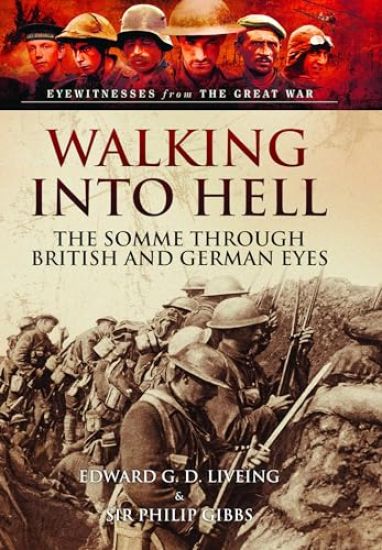
The 1st July 1916 was the blackest day in the history of the British Army when 60,000 unsuspecting men of the British 4th Army advanced into the teeth of a hurricane of German fire. This well-illustrated anthology examines the events of that terrible day from two very different perspectives. The vivid eyewitness account of the battle from the soldiers point of view is provided by Edward Liveing of the London Regiment. After joining the London Regiment in 1914, Liveing was deployed to both Palestine and to France, where he was wounded at the Battle of the Somme in 1916\. This book describes his war on the front line up until his injury on the Somme. Also on the field that day and engaged in filming the battle for posterity was cameraman Lieut. Geoffrey Malins, who produced the famous documentary film of the battle. At the outbreak of war in 1914, Malins, aged 28, traveled to the Western Front where he acted as a freelance war correspondent, filming newsreels in Belgium and France. 1915 brought a fateful change of direction for Malins when he was recruited by the British Kinematograph Manufacturers Association to make a film of the preparations and the execution of a battle on the Western Front. This proved to be a dangerous business and by the end of the first year Malins, now with the rank of Lieutenant, had found himself deafened, gassed and twice wounded in the line of duty. Malins continued his work as a wartime cameraman before he was discharged from the army in 1918, having suffered bad health for sometime previously. These two contrasting accounts provide a remarkable insight into the chaotic events as they unfolded on the battlefield and provide the reader with two very different views of the battle as well as the visual records as produced by Malins, and the other photographers and artists at work on the Somme that day.
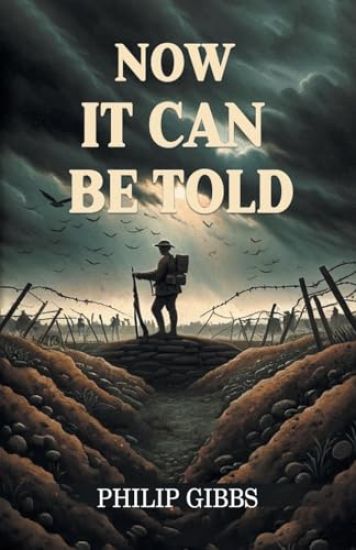
Now It Can Be Told (Edition2024)
Philip Gibbs
Double 9 Books LLP
2024
nidottu
Halvin toimitettuna 31,20 €
Now It Can Be Told by Philip Gibbs is a memoir. The genre is war journalism and memoir. Philip Gibbs, a British journalist and one of five officially sanctioned war correspondents during World War I, provides a detailed, unvarnished account of the war's grim realities. The book captures the stark horror of trench warfare, the psychological toll on soldiers, and the pervasive disillusionment among the troops. Gibbs writes with a poignant honesty, describing the harrowing experiences he witnessed on the front lines and the stark contrast between the propagandist portrayal of the war and its brutal reality. Gibbs's narrative is both personal and comprehensive, offering insights into the everyday lives of soldiers, the devastating impact of modern weaponry, and the emotional scars left by the conflict. His writing is imbued with a sense of urgency and a deep empathy for those who endured the war's hardships. "Now It Can Be Told" serves as a powerful reminder of the war's human cost and the importance of honest reporting. It remains a significant work for its historical value and its unflinching portrayal of the true face of war.
The Soul of the War, a classical book, has been considered important throughout the human history, and so that this work is never forgotten we at Alpha Editions have made efforts in its preservation by republishing this book in a modern format for present and future generations. This whole book has been reformatted, retyped and designed. These books are not made of scanned copies of their original work and hence the text is clear and readable.

The Middle of the Road: A Novel, has been considered important throughout human history. In an effort to ensure that this work is never lost, we have taken steps to secure its preservation by republishing this book in a modern format for both current and future generations. This complete book has been retyped, redesigned, and reformatted. Since these books are not scans of the authors' original publications, the text is readable and clear.

People of Destiny: Americans as I saw them at Home and Abroad, a classical book, has been considered essential throughout the human history, and so that this work is never forgotten we at Alpha Editions have made efforts in its preservation by republishing this book in a modern format for present and future generations. This whole book has been reformatted, retyped and designed. These books are not made of scanned copies of their original work and hence the text is clear and readable.
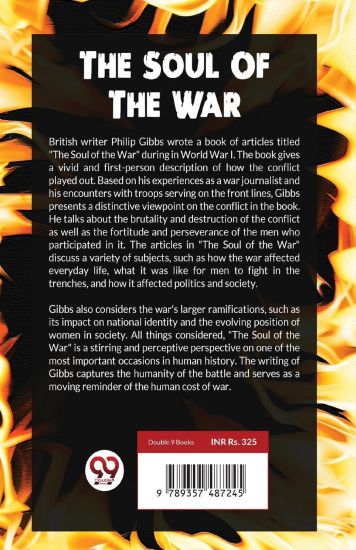
British writer Philip Gibbs wrote a book of articles titled "The Soul of the War" during in World War I. The book gives a vivid and first-person description of how the conflict played out. Based on his experiences as a war journalist and his encounters with troops serving on the front lines, Gibbs presents a distinctive viewpoint on the conflict in the book. He talks about the brutality and destruction of the conflict as well as the fortitude and perseverance of the men who participated in it. The articles in "The Soul of the War" discuss a variety of subjects, such as how the war affected everyday life, what it was like for men to fight in the trenches, and how it affected politics and society. Gibbs also considers the war's larger ramifications, such as its impact on national identity and the evolving position of women in society. All things considered, "The Soul of the War" is a stirring and perceptive perspective on one of the most important occasions in human history. The writing of Gibbs captures the humanity of the battle and serves as a moving reminder of the human cost of war.
This book "" From Bapaume to Passchendaele, 1917 "", has been considered important throughout the human history, and so that this work is never forgotten we have made efforts in its preservation by republishing this book in a modern format for present and future generations. This whole book has been reformatted, retyped and designed. These books are not made of scanned copies and hence the text is clear and readable.