Kirjojen hintavertailu – 12 870 435 kirjaa ja 27 kauppaa

Kirjailija

Philip H. Gordon

Kirjat ja teokset yhdessä paikassa: 15 kirjaa, julkaisuja vuosilta 1994–2020, suosituimpiin kuuluu Containing Russia. Vertaile teosten hintoja ja tarkista saatavuus suomalaisista kirjakaupoista.

Nimi esiintyy myös muodoissa: Philip H Gordon

15 kirjaa

Kirjojen julkaisuvuodet: 1994–2020.

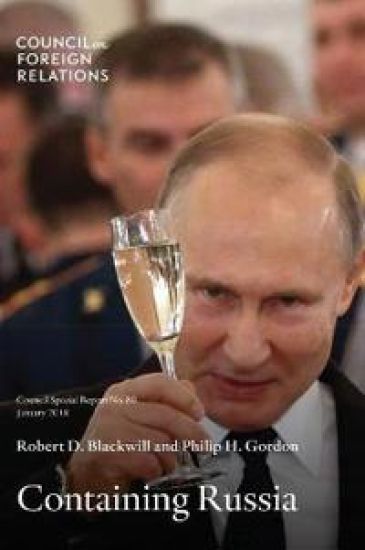
Containing Russia

Containing Russia

Robert D Blackwill; Philip H Gordon

Council on Foreign Relations Press
2018
pokkari
"The evidence that Russia interfered in the 2016 U. S. presidential election is overwhelming," note CFR Senior Fellows Robert D. Blackwill and Philip H. Gordon in a new Council Special Report, Containing Russia: How to Respond to Moscow's Intervention in U. S. Democracy and Growing Geopolitical Challenge. As the report shows, Russia not only meddled in the U. S. democratic process and sought to exacerbate American social divisions but also seeks to undermine U. S. power in Europe and around the world. Blackwill and Gordon, former senior officials in numerous Republican and Democratic administrations, respectively, argue that "neither President Barack Obama nor President Donald J.] Trump--for different reasons--adequately elevated Russia's intervention in the United States to the national priority that it is, or responded to it in a way sufficient to deter Russia or other hostile states from undertaking future attacks." In this report, Blackwill and Gordon contend that "Russia's intervention should not be seen as just another of many stumbles in U. S.-Russia relations over the decades but as a historic turning point" because of the nature of Moscow's threat to America's democratic institutions. A more robust and comprehensive strategy to protect the United States, its allies, and its interests against Russian attacks is therefore sorely needed. To that end, the authors put forth a wide range of policy prescriptions to strengthen U. S. defenses and increase the costs of continued Russian interference. Their prescriptions include expanded sanctions on Russian officials and entities to punish past transgressions and deter future ones; strengthened measures to defend U. S. electoral bodies and cybersecurity and to create greater transparency in social media; and additional U. S. commitments to European security to better protect allies and U. S. interests against Russian aggression. Blackwill and Gordon conclude that "the United States is currently in a second Cold War with Russia" and urge the Trump administration to change its policies to reflect this fact.
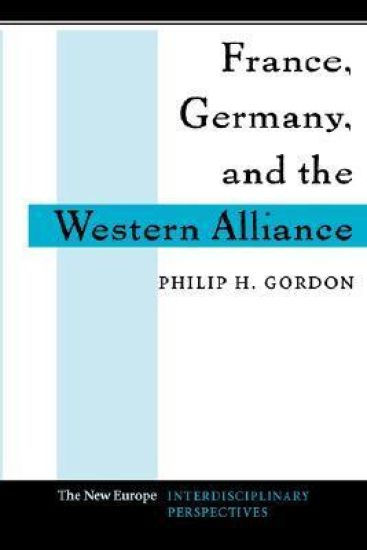
France, Germany, and the Western Alliance
Whether Europe will ever have anything resembling the ?common foreign and security policy? described in the Maastricht Treaty will depend most of all on whether France and Germany are able to align their foreign policy goals and means. This thoughtful and original study examines the Franco-German security partnership in its post? Cold War context an
The Transatlantic Allies and the Changing Middle East
Since the mid-1990s, US and European attitudes, strategies and policies towards the Middle East have diverged. In the Middle East peace process, Europeans have grown frustrated with the lack of progress and with Washington‘s near-monopoly on diplomatic action, and have begun to demand a greater role. On Iraq, the US insists on strong military and economic containment of Saddam Hussein, while some Europeans have started to press for a more rapid reintegration of Iraq into the international community and are reluctant to use or threaten force. The issue of how to deal with Iran has been most divisive of all, with the US and Europe deeply divided over whether they should contain, or engage, Tehran. Transatlantic tensions over the Middle East are damaging for three main reasons. They reduce the effectiveness of allied policies; undermine NATO‘s cohesion when its future is no longer guaranteed by a common threat; and threaten to spill over into the economic domain. This paper examines the reasons for these potentially damaging differences, assesses the prospects for improving transatlantic cooperation in the region and suggests approaches that may help to bring this about. Its main policy conclusions are:On the Arab Israeli conflict, as long as the peace process is moving forward, or has reasonable prospects of doing so, the US is probably right that Europe‘s formal involvement in direct peace talks would not be helpful, particularly if such a role aimed to promote policies different from those of the US. If the peace process stalls completely, however, it will be difficult for Washington to justify opposing a more active European role. On Iraq, the US-led policy of containment is correct, and economic sanctions should remain in place until Baghdad complies fully with UN Security Council disarmament resolutions. However, in exchange for Europe‘s agreement to contribute to Iraq‘s military containment, the US, like Europe, should abide by the letter and spirit
Winning Turkey

Winning Turkey

Philip H. Gordon; Omer Taspinar; Soli Ozel

Brookings Institution
2008
nidottu
"Turkey has always been a crossroads: the point where East meets West, Europe meets Asia, and Christianity meets Islam. Turkey has also been a close and important American ally, but a series of converging political and strategic factors have now endangered its longstanding Western and democratic orientation. In Winning Turkey, two leading analysts explain this worrisome situation and present a plan for improving it. The stakes are clear. Turkey is the most advanced democracy in the Islamic world, bordering a number of the world's hotspots, including Iraq, Iran, and the Caucasus. It occupies the corridor between Western markets and Caspian Sea energy reserves. A stable, Western-oriented Turkey moving toward EU membership would provide a growing market for exports, a source of needed labor, a positive influence on the Middle East, and an ally in the war on terror. The picture has darkened, however, as rising anti-Americanism, deflated hopes for EU accession, civil-military tensions, and terrorist threats have destabilized an already volatile Turkish political system. Wi nning Turkey designs a plan to ease tensions in this critical part of the world. In addition to proposing a ""grand bargain"" between Turkey and the Kurds, it advocates greater support for increased liberalism and democracy, a renewed commitment by both Europe and Turkey to promote EU membership, a historic compromise with Armenia, and greater Western engagement with Turkish Cypriots."
Principles and Practice of Surgery for the Colon, Rectum, and Anus

Principles and Practice of Surgery for the Colon, Rectum, and Anus

Philip H. Gordon; Santhat Nivatvongs

CRC Press Inc
2007
sidottu
Supplying lavish color illustrations that fully detail key anatomical structures and pathology, this Third Edition encompasses the complete range of diseases encountered by colorectal surgeons in day-to-day clinical practice and spans topics related to anorectal disorders, colorectal conditions, problem-oriented approaches to colorectal disease, and laparoscopic colorectal surgery. Documenting the most recent surgical developments and instrumentation methods, this Third Edition provides updated chapters on sophisticated diagnostic and therapeutic modalities, pharmaceutical advances, and patient screening, surveillance, and follow-up care.
Neoplasms of the Colon, Rectum, and Anus

Neoplasms of the Colon, Rectum, and Anus

Philip H. Gordon; Santhat Nivatvongs

CRC Press Inc
2007
sidottu
Colorectal cancer is the second-leading cause of cancer-related death in the Western World. This Second Edition analyzes the genetics, mechanisms, and development of colorectal carcinoma and supplies the latest research and recommendations on the detection, treatment, and prevention of malignancies of the colon, rectum, and anus.
The French Challenge

The French Challenge

Philip H. Gordon; Sophie Meunier-Aitsahalia

Brookings Institution
2001
nidottu
"In August 1999 a forty-six-year-old sheep farmer name José Bové was arrested for dismantling the construction site of a new McDonald's restaurant in the south of France. A few months later Bové built on his fame by smuggling huge chunks of Roquefort cheese into Seattle, where he was among the leaders of the antiglobalization protests against the World Trade Organization summit. Bové's crusade against globalization helped provoke a debate both within France and beyond about the pros and cons of a world in which financial, commercial, human, cultural, and technology flows move faster and more extensively than ever before. As the French struggle to preserve the country's identity, heritage, and distinctiveness, they are nonetheless adapting to a new economy and an interdependent world. This book deals with France's effort to adapt to globalization and its consequences for France's economy, cultural identity, domestic politics, and foreign relations. The authors begin by analyzing the structural transformation of the French economy, driven first by liberalization within the European Union and more recently by globalization. By examining a wide variety of possible measures of globalization and liberalization, the authors conclude that the French economy's adaptation has been far reaching and largely successful, even if French leaders prefer to downplay the extent of these changes in response to political pressures and public opinion. They call this adaptation ""globalization by stealth.""The authors also examine the relationship between trade, culture, and identity and explain why globalization has rendered the three inseparable. They show how globalization is contributing to the restructuring of the traditional French political spectrum and blurring the traditional differences between left and right. Finally, they explore France's effort to tame globalization—maîtriser la mondialisation—and the possible consequences and lessons of the French stance for the rest of the world."
The French Challenge

The French Challenge

Philip H. Gordon; Sophie Meunier-Aitsahalia

Brookings Institution
2001
sidottu
"In August 1999 a forty-six-year-old sheep farmer name José Bové was arrested for dismantling the construction site of a new McDonald's restaurant in the south of France. A few months later Bové built on his fame by smuggling huge chunks of Roquefort cheese into Seattle, where he was among the leaders of the antiglobalization protests against the World Trade Organization summit. Bové's crusade against globalization helped provoke a debate both within France and beyond about the pros and cons of a world in which financial, commercial, human, cultural, and technology flows move faster and more extensively than ever before. As the French struggle to preserve the country's identity, heritage, and distinctiveness, they are nonetheless adapting to a new economy and an interdependent world. This book deals with France's effort to adapt to globalization and its consequences for France's economy, cultural identity, domestic politics, and foreign relations. The authors begin by analyzing the structural transformation of the French economy, driven first by liberalization within the European Union and more recently by globalization. By examining a wide variety of possible measures of globalization and liberalization, the authors conclude that the French economy's adaptation has been far reaching and largely successful, even if French leaders prefer to downplay the extent of these changes in response to political pressures and public opinion. They call this adaptation ""globalization by stealth.""The authors also examine the relationship between trade, culture, and identity and explain why globalization has rendered the three inseparable. They show how globalization is contributing to the restructuring of the traditional French political spectrum and blurring the traditional differences between left and right. Finally, they explore France's effort to tame globalization—maîtriser la mondialisation—and the possible consequences and lessons of the French stance for the rest of the world."
The Transatlantic Allies and the Changing Middle East

The Transatlantic Allies and the Changing Middle East

Philip H Gordon

Oxford University Press Inc
1998
nidottu
Since the mid-1990s, US and European attitudes, strategies and policies towards the Middle East have diverged. In the Middle East peace process, Europeans have grown frustrated with the lack of progress and with Washington's near-monopoly on diplomatic action, and have begun to demand a greater role. On Iraq, the US insists on strong military and economic containment of Saddam Hussein, while some Europeans have started to press for a more rapid reintegration of Iraq into the international community and are reluctant to use or threaten force. The issue of how to deal with Iran has been most divisive of all, with the US and Europe deeply divided over whether they should contain, or engage, Tehran. Transatlantic tensions over the Middle East are damaging for three main reasons. They reduce the effectiveness of allied policies; undermine NATO's cohesion when its future is no longer guaranteed by a common threat; and threaten to spill over into the economic domain. This paper examines the reasons for these potentially damaging differences, assesses the prospects for improving transatlantic cooperation in the region and suggests approaches that may help to bring this about. Its main policy conclusions are: On the Arab-Israeli conflict, as long as the peace process is moving forward, or has reasonable prospects of doing so, the US is probably right that Europe's formal involvement in direct peace talks would not be helpful, particularly if such a role aimed to promote policies different from those of the US. If the peace process stalls completely, however, it will be difficult for Washington to justify opposing a more active European role. On Iraq, the US-led policy of containment is correct, and economic sanctions should remain in place until Baghdad complies fully with UN Security Council disarmament resolutions. However, in exchange for Europe's agreement to contribute to Iraq's military containment, the US, like Europe, should abide by the letter and spirit of these resolutions, even if this means agreeing to lift restrictions on oil exports if Iraq complies in full. Failing to do so could undermine global support for the integrity of the UN system, ultimately leaving the US, and perhaps the UK, isolated in maintaining a policy that might not be sustainable in the long term. On Iran, a transatlantic compromise would need to include an agreement by the US not to impose sanctions against European companies doing business with Iran, as long as Europe offered unstinting support in combating terrorism and helping to contain the development of weapons of mass destruction. The US should also seek agreement with the European Union on which Iranian actions would justify sanctions or other punitive measures. The paper concludes by examining institutional changes that might help to promote transatlantic cooperation on the Middle East.
NATO's Transformation

NATO's Transformation

Philip H. Gordon

Rowman Littlefield
1996
sidottu
This timely volume assesses NATO's current accomplishments, continuing challenges, and potential pitfalls. Leading international scholars and policymakers explore three key themes influencing NATO's future: transatlantic relations, the debate over enlargement, and the organization's new functions. Weighing the fate of an alliance poised for renewal or decline, the contributors offer informed analysis and discussion of an organization that has changed profoundly over the past five years and continues to evolve in the face of an uncertain global environment.
NATO's Transformation

NATO's Transformation

Philip H. Gordon

Rowman Littlefield
1996
nidottu
This timely volume assesses NATO's current accomplishments, continuing challenges, and potential pitfalls. Leading international scholars and policymakers explore three key themes influencing NATO's future: transatlantic relations, the debate over enlargement, and the organization's new functions. Weighing the fate of an alliance poised for renewal or decline, the contributors offer informed analysis and discussion of an organization that has changed profoundly over the past five years and continues to evolve in the face of an uncertain global environment.