Kirjojen hintavertailu – 12 903 725 kirjaa ja 27 kauppaa

Kirjailija

Philip Jenkins

Kirjat ja teokset yhdessä paikassa: 42 kirjaa, julkaisuja vuosilta 1991–2026, suosituimpiin kuuluu American Empire, American Faith. Vertaile teosten hintoja ja tarkista saatavuus suomalaisista kirjakaupoista.

42 kirjaa

Kirjojen julkaisuvuodet: 1991–2026.

The Great and Holy War: How World War I Became a Religious Crusade

The Great and Holy War: How World War I Became a Religious Crusade

Philip Jenkins

HarperOne
2015
nidottu

Halvin toimitettuna 20,20 €

The Great and Holy War offers the first look at how religion created and prolonged the First World War. At the one-hundredth anniversary of the outbreak of the war, historian Philip Jenkins reveals the powerful religious dimensions of this modern-day crusade, a period that marked a traumatic crisis for Western civilization, with effects that echoed throughout the rest of the twentieth century. The war was fought by the world's leading Christian nations, who presented the conflict as a holy war. Thanks to the emergence of modern media, a steady stream of patriotic and militaristic rhetoric was given to an unprecedented audience, using language that spoke of holy war and crusade, of apocalypse and Armageddon. But this rhetoric was not mere state propaganda. Jenkins reveals how the widespread belief in angels and apparitions, visions and the supernatural was a driving force throughout the war and shaped all three of the major religions--Christianity, Judaism and Islam--paving the way for modern views of religion and violence. The disappointed hopes and moral compromises that followed the war also shaped the political climate of the rest of the century, giving rise to such phenomena as Nazism, totalitarianism, and communism. Connecting numerous remarkable incidents and characters--from Karl Barth to Carl Jung, the Christmas Truce to the Armenian Genocide--Jenkins creates a powerful and persuasive narrative that brings together global politics, history, and spiritual crisis as never before and shows how religion informed and motivated circumstances on all sides of the war.
The Great and Holy War

The Great and Holy War

Philip Jenkins

Lion Books
2014
sidottu
The Great and Holy War offers the first look at how religion created and prolonged the First World War, and the lasting impact it had on Christianity and world religions more extensively in the century that followed. The war was fought by the world's leading Christian nations, who presented the conflict as a holy war. A steady stream of patriotic and militaristic rhetoric was served to an unprecedented audience, using language that spoke of holy war and crusade, of apocalypse and Armageddon. But this rhetoric was not mere state propaganda. Philip Jenkins reveals how the widespread belief in angels, apparitions, and the supernatural, was a driving force throughout the war and shaped all three of the Abrahamic religions - Christianity, Judaism, and Islam - paving the way for modern views of religion and violence. The disappointed hopes and moral compromises that followed the war also shaped the political climate of the rest of the century, giving rise to such phenomena as Nazism, totalitarianism, and communism. Connecting remarkable incidents and characters - from Karl Barth to Carl Jung, the Christmas Truce to the Armenian Genocide - Jenkins creates a powerful and persuasive narrative that brings together global politics, history, and spiritual crisis. We cannot understand our present religious, political, and cultural climate without understanding the dramatic changes initiated by the First World War. The war created the world's religious map as we know it today.
Next Christendom

Next Christendom

Philip Jenkins

Oxford University Press Inc
2012
nidottu

Halvin toimitettuna 28,10 €

In this new and substantially expanded Third Edition, Philip Jenkins continues to illuminate the remarkable expansion of Christianity in the global South--in Africa, Asia, and Latin America. Drawing upon the extensive new scholarship that has appeared on this topic in recent years, he asks how the new Christianity is likely to affect the poor, among whom it finds its most devoted adherents. How should we interpret the enormous success of prosperity churches across the Global South? Politically, what will be the impact of new Christian movements? Will Christianity contribute to liberating the poor, to give voices to the previously silent, or does it threaten only to bring new kinds of division and conflict? Does Christianity liberate women, or introduce new scriptural bases for subjection? Acclaim for previous editions of The Next Christendom: Named one of the Top Religion Books of 2002 by USA Today Named One of the Top Ten Religion Books of the Year by Booklist Winner of the Christianity Today Book Award in the category of "Christianity and Culture" "Jenkins is to be commended for reminding us, throughout the often gripping pages of this lively work...that the history of Christianity is the history of innovative--and unpredictable--adaptations." --The New York Times Book Review "This is a landmark book. Jenkin's thesis is comprehensively researched; his analysis is full of insight; and his projection of the future may indeed prove to be prophetic." --Baptist Times "A valuable and provocative look at the phenomenon widely ignored in the affluent North but likely to be of enormous importance in the century ahead.... The Next Christendom is chillingly realistic about the relationship between Christianity and Islam." --Russell Shaw, Crisis "If the times demand nothing less than a major rethinking of contemporary global history from a Christian perspective, The Next Christendom will be one of the significant landmarks pointing the way." --Mark Noll, Books & Culture
Wealth and Justice

Wealth and Justice

Peter Wehner; Arthur C. Brooks; Philip Jenkins

AEI Press
2010
pokkari
Popular opinion would have us believe that America's free market system is driven by greed and materialism, resulting in gross inequalities of wealth, destruction of the environment, and other social ills. Even proponents of capitalism often refer to the free market as simply a 'lesser evil' whose faults are preferable to those of social democracy or communism. But what if the conventional understanding of capitalism as corrupt and unprincipled is wrong? What if the free market economy actually reinforces Christian values? In Wealth and Justice: The Morality of Democratic Capitalism, Arthur C. Brooks and Peter Wehner explore how America's system of democratic capitalism both depends upon and cultivates an intricate social web of families, churches, and communities. Far from oppressing and depriving individuals, the free market system uniquely enables Americans to exercise vocation and experience the dignity of self-sufficiency, all while contributing to the common good. The fruits of this system include the alleviation of poverty, better health, and greater access to education than at any other time in human history-but also a more significant prosperity: the flourishing of the human soul.
Jesus Wars

Jesus Wars

Philip Jenkins

SPCK Publishing
2010
nidottu
Tells the fascinating, violent story of the Church's fifth century battles over 'right belief' that had a far greater impact on the future of Christianity and the world than the much-touted Council of Nicea convened by Constantine a century before.
God's Continent

God's Continent

Philip Jenkins

Oxford University Press Inc
2009
nidottu
Is the Christian church in Europe doomed to collapse under the weight of globalization, Western secularism, and a flood of Muslim immigrants? Is Europe on the brink of becoming "Eurabia"? Though many pundits are predicting just such a scenario, God's Continent reveals the flaws in these arguments and offers a much more measured assessment of Europe's religious future. While frankly acknowledging current tensions, Philip Jenkins shows, for instance, that the overheated rhetoric about a Muslim-dominated Europe is based on politically convenient myths: that Europe is being imperiled by floods of Muslim immigrants, exploding Muslim birth-rates, and the demise of European Christianity. He points out that by no means are Muslims the only new immigrants in Europe. Christians from Africa, Asia, and Eastern Europe are also pouring into the Western countries, and bringing with them a vibrant and enthusiastic faith that is helping to transform the face of European Christianity. Jenkins agrees that both Christianity and Islam face real difficulties in surviving within Europe's secular culture. But instead of fading away, both have adapted, and are adapting. Yes, the churches are in decline, but there are also clear indications that Christian loyalty and devotion survive, even as institutions crumble. The third book in an acclaimed trilogy that includes The Next Christendom and The New Faces of Christianity, God's Continent offers a realistic and historically grounded appraisal of the future of Christianity in a rapidly changing Europe.
The Lost History of Christianity

The Lost History of Christianity

Philip Jenkins

Lion Books
2009
nidottu

Halvin toimitettuna 22,80 €

This book tells a surprising story. Many think of Christianity as a Western faith, which grew out of its origins in the Middle East towards Rome and into Europe, paving the way for the Enlightenment, science and modernity. However, Philip Jenkins reveals, the largest and most influential churches of Christianity's youth lay to the east of Rome, covered the world from China to North Africa, encountered a full spectrum of acceptance to persecution under Islamic rule and only expired after a thousand-year reign after Constantine. This is the story of these churches of the East and how they became extinct - but not before becoming the dominant expression of Christianity for its first 1,000 years and helping to shape both the Asia and the Christianity we know today.
The New Faces of Christianity

The New Faces of Christianity

Philip Jenkins

Oxford University Press Inc
2008
nidottu
Named one of the top religion books of 2002 by USA Today , Philip Jenkins' phenomenally successful The Next Christendom permanently changed the way people think about the future of Christianity. In that volume, Jenkins called the world's attention to the little noticed fact that Christianity's center of gravity was moving inexorably southward, to the point that Africa may soon be home to the world's largest Christian populations. Now, in this brilliant sequel, Jenkins takes a much closer look at Christianity in the global South, revealing what it is like, and what it means for the future. The faith of the South, Jenkins finds, is first and foremost a biblical faith. Indeed, in the global South, many Christians identify powerfully with the world portrayed in the New Testament--an agricultural world very much like their own, marked by famine and plague, poverty and exile, until very recently a society of peasants, farmers, and small craftsmen. In the global South, as in the biblical world, belief in spirits and witchcraft are commonplace, and in many places--such as Nigeria, Indonesia, and Sudan--Christians are persecuted just as early Christians were. Thus the Bible speaks to the global South with a vividness and authenticity simply unavailable to most believers in the industrialized North. More important, Jenkins shows that throughout the global South, believers are reading the Bible with fresh eyes, and coming away with new and sometimes startling interpretations. Some of their conclusions are distinctly fundamentalist, but Jenkins finds an intriguing paradox, for they are also finding ideas in the Bible that are socially liberating, especially with respect to women's rights. Across Africa, Asia, and Latin America, such Christians are social activists in the forefront of a wide range of liberation movements.
The New Faces of Christianity

The New Faces of Christianity

Philip Jenkins

Oxford University Press Inc
2006
sidottu
The best-sellling author of The New Christendom continues his study of the growth of Christianity in the southern regions of the world, examining the influence of the Bible on the peoples of Africa, Asia, and Latin America, including the impact on growing liberation movements and the rise of women's rights.
Dream Catchers

Dream Catchers

Philip Jenkins

Oxford University Press Inc
2005
nidottu
In books such as Mystics and Messiahs, Hidden Gospels, and The Next Christendom, Philip Jenkins has established himself as a leading commentator on religion and society. Now, in Dream Catchers, Jenkins offers a brilliant account of the changing mainstream attitudes towards Native American spirituality, once seen as degraded spectacle, now hailed as New Age salvation. While early Americans had nothing but contempt for Indian religions, deploring them as loathsome devil worship and snake dancing, white Americans today respect and admire Native spirituality. In this book, Jenkins charts this remarkable change, highlighting the complex history of white American attitudes towards Native religions from colonial times to the present. Jenkins ranges widely, considering everything from the 19th-century American obsession with "Hebrew Indians" and Lost Tribes, to the early 20th-century cult of the Maya as bearers of the wisdom of ancient Atlantis, to films like Pocahontas and Dances With Wolves. He looks at the popularity of the Carlos Castaneda books, the writings of Lynn Andrews, and the influential works of Frank Waters, and he explores the New Age paraphernalia found in places like Sedona, Arizona, including dream-catchers, crystals, medicine bags, and Native-themed Tarot cards. Jenkins examines the controversial New Age appropriation of Native sacred places; notes that many "white Indians" see mainstream society as religiously empty; and asks why a government founded on religious freedom tried to eradicate native religions in the last century--and what this says about how we define religion. An engrossing account of our changing attitudes towards Native spirituality, Dream Catchers offers a fascinating introduction to one of the more interesting aspects of contemporary American religion.
Beyond Tolerance

Beyond Tolerance

Philip Jenkins

New York University Press
2003
pokkari
The first book on the abhorrent business of child pornography Perhaps nothing evokes more universal disgust as child pornography. The world of its makers and users is so abhorrent that it is rarely discussed much less studied. Child pornographers have taken advantage of this and are successfully using the new electronic media to exchange their wares without detection or significant sanction. What are the implications of this threat for free speech and a free exchange of ideas on the internet? And how can we stop this illegal activity, which is so repugnant that even the most laissez-faire cyberlibertarians want it stamped out, if we know nothing about it? Philip Jenkins takes a leap onto the lower tiers of electronic media in this first book on the business of child pornography online. He tells the story of how the advent of the internet caused this deviant subculture to become highly organized and go global. We learn how the trade which operates on clandestine websites from Budapest or Singapore to the U. S. is easy to glimpse yet difficult to eradicate. Jenkins details how the most sophisticated transactions are done through a proxy, a "false flag" address, rendering the host computer, and participants, virtually unidentifiable. And these sites exist for only a few minutes or hours allowing on-line child pornographers to stay one step ahead of the law. This is truly a globalized criminal network which knows no names or boundaries, and thus challenges both international and U. S. law. Beyond Tolerance delves into the myths and realities of child pornography and the complex process to stamp out criminal activity over the web, including the timely debates over trade regulation, users' privacy, and individual rights. This sobering look and a criminal community contains lessons about human behavior and the law that none interested in media and the new technology can afford to ignore.
The Making of a Ruling Class

The Making of a Ruling Class

Philip Jenkins

Cambridge University Press
2002
pokkari
This study provides an extensive survey of the economic activities of the gentry, their role as entrepreneurs and as popularisers of the metropolitan culture of Georgian London. It describes how during the eighteenth century, local elites from remote corners of Britain were amalgamated into one new ruling class, a body distinguished by common attitudes, social outlook, living standards and educational patterns. The author provides a synthesis of social, economic and political changes in the years prior to industrialisation. Political changes are studied in detail, and the changing role of political parties and ideologies is examined. Then, after a comprehensive study of the activities and attitudes of the gentry, the book concludes by attempting to explain precisely why Britain should have led the world in the twin processes of industrialisation and modernisation.
Mystics and Messiahs

Mystics and Messiahs

Philip Jenkins

Oxford University Press Inc
2001
nidottu

Halvin toimitettuna 27,30 €

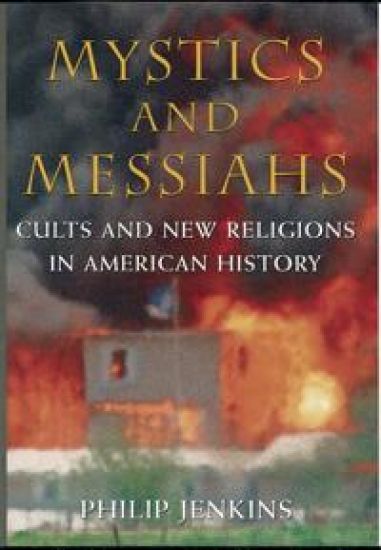
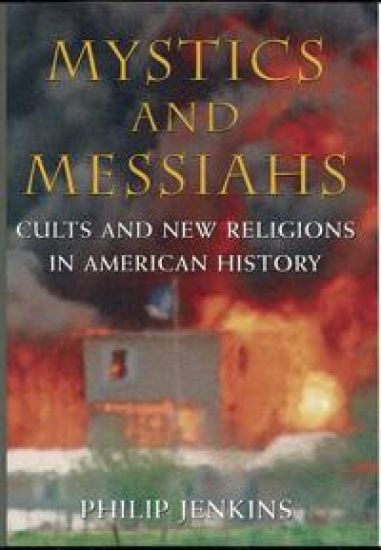
Are religious fringe movements a recent phenomenon in American history? Are widespread fears of mass suicides, sexual abuse, and brainwashing in cults justified? Do marginalized religious groups play any positive role in American spiritual life? Do the panics over such groups follow any discernible pattern? Phillip Jenkins gives fascinating--and surprising--answers to these and many other questions in Mystics and Messiahs, the first full account of cults and anti-cult scares in American history. Jenkins shows that, contrary to popular belief, cults were by no means an invention of the 1960s. In fact, most of the frightening images and stereotypes surrounding fringe religious movements are traceable to the mid-nineteenth century when Mormons, Freemasons, and even Catholics were vehemently denounced for supposed ritualistic violence, fraud, and sexual depravity. As Charles Ferguson observed in 1928, "America has always been the sanctuary of amazing cults." But America has also been the home of an often hysterical anti-cult backlash. Jenkins provides an insightful new analysis of why cults arouse such fear and hatred both in the secular world and in mainstream churches, many of which--Baptists, Quakers, Pentecostals, and Methodists--were themselves originally regarded as cults. Most importantly, Jenkins argues that an accurate historical perspective is urgently needed if we are to avoid the kind of catastrophic confrontation that occurred in Waco or the ruinous prosecution of imagined Satanic cults in the 1980s. While not ignoring genuine instances of aberrant behavior, Mystics and Messiahs goes beyond the vast edifice of myth, distortion, and hype to reveal the true characteristics of religious fringe movements and why they inspire such fierce antagonism.
Beyond Tolerance

Beyond Tolerance

Philip Jenkins

New York University Press
2001
sidottu
The first book on the abhorrent business of child pornography Perhaps nothing evokes more universal disgust as child pornography. The world of its makers and users is so abhorrent that it is rarely discussed much less studied. Child pornographers have taken advantage of this and are successfully using the new electronic media to exchange their wares without detection or significant sanction. What are the implications of this threat for free speech and a free exchange of ideas on the internet? And how can we stop this illegal activity, which is so repugnant that even the most laissez-faire cyberlibertarians want it stamped out, if we know nothing about it? Philip Jenkins takes a leap onto the lower tiers of electronic media in this first book on the business of child pornography online. He tells the story of how the advent of the internet caused this deviant subculture to become highly organized and go global. We learn how the trade which operates on clandestine websites from Budapest or Singapore to the U. S. is easy to glimpse yet difficult to eradicate. Jenkins details how the most sophisticated transactions are done through a proxy, a "false flag" address, rendering the host computer, and participants, virtually unidentifiable. And these sites exist for only a few minutes or hours allowing on-line child pornographers to stay one step ahead of the law. This is truly a globalized criminal network which knows no names or boundaries, and thus challenges both international and U. S. law. Beyond Tolerance delves into the myths and realities of child pornography and the complex process to stamp out criminal activity over the web, including the timely debates over trade regulation, users' privacy, and individual rights. This sobering look and a criminal community contains lessons about human behavior and the law that none interested in media and the new technology can afford to ignore.
Mystics and Messiahs

Mystics and Messiahs

Philip Jenkins

Oxford University Press Inc
2000
sidottu
Are religious fringe movements a recent phenomeon in American history? Are widespread fears of mass suicides, sexual abuse, and brainwashing in cults justified? Do marginalized religious groups play any positive role in American spiritual life? Do the panics over such groups follow any discernible pattern? Phillip Jenkins gives fascinating--and surprising--answers to these and many other questions in Mystics and Messiahs, the first full account of cults and anti-cult scares in American history. Jenkins shows that, contrary to popular belief, cults were by no means an invention of the 1960s. In fact, most of the frightening images and stereotypes surrounding fringe religious movements are traceable to the mid-nineteenth century when Mormons, Freemasons, and even Catholics were vehemently denounced for supposed ritualistic violence, fraud, and sexual depravity. As Charles Ferguson observed in 1928, "America has always been the sanctuary of amazing cults." But America has also been the home of an often hysterical anti-cult backlash. Jenkins provides an insightful new analysis of why cults arouse such fear and hatred both in the secular world and in mainstream churches, many of which--Baptists, Quakers, Pentecostals, and Methodists--were themselves originally regarded as cults. Most importantly, Jenkins argues that an accurate historical perspective is urgently needed if we are to avoid the kind of catastrophic confrontation that occurred in Waco or the ruinous prosecution of imagined Satanic cults in the 1980s. While not ignoring genuine instances of aberrant behaviour, Mystics and Messiahs goes beyond the vast edifice of myth, distortion, and hype to reveal the true characteristics of religious fringe movements and why they inspire such fierce antagonism.
Synthetic Panics

Synthetic Panics

Philip Jenkins

New York University Press
1999
pokkari
America has a long history of drug panics in which countless social problems have been blamed on the devastating effects of some harmful substance. In the last forty years, such panics have often focused on synthetic or designer drugs, like methamphetamine, PCP, Ecstasy, methcathinone, and rave drugs like ketamine, and GHB. Fear of these substances has provided critical justification for the continuing "war on drugs." Synthetic Panics traces the history of these anti-drug movements, demonstrating that designer chemicals inspire so much fear not because they are uniquely dangerous, but because they bring into focus deeply rooted public concerns about social and cultural upheaval. Jenkins highlights the role of the mass media in spreading anti-drug hysteria and shows how proponents of the war on drugs use synthetic panics to scapegoat society's "others" and exacerbate racial, class, and intergenerational conflict.
Using Murder

Using Murder

Philip Jenkins

AldineTransaction
1994
nidottu
In the last decade, serial murder has become a source of major concern for law enforcement agencies, while the serial killer has attracted widespread interest as a villain in popular culture. There is no doubt, however, that popular fears and stereotypes have vastly exaggerated the actual scale of multiple homicide activity. In assessing the concern and the interest, Jenkins has produced an innovative synthesis of approaches to social problem construction. It includes an historical and social-scientific estimate of the objective scale of serial murder; a rhetorical analysis of the construction of the phenomenon in public debate; and a cultural studies-oriented analysis of the portrayal of serial murder in contemporary literature, film, and the mass media. Using Murder suggests that a problem of this sort can only be understood in the context of its political and rhetorical dimension; that fears of crime and violence are valuable for particular constituencies and interest groups, which put them to their own uses. In part, these agendas are bureaucratic, in the sense that exaggerated concern about the offense generates support for criminal justice agencies. But other forces are at work in the culture at large, where serial murder has become an invaluable rhetorical weapon in public debates over issues like gender, race, and sexual orientation. Serial murder is worthy of study not so much for its intrinsic significance, but rather for what it suggests about the concerns, needs, and fears of the society that has come to portray it as an 'ultimate evil.' Using Murder is a highly original study of a powerful contemporary mythology by a criminologist and historian versed in the constructionist literature on the origins of 'moral panics.'