Kirjojen hintavertailu – 12 903 725 kirjaa ja 27 kauppaa

Kirjailija

Philip McCann

Kirjat ja teokset yhdessä paikassa: 10 kirjaa, julkaisuja vuosilta 1998–2017, suosituimpiin kuuluu The Economics of Industrial Location. Vertaile teosten hintoja ja tarkista saatavuus suomalaisista kirjakaupoista.

10 kirjaa

Kirjojen julkaisuvuodet: 1998–2017.

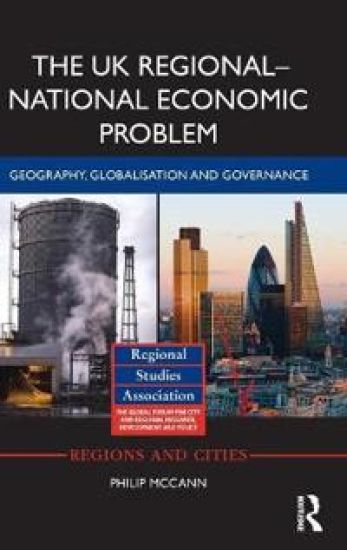
The UK Regional-National Economic Problem
In recent years, the United Kingdom has become a more and more divided society with inequality between the regions as marked as it has ever been. In a landmark analysis of the current state of Britain’s regional development, Philip McCann utilises current statistics, examines historical trends and makes pertinent international comparisons to assess the state of the nation. The UK Regional–National Economic Problem brings attention to the highly centralised, top down governance structure that the UK deploys, and demonstrates that it is less than ideally placed to rectify these inequalities. The ‘North-South’ divide in the UK has never been greater and the rising inequalities are evident in almost all aspects of the economy including productivity, incomes, employment status and wealth. Whilst the traditional economic dominance of London and its hinterland has continued along with relative resilience in the South West of England and Scotland, in contrast the Midlands, the North of England, Northern Ireland and Wales lag behind by most measures of prosperity. This inequality is greatly limiting national economic performance and the fact that Britain has a below average standard of living by European and OECD terms has been ignored. The UK’s economic and governance inequality is unlikely to be fundamentally rebalanced by the current governance and connectivity trends, although this definitive study suggests that some areas of improvement are possible if they are well implemented. This pivotal analysis is essential reading for postgraduate students in economics and urban studies as well as researchers and policy makers in local and central government.
The UK Regional-National Economic Problem
In recent years, the United Kingdom has become a more and more divided society with inequality between the regions as marked as it has ever been. In a landmark analysis of the current state of Britain’s regional development, Philip McCann utilises current statistics, examines historical trends and makes pertinent international comparisons to assess the state of the nation. The UK Regional–National Economic Problem brings attention to the highly centralised, top down governance structure that the UK deploys, and demonstrates that it is less than ideally placed to rectify these inequalities. The ‘North-South’ divide in the UK has never been greater and the rising inequalities are evident in almost all aspects of the economy including productivity, incomes, employment status and wealth. Whilst the traditional economic dominance of London and its hinterland has continued along with relative resilience in the South West of England and Scotland, in contrast the Midlands, the North of England, Northern Ireland and Wales lag behind by most measures of prosperity. This inequality is greatly limiting national economic performance and the fact that Britain has a below average standard of living by European and OECD terms has been ignored. The UK’s economic and governance inequality is unlikely to be fundamentally rebalanced by the current governance and connectivity trends, although this definitive study suggests that some areas of improvement are possible if they are well implemented. This pivotal analysis is essential reading for postgraduate students in economics and urban studies as well as researchers and policy makers in local and central government.
The Regional and Urban Policy of the European Union

The Regional and Urban Policy of the European Union

Philip McCann

Edward Elgar Publishing Ltd
2016
nidottu
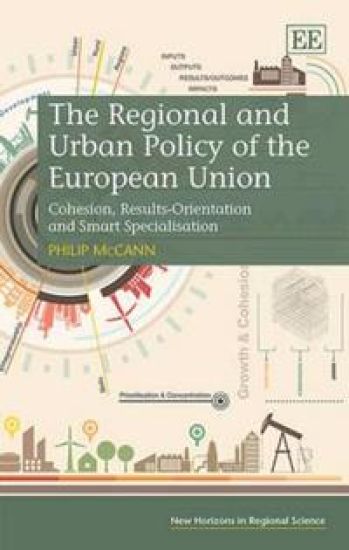
The regional and urban development policy of the European Union, or more precisely, EU Cohesion Policy, is undergoing change. This development is driven by the enormous transformations in European regions and by shifts in thinking and analysis. The issues raised by the changes to regional and urban development policy in Europe span many academic disciplines and build on different research methodologies. A broad approach is required in order to address these issues and this book explicitly incorporates insights from a range of different disciplines. After examining the major regional and urban features of the European economy and discussing the analytical underpinnings of the current re-design to EU Cohesion Policy, the book also aims to provide a road map of the various EU regional and urban data-sources which are available to researchers and policy-makers. This volume is aimed at all economists, geographers, regional scientists, spatial planners, transportation scientists, sociologists, urban studies researchers, environmental scholars, political scientists and policy-analysts who are interested in regional and urban issues.
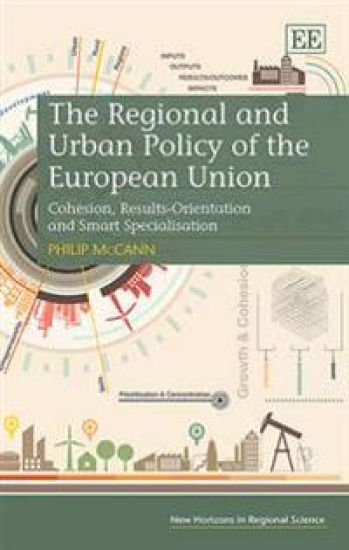
The Regional and Urban Policy of the European Union

The Regional and Urban Policy of the European Union

Philip McCann

Edward Elgar Publishing Ltd
2015
sidottu
The regional and urban development policy of the European Union, or more precisely, EU Cohesion Policy, is undergoing change. This development is driven by the enormous transformations in European regions and by shifts in thinking and analysis. The issues raised by the changes to regional and urban development policy in Europe span many academic disciplines and build on different research methodologies. A broad approach is required in order to address these issues and this book explicitly incorporates insights from a range of different disciplines. After examining the major regional and urban features of the European economy and discussing the analytical underpinnings of the current re-design to EU Cohesion Policy, the book also aims to provide a road map of the various EU regional and urban data-sources which are available to researchers and policy-makers. This volume is aimed at all economists, geographers, regional scientists, spatial planners, transportation scientists, sociologists, urban studies researchers, environmental scholars, political scientists and policy-analysts who are interested in regional and urban issues.
Multinationals and Economic Geography

Multinationals and Economic Geography

Simona Iammarino; Philip McCann

Edward Elgar Publishing Ltd
2013
nidottu
After more than fifty years of systematic research on multinational enterprises (MNEs) what is apparent is that there is, as yet, no unified or dominant theory of the MNE. The objective of this book is to bring into focus one particular dimension of MNE behaviour and activity that has been relatively under-researched - namely the geography of the multinational enterprise - as understood through the lens of innovation and technological change. The authors clearly demonstrate that geography is becoming increasingly important for MNEs and, in turn, MNEs are becoming progressively more important for economic geography. The pivot on which this vital relationship turns is the creation, diffusion and management of new knowledge. This unique book will prove a fascinating read for academics, students and researchers across a broad range of areas including geography, economic geography, regional science, international business and management, innovation studies, economic development. Professionals such as corporate managers and policymakers in these fields would also find this book to be of great interest.
Multinationals and Economic Geography

Multinationals and Economic Geography

Simona Iammarino; Philip McCann

Edward Elgar Publishing Ltd
2013
sidottu
After more than fifty years of systematic research on multinational enterprises (MNEs) what is apparent is that there is, as yet, no unified or dominant theory of the MNE. The objective of this book is to bring into focus one particular dimension of MNE behaviour and activity that has been relatively under-researched - namely the geography of the multinational enterprise - as understood through the lens of innovation and technological change. The authors clearly demonstrate that geography is becoming increasingly important for MNEs and, in turn, MNEs are becoming progressively more important for economic geography. The pivot on which this vital relationship turns is the creation, diffusion and management of new knowledge. This unique book will prove a fascinating read for academics, students and researchers across a broad range of areas including geography, economic geography, regional science, international business and management, innovation studies, economic development. Professionals such as corporate managers and policymakers in these fields would also find this book to be of great interest.
Modern Urban and Regional Economics

Modern Urban and Regional Economics

Philip McCann

Oxford University Press
2013
nidottu
Modern Urban and Regional Economics explains the spatial economic underpinnings of the behaviour of urban and regional economies in order to highlight the differences between the two types of economy. The explicitly spatial approach enables the author to present both urban economics and regional economics within a single integrated framework, using clear model-based explanations from first principles and extensive graphic illustration of the theories discussed. Online Resource Centre For Lecturers: PowerPoints Figures from the book For Students: Questions and cases
Innovation, Entrepreneurship, Geography and Growth

Innovation, Entrepreneurship, Geography and Growth

Philip McCann; Les Oxley

John Wiley Sons Inc
2012
nidottu
Innovation, Entrepreneurship, Geography and Growth provides a timely, accessible review of our understanding of the complex links between innovation, entrepreneurship, geography and growth. Expert contributions provide a thorough roadmap of the developments in research at the interface of these themes. A timely and accessible review of our understanding of the complex links between innovation, entrepreneurship, geography and growthA highly comprehensive roadmap of the range of issues addressed by research in these areasDiscusses the most profitable ways forward for enhancing our understanding of arising issuesContributions from leading experts in the field take a variety of theoretical, empirical and institutional angles
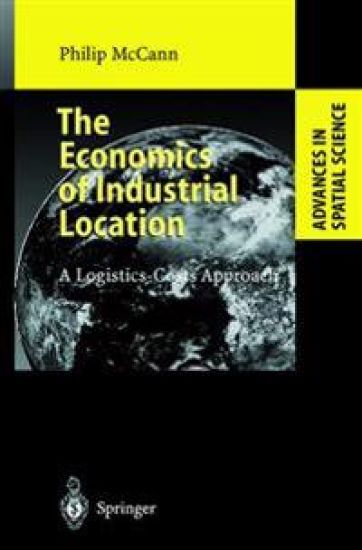
The Economics of Industrial Location

The Economics of Industrial Location

Philip McCann

Springer-Verlag Berlin and Heidelberg GmbH Co. K
2010
nidottu
The motivation for this book comes from the apparent inability of existing orthodox location theory to throw light on a series of location-production problems which are typically faced by modem manufacturing and distribution ftrms. These problems are related to the treatment of time by ftrms, who normally view time costs in terms of inventory costs. From this perspective, traditional industrial location and linkage analysis can be re-cast in a form in which space­ time problems can be dealt with in a unifted manner. The role played by input factor prices and market prices in location behaviour becomes dependent on the relationship between the frequency of shipment and the distance of shipment. This approach provides new insights into the relationship between the optimal location of the ftrm and the value-added by the ftrm, under conditions of either ftxed or varying local factor prices. The approach can then also be extended to discuss the of the spatial changes involved in the new Just-In-Time (JIT) production question philosophy. I would like to acknowledge the many helpful discussions I have had with Bernard Fingleton, Masahisa Fujita, Geoff Hewings, John McCombie, Ron Miller, John Parr, Tony E. Smith, and my colleagues at the University of Reading. Table of Contents Preface vn Introduction 1 1 Comparing Western and Japanese Industrial Purchasing Linkages 5 1. 1 Western Purchasing Linkages 5 Japanese Purchasing Linkages 7 1. 2 1.
The Economics of Industrial Location

The Economics of Industrial Location

Philip McCann

Springer-Verlag Berlin and Heidelberg GmbH Co. K
1998
sidottu
The motivation for this book comes from the apparent inability of existing orthodox location theory to throw light on a series of location-production problems which are typically faced by modem manufacturing and distribution ftrms. These problems are related to the treatment of time by ftrms, who normally view time costs in terms of inventory costs. From this perspective, traditional industrial location and linkage analysis can be re-cast in a form in which space­ time problems can be dealt with in a unifted manner. The role played by input factor prices and market prices in location behaviour becomes dependent on the relationship between the frequency of shipment and the distance of shipment. This approach provides new insights into the relationship between the optimal location of the ftrm and the value-added by the ftrm, under conditions of either ftxed or varying local factor prices. The approach can then also be extended to discuss the of the spatial changes involved in the new Just-In-Time (JIT) production question philosophy. I would like to acknowledge the many helpful discussions I have had with Bernard Fingleton, Masahisa Fujita, Geoff Hewings, John McCombie, Ron Miller, John Parr, Tony E. Smith, and my colleagues at the University of Reading. Table of Contents Preface vn Introduction 1 1 Comparing Western and Japanese Industrial Purchasing Linkages 5 1. 1 Western Purchasing Linkages 5 Japanese Purchasing Linkages 7 1. 2 1.