
Kirjojen hintavertailu – 12 859 819 kirjaa ja 27 kauppaa

Kirjailija

Philip Michael Forness

Kirjat ja teokset yhdessä paikassa: 2 kirjaa, julkaisuja vuosilta 2018–2025, suosituimpiin kuuluu Documents of the Early ‘Arian’ Controversy and the Council of Nicaea. Vertaile teosten hintoja ja tarkista saatavuus suomalaisista kirjakaupoista.

2 kirjaa

Kirjojen julkaisuvuodet: 2018–2025.

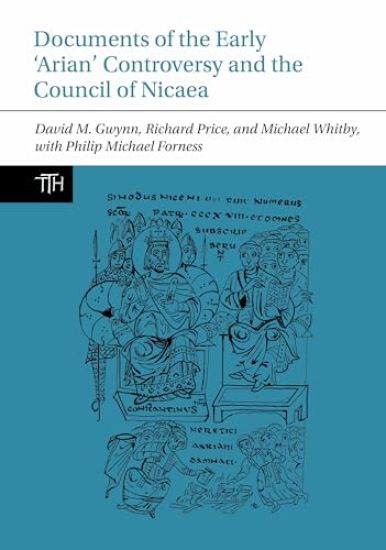
Documents of the Early ‘Arian’ Controversy and the Council of Nicaea

Documents of the Early ‘Arian’ Controversy and the Council of Nicaea

David M. Gwynn; Richard Price; Michael Whitby; Philip Michael Forness

LIVERPOOL UNIVERSITY PRESS
2025
sidottu

Halvin toimitettuna 193,20 €

The Council of Nicaea in 325 was a momentous event in the history of both the Christian Church and the Later Roman empire. Summoned by the Christian emperor Constantine, Nicaea came to be remembered as the first ecumenical council which composed the original Nicene Creed still used in modified form in most Christian churches today. The assembled bishops gathered to debate the theological questions raised when the Alexandrian presbyter Arius clashed with his bishop Alexander regarding the precise divinity of the Son of God and the Son’s relationship with the Father. Through the surviving documents from the years surrounding Nicaea we can explore the doctrinal and ecclesiastical tensions which fuelled the so-called ‘Arian’ Controversy which divided Christians across the fourth century and beyond. At the same time, the Council of Nicaea also debated the celebration of Easter and issues of Church discipline, while coming to terms with Christianity’s new prestige symbolised by the presence at the council of emperor Constantine. The documents translated here are of great individual value but presenting them as a collection with introductions and commentary allows a closer re-examination of their significance and disputed chronology and the importance of Nicaea in a crucial formative period for the Christian Roman empire.
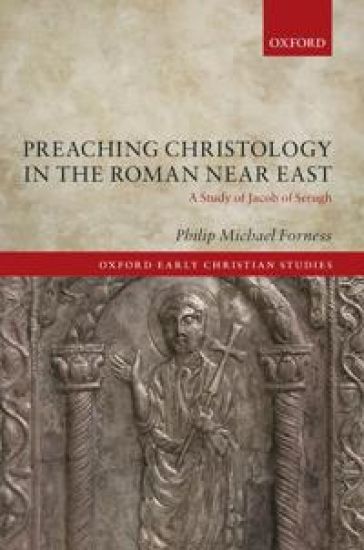
Preaching Christology in the Roman Near East

Preaching Christology in the Roman Near East

Philip Michael Forness

Oxford University Press
2018
sidottu
Preaching formed one of the primary, regular avenues of communication between ecclesiastical elites and a wide range of society. Clergy used homilies to spread knowledge of complex theological debates prevalent in late antique Christian discourse. Some sermons even offer glimpses into the locations in which communities gathered to hear orators preach. Although homilies survive in greater number than most other types of literature, most do not specify the setting of their initial delivery, dating, and authorship. Preaching Christology in the Roman Near East addresses how we can best contextualize sermons devoid of such information. The first chapter develops a methodology for approaching homilies that draws on a broader understanding of audience as both the physical audience and the readership of sermons. The remaining chapters offer a case study on the renowned Syriac preacher Jacob of Serugh (c. 451-521) whose metrical homilies form one of the largest sermon collections in any language from late antiquity. His letters connect him to a previously little-known Christological debate over the language of the miracles and sufferings of Christ through his correspondence with a monastery, a Roman military officer, and a Christian community in South Arabia. He uses this language in homilies on the Council of Chalcedon, on Christian doctrine, and on biblical exegesis. An analysis of these sermons demonstrates that he communicated miaphysite Christology to both elite reading communities as well as ordinary audiences. Philip Michael Forness provides a new methodology for working with late antique sermons and discloses the range of society that received complex theological teachings through preaching.